Connect with us

Concrete

We recently launched bigger capacity batching plants and concrete pumps.

Published

on

Shares

Uhere is a big shift towards high-capacity machines and we are gearing up to cater to future demands at Universal, says Rajesh Kawoor, Vice President, (Concrete Business), Universal Construction Machinery. Excerpts from the interview.

What the present scenario as regards the RMC sector?

For quite some time, there have been no new projects and the overall market is quite sluggish; the RMC sector has also witnessed a slump and growth has been flat compared to last year. We don´t expect anything positive at least for the next six months.

Some of the cement majors are trying to invest in more plants, especially in Tier two and Tier three cities. What are your comments?

Yes, they are trying to expand, taking into consideration the expected growth in the future. A lot of projects have already been sanctioned but the market is sluggish because the funds are not coming forth.

Have you come out with any new equipment launches for the RMC sector?

At Excon 2013, we launched bigger capacity batching plants. Earlier, we were doing only 20 and 30 cu m batching plants. So we have widened our product basket, introduced 60 cu m batching plants and will be coming out with 90 and 120 cu m batching plants. We have also launched bigger capacity concrete pumps machine capable of pumping more than 200 m.

From the OEMs` point of view, what are the basic challenges you face in terms of growth of the RMC sector?

The major challenge we face is in Tier 2 and Tier 3 cities, where the customer has to be educated about the latest machines and technology available. Since we have a pan- India network, we are already in the process of educating them and have also been successfully running a training centre in association with CIDC, where we train operators and technicians and make them skilled operators.

Has the current tax structure adversely impacted the setting up of new RMC plants?

For big projects, I don´t think that is an issue. But yes, there is a negative impact, especially for small projects, as it is getting very difficult to put up their own batching plants. If they are buying from RMC players, then due to taxation, the costs escalate. The government needs to come out with some incentive schemes, especially for small customers.

What is the potential in the hiring segment for RMC equipment?

There is a huge potential especially for concrete pumps and transit mixers in the hiring segment. In matured overseas markets, the major buyers of RMC equipment is from the hiring sector, whereas in India, it´s the other way around.

But now the trend is picking up because in the last couple of years, we have seen a lot of hiring companies showing interest. Even small players are also trying to invest money in the hiring sector.

At Universal, we help develop a lot of hiring companies. If some person is interested in starting a rental or hiring business, we train them, we explain to them how the business runs. We try to bring in more entrepreneurs into the hiring sector and we also tie up with hiring companies.

Continue Reading
Click to comment

Leave a Reply

Your email address will not be published. Required fields are marked *

Concrete

UltraTech’s Kukurdih unit runs fully on green energy

The Chhattisgarh plant has met 100 per cent of its electricity needs through green energy since April 2026.
Published

on

By

Shares
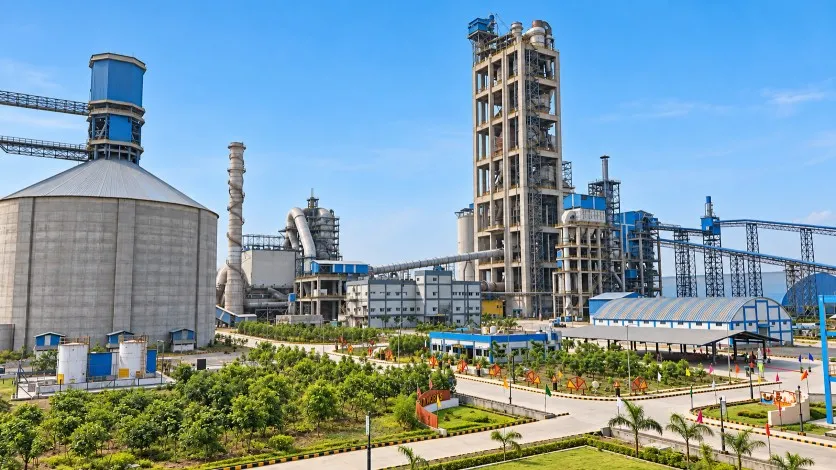
UltraTech Cement’s Kukurdih Cement Works in Chhattisgarh has met 100 per cent of its electricity requirement through green energy every month since April 2026. Commissioned in 2024, the integrated cement manufacturing unit has an installed grey cement capacity of 3.3 million tonnes per annum.
The plant meets its electricity requirement through a combination of renewable power sourcing and Waste Heat Recovery Systems (WHRS). UltraTech said the combination enables the unit to meet its power needs through green energy while maintaining operational reliability.
Since April 2026, nearly a third of UltraTech’s 76 manufacturing units in India have maintained green energy utilisation above 50 per cent of their electricity requirement. Five units, including Kukurdih, have exceeded 95 per cent green energy utilisation.
The company is also progressively deploying Battery Energy Storage Systems (BESS) across its manufacturing network to support greater integration of renewable energy. UltraTech said it has not invested in new captive thermal power capacity at its integrated units, including greenfield projects and brownfield expansions, for more than 10 years.
As of Q1FY27, UltraTech’s captive green energy capacity stood at 1,897 MW, comprising 1,463 MW of renewable capacity from solar, wind and hybrid sources, and 434 MW of WHRS capacity.
Under its RE100 commitment, the company aims to increase the share of green power in its total power mix to 85 per cent by 2030 and 100 per cent by 2050.

Continue Reading

Concrete

Cement Prices Rise Rs. 7 per Bag in September; October Hikes Expected

Cement prices rose in September as companies weighed further increases.
Published

on

By

Shares

Cement companies may seek to raise prices by Rs. 5 to Rs. 20 per bag across most markets in October, although the ability to sustain the increases will depend on demand recovery and dealer acceptance, according to a report by Centrum Broking. The outlook follows a pickup in pricing momentum during September after largely stable prices in July and August.

The all-India average trade price increased by Rs. 7 per bag month-on-month to Rs. 356 in September. Centrum Broking’s channel checks indicated gains across both trade and non-trade segments, with non-trade prices recording sharper increases in most markets. However, higher company billing rates were not fully passed on to customers in several regions because dealers continued selling at earlier prices to meet quarter-end volume targets.

The brokerage said demand weakness in Q2FY27 was less pronounced than the usual seasonal trend, with construction activity improving in several markets towards the end of the quarter. Demand remained range-bound across several markets in July and August, while September produced mixed regional trends. Higher rainfall affected activity in some areas, whereas lower rainfall supported construction work elsewhere.

South India recorded the largest price increase in September, at Rs. 11 per bag, followed by West India at Rs. 9. Central, East and North India each reported increases of Rs. 5 per bag. Despite the September recovery, the average all-India trade price for Q2FY27 stood at Rs. 351 per bag, down Rs. 1 sequentially, as weaker pricing in July and August offset the later gains.

Centrum Broking said the success of any October increases would depend on the pace of demand recovery and dealers’ willingness to accept higher prices. Fuel prices have also risen sharply in recent weeks, making the implementation and sustainability of price increases a key factor for the cement industry’s pricing outlook.

Continue Reading

Concrete

Andhra Pradesh Clears Rs. 30 bn My Home Cement Plant

Project receives incentives of up to Rs. 11.29 bn from state
Published

on

By

Shares

The Andhra Pradesh government has approved a greenfield cement project worth Rs. 30 bn by My Home Industries, along with incentives of up to Rs. 11.29 bn. The decision comes amid a political controversy in Telangana involving allegations about landholdings associated with My Home Group.

According to an Industries and Commerce Department order issued on September 25, 2026, the project is expected to create 2,000 jobs and begin commercial production by March 2029. The proposed facility will have capacity to produce 3.5 MTPA of clinker and 3.5 MTPA of cement.

The total investment includes fixed capital investment of Rs. 25.97 bn, pre-operative expenses of Rs. 2.23 bn, contingencies of Rs. 1.26 bn and working capital margin of Rs. 540 mn. The incentive package is capped at Rs. 11.29 bn, equivalent to up to 43.48 per cent of fixed capital investment, subject to completion of the committed investment by March 2029.

The package includes a capital subsidy of 39 per cent of eligible fixed capital investment, capped at Rs. 9.43 bn, payable over 10 years from the start of commercial production. It also provides reimbursement of Rs. 1 per unit on electricity purchased from distribution companies for 10 years, subject to a ceiling of Rs. 1.86 bn. A further incentive equivalent to 2 per cent of fixed capital investment is linked to the creation of the committed jobs and other policy conditions.

The state has approved the allotment of 27.19 acres through the Andhra Pradesh Industrial Infrastructure Corporation at actual cost. The project also involves land linked to two temples and the realignment of a canal across approximately 9.93 acres, with conditions requiring alternative temple facilities and company-funded infrastructure work. Telangana Chief Minister A. Revanth Reddy has separately raised allegations concerning land associated with My Home Group, including 2,463 acres near Shamshabad. The allegations remain subject to verification through official records and any investigations.

Continue Reading

Video Thumbnail
▶

    SIGN-UP FOR OUR GENERAL NEWSLETTER

    Trending News