Connect with us

Concrete

We recently launched bigger capacity batching plants and concrete pumps.

Published

on

Shares

Uhere is a big shift towards high-capacity machines and we are gearing up to cater to future demands at Universal, says Rajesh Kawoor, Vice President, (Concrete Business), Universal Construction Machinery. Excerpts from the interview.

What the present scenario as regards the RMC sector?

For quite some time, there have been no new projects and the overall market is quite sluggish; the RMC sector has also witnessed a slump and growth has been flat compared to last year. We don´t expect anything positive at least for the next six months.

Some of the cement majors are trying to invest in more plants, especially in Tier two and Tier three cities. What are your comments?

Yes, they are trying to expand, taking into consideration the expected growth in the future. A lot of projects have already been sanctioned but the market is sluggish because the funds are not coming forth.

Have you come out with any new equipment launches for the RMC sector?

At Excon 2013, we launched bigger capacity batching plants. Earlier, we were doing only 20 and 30 cu m batching plants. So we have widened our product basket, introduced 60 cu m batching plants and will be coming out with 90 and 120 cu m batching plants. We have also launched bigger capacity concrete pumps machine capable of pumping more than 200 m.

From the OEMs` point of view, what are the basic challenges you face in terms of growth of the RMC sector?

The major challenge we face is in Tier 2 and Tier 3 cities, where the customer has to be educated about the latest machines and technology available. Since we have a pan- India network, we are already in the process of educating them and have also been successfully running a training centre in association with CIDC, where we train operators and technicians and make them skilled operators.

Has the current tax structure adversely impacted the setting up of new RMC plants?

For big projects, I don´t think that is an issue. But yes, there is a negative impact, especially for small projects, as it is getting very difficult to put up their own batching plants. If they are buying from RMC players, then due to taxation, the costs escalate. The government needs to come out with some incentive schemes, especially for small customers.

What is the potential in the hiring segment for RMC equipment?

There is a huge potential especially for concrete pumps and transit mixers in the hiring segment. In matured overseas markets, the major buyers of RMC equipment is from the hiring sector, whereas in India, it´s the other way around.

But now the trend is picking up because in the last couple of years, we have seen a lot of hiring companies showing interest. Even small players are also trying to invest money in the hiring sector.

At Universal, we help develop a lot of hiring companies. If some person is interested in starting a rental or hiring business, we train them, we explain to them how the business runs. We try to bring in more entrepreneurs into the hiring sector and we also tie up with hiring companies.

Continue Reading
Click to comment

Leave a Reply

Your email address will not be published. Required fields are marked *

Concrete

Shree Cement Targets Above Industry Volume Growth In FY27

Chairman says firm will favour organic expansion and higher dividends

Published

on

By

Shares

Shree Cement expects to outpace the industry in the financial year 2026-27 as it pursues organic expansion and pricing discipline following a recent investor conference. The chairman said the company has completed a pricing realignment and recovered volumes lost during that exercise. Management signalled a clear preference for internal investments rather than acquisitions to support growth.

The company reported that capacity additions and demand growth across core markets are expected to underpin stronger volume performance, with a target of growing volumes at around 1.1 times the industry growth rate. Cash levels are likely to decline as capital expenditure progresses and shareholder distributions increase, the chairman indicated. The board has prioritised higher dividends over a buyback as a means of reducing excess cash.

Shree Cement described a market shift towards value and affordability rather than a race to the lowest price, which links demand expansion more closely with pricing. Historically, prices have risen at around three per cent annually over long periods, the company noted, and while prices may increase faster this year because of cost pressures from geopolitical tensions, a material improvement in industry profitability is not anticipated. In North India, the company expects additional capacity to be absorbed as demand grows, estimating a requirement of roughly 10 million (mn) tonne (t) of incremental demand annually.

The next phase of expansion will focus on the north, west, east and northeast regions, with existing projects and planned capacities viewed as sufficient to meet future demand without pursuing acquisitions. Management said it has already regained lost volumes while sustaining higher prices and will continue to monitor regional opportunities, including a possible investment in West Bengal pending clarity on industrial policy. The company, which has a current market capitalisation of Rs 852,948.9 mn, has seen its shares lose more than 20 per cent over the past year.

Continue Reading

Concrete

Ramco Cements’ Hard Worker Campaign Wins Seven Awards

Campaign earns honours for direction, editing and cinematography

Published

on

By

Shares
The Hard Worker campaign by The Ramco Cements has secured seven honours at the Good Ads Matter Awards 2026, adding to its growing list of accolades and reinforcing its standing among the year’s most recognised advertising campaigns.
The awards were presented during the Good Ads Matter Awards Night 2026 held at Mehboob Studios in Mumbai. The campaign received recognition across multiple categories, highlighting excellence in direction, editing, cinematography and storytelling.
Among the honours, the campaign won Silver in the Campaign of the Year – Direction category, while filmmaker Prakash Varma was named Director of the Year for the films Tortoise & Hare and Eco Plaster. Tortoise & Hare also received Silver awards for Best Editing and Best Colour Grading, along with a Bronze award for Best Cinematography. Eco Plaster earned Bronze awards in the Best Direction – Narrative and Best Direction – Humour categories.
Both films extended their award-winning run, with Eco Plaster being recognised for its narrative centred on water conservation through innovative construction solutions, while Tortoise & Hare was honoured for its storytelling and craft execution.
The Hard Worker campaign was built around the idea that hard work deserves recognition and respect. Through culturally rooted and emotionally engaging stories, the campaign has connected with consumers, engineers, masons and the wider construction community across the country.
Commenting on the achievement, A V Dharmakrishnan, CEO of The Ramco Cements Limited, said that the continued recognition across leading creative platforms reflects the company’s commitment to meaningful and authentic communication rooted in the values of the people it serves.
Balaji K Moorthy, Executive Director – Marketing, The Ramco Cements Limited, said the awards recognise the craftsmanship behind the storytelling, from direction and cinematography to editing and narrative execution.
Following recognition at both the Kyoorius Creative Awards and the Good Ads Matter Awards, the Hard Worker campaign continues to demonstrate the impact of purpose-driven storytelling combined with strong creative execution and consumer relevance.

Continue Reading

Concrete

Cement Makers Reaffirm Commitment to Sustainable Growth

Published

on

By

Shares

World Environment Day spotlight on innovation and circularity

On World Environment Day, the Indian cement industry reiterated its commitment to supporting India’s climate ambitions through sustainable manufacturing, resource efficiency and the adoption of cleaner technologies.

The Cement Manufacturers’ Association (CMA) said the sector remains aligned with the Government of India’s Net Zero commitments and is accelerating efforts to reduce its environmental footprint while supporting the country’s infrastructure and development agenda.

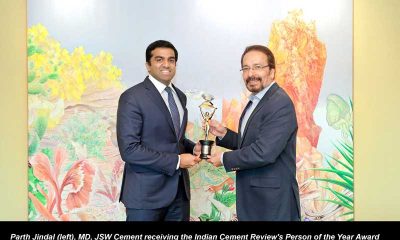
Parth Jindal, President, CMA and Managing Director, JSW Cement, said the industry is increasingly adopting cleaner technologies, improving energy efficiency and expanding the use of alternative fuels and raw materials. He also highlighted the growing importance of circular economy practices, where industrial by-products and waste streams from one sector are utilised as resources in another.

“The Indian Cement Industry is aligned to the Government’s commitments on carbon mitigation and is accelerating the adoption of cleaner technologies, resource efficiency and circular economy practices while actively exploring the potential of Carbon Capture, Utilisation and Storage (CCUS) as a critical pathway for deep decarbonisation,” said Jindal.

He added that coprocessing industrial waste and by-products helps conserve natural resources, reduce disposal requirements and lower the environmental footprint across multiple sectors.

According to Jindal, sustainability is no longer limited to manufacturing processes but is increasingly influencing investment decisions, innovation strategies and long-term growth plans within the industry.

Echoing similar views, Dr Raghavpat Singhania, Vice President, CMA and Managing Director, JK Cement, said sustainable development extends beyond emissions reduction and must also focus on responsible resource utilisation and waste minimisation.

“Sustainability in the built environment cannot be measured by emissions alone. It is equally about how efficiently we use resources, how effectively we minimise waste and how responsibly we create the infrastructure that will serve future generations,” said Singhania.

He noted that the cement industry is advancing its sustainability agenda through greater resource efficiency, increased circularity, technological innovation and continuous improvements in manufacturing practices. As a key contributor to India’s infrastructure development, the sector has a critical role to play in balancing economic growth with environmental responsibility.

On the occasion of World Environment Day, industry leaders reaffirmed their commitment to supporting India’s climate goals while delivering the materials required for resilient, durable and sustainable infrastructure.


Continue Reading

Video Thumbnail
â–

    SIGN-UP FOR OUR GENERAL NEWSLETTER


    Trending News

    SUBSCRIBE TO THE NEWSLETTER


    Don't miss out on valuable insights and opportunities to connect with like minded professionals.


      This will close in 0 seconds