Projects
The projects will be cleared fast if the government comes up with a single window policy
Published
4 years agoon
By
admin
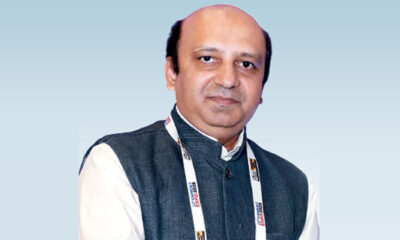
Datta Arjun, Vice President – Business Development, Penta India Cement and Minerals
Although India is counted among the top producers of cement, our per capita consumption is still very low. The country will be poised to see more capacity additions only if the issues of land acquisition are tackled and the cumbersome lengthy procedures to obtain clearances are simplified. Datta Arjun, Vice President – Business Development, Penta India Cement and Minerals elaborates on what needs to be done. Excerpts from the interview.
Has the economic slowdown impacted production capacity augmentation or the setting up of new cement plants?
The economic slowdown has definitely had its effect on cement production. Capacity utilisation has dropped and the industry is running at approximately 65 – 70 per cent of its installed capacity. This is also due to an increase in the use of blended cement and the rapid growth of cement industry, which led to this gap between demand and supply. However, keeping in mind the potential for growth due to much lower per capita cement consumption, which is about 156 kgs / year in India against world average of about 260 kgs/year, the industry is continuing to boost its capacity by augmentation by adding new cement plants. The growth is in line with targeted capacity of 550 million tonnes per annum (MTPA) by the year 2020.
In the past, it has been observed that during such low demand periods, the plant owners could afford to shut the plant down for longer periods. During this time, they would go ahead with small to medium size investment in increase existing plant capacity and reducing specific energy consumption and buying state- of- the- art technology. The trend is still continuing.
Are we in the state of cement production overcapacity?
Indian cement production capacity has increased from 336.1million tonnes in 2012 to 349.6 million tonnes in 2013, an increase of 4 per cent. To reach a production capacity of 550 MTPA by 2020, the cement industry has to grow by a CAGR of approximately 6.5 per cent. However, capacity utilisation has always been lagging behind, from about 85 per cent in FY 09-10 to around 75 per cent in FY 11-12. In FY 12-13, it was around 65 û70 per cent.
To bridge the gap, the construction growth has to take place in all sectors, viz; housing, infrastructure, commercial and industrial and especially infrastructure where potential is so high that India has the capacity to become world´s third largest construction market by 2025. There is also a considerable scope for a country like India to improve per capita cement consumption to match the world average. If construction projects are not undertaken in spite of their being necessary, India´s cement production capacity will always be an overcapacity.
What policy changes can help the cement industry regain momentum?
Many favourable policies have been already undertaken by the Indian government for the growth of the cement industry. However, a few problems remain.
One big hurdle at the moment is the acquisition of land for setting up a greenfield project. Many projects are delayed and some are even abandoned due to land issues. The new land acquisition law will worsen the situation. There has to be a fair pricing policy in place, to acquire land that will benefit the mass population and not just the interests of a few. We can only hope that the problem is temporary and that Indian cement plant owners will not invest in other countries to set up new plants.
Another major issue the industry is facing is from several statutory clearances required at various stages of the plant being set up. If the government comes up with a single window policy, the projects would be cleared fast and unnecessary delays and cost overruns could be avoided.
The government´s support to shorten the unnecessary lengthy procedures will help the industry grow not only in 2014 but also in the future.
What are the major challenges in retrofitting / setting up new cement plants?
Some of the older cement plants will need considerable revamping to match the current performance parameters and regulations in terms of environmental emissions, energy efficiency and resource conservation. As a result, a major overhaul will be necessary to bring these plants at par. However, these challenging projects will test the mettle of engineering consultants and technology providers. In the future, only those who can provide tailor- made and smart solutions will survive.
In one instance, a sick unit which was shut down for quite a few years, is currently being revamped, while an airport has come up recently near the plant location. Now the major restriction in the new pre-heater tower design is the maximum height allowed by the airport authority. Hence, the entire retrofit project has to be designed around this constraint.
While setting up new plants, land acquisition is a big challenge. Penta India is working on an optimised layout for green field plants so that land requirement can be reduced by 15-20 per cent.
What is the scope for greenfield projects?
We are talking about addition of close to 200 million tonnes in the next seven years, and both greenfield as well as brownfield projects have an important role to play here. However, for greenfield projects, the land acquisition problem has to be addressed as it is becoming the deciding factor.
Ageing plants with obsolete technologies have a higher energy consumption factor and hence, higher carbon dioxide generation. They also contribute to higher dust pollution levels in the atmosphere. High running costs, in many cases, are making the plants unviable as against relatively newer, higher capacity plants. The old, low capacity plants, running at 500-700 tpd, need to be upgraded or discarded. This opens up the avenue for either brownfield upgradation or new projects.
What are the new trends emerging in the design of cement plans and other supporting systems?
In India specifically, there is an increasing trend in planning and designing cement equipment / plant with a focus on reduction in energy consumption and pollution. The electrical energy consumption which is very prominent in a cement plant has been reduced drastically recently, by the introduction of the vertical pre -grinder and roller press technology. The design of pre-calciner / burners in the pyro section is developed to conform to NOX emission levels. Coolers are also becoming more efficient.
Waste heat recovery system and alternate fuel use have almost become regular features in all plant design. To save on natural resources, the focus is now on consuming less or zero water in the process. These concepts are implemented at the plant conceptualisation stage itself.
There is also a move towards increased automation in material handling, use of improved heavy machinery in mining, material analysis instruments, robotics in laboratory with the aim of reducing manpower requirement and assuring quality. From the logistics viewpoint, the adoption of efficient wagon loading and unloading technology and reduction of inventory, will also work well. Conditioning monitoring of equipment is necessary to reduce breakdown related maintenance and improve the run factor in the plant.
Was 2013 a good year for you?
Service providers found 2013 to be extremely challenging. A lesser number of projects and a higher number of service providers have made the Indian market a buyers´ market. Orders from overseas market became vital for survival. On the domestic front, up-gradation and feasibility study projects kept Penta busy; Penta has also been working in the Middle East and on African projects and expects to cater to the market picking up in North America, too.
India has the capacity to become world´s third largest construction market by 2025.
One big hurdle at the moment is the acquisition of land for setting up a greenfield project. Many projects are delayed and some are even abandoned due to land issues.
You may like
-
Double Tap to Go Green
-
15th Cement EXPO to be held in March 2025 in Hyderabad
-
14th Cement EXPO
-
Vinita Singhania receives Lifetime Achievement Award at the 7th Indian Cement Review Awards
-
Increasing Use of Supplementary Cementitious Materials
-
Indian Cement Review Touts Decarbonisation Mantra & Awards Growth
Economy & Market
RAHSTA Roundtable Sets Agenda for Smarter, Safer Highways
Published
4 weeks agoon
March 16, 2026By
admin
Roundtable discussions focus on innovation for safer highways.
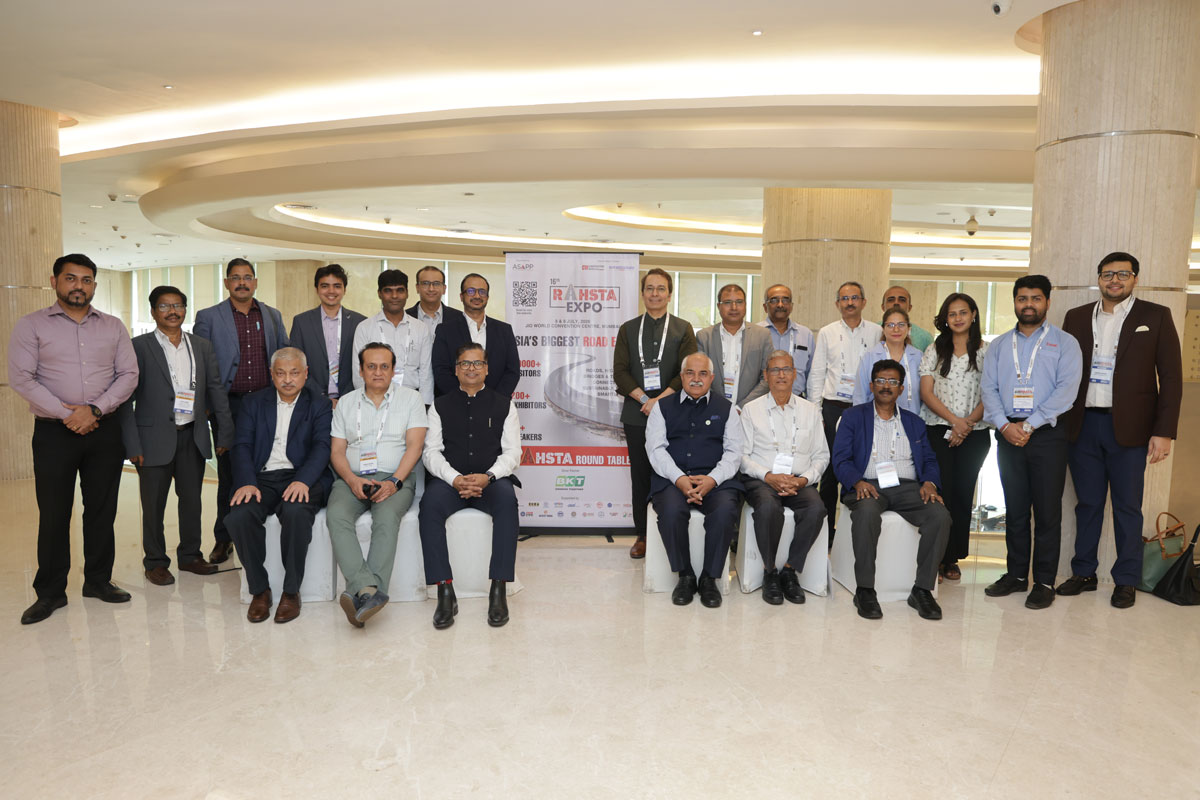
Held on 12 March 2026 at Courtyard by Marriott, Mumbai, alongside the Infrastructure Today Airport Conclave, the RAHSTA Roundtable brought together stakeholders from across the highways and infrastructure ecosystem to shape the agenda for the 16th RAHSTA 2026, scheduled for 8–9 July 2026 at the Jio Convention Centre, Mumbai. The session focused on key industry themes including road construction, technology, safety and long-term sustainability.
Opening the discussion, Pratap Padode, Founder, FIRST Construction Council, said the roundtable marked the beginning of a broader consultative process leading up to the July event. The aim, he noted, is to bring together industry stakeholders to refine the agenda for discussions on the future of roads, bridges, tunnels and allied infrastructure.
Padode noted that while central road project awards have slowed in recent years, states are increasingly driving the next phase of infrastructure growth. Maharashtra, with its long-term road development plans and agencies such as MSRDC and MSIDC, is expected to play a significant role in this expansion.
RAHSTA Expo 2026 as a specialised platform dedicated to road infrastructure, covering highways, tunnels, bridges and flyovers along with construction technologies, safety systems and maintenance solutions. He also highlighted the growing importance of rural connectivity and said the organisers are engaging with government bodies to highlight rural road development initiatives.
Tanveer Padode, CIO, ASAPP Info Group, presented insights from IMPACCT, the group’s infrastructure intelligence platform. He pointed to a strong project pipeline despite slower highway awards earlier in the year, noting that states such as Maharashtra, Odisha and Arunachal Pradesh are emerging as key drivers of new projects. The data also revealed that only a small group of contractors participates in large-value infrastructure bids.
Lt Gen Rajeev Chaudhary, former Director General, Border Roads Organisation and Chairman of the RAHSTA Expo Committee, emphasised the need for stronger collaboration across the ecosystem, including policymakers, contractors, technology providers and financiers. He also called for addressing systemic issues within the sector and encouraged greater participation of women in infrastructure leadership.
The discussion also explored the evolving economics of road development. Phani Prasad Mandalaparthy, Associate Director, CRISIL Intelligence, noted that the slowdown in project awards reflects a shift towards higher-value logistics corridors rather than simple road widening projects. However, private participation through BOT and TOT models remains limited.
From the contractors’ perspective, Sudhir Hoshing, Whole-Time Director, Ceigall, said companies are becoming more selective in bidding, favouring projects with clearer payment mechanisms and efficient processes. While NHAI continues to offer greater operational clarity, states such as Uttar Pradesh and Bihar were cited as relatively supportive environments for project execution.
Durability and sustainability also emerged as key themes. Himanshu Agarwal, COO – Road & Infrastructure, Zydex Group India, highlighted the need to prioritise lifecycle performance and resilient pavements, while participants discussed the potential of alternative materials such as plastic waste, steel slag and industrial by-products in road construction.
Dr LR Manjunatha, Vice President, JSW Cement, emphasised that India has abundant fly ash, slag and other industrial materials that can improve durability and sustainability if integrated into specifications and policy frameworks.
Technology and equipment challenges were also discussed. Dr Lakshmana Rao Mantri, Dy General Manager, Afcons Infrastructure, highlighted the shortage of tunnel boring machines (TBMs), which is delaying several underground infrastructure projects. Participants agreed that developing domestic TBM manufacturing capabilities will be critical for future infrastructure expansion.
The future of concrete pavements was another area of discussion. Dr V Ramachandra, President, Indian Concrete Institute, stressed that the debate should focus on lifecycle performance rather than material choice alone, noting that evolving design standards are improving the feasibility of concrete roads.
Prof Dharamveer Singh of IIT Bombay added that while India has made significant progress in infrastructure development, stronger capacity building and better execution practices are essential to ensure consistent road quality.
The discussion also touched upon technology adoption in the sector. Rushabh Mamania, Partner & CBO, Roadvision, highlighted the growing role of AI in road infrastructure, noting that AI-driven monitoring systems are already being deployed across large stretches of national highways.
Overall, the roundtable underscored that the future of highway infrastructure will depend not only on the pace of construction but also on durability, safety, technology integration and sustainable materials. The discussions offered valuable insights that will help shape the agenda for RAHSTA 2026 and guide future collaboration within the industry.
Concrete
Turning Downtime into Actionable Intelligence
Published
2 months agoon
February 19, 2026By
admin
Stoppage Insights instantly identifies root causes and maps their full operational impact.
In cement, mining and minerals processing operations, every unplanned stoppage equals lost production and reduced profitability. Yet identifying what caused a stoppage remains frustratingly complex. A single motor failure can trigger cascading interlocks and alarm floods, burying the root cause under layers of secondary events. Operators and maintenance teams waste valuable time tracing event chains when they should be solving problems. Until now.
Our latest innovation to our ECS Process Control Solution(1) eliminates this complexity. Stoppage Insights, available with the combined updates to our ECS/ControlCenter™ (ECS) software and ACESYS programming library, transforms stoppage events into clear, actionable intelligence. The system automatically identifies the root cause of every stoppage – whether triggered by alarms, interlocks, or operator actions – and maps all affected equipment. Operators can click any stopped motor’s faceplate to view what caused the shutdown instantly. The Stoppage UI provides a complete record of all stoppages with drill-down capabilities, replacing manual investigation with immediate answers.
Understanding root cause in Stoppage Insights
In Stoppage Insights, ‘root cause’ refers to the first alarm, interlock, or operator action detected by the control system. While this may not reveal the underlying mechanical, electrical or process failure that a maintenance team may later discover, it provides an actionable starting point for rapid troubleshooting and response. And this is where Stoppage Insights steps ahead of traditional first-out alarm systems (ISA 18.2). In this older type of system, the first alarm is identified in a group. This is useful, but limited, as it doesn’t show the complete cascade of events, distinguish between operator-initiated and alarm-triggered stoppages, or map downstream impacts. In contrast, Stoppage Insights provides complete transparency:
- Comprehensive capture: Records both regular operator stops and alarm-triggered shutdowns.
- Complete impact visibility: Maps all affected equipment automatically.
- Contextual clarity: Eliminates manual tracing through alarm floods, saving critical response time.
David Campain, Global Product Manager for Process Control Systems, says, “Stoppage Insights takes fault analysis to the next level. Operators and maintenance engineers no longer need to trace complex event chains. They see the root cause clearly and can respond quickly.”
Driving results
1.Driving results for operations teams
Stoppage Insights maximises clarity to minimise downtime, enabling operators to:
• Rapidly identify root causes to shorten recovery time.
• View initiating events and all affected units in one intuitive interface.
• Access complete records of both planned and unplanned stoppages
- Driving results for maintenance and reliability teams
Stoppage Insights helps prioritise work based on evidence, not guesswork:
• Access structured stoppage data for reliability programmes.
• Replace manual logging with automated, exportable records for CMMS, ERP or MES.(2)
• Identify recurring issues and target preventive maintenance effectively.
A future-proof and cybersecure foundation
Our Stoppage Insights feature is built on the latest (version 9) update to our ACESYS advanced programming library. This industry-leading solution lies at the heart of the ECS process control system. Its structured approach enables fast engineering and consistent control logic across hardware platforms from Siemens, Schneider, Rockwell, and others.
In addition to powering Stoppage Insights, ACESYS v9 positions the ECS system for open, interoperable architectures and future-proof automation. The same structured data used by Stoppage Insights supports AI-driven process control, providing the foundation for machine learning models and advanced analytics.
The latest releases also respond to the growing risk of cyberattacks on industrial operational technology (OT) infrastructure, delivering robust cybersecurity. The latest ECS software update (version 9.2) is certified to IEC 62443-4-1 international cybersecurity standards, protecting your process operations and reducing system vulnerability.
What’s available now and what’s coming next?
The ECS/ControlCenter 9.2 and ACESYS 9 updates, featuring Stoppage Insights, are available now for:
- Greenfield projects.
- ECS system upgrades.
- Brownfield replacement of competitor systems.
Stoppage Insights will also soon integrate with our ECS/UptimeGo downtime analysis software. Stoppage records, including root cause identification and affected equipment, will flow seamlessly into UptimeGo for advanced analytics, trending and long-term reliability reporting. This integration creates a complete ecosystem for managing and improving plant uptime.
(1) The ECS Process Control Solution for cement, mining and minerals processing combines proven control strategies with modern automation architecture to optimise plant performance, reduce downtime and support operational excellence.
(2) CMMS refers to computerised maintenance management systems; ERP, to enterprise resource planning; and MES to manufacturing execution systems.
Economy & Market
FORNNAX Appoints Dieter Jerschl as Sales Partner for Central Europe
Published
2 months agoon
February 5, 2026By
admin
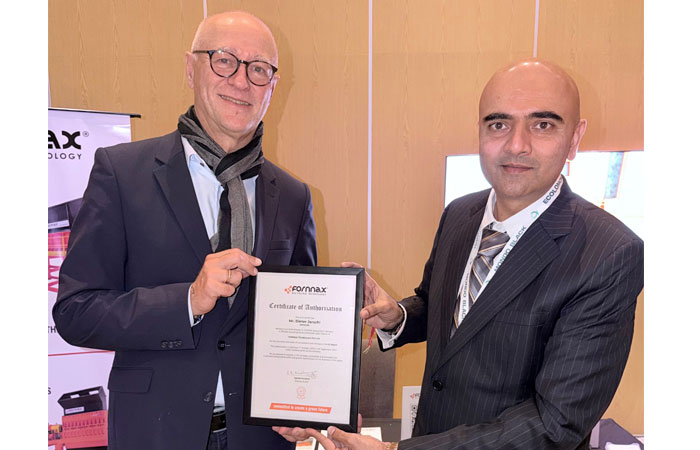
FORNNAX TECHNOLOGY has appointed industry veteran Dieter Jerschl as its new sales partner in Germany to strengthen its presence across Central Europe. The partnership aims to accelerate the adoption of FORNNAX’s high-capacity, sustainable recycling solutions while building long-term regional capabilities.
FORNNAX TECHNOLOGY, one of the leading advanced recycling equipment manufacturers, has announced the appointment of a new sales partner in Germany as part of its strategic expansion into Central Europe. The company has entered into a collaborative agreement with Mr. Dieter Jerschl, a seasoned industry professional with over 20 years of experience in the shredding and recycling sector, to represent and promote FORNNAX’s solutions across key European markets.
Mr. Jerschl brings extensive expertise from his work with renowned companies such as BHS, Eldan, Vecoplan, and others. Over the course of his career, he has successfully led the deployment of both single machines and complete turnkey installations for a wide range of applications, including tyre recycling, cable recycling, municipal solid waste, e-waste, and industrial waste processing.
Speaking about the partnership, Mr. Jerschl said,
“I’ve known FORNNAX for over a decade and have followed their growth closely. What attracted me to this collaboration is their state-of-the-art & high-capacity technology, it is powerful, sustainable, and economically viable. There is great potential to introduce FORNNAX’s innovative systems to more markets across Europe, and I am excited to be part of that journey.”
The partnership will primarily focus on Central Europe, including Germany, Austria, and neighbouring countries, with the flexibility to extend the geographical scope based on project requirements and mutual agreement. The collaboration is structured to evolve over time, with performance-driven expansion and ongoing strategic discussions with FORNNAX’s management. The immediate priority is to build a strong project pipeline and enhance FORNNAX’s brand presence across the region.
FORNNAX’s portfolio of high-performance shredding and pre-processing solutions is well aligned with Europe’s growing demand for sustainable and efficient waste treatment technologies. By partnering with Mr. Jerschl—who brings deep market insight and established industry relationships—FORNNAX aims to accelerate adoption of its solutions and participate in upcoming recycling projects across the region.
As part of the partnership, Mr. Jerschl will also deliver value-added services, including equipment installation, maintenance, and spare parts support through a dedicated technical team. This local service capability is expected to ensure faster project execution, minimise downtime, and enhance overall customer experience.
Commenting on the long-term vision, Mr. Jerschl added,
“We are committed to increasing market awareness and establishing new reference projects across the region. My goal is not only to generate business but to lay the foundation for long-term growth. Ideally, we aim to establish a dedicated FORNNAX legal entity or operational site in Germany over the next five to ten years.”
For FORNNAX, this partnership aligns closely with its global strategy of expanding into key markets through strong regional representation. The company believes that local partnerships are critical for navigating complex market dynamics and delivering solutions tailored to region-specific waste management challenges.
“We see tremendous potential in the Central European market,” said Mr. Jignesh Kundaria, Director and CEO of FORNNAX.
“Partnering with someone as experienced and well-established as Mr. Jerschl gives us a strong foothold and allows us to better serve our customers. This marks a major milestone in our efforts to promote reliable, efficient and future-ready recycling solutions globally,” he added.
This collaboration further strengthens FORNNAX’s commitment to environmental stewardship, innovation, and sustainable waste management, supporting the transition toward a greener and more circular future.
Ultra Concrete Age
NCB Signs MoU With Cement Manufacturer To Boost Construction Skills
JSW Cement Commissions Nagaur Plant, Enters North India
Cement Prices Likely To Rise As Petcoke Costs Increase
IIT Guwahati Develops Radiation-Resistant Cement Mortar
Ultra Concrete Age
NCB Signs MoU With Cement Manufacturer To Boost Construction Skills
JSW Cement Commissions Nagaur Plant, Enters North India
Cement Prices Likely To Rise As Petcoke Costs Increase