

Concrete
India’s net zero ambitions: The economic rebalancing


The year 2050 is not far off while the enormous challenge of reducing carbon emissions stares at not only the developed nations, but developing nations as well. This is a rebalancing that encompasses several transitions in the economy from financial investments in the right technology and infrastructure interfaces, industrial and social transitions as well. While the need for financial investments is of paramount importance, one cannot ignore the deep impacts of de-carbonising the economy on people and livelihood of a large proportion of the population; the skills and expertise to cope with the future needs of a de-carbonised economy must be attended to right away.
The EU gives us some direction as they were the early starters, between 1990 and 2017, EU reduced Carbon emission by 22 per cent, while the GDP increased by 58 per cent thus decoupling greenhouse gas emissions from the economic growth. This came from large scale electrification of the energy system coupled with deployment of renewables decarbonisng energy supply and significantly reduce dependency on other third country suppliers. The improvement of energy efficiency and industrial modernization followed suit, where waste reduction and recycling took center stage.

We can take examples from two of the most energy intensive industries, cement and aluminum and the progress in the last two decades has been significant. Take Germany or Poland and the shift started from landfill laws, that became more and more stringent thus bringing in enormous focus on recycling. Take municipal waste and one would see that entire municipal waste got recycled and both these countries do not use any fossil fuels in their cement kilns. The industrial waste heat is recycled into household electrification and heating needs and very large industrial complex could be built closer to the towns because it helped to significantly reduce wastes in all forms, especially energy that could be diverted to household use, while municipal wastes could be used as fuel in the industrial heating.
Recycling of waste is all pervasive in all advanced economies of Europe thus bringing in the ten level hierarchy of progress ending with Refuse (not producing stuff) and going down the order as follows: rethink, reduce, re-use, repair, refurbish, remanufacture, repurpose, recycle and recover.
Decarbonising the transport sector by using alternative means of transport, connected and automated driving combined with the roll-out of electric vehicles and enhanced use of alternative fuels has started to give rich dividends as the Transport emissions form 24 per cent of all emissions and is a tall order. For a large economy like India the waste factor and inefficiencies of logistics alone takes away the bulk of the carbonisation needs, building efficient infrastructure and sharing the infrastructure efficiently are as important as working on electrification of mobility.
Most modern cities in Europe have moved their public transportation systems from fossil fuels completely and per capita emission has reduced by leaps and bounds as the shift from individual vehicles to public vehicles is at the root of the puzzle. Zurich for example has not increased its private car parking space for almost the last decade, thus restricting the number of vehicles that can enter the city at any point of time.
But reaping first mover benefits by modernising existing installations and investing in new carbon neutral and circular economy compatible technologies and systems will need routing of financial investments into several buckets that will put pressures on the existing expansion plans of several fossil fuel consuming industries, habits, systems and habitats. The investments have to be carefully planned in transportation infrastructure and systems, energy transition to renewable and smart grid solutions (transmission and distribution landscape) including storage systems and in smart cities that automatically create the network of carbon emission neutral solutions to everything.
This calls for investments on a massive scale as solar, wind and all renewable energy cannot be directly injected into the grid without proper storage systems in place that will be able to match supply with demand at every instant; without these the rise of renewable energy solutions will be severely limited. Connected systems that are interoperable and building on a smart network is at the core of the EU success stories.
Turning to the creation of new jobs, the focus must shift to resource allocation in efficient land, water and air usage and for sustainable agriculture, forestry and marine systems. EU has made dramatic progress here and the emission reduction in agriculture and in construction has been brought about by transitions to new technologies creating jobs.
Circular economy for a country like India must start with alternate employment opportunities for those who are currently employed in the non-renewable sectors of the economy and the puzzle can only be solved if the new skills of the circular economy can be worked on right from the schools. Here more than the investments, the intent to decouple existing economic growth drivers from carbon dependence is itself an arduous task.
ABOUT THE AUTHOR:
Procyon Mukherjee is an ex-Chief Procurement Officer at LafargeHolcim India.





Concrete
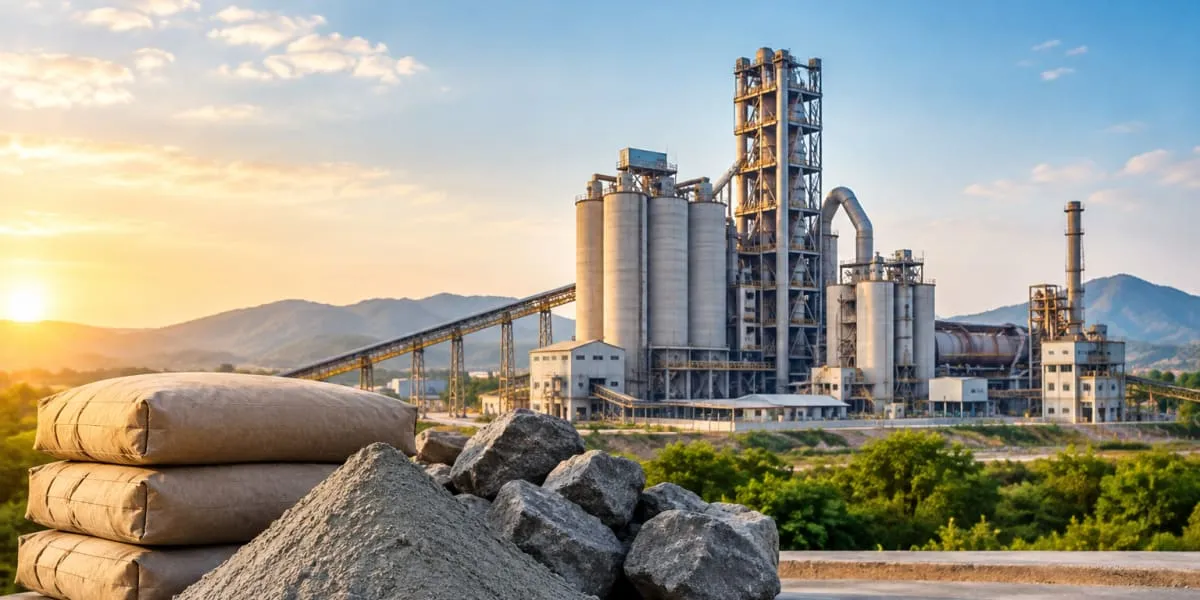
UltraTech Cement Expands in Andhra Pradesh with Rs. 26.5 bn
Petnikota plant adds 3.6 MTPA cement dispatch capacity
Concrete
Nuvoco reports 13.5% revenue growth in Q2 FY27
Cement sales rose 9% to 4.7 MMT, while EBITDA increased 11%.

Concrete
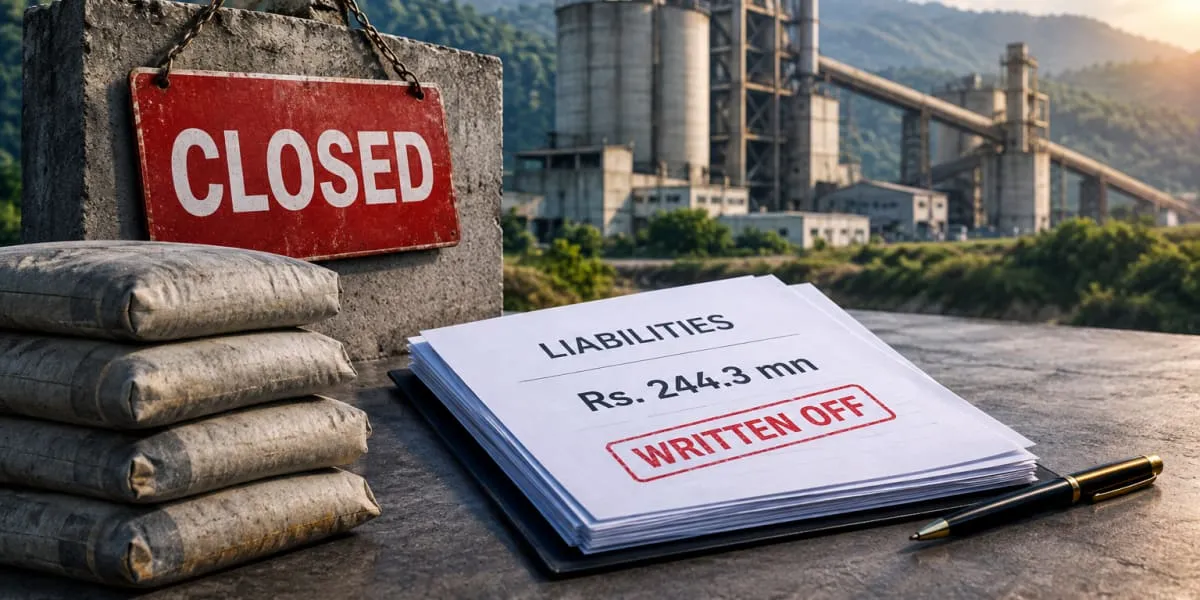
Meghalaya Cabinet Approves MCCL Closure, Writes Off Rs. 244.3 mn
Cabinet approves winding up of state-owned cement company


UltraTech Cement Expands in Andhra Pradesh with Rs. 26.5 bn

Nuvoco reports 13.5% revenue growth in Q2 FY27

Meghalaya Cabinet Approves MCCL Closure, Writes Off Rs. 244.3 mn

Fornnax Wins AIRIA’s Special Export Award for Rubber Machinery in 2025-26

Cement Prices Likely to Rise Rs. 10-15 per Bag from Mid-October
UltraTech Cement Expands in Andhra Pradesh with Rs. 26.5 bn
Nuvoco reports 13.5% revenue growth in Q2 FY27
Meghalaya Cabinet Approves MCCL Closure, Writes Off Rs. 244.3 mn
Fornnax Wins AIRIA’s Special Export Award for Rubber Machinery in 2025-26
Cement Prices Likely to Rise Rs. 10-15 per Bag from Mid-October
-

 Concrete4 weeks ago
JSW Cement Receives Rs. 2.3 bn GST Demand Notice
-

 Concrete3 weeks ago
Andhra Pradesh Clears Rs. 30 bn My Home Cement Plant
-
 Concrete4 weeks ago
Montra Electric, Wonder Cement Deploy 250-Vehicle EV Fleet
-
 Concrete3 weeks ago
Cement Prices Rise Rs. 7 per Bag in September; October Hikes Expected