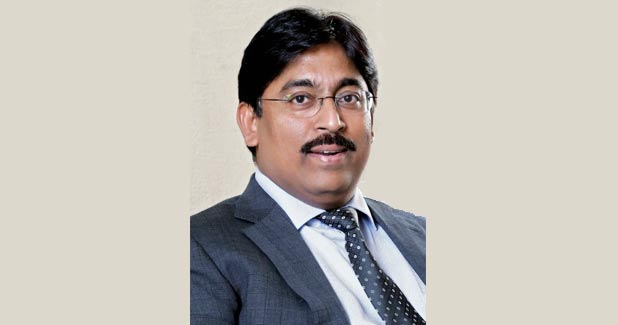
Prashant Jha, Chief RMX, Nuvoco Vistas
What are the emerging trends in precast?
Depending on the load-bearing structure of the building, some of the emerging trends in precast systems are:
Large-panel systems: The designation "large-panel system" refers to multistory structures composed of large wall and floor concrete panels connected in the vertical and horizontal directions so that the wall panels enclose appropriate spaces for the rooms within a building.
Frame systems: Precast frames can be constructed using either linear elements or spatial beam-column sub-assemblages. Precast beam-column sub-assemblages have the advantage that the connecting faces between the sub-assemblages can be placed away from the critical frame regions; however, linear elements are generally preferred because of the difficulties associated with forming, handling, and erecting spatial elements.
Slab-column systems with shear walls: These systems rely on shear walls to sustain lateral load effects, whereas the slab-column structure resists mainly gravity loads. There are two main systems in this category:
- Lift-slab system with walls
- Prestressed slab-column system
Modular system: In case of smaller single units, this system is helpful. Some of the advantages are;
- Entire unit is cast in a factory and installed at site.
- Suitable for toilet blocks or individual rooms
- Monolithic casting guarantees waterproofing at junctions
In precast, which segment do you cater to the most?
Nuvoco has contributed and provided solutions to the Infrastructure, mainly Mass Rapid Transit System such as the Noida Metro and the Mumbai Metro projects.
Noida metro project: Nuvoco supplied 243,700 CuM of concrete for Noida Metro, for its NC 01 -elevated viaduct and 8 elevated stations, and NC 02 – elevated viaduct and 7 elevated stations. 3 dedicated captive plants were set up for the project with a concrete output of 250 CuM/hr, with one plant for the casting of U girders. The main challenges included on time productivity, de-shuttering and lifting of the precast modules, controlling the temperature and shrinkage, and aesthetic finish. Each of the girders were with the specification of 5 m wide, 27 m long, with a height of 1.8 m, a thickness of 150 – 200mm, and a volume of 50 – 60 CuM. This was pre-stressed, using 52 to 109 cables as per design. Nuvoco used its high performance early strength concrete, Robuste, of M55 Grade, for the project, ensuring the U Girders achieved a strength of 12 – 14 Mpa at 12 hrs for early de-shuttering. As a result, it successfully erected 200 U-shaped girders in May 2016.
Mumbai metro project: The Mumbai Metro Line – 3, connecting Cuffe Parade to SEEPZ, with 26 underground stations and one at-grade station. The requirement was for package 4, that comprised the three underground stations. Nuvoco set up a captive plant at the site, along with a transit mixer, for the production of 2,48,000 CuM of concrete. This was used for the construction of 6082 m twin bored tunnels with a diameter of 5.80 m. The tunnel sections are 1.4 m long, 1 m wide, and 275 mm in height, with a volume of 1.4 m3. Precast was used to provide a protective lining and reinforcement to the structure. The primary challenge was supplying high early strength concrete of 12 Mpa at 12 hrs without steam curing for de-shuttering. Insert. The project also needed to ensure extremely low Chloride penetration and migration to offer a service life of 150 Years, along with controlled shrinkage, and a customised aesthetic finish. Nuvoco has been able to address these needs by using a combination of two of its products, Instante and Robuste, of M50 Grade.
The industry took a leap with smart products in cement. Can you elaborate on the smart product portfolio of Nuvoco?
Nuvoco’s offers 14 ready-mix concrete products and their variants. They can be customised to suit any specific construction need and provide multiple benefits. Our concrete flagship brands encompass:
- Agile, the self-compacting and self-consolidating concrete with a high-quality surface finish
- Artiste, a range of decorative concrete that combines freedom of design with low maintenance and high durability.
- Xlite, the low-density concrete that reduces structural weight and lowers thermal conductivity.
- InstaMix, our ready-to-use bagged concrete and mortar offerings are designed to deliver cost-effective, easy-to-use construction solution in any location.
– RENJINI LIZA VARGHESE
Quote from Dalmia Cement for World Environment Day
Mahendra Singhi, MD & CEO, Dalmia Cement Bharat Limited, who is best known for being an avid advocate of sustainability, said, "The recent crisis, which impacted the entire world, has brought several dramatic changes to the environment from the past two months with a steep fall in global carbon emissions. We have to now explore how – as per our conscious low consumption practices – we can ensure that this reduction is not transient but results in low carbon economy. This crisis has further made all of us to realise that nature is a source of solace, an inspiration, and a teacher and the utmost need to protect it. This Environment Day, let us all come together and commit ourselves to simplest lifestyles as nature tends to act in the simplest way. I believe we still have the opportunity to reshape and redesign our world in a more. Sustainable way and I urge all global players, to not only work towards creating a greener environment, but also healthy lifestyles for all."














 Concrete3 weeks ago
 Concrete3 weeks ago
 Concrete4 weeks ago
 Concrete3 weeks ago