Connect with us

Technology

Deccan Pride

Published

on

Shares

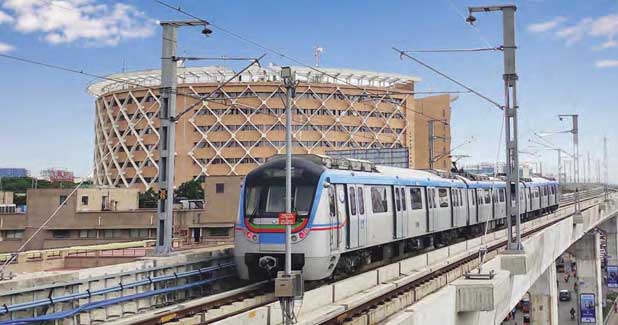
Hyderabad Metro Rail is now the second largest operational metro network in the country covering 69.2 km, with Corridor 2, the 11-km Green Line stretch, becoming operational.

With Corridor 2-the 11-km Green Line stretch from JBS Parade Ground (JBS) to Mahatma Gandhi Bus Station (MGBS)-going operational, the Hyderabad Metro Rail Project becomes the second largest operational metro network in the country covering 69.2 km (Corridor 1 from Miyapur to LB Nagar: 29.2 km; Corridor 2 from JBS to MGBS: 11 km; Corridor 3 from Nagole to Raidurgam: 29 km). With a total project cost of about Rs 200 billion and the world’s largest metro project in a PPP mode, the Hyderabad Metro Rail is already playing a key role in the growth and development of the city.

Salient features
The 11-km-long Green Line of Corridor 2 with nine stations connects the twin cities of Secunderabad and Hyderabad, from JBS to MGBS on the Musi River, and reduces travel time to just 16 minutes, end to end, compared to 45 minutes by road.

The stations JBS and MGBS are interchange stations, with the former located near the second largest bus terminus in the city. JBS Station is one of the tallest in the project with five levels: Street, lower concourse, upper concourse, lower and upper platforms. The station has been designed as a portal frame-type RCC structure with columns on either side of the road and another in the central median. Entry and exit structures facilitate easy approaches for the passengers coming from JBS. One entry-exit connects to the Corridor 3 Parade Grounds Station (interchange) through a skywalk. The Secunderabad West and Gandhi Hospital stations have four entry-exits from all directions with lifts and escalators, apart from staircases.

MGBS -The star station
Spread over 3 lakh sq ft, the Mahatma Gandhi Bus Station Interchange station is one of the country’s largest, with several outstanding features. Uniquely built, it houses the interchange of two corridors (Corridor 2 – JBS to MGBS at the higher level and Corridor 1 – Miyapurto LB Nagar at the lower level). "There are three levels with each level again split into two, as one corridor passes over the other; in this passenger-friendly station, passengers can easily and smoothly transit from one corridor to the other," says KVB Reddy, Managing Director & CEO, L&T Hyderabad Metro Rail. The station has been entirely conceptualised and executed in-house by the L&TMRHL team. It is 142-m-long, 60-m-wide and designed spaciously to accommodate retail outlets, entertainment zones and convenience outlets at the concourse level, from where one can cross over from one end of the Musi watercourse to the other. The platform level of Corridor 2 is at a height of 23 m and the roof that is at 33 m is designed with tetrahedron-supported columns placed at the edge to resemble a modern airport, for unobstructed view and enhanced aesthetics.

The intermediate floors between the slabs accommodate the technical services. The station has two entry-exits and wide skywalks from both sides of the waterfront for passenger convenience. An additional entry-exit is at the foot of the existing bus facility for alighting passengers arriving from the station along with four escalators and two lifts. The main area of the station is magnificently adorned with jaguar brown granite flooring. The integrated station has four lifts, 12 escalators and sufficient staircases. Further, a service connection can switch the movement of trains from Corridors 1 and 2.

JBS – Parade Ground Station
Spread over 2 lakh sq ft, Parade Ground Interchange Metro station is one of the prominent metro stations in the country with many special features. Considering the topographical features of the location, the stations – Parade Grounds on Blue line and JBS Parade Ground on Green line are engineered to build in perpendicular directions, integrated with a skywalk for seamless movement of passengers from one corridor to another.

The station box is 140-m-long and 25-m-wide and the station has five levels namely street, lower Concourse-1, lower Concourse-2, Upper Concourse and Platform levels. Around 10,520 cu m of concrete and 1,200 MT of steel was used in the construction. Designed spaciously, the station accommodates retail outlets, entertainment zones and convenience outlets spread in multiple levels spread over 33,000 sq ft area. Platform level is at 28.5 m height and roof level at 35.7 m. The roof has been designed for unobstructed view. The station has four lifts, 16 escalators, sufficient number of staircases and 68 cameras for end to end surveillance The station, JBS Parade Ground, is a terminal station on the Green line (JBS to MGBS). The station is remotely located next to second largest bus terminus in the city.

Passenger facilities
All the stations are eco-friendly with natural light, ventilation and specially designed tactile paths for the blind and are wheelchair-friendly. All facilities, including medical, are readily available and seamlessly integrated.

"Several of our initiatives are to improve ride experience, like providing free water, free toilets, exclusive ladies section, cross-sell offers, complimentary newspapers, etc," adds Reddy. "We have also introduced various last-mile connectivity options like electric vehicles, rent-a-bicycle services, cab aggregator and bus services at metro stations."

Overcoming challenges
Evidently, a project of this nature and scale is likely to experience several challenges. Reddy highlights them below:

Preconstruction: Underground utilities with no readily available drawings led to many surprises; involvement of too many government agencies and lengthy procedures; clash of interest between various departments.

Land: Responsibility of procuring right of way (ROW) and land resting with the government resulted delay in acquisition of private properties, due to changes in land acquisition law; risk for concessionaire if construction commences before availability of complete land parcels and unhindered availability of ROW; lack of continuous ROW in a linear project like a metro.

Alignment finalisation: Limitation on sharp curve <130 ? as the viaduct passes through busy roads and the rolling stock cannot take sharp curves; frequent changes even after the finalisation of alignment necessitated owing to challenges in property acquisition.

Design: Reworks because of uncertain ground features; standardisation of technical specifications and unification; frequent changes even after finalisation of design owing to underground utility diversions and frequent changes in finalised alignments.

Traffic management: Limited availability of ROW and limited road width in core areas of the city.

Ridership: Lack of definitive data on the city’s ridership pattern that is mostly dependent on city development; first and last-mile connectivity with feeder services to the metro.

Financial challenges: Volatile financial market; interest-rate fluctuations during construction; large foreign exchange exposure with volatility of Rs vs the US Dollar and Euro; risk of cost overrun – delays resulting in cost increase and inflation of inputs.

Operation and maintenance risk.

Success galore
Despite the challenges, the Hyderabad Metro Rail is an iconic Indian infrastructure project that has already triggered robust economic activity and transformed Hyderabad into one of India’s most futuristic cities, with integrated urban transportation using inter-modal connectivity. Connecting major bus stations, rail terminals, malls and MMTS services, it is an efficient, safe, reliable and comfortable public transportation system laying emphasis on transit-oriented development (TOD), thus contributing significantly to improving the liveability index of the city.

This metro project brings together best-in-class resources and technology in every aspect: Stations, station planning, rolling stock, track work, depots, AFC, power supply, traction and SCADA system, signalling and train control system, telecom system and MEP. It features elevated world-class station buildings at approximately every kilometre. Further, the project has promoted a green and eco-friendly mode of travel by reducing carbon emission, fuel consumption and pollution, and has 17 IGBC LEED Platinum-certified metro stations. The stations are designed to be user-friendly with lifts, staircases and facilities for the disabled.

What’s more! The advanced signalling and train control technology, Communication-Based Train Control (CBTC), has been adopted by Hyderabad Metro. Notably, this is the first metro project in India to claim train control by CBTC technology. Also, the trains use regenerative electric braking, thereby converting momentum into electrical energy and feeding back to the power supply system while braking. This will reduce the energy requirement from the grid. Another highlight is the automatic fare collection system, which enables hassle-free entry and exit from the stations – the Savaari App and QR Code ticketing system are proving to be a boon for commuters for hassle-free ticketing. "The completion of all three corridors will mark the beginning of an era of seamless and hassle-free commuting in Hyderabad," concludes Reddy. "We are committed to enhance quality of life for the people through a sustainable transport network, integrated with vibrant urban spaces, making Hyderabad Metro an integral part of one’s daily life."

The model
The Hyderabad Metro Rail project has seen the transformation of Larsen & Toubro (L&T) from contractor to concessionaire, a pioneering concept adopted for the first time in the world. As followed in Hong Kong and other metros, transit-oriented development (TOD) plays a significant role in L&T’s operations and maintenance (O&M) model, which also features intra modal transportation (physical, operational, fare integration) with emphasis on reliability, availability, maintainability, safety (RAMS) and customer satisfaction.

L&T’s prime focus is on-life cycle costing, development of an efficient and lean organisation for O&M and building capability in a structured manner. Efficient project execution and O&M strategies, employment generation and skill development are significant features of this model, resulting in overall economic development. However, the continued success of PPP projects will depend on the introduction of system-based approval systems, better risk identification and mitigation, uniform technical specifications across the country and easy coordination between the various agencies involved, both at the Centre and state government levels.

PPPs are all about balance: Maintaining equilibrium between the public and private, risk and reward, cost and impact. A PPP structure ensures better value for money, higher performance incentives, faster construction, cost-effective delivery, and well-defined accountability with the risk on the PPP player. With respect to metro-rail projects, it is important to have a robust model for execution with a clear change of mindset across the board. A robust mechanism for redressal and risk sharing is also essential.

– SERAPHINA D’SOUZA

Continue Reading
Click to comment

Leave a Reply

Your email address will not be published. Required fields are marked *

Concrete

Reimagining Logistics: Spatial AI and Digital Twins

Published

on

By

Shares

Digital twins and spatial AI are transforming cement logistics by enabling real-time visibility, predictive decision-making, and smarter multi-modal operations across the supply chain. Dijam Panigrahi highlights how immersive AR/VR training is bridging workforce skill gaps, helping companies build faster, more efficient, and future-ready logistics systems.

As India accelerates infrastructure investment under flagship programs such as PM GatiShakti and the National Infrastructure Pipeline, the pressure on cement manufacturers to deliver reliably, efficiently, and cost-effectively has never been greater. Yet for all the modernisation that has taken place on the production side, the end-to-end logistics chain, from clinker dispatch to the last-mile delivery of bagged cement to construction sites, remains a domain riddled with inefficiencies, opacity and manual decision-making.
The good news is that a new generation of spatial computing technologies is now mature enough to transform this reality. Digital twins, spatial artificial intelligence (AI) and immersive augmented and virtual reality (AR/VR) training platforms are converging to offer cement producers something they have long sought: real-time visibility, autonomous decision-making at the operational edge, and a scalable solution to the persistent skills gap that hampers workforce performance.

Advancing logistics with digital twins
The cement supply chain is uniquely complex. A single integrated plant may manage limestone quarrying, kiln operations, grinding, packing and despatch simultaneously, with finished product flowing through rail, road, and waterway networks to reach hundreds of regional depots and distribution points. Coordinating this network using spreadsheets, siloed ERP data, and phone calls is not merely inefficient; it is a structural liability in a competitive market where delivery reliability is a key differentiator.
Digital twin technology offers a way out. A cement logistics digital twin is a continuously updated, three-dimensional virtual replica of the entire supply chain, from the truck loading bays at the plant to the inventory levels at district depots. By ingesting data from IoT sensors on conveyor belts and packing machines, GPS trackers on road and rail fleets, weighbridge records, and weather feeds, the digital twin provides planners with a single, authoritative picture of where every ton of cement is, in real time.
The value, however, goes well beyond visibility. Because the digital twin mirrors the physical system in dynamic detail, it can run scenario simulations before decisions are executed. If a primary rail corridor is disrupted, logistics managers can model alternative routing options, shifting volumes to road or coastal shipping, and assess the cost and time implications within minutes rather than days. If a packing line at the plant is running below capacity, the twin can automatically recalculate dispatch schedules downstream and alert depot managers to adjust receiving resources accordingly.
For cement companies operating multi-plant networks across geographies as varied as Rajasthan and the North-East, this kind of end-to-end situational awareness is transformative. It collapses information latency from hours to seconds, enables proactive rather than reactive logistics management, and creates the data foundation upon which AI-driven decision-making can be built. Companies that have deployed logistics digital twins in comparable heavy-industry contexts have reported reductions in transit time variability of up to 20 per cent and meaningful decreases in demurrage and detention costs, savings that flow directly to the bottom line.

Smart logistics operations
A digital twin is only as powerful as the intelligence layer that sits on top of it. This is where Spatial AI becomes the critical differentiator for cement logistics.
Traditional logistics management systems are reactive. They record what has happened and flag exceptions after the fact. Spatial AI systems, by contrast, are proactive. They continuously analyse the state of the logistics network as represented in the digital twin, identify emerging bottlenecks before they crystallise into delays, and recommend corrective actions.
At the plant gate, AI-powered visual inspection systems using spatial depth-sensing cameras can assess truck conditions, verify load integrity and confirm seal tamper status in seconds, replacing the manual checks that currently slow throughput. At the depot level, Spatial AI can monitor stock drawdown rates in real time, cross-reference them against pending customer orders and inbound shipment ETAs, and automatically trigger replenishment orders when safety thresholds are approached. In transit, AI systems processing GPS and telematics data can detect anomalous vehicle behaviour, including extended stops, route deviations, speed irregularities and alert fleet managers instantly.
Perhaps most significantly for Indian cement logistics, Spatial AI can optimise the complex multi-modal routing decisions that are central to competitive cost management. Given the variability in road quality, seasonal accessibility, rail rake availability, and regional demand patterns across India’s vast geography, the combinatorial complexity of routing optimisation is beyond human planners working with conventional tools. AI systems can process this complexity continuously and adapt routing recommendations as conditions change, reducing empty running, improving vehicle utilisation and cutting fuel costs.
The agentic dimension of modern AI is particularly relevant here. Agentic AI systems do not merely analyse and recommend; they act. In a cement logistics context, this means an AI system that can, within pre-authorised boundaries, directly communicate revised dispatch instructions to plant teams, update booking confirmations with freight forwarders and reallocate available rail rakes across plant locations, all without waiting for a human to process a recommendation and make a call. For logistics executives, this represents a genuine shift from managing a workforce to setting the rules of engagement and reviewing outcomes. The operational tempo achievable with agentic AI simply cannot be matched by human-in-the-loop systems working at the pace of emails and phone calls.

Bridging the skills gap
Technology investments in digital twins and spatial AI will deliver diminishing returns if the human workforce cannot operate effectively within the new systems they create. This is a challenge that India’s cement industry cannot afford to underestimate. The sector relies on a large, geographically dispersed workforce, including truck drivers, depot managers, despatch supervisors, fleet maintenance technicians, many of whom have been trained on paper-based processes and manual workflows. Retraining this workforce for a digitised, AI-augmented environment is a substantial undertaking, and conventional classroom or on-the-job training methods are poorly suited to the scale and pace required.
Immersive AR and VR training platforms offer a fundamentally different approach. By creating photorealistic, interactive simulations of logistics environments, such as a plant dispatch bay, a depot yard, the interior of a cement truck cab, allow workers to practice complex procedures and decision-making scenarios in a safe, consequence-free virtual environment. A depot manager can work through a simulated rail rake delay scenario, making decisions about customer allocation and communication
without the pressure of real orders being affected. A truck driver can practice the correct procedure for securing a load of bagged cement without the risk of a road incident.
The learning science case for immersive training is compelling. Studies consistently show that experiential, simulation-based learning produces faster skill acquisition and higher retention rates than didactic instruction, with some research indicating retention rates three to four times higher for VR-based training compared to classroom methods. For complex operational procedures where muscle memory and situational awareness matter as much as conceptual knowledge, the advantage of immersive simulation is even more pronounced.
Today’s leading cloud-based spatial computing platforms enable high-fidelity AR and VR training experiences to be delivered on standard mobile devices, removing the hardware barrier that has historically made immersive training impractical for large, distributed workforces. This is particularly relevant for cement companies with depots and logistics operations in tier-two and tier-three locations, where access to specialised training hardware cannot be assumed.
The integration of AR into live operations also creates ongoing learning opportunities beyond formal training programs. As an example, maintenance technicians equipped with AR overlays can receive step-by-step guidance for equipment procedures directly in their field of view, reducing error rates and service times for critical plant and fleet assets.

New strategy, new horizons
India’s cement industry is entering a period of intensifying competition, rising logistics costs, and demanding customers with shrinking tolerance for delivery variability. The companies that will lead over the next decade will be those that treat logistics not as a cost centre to be minimised, but as a strategic capability to be built.
Digital twins, spatial AI and immersive AR/VR training are not distant future technologies, they are deployable today on infrastructure that Indian cement companies already operate. The question is not whether to adopt them, but how quickly to do so and where to begin.

About the author:
Dijam Panigrahi is Co-Founder and COO of GridRaster Inc., a provider of cloud-based spatial computing platforms that power high-quality digital twin and immersive AR/VR experiences on mobile devices for enterprises. GridRaster’s technology is deployed across manufacturing, logistics and infrastructure sectors globally.

Continue Reading

Concrete

Beyond Despatch: Building a Strategic Supply Chain Process

Published

on

By

Shares

Dr SB Hegde, Global Cement Industry Leader discusses the imperative need for modern cement plants to recognise packaging and bag traceability as critical components of quality assurance and supply chain management.

In cement manufacturing, considerable attention is given to clinker quality, kiln operation, grinding efficiency and laboratory control. Yet the final stage of the process, cement packaging and despatch, often receives less strategic focus. The cement bag leaving the plant gate represents the final interface between the manufacturer and the customer. Even if clinker chemistry, fineness and strength development are well controlled, weaknesses in packaging, handling, or distribution can affect product quality before it reaches the construction site.
Operational experience from cement plants across different regions shows that packaging efficiency and bag traceability have a significant influence on product reliability, logistics performance and brand credibility. In modern cement plants, packaging systems are no longer viewed merely as despatch equipment. They are increasingly recognised as an important part of quality assurance, supply chain management and customer confidence.

Operational importance of packaging
Cement packaging systems must operate with high speed, accuracy and reliability to support efficient despatch operations. Rotary packers equipped with electronic weighing systems have improved packing accuracy and productivity in many plants.
However, maintaining operational discipline remains essential. Regular calibration of weighing systems, maintenance of packer spouts and proper bag application are important for maintaining consistent bag weights and preventing cement loss.
Operational benchmarks observed in many cement plants are summarised in Table 1.
Plants that improved calibration discipline and equipment maintenance have reported packing loss reductions of about 1 per cent to 1.5 per cent, which represents significant annual savings.

Quality assurance beyond the plant gate
Quality control in cement plants traditionally focuses on laboratory parameters such as fineness, compressive strength and chemical composition. However, the condition of cement when it reaches the customer is equally important.
Cement bags may travel through several stages including plant storage, transport vehicles, dealer warehouses and retail outlets before reaching the construction site. During this journey, cement may be exposed to humidity, rough handling and improper storage conditions.
Table 2 shows common factors that may affect cement quality during distribution.
Studies indicate that cement stored under humid conditions for long periods may experience 10 per cent to 20 per cent reduction in early strength. Therefore, maintaining proper packaging integrity and traceability is essential.

Role of cement bag traceability systems
Traceability systems allow manufacturers to identify when and where cement was produced and despatched. These systems connect packaging operations with production records and logistics data.
When customer complaints occur, traceability enables manufacturers to identify:

  • Production batch
  • Packing date and time
  • Plant location
  • Laboratory test results

Several technologies are used to implement bag traceability, as shown in Table 3.
Among these technologies, QR code authentication systems are becoming popular because customers can verify product authenticity through smartphones.

Digital transformation
Digital technologies are transforming cement packaging operations. Modern packing lines now integrate:

  • automated rotary packers
  • electronic bag counting systems
  • robotic palletising systems
  • ERP-based despatch management
  • digital supply chain monitoring

These technologies improve operational efficiency and transparency across the supply chain.
Such systems help manufacturers track cement movement across the distribution network and respond quickly to quality concerns.

Case Study: Digital Cement Bag Authentication
Several cement manufacturers in Asia and the Middle East have implemented QR code-based bag authentication systems to improve supply chain transparency.
In one integrated cement plant, QR codes were integrated into the rotary packing machine. Each cement bag received a unique digital identity linked to the production database.
The QR code contained information such as:
• plant location
• manufacturing date and time
• product type
• batch number

Customers and dealers could scan the code using a mobile application to verify product authenticity.
After implementation, the company reported:
• reduction in counterfeit bag circulation
• improved despatch data accuracy
• faster resolution of customer complaints
• better visibility of distribution networks

The system was also integrated with the company’s ERP platform, enabling real-time monitoring of production and despatch activities.

Future-Smart Packaging Systems
The future of cement packaging lies in the integration of Industry 4.0 technologies with logistics and supply chain management.
Packaging lines will increasingly become part of connected digital ecosystems linking production, quality control, despatch and market distribution.
Artificial intelligence and data analytics may also help detect abnormalities in bag weight variations, equipment performance and despatch patterns.

Global benchmark indicators
Global benchmarking of cement packaging operations highlights the increasing importance of efficiency, automation and digital traceability in modern cement supply chains. Leading cement plants are now focusing on key performance indicators such as packer availability, bag weight accuracy, packing losses, truck turnaround time and digital traceability coverage. Studies show that overall equipment effectiveness (OEE) in many industrial operations is still around 65 per cent to 70 per cent, whereas world-class plants aim for levels above 85 per cent, indicating significant scope for improvement in operational efficiency.
At the same time, the global cement packaging sector is expanding steadily, supported by growing infrastructure demand and increased emphasis on reliable and moisture-resistant packaging solutions. The cement packaging market is projected to grow steadily in the coming decade as companies adopt automation, smart packaging technologies and integrated logistics systems to improve despatch efficiency and supply chain transparency. In this context, benchmarking against global indicators helps cement plants identify performance gaps and adopt best practices such as automated bagging systems, QR-based traceability, ERP-linked despatch monitoring, and predictive maintenance of packing equipment.

Strategic Recommendations
To fully benefit from packaging and traceability systems, cement manufacturers should consider the following approaches.
• Packaging systems should be treated as an integral part of the manufacturing value chain rather than simply despatching equipment.
• Investments in modern packers, automated loading systems and digital traceability technologies should be encouraged.
• Industry associations may also promote standard traceability practices to reduce counterfeit products and improve transparency in the cement market.
Finally, continuous training of plant personnel in packaging operations and maintenance practices is essential for sustaining operational efficiency.

Conclusion
Cement packaging has evolved from a routine mechanical operation into a strategic component of modern cement manufacturing. Efficient packaging systems ensure that the quality achieved within the plant is preserved during transportation and distribution. Traceability technologies allow manufacturers to track cement movement, investigate complaints and prevent counterfeit products.
As the cement industry moves toward digitalisation and integrated supply chains, packaging and bag traceability will play an increasingly important role in quality assurance, operational efficiency and customer confidence. Ultimately, the cement bag leaving the plant carries not only cement but also the reputation and responsibility of the manufacturer.

References

  1. Hewlett, P.C., & Liska, M. (2019). Lea’s Chemistry of Cement and Concrete. Butterworth-Heinemann.
  2. Schneider, M., Romer, M., Tschudin, M., & Bolio, H. (2011). Sustainable cement production. Cement and Concrete Research, 41(7), 642–650.
  3. International Cement Review. (2023). Advances in cement packaging and logistics systems.
  4. World Business Council for Sustainable Development (2021). Cement Industry Supply Chain Innovation Report.
  5. Gartner, E., & Hirao, H. (2015). Reducing CO2 emissions in cement production. Cement and Concrete Research.
  6. ScienceDirect Industry Studies. (2024). Operational efficiency benchmarks and overall equipment effectiveness in industrial manufacturing systems.
  7. World Cement Association. (2022). Digital Transformation in Cement Manufacturing and Logistics. London.
  8. Towards Packaging Research. (2024). Global cement
    packaging market trends and technology outlook. Industry Market Analysis Report.
  9. Towards Packaging Research. (2024). Global cement
    packaging market trends and technology outlook. Industry Market Analysis Report.

About the author:
Dr SB Hegde is a Professor at Jain College of Engineering, Karnataka, and Visiting Professor at Pennsylvania State University, USA. With 248 publications and 10 patents, he specialises in low-carbon cement, Industry 4.0, and sustainability, consulting with cement companies to support India’s net-zero goals.

Table 1. Key Operational Parameters for Cement Packaging Systems

Parameter Typical Industry Range Recommended Target Operational Significance
Rotary packer capacity 2400–3600 bags/hr 3000–4000 bags/hr Improves despatch efficiency
Bag weight tolerance ±0.5 kg ±0.25 kg Reduces customer complaints
Bag leakage rate 1 per cent to 2 per cent <0.5 per cent Minimises cement loss Packing accuracy 98 per cent to 99 per cent >99.5 per cent Ensure compliance with standards
Truck loading time 30–45 minutes 20–30 minutes Improves logistics efficiency

Table 2. Causes of Cement Quality Degradation During Distribution
Factor Typical Cause Impact on Cement
Moisture exposure Poor storage or rain exposure Lump formation
Long storage duration Slow inventory turnover Loss of early strength
Bag damage Rough handling Cement loss
Improper stacking Excessive loading Bag rupture
Counterfeit bag reuse Refilling of empty bags Brand damage

Table 3. Comparison of Cement Bag Traceability Technologies
Technology Advantages Limitations
Printed batch code Low cost and simple Limited traceability
Barcode Fast scanning Requires equipment
QR code Smartphone verification Requires digital platform
RFID tagging Automated tracking Higher cost
Blockchain systems High transparency Complex implementation

Continue Reading

Economy & Market

SEW-EURODRIVE India Opens Drive Technology Centre in Chennai

Published

on

By

Shares

The new facility strengthens SEW-EURODRIVE India’s manufacturing, assembly and service capabilities

SEW-EURODRIVE India has inaugurated a new Drive Technology Centre (DTC) in Chennai, marking a significant expansion of its manufacturing and service infrastructure in South India. The facility is positioned to enhance the company’s responsiveness and long-term support capabilities for customers across southern and eastern regions of the country.

Built across 12.27 acres, the facility includes a 21,350-square-metre assembly and service setup designed to support future industrial growth, evolving application requirements and capacity expansion. The centre reflects the company’s long-term strategy in India, combining global engineering practices with local manufacturing and service capabilities.

The new facility has been developed in line with green building standards and incorporates sustainable features such as natural daylight utilisation, solar power generation and rainwater harvesting systems. The company has also implemented energy-efficient construction and advanced climate control systems that help reduce shopfloor temperatures by up to 3°C, improving production stability, product quality and working conditions.

A key highlight of the centre is the 15,000-square-metre assembly shop, which features digitisation-ready assembly cells based on a single-piece flow manufacturing concept. The facility also houses SEW-EURODRIVE India’s first semi-automated painting booth, aimed at ensuring uniform surface finish and improving production throughput.

With the commissioning of the Chennai Drive Technology Centre, SEW-EURODRIVE India continues to strengthen its manufacturing footprint and reinforces its long-term commitment to supporting industrial growth and automation development in India.

Continue Reading

Video Thumbnail

    SIGN-UP FOR OUR GENERAL NEWSLETTER


    Trending News

    Technology

    Deccan Pride
    Published

    on

    Shares


    Hyderabad Metro Rail is now the second largest operational metro network in the country covering 69.2 km, with Corridor 2, the 11-km Green Line stretch, becoming operational.

    With Corridor 2-the 11-km Green Line stretch from JBS Parade Ground (JBS) to Mahatma Gandhi Bus Station (MGBS)-going operational, the Hyderabad Metro Rail Project becomes the second largest operational metro network in the country covering 69.2 km (Corridor 1 from Miyapur to LB Nagar: 29.2 km; Corridor 2 from JBS to MGBS: 11 km; Corridor 3 from Nagole to Raidurgam: 29 km). With a total project cost of about Rs 200 billion and the world’s largest metro project in a PPP mode, the Hyderabad Metro Rail is already playing a key role in the growth and development of the city.

    Salient features
    The 11-km-long Green Line of Corridor 2 with nine stations connects the twin cities of Secunderabad and Hyderabad, from JBS to MGBS on the Musi River, and reduces travel time to just 16 minutes, end to end, compared to 45 minutes by road.

    The stations&nbsp;JBS and MGBS are interchange stations, with the former located near the second largest bus terminus in the city. JBS Station is one of the tallest in the project with five levels: Street, lower concourse, upper concourse, lower and upper platforms. The station has been designed as a portal frame-type RCC structure with columns on either side of the road and another in the central median. Entry and exit structures facilitate easy approaches for the passengers coming from JBS. One entry-exit connects to the Corridor 3 Parade Grounds Station (interchange) through a skywalk. The Secunderabad West and Gandhi Hospital stations have four entry-exits from all directions with lifts and escalators, apart from staircases.

    MGBS -The star station
    Spread over 3 lakh sq ft, the Mahatma Gandhi Bus Station Interchange station is one of the country’s largest, with several outstanding features. Uniquely built, it houses the interchange of two corridors (Corridor 2 – JBS to MGBS at the higher level and Corridor 1 – Miyapurto LB Nagar at the lower level). "There are three levels with each level again split into two, as one corridor passes over the other; in this passenger-friendly station, passengers can easily and smoothly transit from one corridor to the other," says KVB Reddy, Managing Director &amp; CEO, L&amp;T Hyderabad Metro Rail. The station has been entirely conceptualised and executed in-house by the L&amp;TMRHL team. It is 142-m-long, 60-m-wide and designed spaciously to accommodate retail outlets, entertainment zones and convenience outlets at the concourse level, from where one can cross over from one end of the Musi watercourse to the other. The platform level of Corridor 2 is at a height of 23 m and the roof that is at 33 m is designed with tetrahedron-supported columns placed at the edge to resemble a modern airport, for unobstructed view and enhanced aesthetics.

    The intermediate floors between the slabs accommodate the technical services. The station has two entry-exits and wide skywalks from both sides of the waterfront for passenger convenience. An additional entry-exit is at the foot of the existing bus facility for alighting passengers arriving from the station along with four escalators and two lifts. The main area of the station is magnificently adorned with jaguar brown granite flooring. The integrated station has four lifts, 12 escalators and sufficient staircases. Further, a service connection can switch the movement of trains from Corridors 1 and 2.

    JBS – Parade Ground Station
    Spread over 2 lakh sq ft, Parade Ground Interchange Metro station is one of the prominent metro stations in the country with many special features. Considering the topographical features of the location, the stations – Parade Grounds on Blue line and JBS Parade Ground on Green line are engineered to build in perpendicular directions, integrated with a skywalk for seamless movement of passengers from one corridor to another.

    The station box is 140-m-long and 25-m-wide and the station has five levels namely street, lower Concourse-1, lower Concourse-2, Upper Concourse and Platform levels. Around 10,520 cu m of concrete and 1,200 MT of steel was used in the construction. Designed spaciously, the station accommodates retail outlets, entertainment zones and convenience outlets spread in multiple levels spread over 33,000 sq ft area. Platform level is at 28.5 m height and roof level at 35.7 m. The roof has been designed for unobstructed view. The station has four lifts, 16 escalators, sufficient number of staircases and 68 cameras for end to end surveillance The station, JBS Parade Ground, is a terminal station on the Green line (JBS to MGBS). The station is remotely located next to second largest bus terminus in the city.

    Passenger facilities
    All the stations are eco-friendly with natural light, ventilation and specially designed tactile paths for the blind and are wheelchair-friendly. All facilities, including medical, are readily available and seamlessly integrated.

    "Several of our initiatives are to improve ride experience, like providing free water, free toilets, exclusive ladies section, cross-sell offers, complimentary newspapers, etc," adds Reddy. "We have also introduced various last-mile connectivity options like electric vehicles, rent-a-bicycle services, cab aggregator and bus services at metro stations."

    Overcoming challenges
    Evidently, a project of this nature and scale is likely to experience several challenges. Reddy highlights them below:

    Preconstruction: Underground utilities with no readily available drawings led to many surprises; involvement of too many government agencies and lengthy procedures; clash of interest between various departments.

    Land: Responsibility of procuring right of way (ROW) and land resting with the government resulted delay in acquisition of private properties, due to changes in land acquisition law; risk for concessionaire if construction commences before availability of complete land parcels and unhindered availability of ROW; lack of continuous ROW in a linear project like a metro.

    Alignment finalisation: Limitation on sharp curve &lt;130 ? as the viaduct passes through busy roads and the rolling stock cannot take sharp curves; frequent changes even after the finalisation of alignment necessitated owing to challenges in property acquisition.

    Design: Reworks because of uncertain ground features; standardisation of technical specifications and unification; frequent changes even after finalisation of design owing to underground utility diversions and frequent changes in finalised alignments.

    Traffic management: Limited availability of ROW and limited road width in core areas of the city.

    Ridership: Lack of definitive data on the city’s ridership pattern that is mostly dependent on city development; first and last-mile connectivity with feeder services to the metro.

    Financial challenges: Volatile financial market; interest-rate fluctuations during construction; large foreign exchange exposure with volatility of Rs vs the US Dollar and Euro; risk of cost overrun – delays resulting in cost increase and inflation of inputs.

    Operation and maintenance risk.

    Success galore
    Despite the challenges, the Hyderabad Metro Rail is an iconic Indian infrastructure project that has already triggered robust economic activity and transformed Hyderabad into one of India’s most futuristic cities, with integrated urban transportation using inter-modal connectivity. Connecting major bus stations, rail terminals, malls and MMTS services, it is an efficient, safe, reliable and comfortable public transportation system laying emphasis on transit-oriented development (TOD), thus contributing significantly to improving the liveability index of the city.

    This metro project brings together best-in-class resources and technology in every aspect: Stations, station planning, rolling stock, track work, depots, AFC, power supply, traction and SCADA system, signalling and train control system, telecom system and MEP. It features elevated world-class station buildings at approximately every kilometre. Further, the project has promoted a green and eco-friendly mode of travel by reducing carbon emission, fuel consumption and pollution, and has 17 IGBC LEED Platinum-certified metro stations. The stations are designed to be user-friendly with lifts, staircases and facilities for the disabled.

    What’s more! The advanced signalling and train control technology, Communication-Based Train Control (CBTC), has been adopted by Hyderabad Metro. Notably, this is the first metro project in India to claim train control by CBTC technology. Also, the trains use regenerative electric braking, thereby converting momentum into electrical energy and feeding back to the power supply system while braking. This will reduce the energy requirement from the grid. Another highlight is the automatic fare collection system, which enables hassle-free entry and exit from the stations – the Savaari App and QR Code ticketing system are proving to be a boon for commuters for hassle-free ticketing. "The completion of all three corridors will mark the beginning of an era of seamless and hassle-free commuting in Hyderabad," concludes Reddy. "We are committed to enhance quality of life for the people through a sustainable transport network, integrated with vibrant urban spaces, making Hyderabad Metro an integral part of one’s daily life."

    The model
    The Hyderabad Metro Rail project has seen the transformation of Larsen &amp; Toubro (L&amp;T) from contractor to concessionaire, a pioneering concept adopted for the first time in the world. As followed in Hong Kong and other metros, transit-oriented development (TOD) plays a significant role in L&amp;T’s operations and maintenance (O&amp;M) model, which also features intra modal transportation (physical, operational, fare integration) with emphasis on reliability, availability, maintainability, safety (RAMS) and customer satisfaction.

    L&amp;T’s prime focus is on-life cycle costing, development of an efficient and lean organisation for O&amp;M and building capability in a structured manner. Efficient project execution and O&amp;M strategies, employment generation and skill development are significant features of this model, resulting in overall economic development. However, the continued success of PPP projects will depend on the introduction of system-based approval systems, better risk identification and mitigation, uniform technical specifications across the country and easy coordination between the various agencies involved, both at the Centre and state government levels.

    PPPs are all about balance: Maintaining equilibrium between the public and private, risk and reward, cost and impact. A PPP structure ensures better value for money, higher performance incentives, faster construction, cost-effective delivery, and well-defined accountability with the risk on the PPP player. With respect to metro-rail projects, it is important to have a robust model for execution with a clear change of mindset across the board. A robust mechanism for redressal and risk sharing is also essential.

    – SERAPHINA D’SOUZA

    Continue Reading
    Click to comment

    Leave a Reply

    Your email address will not be published. Required fields are marked *

    Concrete

    Reimagining Logistics: Spatial AI and Digital Twins

    Published

    on

    By

    Shares

    Digital twins and spatial AI are transforming cement logistics by enabling real-time visibility, predictive decision-making, and smarter multi-modal operations across the supply chain. Dijam Panigrahi highlights how immersive AR/VR training is bridging workforce skill gaps, helping companies build faster, more efficient, and future-ready logistics systems.

    As India accelerates infrastructure investment under flagship programs such as PM GatiShakti and the National Infrastructure Pipeline, the pressure on cement manufacturers to deliver reliably, efficiently, and cost-effectively has never been greater. Yet for all the modernisation that has taken place on the production side, the end-to-end logistics chain, from clinker dispatch to the last-mile delivery of bagged cement to construction sites, remains a domain riddled with inefficiencies, opacity and manual decision-making.
    The good news is that a new generation of spatial computing technologies is now mature enough to transform this reality. Digital twins, spatial artificial intelligence (AI) and immersive augmented and virtual reality (AR/VR) training platforms are converging to offer cement producers something they have long sought: real-time visibility, autonomous decision-making at the operational edge, and a scalable solution to the persistent skills gap that hampers workforce performance.

    Advancing logistics with digital twins
    The cement supply chain is uniquely complex. A single integrated plant may manage limestone quarrying, kiln operations, grinding, packing and despatch simultaneously, with finished product flowing through rail, road, and waterway networks to reach hundreds of regional depots and distribution points. Coordinating this network using spreadsheets, siloed ERP data, and phone calls is not merely inefficient; it is a structural liability in a competitive market where delivery reliability is a key differentiator.
    Digital twin technology offers a way out. A cement logistics digital twin is a continuously updated, three-dimensional virtual replica of the entire supply chain, from the truck loading bays at the plant to the inventory levels at district depots. By ingesting data from IoT sensors on conveyor belts and packing machines, GPS trackers on road and rail fleets, weighbridge records, and weather feeds, the digital twin provides planners with a single, authoritative picture of where every ton of cement is, in real time.
    The value, however, goes well beyond visibility. Because the digital twin mirrors the physical system in dynamic detail, it can run scenario simulations before decisions are executed. If a primary rail corridor is disrupted, logistics managers can model alternative routing options, shifting volumes to road or coastal shipping, and assess the cost and time implications within minutes rather than days. If a packing line at the plant is running below capacity, the twin can automatically recalculate dispatch schedules downstream and alert depot managers to adjust receiving resources accordingly.
    For cement companies operating multi-plant networks across geographies as varied as Rajasthan and the North-East, this kind of end-to-end situational awareness is transformative. It collapses information latency from hours to seconds, enables proactive rather than reactive logistics management, and creates the data foundation upon which AI-driven decision-making can be built. Companies that have deployed logistics digital twins in comparable heavy-industry contexts have reported reductions in transit time variability of up to 20 per cent and meaningful decreases in demurrage and detention costs, savings that flow directly to the bottom line.

    Smart logistics operations
    A digital twin is only as powerful as the intelligence layer that sits on top of it. This is where Spatial AI becomes the critical differentiator for cement logistics.
    Traditional logistics management systems are reactive. They record what has happened and flag exceptions after the fact. Spatial AI systems, by contrast, are proactive. They continuously analyse the state of the logistics network as represented in the digital twin, identify emerging bottlenecks before they crystallise into delays, and recommend corrective actions.
    At the plant gate, AI-powered visual inspection systems using spatial depth-sensing cameras can assess truck conditions, verify load integrity and confirm seal tamper status in seconds, replacing the manual checks that currently slow throughput. At the depot level, Spatial AI can monitor stock drawdown rates in real time, cross-reference them against pending customer orders and inbound shipment ETAs, and automatically trigger replenishment orders when safety thresholds are approached. In transit, AI systems processing GPS and telematics data can detect anomalous vehicle behaviour, including extended stops, route deviations, speed irregularities and alert fleet managers instantly.
    Perhaps most significantly for Indian cement logistics, Spatial AI can optimise the complex multi-modal routing decisions that are central to competitive cost management. Given the variability in road quality, seasonal accessibility, rail rake availability, and regional demand patterns across India’s vast geography, the combinatorial complexity of routing optimisation is beyond human planners working with conventional tools. AI systems can process this complexity continuously and adapt routing recommendations as conditions change, reducing empty running, improving vehicle utilisation and cutting fuel costs.
    The agentic dimension of modern AI is particularly relevant here. Agentic AI systems do not merely analyse and recommend; they act. In a cement logistics context, this means an AI system that can, within pre-authorised boundaries, directly communicate revised dispatch instructions to plant teams, update booking confirmations with freight forwarders and reallocate available rail rakes across plant locations, all without waiting for a human to process a recommendation and make a call. For logistics executives, this represents a genuine shift from managing a workforce to setting the rules of engagement and reviewing outcomes. The operational tempo achievable with agentic AI simply cannot be matched by human-in-the-loop systems working at the pace of emails and phone calls.

    Bridging the skills gap
    Technology investments in digital twins and spatial AI will deliver diminishing returns if the human workforce cannot operate effectively within the new systems they create. This is a challenge that India’s cement industry cannot afford to underestimate. The sector relies on a large, geographically dispersed workforce, including truck drivers, depot managers, despatch supervisors, fleet maintenance technicians, many of whom have been trained on paper-based processes and manual workflows. Retraining this workforce for a digitised, AI-augmented environment is a substantial undertaking, and conventional classroom or on-the-job training methods are poorly suited to the scale and pace required.
    Immersive AR and VR training platforms offer a fundamentally different approach. By creating photorealistic, interactive simulations of logistics environments, such as a plant dispatch bay, a depot yard, the interior of a cement truck cab, allow workers to practice complex procedures and decision-making scenarios in a safe, consequence-free virtual environment. A depot manager can work through a simulated rail rake delay scenario, making decisions about customer allocation and communication
    without the pressure of real orders being affected. A truck driver can practice the correct procedure for securing a load of bagged cement without the risk of a road incident.
    The learning science case for immersive training is compelling. Studies consistently show that experiential, simulation-based learning produces faster skill acquisition and higher retention rates than didactic instruction, with some research indicating retention rates three to four times higher for VR-based training compared to classroom methods. For complex operational procedures where muscle memory and situational awareness matter as much as conceptual knowledge, the advantage of immersive simulation is even more pronounced.
    Today’s leading cloud-based spatial computing platforms enable high-fidelity AR and VR training experiences to be delivered on standard mobile devices, removing the hardware barrier that has historically made immersive training impractical for large, distributed workforces. This is particularly relevant for cement companies with depots and logistics operations in tier-two and tier-three locations, where access to specialised training hardware cannot be assumed.
    The integration of AR into live operations also creates ongoing learning opportunities beyond formal training programs. As an example, maintenance technicians equipped with AR overlays can receive step-by-step guidance for equipment procedures directly in their field of view, reducing error rates and service times for critical plant and fleet assets.

    New strategy, new horizons
    India’s cement industry is entering a period of intensifying competition, rising logistics costs, and demanding customers with shrinking tolerance for delivery variability. The companies that will lead over the next decade will be those that treat logistics not as a cost centre to be minimised, but as a strategic capability to be built.
    Digital twins, spatial AI and immersive AR/VR training are not distant future technologies, they are deployable today on infrastructure that Indian cement companies already operate. The question is not whether to adopt them, but how quickly to do so and where to begin.

    About the author:
    Dijam Panigrahi is Co-Founder and COO of GridRaster Inc., a provider of cloud-based spatial computing platforms that power high-quality digital twin and immersive AR/VR experiences on mobile devices for enterprises. GridRaster’s technology is deployed across manufacturing, logistics and infrastructure sectors globally.

    Continue Reading

    Concrete

    Beyond Despatch: Building a Strategic Supply Chain Process

    Published

    on

    By

    Shares

    Dr SB Hegde, Global Cement Industry Leader discusses the imperative need for modern cement plants to recognise packaging and bag traceability as critical components of quality assurance and supply chain management.

    In cement manufacturing, considerable attention is given to clinker quality, kiln operation, grinding efficiency and laboratory control. Yet the final stage of the process, cement packaging and despatch, often receives less strategic focus. The cement bag leaving the plant gate represents the final interface between the manufacturer and the customer. Even if clinker chemistry, fineness and strength development are well controlled, weaknesses in packaging, handling, or distribution can affect product quality before it reaches the construction site.
    Operational experience from cement plants across different regions shows that packaging efficiency and bag traceability have a significant influence on product reliability, logistics performance and brand credibility. In modern cement plants, packaging systems are no longer viewed merely as despatch equipment. They are increasingly recognised as an important part of quality assurance, supply chain management and customer confidence.

    Operational importance of packaging
    Cement packaging systems must operate with high speed, accuracy and reliability to support efficient despatch operations. Rotary packers equipped with electronic weighing systems have improved packing accuracy and productivity in many plants.
    However, maintaining operational discipline remains essential. Regular calibration of weighing systems, maintenance of packer spouts and proper bag application are important for maintaining consistent bag weights and preventing cement loss.
    Operational benchmarks observed in many cement plants are summarised in Table 1.
    Plants that improved calibration discipline and equipment maintenance have reported packing loss reductions of about 1 per cent to 1.5 per cent, which represents significant annual savings.

    Quality assurance beyond the plant gate
    Quality control in cement plants traditionally focuses on laboratory parameters such as fineness, compressive strength and chemical composition. However, the condition of cement when it reaches the customer is equally important.
    Cement bags may travel through several stages including plant storage, transport vehicles, dealer warehouses and retail outlets before reaching the construction site. During this journey, cement may be exposed to humidity, rough handling and improper storage conditions.
    Table 2 shows common factors that may affect cement quality during distribution.
    Studies indicate that cement stored under humid conditions for long periods may experience 10 per cent to 20 per cent reduction in early strength. Therefore, maintaining proper packaging integrity and traceability is essential.

    Role of cement bag traceability systems
    Traceability systems allow manufacturers to identify when and where cement was produced and despatched. These systems connect packaging operations with production records and logistics data.
    When customer complaints occur, traceability enables manufacturers to identify:

    • Production batch
    • Packing date and time
    • Plant location
    • Laboratory test results

    Several technologies are used to implement bag traceability, as shown in Table 3.
    Among these technologies, QR code authentication systems are becoming popular because customers can verify product authenticity through smartphones.

    Digital transformation
    Digital technologies are transforming cement packaging operations. Modern packing lines now integrate:

    • automated rotary packers
    • electronic bag counting systems
    • robotic palletising systems
    • ERP-based despatch management
    • digital supply chain monitoring

    These technologies improve operational efficiency and transparency across the supply chain.
    Such systems help manufacturers track cement movement across the distribution network and respond quickly to quality concerns.

    Case Study: Digital Cement Bag Authentication
    Several cement manufacturers in Asia and the Middle East have implemented QR code-based bag authentication systems to improve supply chain transparency.
    In one integrated cement plant, QR codes were integrated into the rotary packing machine. Each cement bag received a unique digital identity linked to the production database.
    The QR code contained information such as:
    • plant location
    • manufacturing date and time
    • product type
    • batch number

    Customers and dealers could scan the code using a mobile application to verify product authenticity.
    After implementation, the company reported:
    • reduction in counterfeit bag circulation
    • improved despatch data accuracy
    • faster resolution of customer complaints
    • better visibility of distribution networks

    The system was also integrated with the company’s ERP platform, enabling real-time monitoring of production and despatch activities.

    Future-Smart Packaging Systems
    The future of cement packaging lies in the integration of Industry 4.0 technologies with logistics and supply chain management.
    Packaging lines will increasingly become part of connected digital ecosystems linking production, quality control, despatch and market distribution.
    Artificial intelligence and data analytics may also help detect abnormalities in bag weight variations, equipment performance and despatch patterns.

    Global benchmark indicators
    Global benchmarking of cement packaging operations highlights the increasing importance of efficiency, automation and digital traceability in modern cement supply chains. Leading cement plants are now focusing on key performance indicators such as packer availability, bag weight accuracy, packing losses, truck turnaround time and digital traceability coverage. Studies show that overall equipment effectiveness (OEE) in many industrial operations is still around 65 per cent to 70 per cent, whereas world-class plants aim for levels above 85 per cent, indicating significant scope for improvement in operational efficiency.
    At the same time, the global cement packaging sector is expanding steadily, supported by growing infrastructure demand and increased emphasis on reliable and moisture-resistant packaging solutions. The cement packaging market is projected to grow steadily in the coming decade as companies adopt automation, smart packaging technologies and integrated logistics systems to improve despatch efficiency and supply chain transparency. In this context, benchmarking against global indicators helps cement plants identify performance gaps and adopt best practices such as automated bagging systems, QR-based traceability, ERP-linked despatch monitoring, and predictive maintenance of packing equipment.

    Strategic Recommendations
    To fully benefit from packaging and traceability systems, cement manufacturers should consider the following approaches.
    • Packaging systems should be treated as an integral part of the manufacturing value chain rather than simply despatching equipment.
    • Investments in modern packers, automated loading systems and digital traceability technologies should be encouraged.
    • Industry associations may also promote standard traceability practices to reduce counterfeit products and improve transparency in the cement market.
    Finally, continuous training of plant personnel in packaging operations and maintenance practices is essential for sustaining operational efficiency.

    Conclusion
    Cement packaging has evolved from a routine mechanical operation into a strategic component of modern cement manufacturing. Efficient packaging systems ensure that the quality achieved within the plant is preserved during transportation and distribution. Traceability technologies allow manufacturers to track cement movement, investigate complaints and prevent counterfeit products.
    As the cement industry moves toward digitalisation and integrated supply chains, packaging and bag traceability will play an increasingly important role in quality assurance, operational efficiency and customer confidence. Ultimately, the cement bag leaving the plant carries not only cement but also the reputation and responsibility of the manufacturer.

    References

    1. Hewlett, P.C., & Liska, M. (2019). Lea’s Chemistry of Cement and Concrete. Butterworth-Heinemann.
    2. Schneider, M., Romer, M., Tschudin, M., & Bolio, H. (2011). Sustainable cement production. Cement and Concrete Research, 41(7), 642–650.
    3. International Cement Review. (2023). Advances in cement packaging and logistics systems.
    4. World Business Council for Sustainable Development (2021). Cement Industry Supply Chain Innovation Report.
    5. Gartner, E., & Hirao, H. (2015). Reducing CO2 emissions in cement production. Cement and Concrete Research.
    6. ScienceDirect Industry Studies. (2024). Operational efficiency benchmarks and overall equipment effectiveness in industrial manufacturing systems.
    7. World Cement Association. (2022). Digital Transformation in Cement Manufacturing and Logistics. London.
    8. Towards Packaging Research. (2024). Global cement
      packaging market trends and technology outlook. Industry Market Analysis Report.
    9. Towards Packaging Research. (2024). Global cement
      packaging market trends and technology outlook. Industry Market Analysis Report.

    About the author:
    Dr SB Hegde is a Professor at Jain College of Engineering, Karnataka, and Visiting Professor at Pennsylvania State University, USA. With 248 publications and 10 patents, he specialises in low-carbon cement, Industry 4.0, and sustainability, consulting with cement companies to support India’s net-zero goals.

    Table 1. Key Operational Parameters for Cement Packaging Systems

    Parameter Typical Industry Range Recommended Target Operational Significance
    Rotary packer capacity 2400–3600 bags/hr 3000–4000 bags/hr Improves despatch efficiency
    Bag weight tolerance ±0.5 kg ±0.25 kg Reduces customer complaints
    Bag leakage rate 1 per cent to 2 per cent <0.5 per cent Minimises cement loss Packing accuracy 98 per cent to 99 per cent >99.5 per cent Ensure compliance with standards
    Truck loading time 30–45 minutes 20–30 minutes Improves logistics efficiency

    Table 2. Causes of Cement Quality Degradation During Distribution
    Factor Typical Cause Impact on Cement
    Moisture exposure Poor storage or rain exposure Lump formation
    Long storage duration Slow inventory turnover Loss of early strength
    Bag damage Rough handling Cement loss
    Improper stacking Excessive loading Bag rupture
    Counterfeit bag reuse Refilling of empty bags Brand damage

    Table 3. Comparison of Cement Bag Traceability Technologies
    Technology Advantages Limitations
    Printed batch code Low cost and simple Limited traceability
    Barcode Fast scanning Requires equipment
    QR code Smartphone verification Requires digital platform
    RFID tagging Automated tracking Higher cost
    Blockchain systems High transparency Complex implementation

    Continue Reading

    Economy & Market

    SEW-EURODRIVE India Opens Drive Technology Centre in Chennai

    Published

    on

    By

    Shares

    The new facility strengthens SEW-EURODRIVE India’s manufacturing, assembly and service capabilities

    SEW-EURODRIVE India has inaugurated a new Drive Technology Centre (DTC) in Chennai, marking a significant expansion of its manufacturing and service infrastructure in South India. The facility is positioned to enhance the company’s responsiveness and long-term support capabilities for customers across southern and eastern regions of the country.

    Built across 12.27 acres, the facility includes a 21,350-square-metre assembly and service setup designed to support future industrial growth, evolving application requirements and capacity expansion. The centre reflects the company’s long-term strategy in India, combining global engineering practices with local manufacturing and service capabilities.

    The new facility has been developed in line with green building standards and incorporates sustainable features such as natural daylight utilisation, solar power generation and rainwater harvesting systems. The company has also implemented energy-efficient construction and advanced climate control systems that help reduce shopfloor temperatures by up to 3°C, improving production stability, product quality and working conditions.

    A key highlight of the centre is the 15,000-square-metre assembly shop, which features digitisation-ready assembly cells based on a single-piece flow manufacturing concept. The facility also houses SEW-EURODRIVE India’s first semi-automated painting booth, aimed at ensuring uniform surface finish and improving production throughput.

    With the commissioning of the Chennai Drive Technology Centre, SEW-EURODRIVE India continues to strengthen its manufacturing footprint and reinforces its long-term commitment to supporting industrial growth and automation development in India.

    Continue Reading

    Trending News