Connect with us

Economy & Market

Core sector grows at 6-month high in Jan

Published

on

Shares

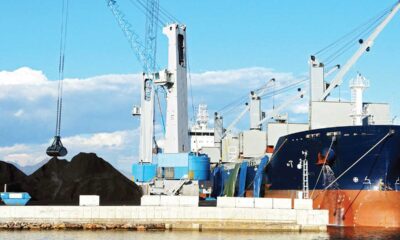
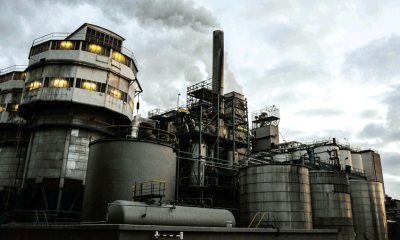
The growth during the month has been aided by increased output in the five out of eight industries ‘ coal, refineries, steel, cement and electricity.

In the month of January 2020, the output of eight core industries grew at a six-month high. At 2.2 per cent growth in the month, it was 70 bps higher than the 1.5 per cent growth in witnessed in the corresponding month a year ago and 10 bps higher than 2.1 per cent growth seen in the previous month. The eight core industries comprise of 40.27 per cent of the weights included in the index of industrial production (IIP) basket. The growth during the month has been aided by increased output in the five out of eight industries ‘ coal, refineries, steel, cement and electricity.

For December 2019, the year-on-year (YoY) growth has been revised upwards from 1.3 per cent earlier to 2.1 per cent as per latest data.

During the first 10 months of FY20’April 2019 to January 2020’the production in the eight core industries expanded at lacklustre 0.6 per cent, as against the 4.4 per cent growth seen in the corresponding period a year ago.

Industry-wise growth:

  • Coal production was at a 10 month high and it increased by 8 per cent in January 2020 compared with the 2 per cent growth seen in January 2019. The resumption of extraction activities post delayed monsoons this year has resulted in the increase in the production by the industry.
  • Crude oil production in January 2020 contracted for more than two years, successively for 26 months by 5.3 per cent, higher than de-growth by 4.3 per cent seen in January 2019. Decline in the crude oil prices globally and high inventories are seen to weigh on the production during the month.
  • The production of the natural gas too has contracted by 9.1 per cent as against 6.2 per cent growth seen in January 2019 registering sustained contraction for the 10 months mainly on account of subdued prices and inventory pile up.
  • Refinery products, which have highest weight in eight core industries, grew by 1.9 per cent in January 2020, as against 2.6 per cent contraction seen in the comparable month last year. It can partly be ascribed to the increased production of BS VI fuel by the refiners to meet the upcoming demand ahead of the implementation of BS VI norms April 2020 onwards.
  • Fertilizers production has seen a decline for the first time in the past eight months. The production of fertilizers decreased by 0.1 per cent in January 2020 compared with the 10.5 per cent growth seen in January 2019. High base effect has weighed on the overall growth numbers during the month despite of robust sowing activities seen during rabi season.
  • Steel production increased by 2.2 per cent in January 2020 lower than the 5.5 per cent growth witnessed in January 2019. The resumption of construction activities has supported the production in the industry.
  • The production of cement grew by 5 per cent in January 2020, lower than the 11 per cent growth in January 2019. Though the pick-up in construction activities aided the production of cement, high base effect the curtailed overall growth during the month.
  • Electricity production witnessed a trend reversal and grew by 2.8 per cent against the sustained contraction seen in the previous 5 months. It was also higher than the 0.8 per cent growth in January 2019.
  • CARE Ratings’ view
    Based on the core sector growth, IIP is expected to grow by 2-3 per cent for January 2020. We are expecting IIP to grow by 2 per cent for FY20.

    COURTESY:
    CARE RATINGS "Core Sector Update"
    January 2020

    Disclaimer: This report is prepared by CARE Ratings Ltd. CARE Ratings has taken utmost care to ensure accuracy and objectivity while developing this report based on information available in public domain. However, neither the accuracy nor completeness of information contained in this report is guaranteed. CARE Ratings is not responsible for any errors or omissions in analysis/inferences/views or for results obtained from the use of information contained in this report and especially states that CARE Ratings has no financial liability whatsoever to the user of this report.

    ABOUT THE AUTHORS: ‘Madan Sabnavis is Chief Economist. He can be contacted on: madan.sabnavis@careratings.com or 91-22-68374433 ‘ Dr Rucha Ranadive is Economist. She can be contacted on: rucha.ranadive@careratings.com or 91-22-68374406

    Continue Reading
    Click to comment

    Leave a Reply

    Your email address will not be published. Required fields are marked *

    Economy & Market

    Leonard Unveils Dual-Head Robotic Arm for Hazardous Industrial Demolition

    Published

    on

    By

    Shares

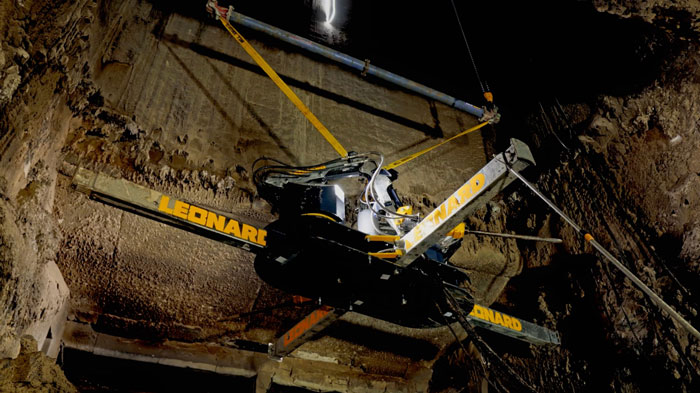
     Leonard unveils Descender Duo, a dual-head robotic demolition arm designed to improve industrial safety and reduce shutdown time by up to 50 per cent.

    Industrial robotics and refractory services specialist Leonard has launched Descender Duo, a dual-head robotic demolition arm designed to improve safety, accelerate maintenance and reduce shutdown times in hazardous industrial environments. The system made its debut at Lisahally Power Station in Northern Ireland, removing 25 tonnes of slag material within hours.

    Developed for the cement, metals, waste-to-energy and petrochemical industries, Descender Duo enables remote-controlled refractory demolition, anchor cutting and welding, and refractory spraying inside boilers, calciners and silos. Its vertical-access design eliminates the need for personnel to enter confined, high-risk spaces during these operations.

    Weighing less than two tonnes, the pre-assembled system requires an access opening of just 1.2 m². Supported by an external overhead hoist, it uses electrically operated hydraulic stabilising legs to secure itself inside vessels. The robotic arm offers 360-degree rotation and is suited to vessels approximately 9 m in diameter, with its operating reach extendable through strategically positioned access points.

    Equipped with two independently controlled robotic heads, Descender Duo can perform identical or different tasks simultaneously, including refractory demolition, anchor cutting and spraying. Its remote-control system incorporates live camera feeds, allowing operators to monitor operations without entering hazardous environments.

    According to Leonard, the technology can deliver time savings of up to 50 per cent compared with manual methods. Its ability to operate at temperatures exceeding 100°C allows maintenance to begin as early as 24 hours after burner shutdown. An all-electric power supply further supports cleaner and more cost-efficient operations.

    First Deployment Demonstrates Shutdown Efficiency

    The system was first deployed at Burmeister & Wain Scandinavian Contractor’s (BWSC) Lisahally Power Station in Londonderry, Northern Ireland. The facility generates electricity from grade C waste wood, supplying approximately 40,000 homes and businesses.

    Leonard and BWSC collaborated to develop a customised solution for the plant’s 26-metre furnace, where extensive external pipework created significant access challenges.

    Mark Leonard, Managing Director, Leonard, said, “It required new thinking and rather than step away from the problem we were committed to solving it for the customer, with the customer. We’re relentless in our approach to tackling complex challenges, head-on. We took our years of cement plant experience, coupled with our working knowledge of the BWSC plant, and designed, engineered and tested a completely new vertical solution within just seven weeks from that initial conversation with the customer. That solution was the Descender Duo as we know it today.”

    Traditionally, the furnace required a cooling period of up to 36 hours before preparatory work could begin, followed by manual slag removal using rope-access personnel. With Descender Duo, work commenced just 24 hours after shutdown, reducing downtime by up to one day.

    The deployment removed 25 tonnes of slag within hours, eliminated the need for at least six workers to enter the hazardous furnace interior and saved 26 hours in the shutdown programme.

    “The effectiveness exceeded expectation,” said Martin Doran, Plant Manager at Lisahally Power Station.

    “When the Descender Duo concept was first discussed, we had to spend some time with the team from Leonard looking at how it was going to be moved into the furnace. Every site is different and that presented its own challenges, but nothing that the team couldn’t overcome. Once it was installed we were hugely impressed by its efficiency.”

    Expanding Industrial Robotics Applications

    Descender Duo joins Leonard’s existing portfolio of robotic maintenance solutions, including the Axis horizontal-access arm, Nano confined-space access arm, Charger cement mill media recharging system and Calibre cement mill media grading system.

    Headquartered in Northern Ireland, Leonard provides robotic refractory demolition, installation, inspection and industrial maintenance services across the cement, metals, energy, biomass, glass and civil engineering sectors.

    Formerly known as G Leonard, the company has more than 35 years of industry experience and operates across Europe, North America, the Middle East, Africa and Asia-Pacific.

    The latest innovation reinforces Leonard’s focus on replacing hazardous manual processes with robotic systems that improve workforce safety, enhance operational efficiency and minimise industrial downtime.


    Continue Reading

    Concrete

    Martin Engineering Appoints Ashwini Khunte as India General Manager

    Published

    on

    By

    Shares

    Martin Engineering names Ashwini Khunte India General Manager to strengthen operations and drive growth across key bulk material handling sectors.

    Pune

    Martin Engineering, a global provider of bulk material handling solutions, has appointed Ashwini Khunte as General Manager of its India business, strengthening its leadership as the company expands its presence across the country’s cement, mining, steel, power and infrastructure sectors.

    Khunte brings more than a decade of experience with Martin Engineering, having joined its Indian operations in 2013 as a Design Engineer, shortly after the company established its presence in the country in 2012.

    A mechanical engineer by qualification, she spent her initial five years developing bulk material handling solutions in collaboration with the company’s operations team. During this period, she gained extensive experience addressing operational challenges in the steel, cement and coal industries. She subsequently moved into project engineering, managing major engineering, procurement and construction (EPC) and original equipment manufacturer (OEM) projects from initial enquiry to commissioning. Her responsibilities later expanded to overseeing Martin Engineering’s conveyor product portfolio in India, involving customer engagement, technical presentations and site visits across heavy industries.

    In 2024, Khunte was promoted to Head of Sales & Marketing for the company’s Europe, Middle East, Africa and India (EMEAI) region. The position broadened her international market exposure and strengthened her strategic and commercial leadership capabilities.

    Commenting on her appointment, Ashwini Khunte, General Manager, Martin Engineering India, said: “India represents a tremendous opportunity for Martin Engineering. The country’s continued investment in cement, mining, steel, power and infrastructure is creating increasing demand for safer, cleaner and more productive bulk material handling, and that’s exactly what we do. My priority will be to build on the strong foundations already established in India, while continuing to develop our people, strengthen customer relationships and bring practical solutions to the challenges faced by our industry.”

    Robert Whetstone, Area Vice President – EMEAI, Martin Engineering, highlighted Khunte’s technical expertise, market understanding and leadership experience.

    “Ashwini brings an exceptional combination of technical understanding, customer knowledge and commercial leadership. She has grown as Martin Engineering has grown, and has consistently demonstrated outstanding capability to transform her expertise into practical solutions. Her knowledge of the Indian market, together with her international experience, makes her ideally suited to lead our India business through its next stage of growth for years to come.”

    Since establishing its Indian business in 2012, Martin Engineering has expanded its local workforce, manufacturing capabilities and dealership network. The company supplies conveyor products, transfer point solutions, material flow aids, training and technical support to bulk material handling industries. Khunte’s appointment positions the company to further strengthen customer relationships and expand its solutions portfolio in India’s growing industrial and infrastructure markets.

    Continue Reading

    Concrete

    Fornnax Wins AIRIA’s Special Export Award for Rubber Machinery in 2025-26

    Published

    on

    By

    Shares

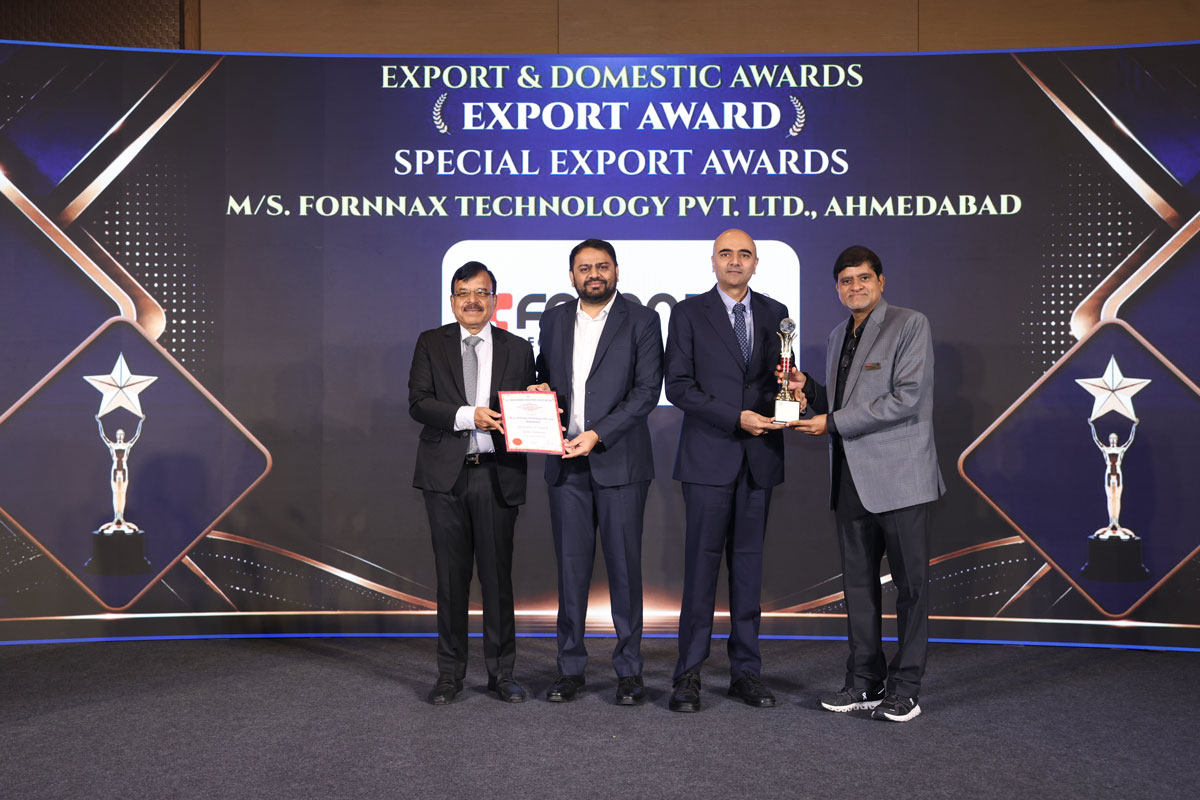
    Fornnax Technology Pvt. Ltd. has been honoured with the Special Export Award – Rubber Machinery for 2025–26 by the All-India Rubber Industries Association (AIRIA), in recognition of its highest exports of tyre recycling plants to the European region.

    With more than a decade of experience in India’s tyre recycling industry, Fornnax has contributed to the development of advanced recycling technologies and infrastructure. The company currently holds a 90% market share in India’s domestic tyre recycling sector, while exports account for 30% of its business, spanning markets such as Europe, Australia and the GCC.

    The award marks another milestone for Fornnax, whose tyre recycling lines and advanced shredding technologies are supporting the growth of the circular economy in India and international markets.

    Commenting on the recognition, Mr. Jignesh Kundaria, Founder and Director of Fornnax, said:

    “This honour from AIRIA is a reflection of an incredible journey we have undertaken over the years. When we started Fornnax, there was no established recycling industry in India to follow. We chose to build for the future instead. Today, when you see India’s tyre recycling sector, it has already transformed into a dynamic, high-growth industry and we are extremely proud to have played our part in building it.”

    Unlike standalone equipment suppliers, Fornnax focuses on developing complete, high-capacity recycling infrastructure. Its integrated systems combine multiple stages of shredding and size reduction to enable efficient, continuous operations. This system-level engineering approach helps recycling operators improve throughput, equipment reliability and operational consistency.

    The recognition reinforces Fornnax’s commitment to developing engineering technologies that contribute to a more efficient and circular recycling ecosystem.

    Looking ahead, the company aims to expand its international presence while continuing to develop advanced shredding and recycling solutions to address the growing volumes and evolving requirements of the global recycling industry.

    For more information, visit: www.fornnax.com

    Continue Reading

    Video Thumbnail
    ▶

      SIGN-UP FOR OUR GENERAL NEWSLETTER

      Trending News

      SUBSCRIBE TO THE NEWSLETTER


      Don't miss out on valuable insights and opportunities to connect with like minded professionals.


        This will close in 0 seconds