A few critical areas of a cement kiln like tip casting (TC) and cooler beam (bull nose) are very sensitive. Normally bricks are being used in TC and are matched with the performance of burning zone bricks lining. To overcome this situation, few of the cement plants have started using various grades of castable shapes (monilithic lining). Here are a few success stories.
Refractories play a critical, if unseen, role in both the rotary kiln lining and the lining of other equipment like pre-calciner, coolers of kiln system. The durability of the rotary kiln brick lining generally determines the duration of a kiln operating period. Whilst great efforts are made to ensure appropriate refractory brick materials selection, installation, deployment (zoning) and the optimisation of the kiln light-up, it is primarily the nature and stability of the subsequent kiln operation that influences rotary kiln lining life. Normal life expectancy for burning zone is about one year. Cement plants prefer to take only one shutdown in a year when the burning zone bricks are changed.
Performance of refractory broadly depends on three factors ‘refractory selection, installation and usage conditions. Assuming first two conditions are under control as per requirement, the various stresses in usage condition cause refractory failure, such as chemical, thermal or mechanical.
Problems encountered
Brick selection for a kiln depends on factors such as kiln size and production load on the kiln. For large kilns with high production loads, it is necessary to use basic bricks in the burning zone. Different qualities of alumina bricks are used for the rest of the kiln. Kilns with moderate production loads are generally lined with special alumina and normal alumina bricks. Nowadays, increasing usage of alternative fuels pose a challenges like coating formation, ring formation, etc. Many times the alternative fuels are substituted through the main kiln burner as well as in the pre-heater/pre-calciner; the chemical and heat-release changes caused by inevitable short-term fluctuations in the fuel(s) mix has a major influence on the thermal, coating and atmosphere conditions existing through the rotary kiln into the pre-calciner.
Consequently, the main influence of the use of alternative fuels is often on clinker chemistry due to the different ash compositions of individual alternative fuels.
Presently quite a few of the kilns are being fired with pet coke, which contains 6 to 8 per cent sulphur. This sulphur reacts with lime and forms calcium sulphate or sulphur spurrite at the calcining zone. Very often deposition of sulphur spurrite on the calcining zone tends to form a dam ring blocking smooth passage of raw meal from inlet to the burning zone. Often kilns need to be stopped to break the dam rings manually and normal operation is hampered.
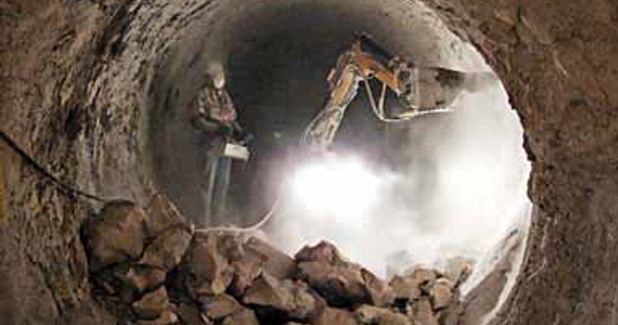
Tip casting refers to the tip of the kiln at the outlet side. Generally this area is fitted with outlet sector plates. The area being outermost part of the kiln is highly prone to thermal shock at every stoppage. It also undergoes continuous abrasion from falling clinkers and dust laden secondary air. For cooler, most critical part is the area towards the kiln. These include the front wall, bull nose and first compartment area. Here temperature and abrasion both are much higher than the rest of the cooler. Very special quality alumina bricks and castables with high resistance to thermal shock and abrasion are used in critical zones of the cooler. Depending on severity of working condition, refractories are selected for the rest of the areas.
Coating formation
A good protective coating on the refractory in the burning zone serves to prolong the life of the refractory. Coating is a mass of clinker or dust particles that adheres to the wall of the kiln, having changed from a liquid or semi-liquid to a solidified state. The solidified particles adhere to the surface of the coating as long as the temperature of the surface of the coating is below the solidifying tem-?perature of the particles. In short, handling kiln operation in a cement plant is a challenging job and any innovation that will claim to improve refractory life is keenly followed by plant personnel. Refractory brick manufacturers and Castable suppliers come with new ideas which we have tried to cover in detail elsewhere in the current issue.
Novel approach by some producers
With development of low cement and cement less castables, some solutions are today available for problematic areas of kiln system. Vesuvius India is suggesting pre-cast pre-dried refractory shapes for the speed and performance in terms of longer refractory life. Pressed firebricks could not be produced in all the different shapes in the needed quality. Pre-cast pre-dried shapes made from castables give the flexibility of material selection and variability of shapes and sizes replacing bricks. Innovation in pre-cast pre-dried solution occurred after the development of high-end monolithic solutions and manufacturing technology.
More sophisticated low cement (LC) and ultra-low cement (ULC) constables are developed with higher densities, lower porosity and significantly improved properties. Lower cement contents require accurate control of water addition, the use of high-intensity mixers together with adequate vibration of the material during placement. Adopting these operational controls in field installations is challenging and so for some high performance demanding areas, the pre-cast technology offers advantageous properties in comparison with in situ cast installation.
Vesuvius India claims that the pre-cast solution is a precision solution due tothe modular lining which combines the advantages of both bricks and castables. Pre-cast pre-dried blocks may have the insulation and the anchoring system pre-attached. Physical properties of the material can further be optimised and improved by firing the precast shapes in a PLC controlled oven or furnace. The precision of firing is developed by doing a TGA (thermo-gravimetric analysis) study of the target formulation.
Calderys Refractories, a leading producer of low cement castables, have similar experiences. Critical areas of a cement kiln like tip casting (nose ring) and cooler beam (bull nose) are susceptible to frequent damages due to clinker abrasion, thermal shock and mechanical stress. Calderys provides tailormade pre-cast- pre-fired solutions for these applications. These blocks are being manufactured with very high grade special castable and state of the art manufacturing technique to ensure superior and reliable performance. The advantages are manifold, which you can read in details in the article provided in this issue elsewhere. In short it saves on time, hardships and money. Most important is considerable reduction in unplanned stoppages.
TRL Krosaki has attempted a new refractory lining concept for rotary kiln by replacing basic quality bricks with high alumina fired bricks. It has developed 70 per cent alumino silicate product by lowering impurities like Fe2O3, TiO2, alkalis, etc. along with addition of special kind of additives in the product that can enhance the life of refractory lining of rotary kiln. The developed product has 92 per cent dense calcined Indian Bauxite and matrix part has been strengthened by incorporation of calcined alumina along with Kaolinite.
Certain percentage of phosphoric acid (PA) has been added in the product along with other binder system. Due to presence of PA and special kind of additives; developed product is showing low porosity as well as high strength and good high temperature properties. The product can very well withstand attacks of petcoke. Keeping confidence upon characteristics of the newly developed alumino silicate product; TRL Krosaki has replaced the basic quality refractories completely by using this developed product for refractory lining of rotary kiln. The used product is performing satisfactorily at customer end as claimed by TRL Krosaki.
In short, cement producers are exploring innovative approaches to improve kiln availability by reducing unplanned stoppages due to refractory failures.
– VIKAS DAMLE