Connect with us

Economy & Market

Lack of big govt investment plans hits sentiment

Published

on

Shares

Industry was expecting investment booster to the economy through various construction and infrastructure projects post-polls, and the demand was affected as these hopes were belied.

With increase in monsoon footprint and intensity in July 2019, pressure points were visible on cement demand, adding to the earlier pressures created by continued lull post-election, belying the expectations of the industry on increased project spending by the government.

The ET Cement Index that tracks cement price movements across the country has unusually remained flat/stable at 2,397.3 points between end-June and beginning of August 2019, after a marginal fall in June.

However, channel checks by the leading brokerage, CLSA indicated weakened cement demand trends in July across markets due to tough macro, tight liquidity, lull post elections on government spending, monsoon etc. The Union Budget 2019-20 for full year released early July proved to be a dampener, lacking in any big ticket investment plans.

Cement prices were down 7-10 per cent MoM in Andhra Pradesh & Telangana, while east has seen ~4 per cent MoM decline. Prices in north, central and Gujarat are down 1-2 per cent MoM, CLSA’s recent channel checks found.

"A part of the price correction is due to seasonality as construction activity tapers off during monsoons. However, the channel expects further pricing corrections in next few months as demand is likely to pick-up only post monsoon. We currently forecast 4-6 per cent Quarter-on-Quarter (QoQ) decline in realisations for our coverage during 2QFY20 and there is a possibility of earnings cuts in south-based players, if there are further (price) cuts," says Vivek Maheshwari, Investment Analyst of CLSA, in a report released on July 31, 2019.

"There has been a notable improvement in the cumulative rainfall received as the cumulative deficit has reduced from (-)19 per cent for the week ended 24 July to (-)9 per cent for the week ended 31 July," says Madan Sabnavis, Chief Economist, CARE Ratings in a report titled Weekly Monsoon Monitor dated August 2, 2019. Steep rise in prices in April and May 2019 have weakened the demand, curtailing the pricing power of the industry in the following months. In June, ET Cement Index eased 1.39 per cent at 2397.3 from the all time peak of 2431.1 points registered at the end of May 2019. With sharp 8 per cent Month-on-Month (MoM or compared to the previous month) hike pan-India in April, average trade prices in April-June were up by 11 per cent Quarter-on-Quarter (QoQ).

According to CLSA’s channel checks, across regions demand has been generally weak with very high pressures visible in the states of Andhra and Telangana post elections as activity has slowed down quite a bit, taking the July prices down 6-7 per cent versus 1QFY20 average for the south as a whole. In the east, prices have also been cut by 4 per cent Month-on-Month (MoM) in July, which is down 5 per cent versus 1QFY20. North, central and west (Gujarat) have seen 1-2 per cent MoM cuts in July and this is similar when compared with 1QFY20 average as there were strong hikes in the earlier quarter.

Drying up of funding sources for construction contractors has impacted construction activity in general, raising concerns over cement demand. Availability of sand has also been highlighted as an issue in some places, impacting construction activity.

Monsoon progress
The progress of the south-west monsoon reveals a notable improvement for the week ended 31 July with the cumulative rainfall deficit reducing to (-) 9 per cent and the number of sub-divisions recording deficient rainfall being 14, out of 36 divisions across the country. The rainfall deficit of (-) 9 per cent during the current season is at a 5-year high, according to Indian Meteorological Department (IMD).

Improved rainfall position coupled with relatively better distribution of rainfall bodes well for the crop production.

Spatial and temporal spread of monsoon in the sowing season will impact the agricultural crop outcomes and consequently, rural incomes, based on which the demand for cement from rural areas will be impacted. That is, a good monsoon can boost demand for cement due to increased construction activity.

The sowing crop situation as of 26 July’19 has also seen an improvement for a few kharif crops namely maize, urad, sugarcane and cotton as the sowing for the current season has been higher than the normal. However, the sowing of key crops namely rice, food-grains, bajra is significantly lower than the normal, according to CARE Ratings’ analysis.

Looking ahead
"IMD is expecting monsoon to be normal in August and September and is likely to be 100 per cent of the long period (50 years) average. In the balance two months, the progress of sowing and in turn the food production would be critical for overall consumer and wholesale inflation to remain benign," says CARE Ratings.

Maheshwari says, "Our interactions with industry players indicate that the demand is likely to pick-up only post monsoons, but we see lesser optimism at this stage on an imminent pick-up in the next few months due to tough macro conditions."


Continue Reading
Click to comment

Leave a Reply

Your email address will not be published. Required fields are marked *

Concrete

UltraTech becomes first Indian cement firm to cross 2 GW green energy

Published

on

By

Shares

UltraTech Cement has crossed 2 GW of captive green energy capacity, with renewables and waste heat recovery meeting 48 per cent of its power needs.

Mumbai

UltraTech Cement Limited has surpassed 2 GW of installed green energy capacity for captive use, becoming the first cement company in India to achieve the milestone. The Aditya Birla Group company commissioned 116.55 MW of wind capacity at its Inter-State Transmission System-connected wind-solar hybrid project in Barmer, Rajasthan, along with 10 MW of Waste Heat Recovery System capacity at Sarlanagar Cement Works in Karnataka.

With these additions, UltraTech’s cumulative installed green energy capacity has reached 2,024 MW. This includes 1,580 MW of renewable energy capacity and 444 MW of waste heat recovery capacity, together meeting around 48 per cent of the company’s current power requirements.

The company said the milestone reflects the progress of its long-term energy transition strategy. In FY27 so far, nearly one-third of UltraTech’s 76 manufacturing units in India have maintained green energy utilisation above 50 per cent of their electricity requirements, while five units have crossed 95 per cent.

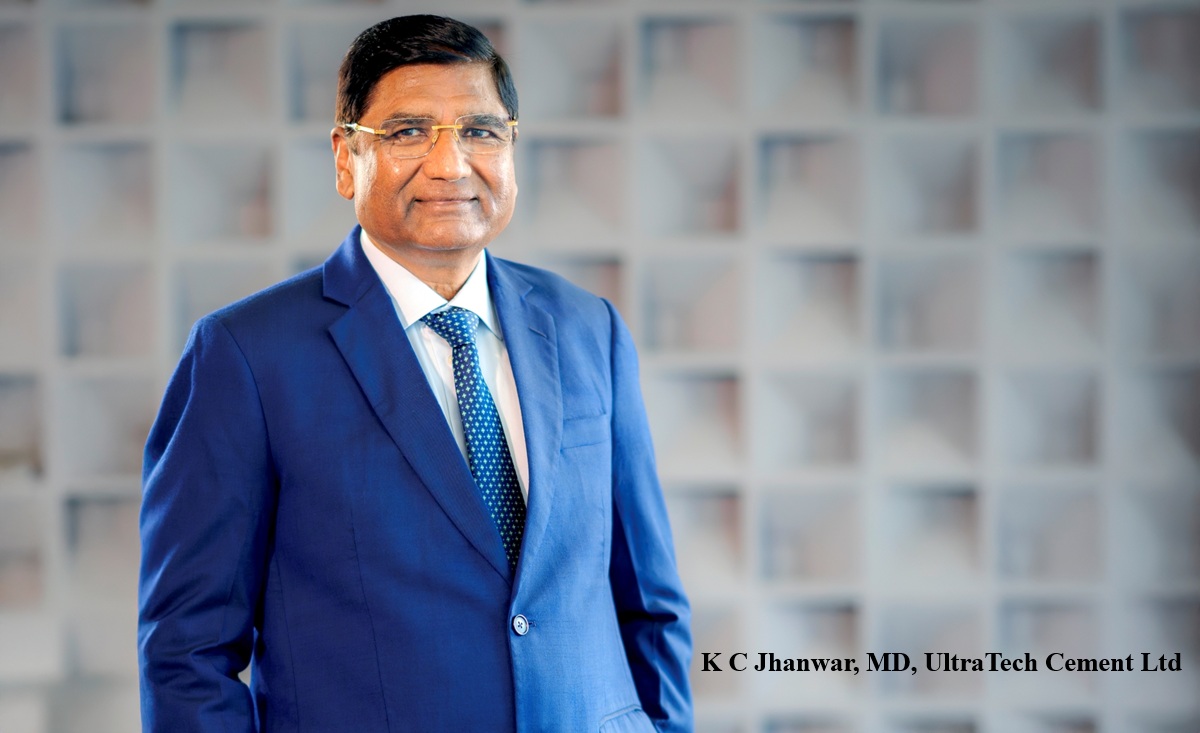
K C Jhanwar, Managing Director, UltraTech Cement Limited, said, “Crossing the 2 GW green energy milestone is the result of a strategy we have pursued consistently over the past decade. Cement is an energy-intensive, hard-to-abate sector, and showing that reliability and growth can go hand in hand with a rapid shift to green energy sets a benchmark for the industry. With nearly half of our power needs now met through green energy, we are significantly less exposed to fossil fuel supply constraints and power price volatility. As we scale up renewables, waste heat recovery and battery storage across our operations, we are building an energy foundation for stable, long-term growth.”

UltraTech commissioned 430 MW of green energy capacity in FY26 and continues to expand its renewable energy and waste heat recovery portfolio.

The company is also progressively integrating Battery Energy Storage Systems across its operations to improve renewable energy utilisation and supply reliability.

In 2025, UltraTech operationalised what it described as India’s first on-site hybrid round-the-clock renewable energy project at Sewagram Cement Works in Gujarat. The project combines solar, wind and battery storage.

As part of its decarbonisation strategy, UltraTech said it has not invested in new captive thermal power capacity for either greenfield projects or brownfield expansions at its integrated units for more than a decade.

The company said its expanding green energy portfolio is helping reduce dependence on conventional grid electricity and fossil fuel-based power, while lowering exposure to fluctuations in coal and electricity prices.

UltraTech aims to increase green energy’s share in its total power mix to 85 per cent by 2030. As a member of RE100, it has also committed to meeting 100 per cent of its electricity requirement through renewable sources by 2050.

UltraTech Cement, the cement flagship of the Aditya Birla Group, has a total grey cement capacity of 210.1 MTPA and white cement and putty capacity of 3.5 MTPA. The company is also a signatory to the GCCA Climate Ambition 2050 and has committed to the GCCA Net Zero Concrete roadmap.

Continue Reading

Concrete

Shiva Cement Merges with JSW Cement

Published

on

By

Shares

JSW Cement has announced a scheme of arrangement to merge its listed subsidiary Shiva Cement with itself, creating a single unified cement platform. The boards of both companies have approved the proposal, which will require clearances from stock exchanges, the Securities and Exchange Board of India, the National Company Law Tribunal, Odisha Industrial Infrastructure Development Corporation and other applicable authorities.

The transaction is expected to be completed within 12 to 14 months, subject to the necessary approvals from regulators, shareholders and creditors. Under the scheme, JSW Cement will issue 5 equity shares with a face value of Rs. 10 each for every 41 equity shares with a face value of Rs. 2 each held by Shiva Cement shareholders other than JSW Cement.

The company said the merger would consolidate financial, managerial, technical, distribution and marketing resources while reducing administrative duplication and compliance requirements. It would also provide greater funding flexibility, potentially lower financing costs and eliminate inter-company guarantees.

The consolidation is expected to strengthen backward integration by enabling JSW Cement to use Shiva Cement’s clinker manufacturing facility. This would reduce dependence on external clinker procurement and improve supply-chain efficiency. Public shareholders of Shiva Cement would receive direct ownership in JSW Cement, which has a broader institutional investor base and a more liquid listed presence.

JSW Cement acquired a controlling stake in Shiva Cement through transactions that began in January 2017. Shiva Cement operates a clinker facility in Odisha, near the borders of Odisha, Chhattisgarh and Jharkhand, and commissioned a 1 mtpa cement grinding unit at Sambalpur in FY26 through a commercial arrangement with Bhushan Power and Steel.

JSW Cement has 24.10 mtpa of cement grinding capacity and 9.74 mtpa of clinkerisation capacity. Its Indian operations comprise nine plants, including two integrated units, one clinker unit and six grinding units. The proposed merger is intended to simplify the corporate structure and align the financial statements of the two companies.

Continue Reading

Concrete

Nuvoco Vistas, CleanMax Partner for Wind-Solar Hybrid Project in Rajasthan

Published

on

By

Shares

The project – comprising 20 MW of wind and 26.4 MWdc of solar capacity – will support Nuvoco’s cement operations with cleaner power while strengthening its renewable energy and decarbonisation strategy.

Mumbai, September 29, 2026

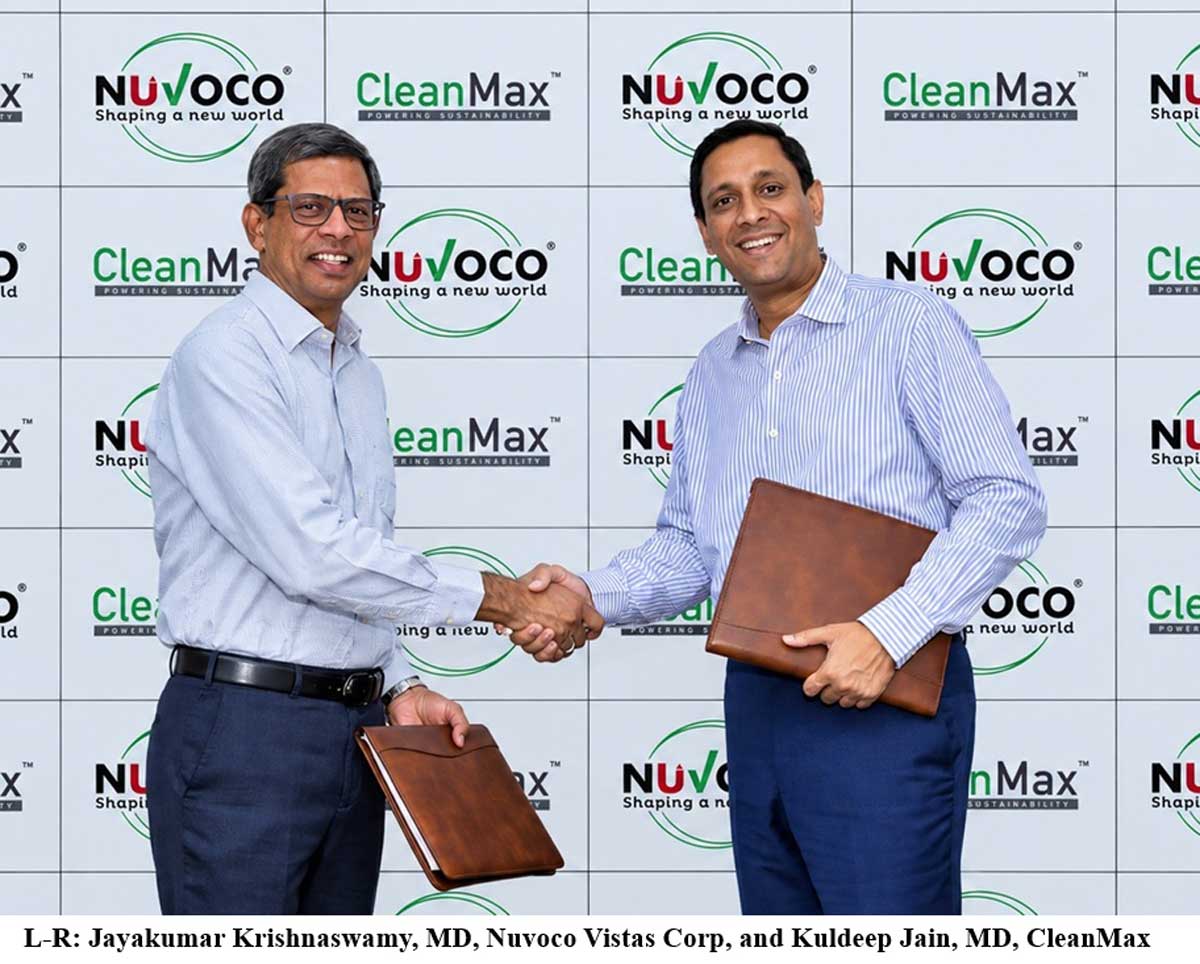
Nuvoco Vistas Corp Ltd, part of Nirma Group and one of India’s leading cement companies, has partnered with Clean Max Enviro Energy Solutions Limited (CleanMax), a renewable energy solutions provider for the commercial and industrial (C&I) sector, to develop a 46.4 MW wind-solar hybrid renewable energy project in Rajasthan.

The project will support Nuvoco’s cement operations with cleaner power while strengthening its renewable energy and decarbonisation strategy. It is expected to increase the share of renewable energy in Nuvoco’s power mix, reducing fossil fuel consumption and associated emissions.

Developed by CleanMax, an Independent Power Producer (IPP), at Bhikamkhore, Rajasthan, the project will comprise 20 MW of wind capacity and 26.4 MWdc of solar capacity, along with a 2-MWh Battery Energy Storage System (BESS). Power generated from the facility will be supplied to Nuvoco through the State Transmission Utility (STU) Open Access network.

The hybrid project is expected to generate approximately 100 million units (MU) of renewable electricity annually and help avoid around 1,25,485 tonnes of CO₂ emissions every year across Scope 1 and Scope 2 emissions.

The initiative supports Nuvoco’s ongoing efforts to reduce the carbon intensity of its manufacturing operations through renewable energy adoption, Waste Heat Recovery Systems (WHRS), energy-efficiency measures and increased use of alternative fuels. It also aligns with the company’s DIRE (Digitalisation, Innovation and Renewables) agenda, which focuses on climate action, renewable energy transition, water stewardship, circularity and biodiversity conservation across its manufacturing ecosystem.

Commenting on the initiative, Jayakumar Krishnaswamy, Managing Director, Nuvoco Vistas Corp Ltd, said, “This marks an important step in advancing Nuvoco’s journey towards more sustainable and resilient operations. Our collaboration with CleanMax will increase the share of renewable energy across our Rajasthan operations, strengthening our energy mix while improving long-term cost efficiency and reducing our dependence on conventional power sources. Initiatives such as these reinforce our commitment to operational excellence and responsible growth, while supporting our vision of Building a Safer, Smarter and Sustainable World.”

Kuldeep Jain, Founder and Managing Director, CleanMax, said, “Cement plants run continuously, so the power behind them has to be dependable for decades, not years. We’re seeing manufacturing industries view clean energy as an integral part of their core operations and long-term strategy. Our partnership with Nuvoco reflects that shift, and we’re pleased to support its decarbonisation journey. This wind-solar hybrid project is designed to deliver long-term cost certainty while supporting the Company’s transition to cleaner power.”

Nuvoco has been advancing its sustainability initiatives through renewable energy, operational efficiency and technology-driven solutions. The company operates across Cement, Ready-Mix Concrete (RMX) and Modern Building Materials (MBM) segments, with a presence across East, North and West India.

The company began operations in 2014 with a greenfield cement plant in Nimbol, Rajasthan, and later acquired Lafarge India Limited, which entered India in 1999, along with Emami Cement Ltd in 2020 and Vadraj Cement Limited in April 2025. With planned expansion initiatives, including a new grinding mill at the Arasmeta Cement Plant and multiple debottlenecking projects, Nuvoco aims to achieve a cement capacity of 35 MMTPA.

The company reported total income of Rs 113.62 billion in FY 2025-26, reflecting its continued growth trajectory. Its cement portfolio includes Concreto, Duraguard, Double Bull, PSC, Nirmax and Infracem brands, while its RMX business offers products under Concreto, Artiste, InstaMix, X-Con and Ecodure brands. Nuvoco also provides construction solutions under its Zero M range of modern building materials.

Continue Reading

Video Thumbnail
▶

    SIGN-UP FOR OUR GENERAL NEWSLETTER

    Trending News

    SUBSCRIBE TO THE NEWSLETTER


    Don't miss out on valuable insights and opportunities to connect with like minded professionals.


      This will close in 0 seconds