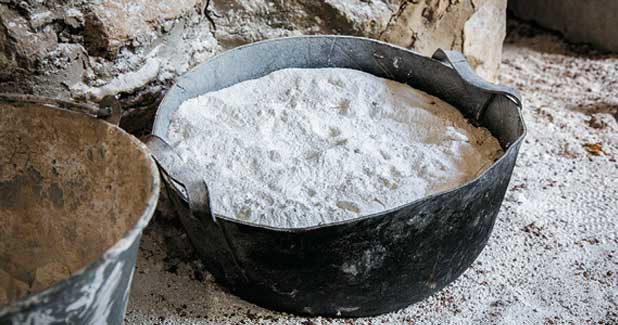
Gypsum is the most essential ingredient of the finished cement. Though useful, handling of gypsum in a cement plant is not so easy since it is a hygroscopic material and very sticky in nature.
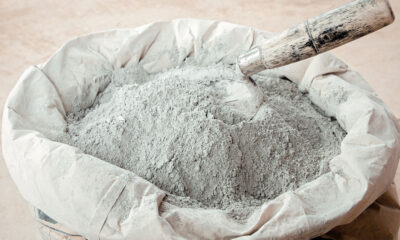
The terms cement and concrete are used interchangeably, although cement is actually an ingredient of concrete; gypsum is often added to cement to slow down the setting (hardens) time. Cement sets quickly and retarding that process allows workers to pour the mixture into the various forms or frames needed.
The majority of cement plants in Greece mainly use natural gypsum to prevent rapid cement setting. The partial or total replacement of gypsum by materials, which contain calcium sulphate, has been instigated by two facts. Firstly, the increasing availability of low-cost by-products containing calcium sulphate and secondly, the prospect of the gypsum quarries to mine, in the near future, a rock that is a mixture of gypsum and anhydrite.
FGD gypsum, a waste material of the desulphurisation process in coal burning power plants, to convert SO3 content of flue gases into gypsum, is an important alternative source of chemical gypsum. The experiments done with only FGD gypsum shows that the setting time was influenced by the percentages of FGD gypsum addition in the mortars tested. The initial and final setting time increased with increasing FGD gypsum ratio. The compressive strength also was affected by increase of FGD gypsum in the mortars. At all ages the compressive strength of the mortar with addition of FGD gypsum in combination with natural gypsum was higher that to other mixtures. The performances of cements prepared with mixtures FGD gypsum/natural gypsum were better compared with that prepared only with natural gypsum. At the same time, a hydration study of cements with FGD is presented. The addition of FGD gypsum increases setting time without affecting the compressive strength profile. The degree of dehydration of the dehydrated calcium sulphate regulates setting and strength performance of the cement partially replaced with either anhydrite or FGD gypsum.
In addition, gypsum will react with the tricalcium aluminate mineral (C3A), which is the compound mainly responsible for the early setting time of cement. The reaction of gypsum with (C3A) will retard the setting time of cement (i.e. prolong the setting time), which is necessary for concreting operations to be completed perfectly, if the amount of gypsum is small the setting time will be short, however, addition large amount of gypsum to the clinker during its grinding will delay the harden of the cement paste and producing a large amount of heat during the reaction and solidification of concrete. Therefore the amount of gypsum should be controlled to achieve the proper setting time and decreasing the percentage of SO3 in the concrete, and to avoid steel corrosion and concrete structure deformation.
While producing 53 grade of cement, generally cement plant prefers to use mineral gypsum. Today industry faces shortage of mineral gypsum, which is the purer form of gypsum and the gap is bridged by synthetic gypsum mainly coming from fertiliser industry. This gypsum is commonly known as chemical gypsum. Shreesh Khadilkar in his article has covered in details about various options available on sourcing gypsum. As stated by Shreesh, FGD gypsum from thermal plants can become alternate source in place of fertiliser gypsum but it is still at an experimental stage.
Handling of gypsum in a cement plant is not so easy since it is a hygroscopic material and very sticky in nature. The readers now will appreciate that though gypsum is essential ingredient of cement but proving to be a speed breaker.
VIKAS DAMLE