Lokesh Chandra Lohar, General Manager – Technical and Executive Cell, Wonder Cement, shares insights on overcoming challenges, leveraging innovations and the crucial role of R&D in maintaining high standards in cement production.
Can you provide an overview of the grinding process in your cement manufacturing plant and its significance in the overall production process?
Cement grinding unit is used to grind clinker and gypsum into a fine powder, known as cement. The process of grinding involves grinding of the clinker to a fine powder, which is then mixed with gypsum, fly ash and other additives to produce cement.
At Wonder Cement, our grinding processes are pivotal in ensuring high-quality cement production by utilising state of art technologies ex. Vertical Roller Mill (VRM), roller press with ball mill in combi circuit and finish mode grinding and high-efficiency classifier, have achieved optimal particle size distribution and energy efficiency.
Our commitment to sustainability is evident with usage of energy-efficient equipment, eco-friendly grinding aids and renewable energy sources. Continuous research and development efforts ensure we stay at the forefront of innovations, optimising our grinding operations and minimising impact on the environment.
The main processes involved in a cement grinding unit are:
- Clinker grinding: This is the main process in a cement grinding unit, where the clinker is ground into a fine powder using a ball mill or combi mills (RP+ Ball Mill) or vertical roller mill circuit. The grinding process is controlled to achieve the desired fineness of the cement.
- Gypsum and other additives: Gypsum is added to the clinker during the grinding process to regulate the setting time of the cement. Other additives such as fly ash, BF slag and pozzolana may also be added to improve the performance of the cement.
- Packaging: Once the grinding process is complete, the cement is stored in silos before being packed in bags or loaded into bulk trucks for transportation.
- Quality control: Quality control measures are in place throughout the grinding process to ensure that the final product meets the required specifications, including strength, setting time, and consistency.What are the main challenges you face in the grinding process, and how do you address these challenges to maintain efficiency and product quality?
The main challenges in the grinding process include high energy consumption, frequent wear and maintenance, variability in clinker properties, environment impact and ensuring consistent product quality. To address these challenges, we have implemented several strategies:
- High energy consumption: Clinker grinding is energy-intensive, and high energy costs can significantly impact the overall production costs of cement.
This is one of the primary challenges in the grinding process.
- Use of high-efficiency equipment: We have state-of-the-art energy-efficient grinding equipment, such as vertical roller mills (VRM), Combi Circuit (roller press with ball mill), which consume significantly less energy consumption.
- Process optimisation: Real time monitoring and optimisation of the grinding process to minimise energy consumption.
- Frequent wear and maintenance: The grinding equipment, such as mills and crushers, is subjected to wear over time. Frequent maintenance and downtime can affect production efficiency.
- Regular maintenance: Implement a proactive maintenance schedule to address wear and tear promptly, ensuring the equipment remains in optimal condition.
- Proper lubrication: Adequate lubrication of moving parts can extend the lifespan of grinding equipment.
Use of wear-resistant materials for components, which are prone to wear and abrasion.
- Variability in clinker properties: Clinker properties can vary from one batch to another, leading to inconsistencies in the grinding process and the quality of the final cement product.
- Clinker sources: At Wonder we have one clinker source, which is our mother plant at Nimbahera, Rajasthan and we distribute clinker to various split GU’s from Nimbahera. This helps us to maintain uniform clinker quality across each location.
- Quality control: Rigorous quality control measures help us identify and address variations in clinker properties. Adjust grinding parameters as needed to compensate for these variations. (ex. use of cross belt analyser and on-line particle size distribution)
- Environmental impact: Energy-intensive grinding processes can have environmental repercussions due to high dust emissions and energy consumption.
Use of high efficiency dust collection and suppression system to keep emissions below statutory norms
- Sustainable grinding aids: Consider using eco-friendly grinding aids that enhance grinding efficiency without compromising cement quality and environmental standards.
- Alternative fuels: Use alternative and more sustainable fuels in the cement kiln and hot gas generated to reduce carbon emissions.
- Use of clean energy in logistics:
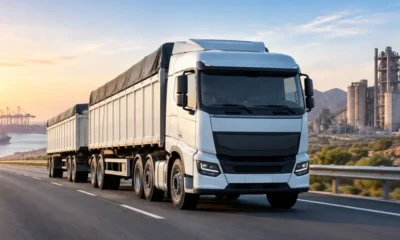
To reduce carbon emissions, sustainable alternatives are also sought for inland transport. We have involved neutral internal transports (electric powered trucks).
- Automation and digitalisation of production:
- Wonder Cement has already initiated the process to implement Smart Cement Industry 4.0.
- With Industry 4.0, the automation and digitalisation of operations, including the use of sensors, remote diagnosis, analysis of big data (including the artificial intelligence analysis of unstructured data such as images and video), equipment, virtual facilities, and intelligent control systems will be done automatically (based first on ‘knowledge capture’ and then on machine learning). For Process optimisation we are using the FLS Process expert system (PXP) system. This allows for system optimisation and increased efficiency gains in production.
How do grinding aids contribute to the efficiency of the grinding process in your plant? What types of grinding aids do you use?
Grinding aids help in reducing the agglomeration of particles, thus improving the overall grinding efficiency and ensuring a smoother and more efficient grinding process without having adverse effect on any of the properties of the resulting cement. In cement manufacturing, various types of grinding aids are used to improve the efficiency of the grinding process. These include:
Glycol-based grinding aids
- Composition: Ethylene glycol and diethylene glycol.
- Usage: Commonly used in to improve the grinding efficiency and reduce energy consumption.
Amine-based grinding aids
- Composition: Triethanolamine (TEA) and Triisopropanolamine (TIPA).
- Usage: Effective in improving the grindability of clinker and other raw materials, enhancing cement strength and performance.
Polyol-based grinding aids
Composition: Polyethylene glycol and other polyol compounds.
Usage: Used to improve the flowability of the material and reduce the tendency of particles
to agglomerate.
Acid-based grinding aids
Composition: Various organic acids.
Usage: Used to modify the surface properties of the particles, improving the grinding efficiency and final product quality.
Specialty grinding aids
- Composition: Proprietary blends of various chemicals tailored for specific materials and grinding conditions.
- Usage: Customised to address challenges in the grinding process, such as the use of alternative raw materials or specific performance requirements.
Can you discuss any recent innovations or improvements in grinding technology that have been implemented in your plant?
Recent innovations and improvements in grinding technology:
- Selection of state-of-the-art vertical roller mills along with high efficiency classifier (VRMs): VRMs are more energy-efficient and have lower power consumption, leading to significant energy savings. They also provide a more consistent product quality and require less maintenance. For raw meal grinding, we have both VRM and roller press.
- Wear-resistant materials and components: Upgrading grinding media, liners and other components with wear-resistant materials. These materials extend the lifespan of the equipment, reduce downtime, and lower maintenance costs. Examples include ceramic liners and high chrome grinding media.
- Intelligent monitoring and predictive maintenance: Utilising IoT sensors and predictive analytics to monitor equipment health. Predictive maintenance helps identify potential issues before they lead to equipment failure, reducing unplanned downtime and maintenance costs. It ensures optimal performance and prolongs equipment life.
- Optimisation software and simulation tools: Using simulation software to model and optimise the grinding process. These tools help in understanding the process dynamics, identifying bottlenecks, and testing different scenarios for process improvement. This leads to better process control and efficiency.
How do you ensure that your grinding equipment is energy-efficient and environmentally sustainable?
- Energy-efficient grinding technologies such as VRMs: VRMs are more energy-efficient than traditional ball mills due to their ability to grind materials using less energy.
- Benefits: Up to 30 per cent to 40 per cent reduction in energy consumption.
Use of renewable energy sources (solar power integration): Utilising solar power for grinding operations
- Implementation: Signing of long-term open access power purchase agreements (PPA) with renewable energy developers
- Benefits: Reduces reliance on fossil fuels, decreases greenhouse gas emissions.
Environmental sustainability practices
a. Dust collection and emission control
Description: Using bag filters, and covered material handling system
Implementation: Installing and maintaining high-efficiency dust control equipment.
Benefits: Reduces particulate emissions, improves air quality, complies with environmental regulations.
b. Water conservation
Description: Recycle and reuse water in the grinding process.
Implementation: Installing sewage treatment plant (STP)
Benefits: Reduces water consumption, minimises environmental impact.
c. Use of alternative raw materials
Description: Incorporating industrial by-products like fly ash, BF slag and chemical gypsum in the grinding process.
Implementation: Sourcing and blending alternative materials.
Benefits: Reduces the need for natural resources, lowers carbon footprint, enhances sustainability.
By implementing these practices, the plant ensures that its grinding operations are both energy-efficient and environmentally sustainable, aligning with industry best practices and regulatory requirements.
What role does research and development play in optimising your grinding processes and the selection of grinding aids?
Following is the role of research and development in optimising grinding processes and selecting
grinding aids:
- Testing and usage of new low-cost cementitious material: Dedicated R&D teams work on developing and new low-cost cementitious material to reduce clinker factor in cement and
improve efficiency.
- Process simulation and modelling: Uses simulation and modelling tools to understand the dynamics of the grinding process and identify areas for improvement.
- Formulation of new grinding aids with reverse engineering: Formulate new grinding aids to enhance the efficiency of the grinding process.
- Testing and evaluation: Conducting laboratory and plant-scale tests to evaluate the effectiveness of different grinding aids.
- Collaboration with industry partners: Collaborating with suppliers, universities and research institutions to stay at the forefront of grinding technology advancements.
Research and development play a crucial role in optimising grinding processes and selecting the appropriate grinding aids. By focusing on innovation, process optimisation, sustainability and continuous improvement, R&D ensures that the plant remains competitive, efficient, and environmentally responsible. This commitment to research and development enables the plant to achieve higher productivity, lower costs and produce superior quality cement.
What trends or advancements in grinding processes and grinding aids do you foresee impacting the cement manufacturing industry in the near future?
The trends and advancements in grinding processes and grinding aids that we see coming up in the near future are:
1. Digitalisation and Industry 4.0
- Advanced process control (APC) and automation
- Internet of things (IoT) and predictive maintenance
- Artificial intelligence (AI) and machine learning (ML)
2. Energy efficiency and sustainability
- Energy-efficient grinding technologies
- Use of renewable energy
3. Innovations in grinding aids
- Eco-friendly grinding aids
- Tailored grinding aids
- Multifunctional grinding aids
4. Advanced materials and components
- Wear-resistant materials for liners
- High-density grinding media
5. Process optimisation and integration
- Holistic process optimisation
6. Sustainability and circular economy
- Circular economy practices
- Carbon capture and utilisation (CCU)
– Kanika Mathur




















 Concrete4 weeks ago
 Concrete2 weeks ago
 Concrete2 weeks ago
 Concrete4 weeks ago