Projects
A grand success
Published
7 years agoon
By
admin
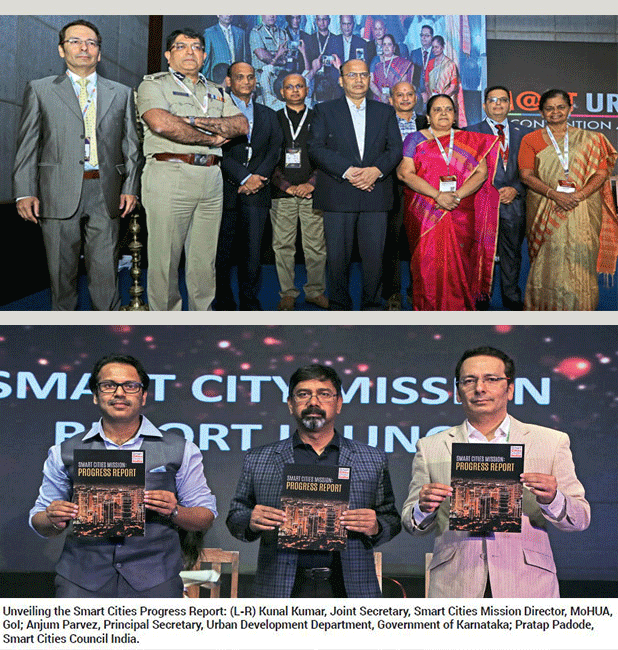
The Smart Cities Council India, part of the global consortium of smart cities, recently concluded the 6th Smart Cities Summit- SM@RT URBANATION – at Hotel Ashok Lalit in Bengaluru.
The Smart Cities Council India, part of the global consortium of smart cities, recently concluded the 6th Smart Cities Summit – SM@RT URBANATION – at Hotel Ashok Lalit in Bengaluru. Organised on September 24-25, the event outlined India’s urban reality and future, buttressed by technological evolution. With 40 exhibitors, a two-day conference featuring more than 80 high profile national and international speakers, the Smart Cities Awards recognising over 40 cities and a footfall of 1,500, the event had all the ingredients to make it a grand success.
Also, this year, the 14th CONSTRUCTION WORLD Architect & Builder Awards 2019 (CWAB 2019) got bigger and smarter as it collaborated with the 6th SM@RT URBANATION event, recognising and awarding over 40 leading architects and builders in India.
Kunal Kumar, Joint Secretary, Smart Cities Mission Director, Ministry of Housing & Urban Affairs, Government of India, launched the recent Smart Cities Progress Report at the Summit. "Of the 5,000 projects that 100 cities had proposed, we have tendered out 3,880 projects worth Rs 1,418 billion; grounded 3,100 projects worth Rs 1,004 billion; and completed 1,100 projects worth over Rs 201 billion," he said. "This is only one aspect of what the mission has achieved. The remaining projects are expected to be tendered out by March 2020." The report includes all the recent data from the Ministry of Housing and Urban Affairs on completed, operational and under-implementation projects and tenders floated.
Kicking off the event on the right note, Pratap Padode, Founder & Director, Smart Cities Council India, said, "The opportunity for building cities that last centuries is available to our current leaders. The Delhi-Mumbai Industrial Corridor has planned eight industrial cities. Planned to come up around a radial distance of about 25 km from the proposed international airport at Navi Mumbai, NAINA city will be developed on just over a 334-sq km plot. Its development plan was recently cleared. Navi Mumbai was probably the last greenfield city that was planned and it has held its course. China has developed 30 cities in the past 30 years with over one million population. India has 53 cities or rather urban agglomerations with over one million population, while China has over 160. The municipal act needs an overhaul if we expect commitment to building sustainable cities that will last centuries."
To make urbanisation a positive and productive transformation that will deliver long-term gains to citizens, Vijay Bhaskar TM, Chief Secretary, Government of Karnataka, elaborated upon the three goals of social equitability, economic viability and environmental sustainability. He added,"Urbanisation manifests itself in two ways: Expansion of existing cities and creation of new ones. The unprecedented urban growth that is expected, especially in countries such as India, will require a wide range of policies and practices to be conceptualised around a new socially inclusive and environmentally friendly paradigm. The current situation holds tremendous potential for governments to build cities of the future that can serve as engines of growth by attracting talent and investment in the global competitive landscape."
Addressing the audience, Anjum Parvez, Principal Secretary, Urban Development Department, Government of Karnataka, said, "Every city is trying to become smart and this is a positive development happening in our country. While smart is the new buzzword, we have started late. It is only in the late ’90s that we started talking about urban development. Today, there is a need to focus on the development of rural areas and create job opportunities in these areas. Also, today, we are no more just learners; we are contributors. The smart cities scheme has been a catalyst in changing the way we look at urbanisation."
Indeed, Smart Urbanation was a grand gathering of industry stalwarts. The two-day conference focused on various opportunities and pertinent solutions with regards to smart cities. Don’t miss our photo gallery that introduces you to the high-profile speakers and dignitaries. And read on to know more about the exhibition and winners of the Smart Cities Awards.
Concrete
Turning Downtime into Actionable Intelligence
Published
4 days agoon
February 19, 2026By
admin
Stoppage Insights instantly identifies root causes and maps their full operational impact.
In cement, mining and minerals processing operations, every unplanned stoppage equals lost production and reduced profitability. Yet identifying what caused a stoppage remains frustratingly complex. A single motor failure can trigger cascading interlocks and alarm floods, burying the root cause under layers of secondary events. Operators and maintenance teams waste valuable time tracing event chains when they should be solving problems. Until now.
Our latest innovation to our ECS Process Control Solution(1) eliminates this complexity. Stoppage Insights, available with the combined updates to our ECS/ControlCenter™ (ECS) software and ACESYS programming library, transforms stoppage events into clear, actionable intelligence. The system automatically identifies the root cause of every stoppage – whether triggered by alarms, interlocks, or operator actions – and maps all affected equipment. Operators can click any stopped motor’s faceplate to view what caused the shutdown instantly. The Stoppage UI provides a complete record of all stoppages with drill-down capabilities, replacing manual investigation with immediate answers.
Understanding root cause in Stoppage Insights
In Stoppage Insights, ‘root cause’ refers to the first alarm, interlock, or operator action detected by the control system. While this may not reveal the underlying mechanical, electrical or process failure that a maintenance team may later discover, it provides an actionable starting point for rapid troubleshooting and response. And this is where Stoppage Insights steps ahead of traditional first-out alarm systems (ISA 18.2). In this older type of system, the first alarm is identified in a group. This is useful, but limited, as it doesn’t show the complete cascade of events, distinguish between operator-initiated and alarm-triggered stoppages, or map downstream impacts. In contrast, Stoppage Insights provides complete transparency:
- Comprehensive capture: Records both regular operator stops and alarm-triggered shutdowns.
- Complete impact visibility: Maps all affected equipment automatically.
- Contextual clarity: Eliminates manual tracing through alarm floods, saving critical response time.
David Campain, Global Product Manager for Process Control Systems, says, “Stoppage Insights takes fault analysis to the next level. Operators and maintenance engineers no longer need to trace complex event chains. They see the root cause clearly and can respond quickly.”
Driving results
1.Driving results for operations teams
Stoppage Insights maximises clarity to minimise downtime, enabling operators to:
• Rapidly identify root causes to shorten recovery time.
• View initiating events and all affected units in one intuitive interface.
• Access complete records of both planned and unplanned stoppages
- Driving results for maintenance and reliability teams
Stoppage Insights helps prioritise work based on evidence, not guesswork:
• Access structured stoppage data for reliability programmes.
• Replace manual logging with automated, exportable records for CMMS, ERP or MES.(2)
• Identify recurring issues and target preventive maintenance effectively.
A future-proof and cybersecure foundation
Our Stoppage Insights feature is built on the latest (version 9) update to our ACESYS advanced programming library. This industry-leading solution lies at the heart of the ECS process control system. Its structured approach enables fast engineering and consistent control logic across hardware platforms from Siemens, Schneider, Rockwell, and others.
In addition to powering Stoppage Insights, ACESYS v9 positions the ECS system for open, interoperable architectures and future-proof automation. The same structured data used by Stoppage Insights supports AI-driven process control, providing the foundation for machine learning models and advanced analytics.
The latest releases also respond to the growing risk of cyberattacks on industrial operational technology (OT) infrastructure, delivering robust cybersecurity. The latest ECS software update (version 9.2) is certified to IEC 62443-4-1 international cybersecurity standards, protecting your process operations and reducing system vulnerability.
What’s available now and what’s coming next?
The ECS/ControlCenter 9.2 and ACESYS 9 updates, featuring Stoppage Insights, are available now for:
- Greenfield projects.
- ECS system upgrades.
- Brownfield replacement of competitor systems.
Stoppage Insights will also soon integrate with our ECS/UptimeGo downtime analysis software. Stoppage records, including root cause identification and affected equipment, will flow seamlessly into UptimeGo for advanced analytics, trending and long-term reliability reporting. This integration creates a complete ecosystem for managing and improving plant uptime.
(1) The ECS Process Control Solution for cement, mining and minerals processing combines proven control strategies with modern automation architecture to optimise plant performance, reduce downtime and support operational excellence.
(2) CMMS refers to computerised maintenance management systems; ERP, to enterprise resource planning; and MES to manufacturing execution systems.
Economy & Market
FORNNAX Appoints Dieter Jerschl as Sales Partner for Central Europe
Published
3 weeks agoon
February 5, 2026By
admin
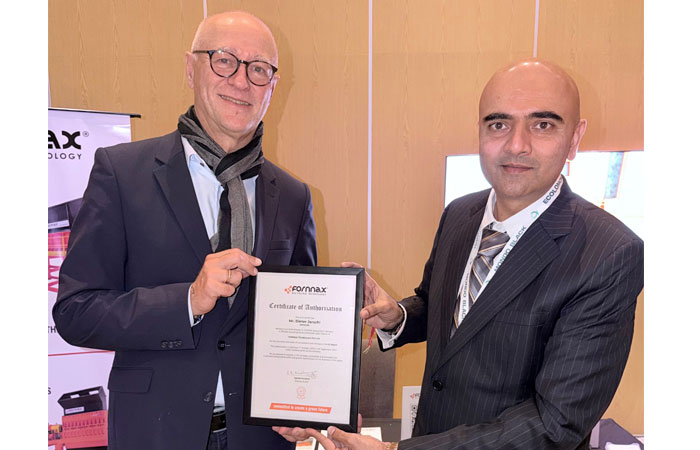
FORNNAX TECHNOLOGY has appointed industry veteran Dieter Jerschl as its new sales partner in Germany to strengthen its presence across Central Europe. The partnership aims to accelerate the adoption of FORNNAX’s high-capacity, sustainable recycling solutions while building long-term regional capabilities.
FORNNAX TECHNOLOGY, one of the leading advanced recycling equipment manufacturers, has announced the appointment of a new sales partner in Germany as part of its strategic expansion into Central Europe. The company has entered into a collaborative agreement with Mr. Dieter Jerschl, a seasoned industry professional with over 20 years of experience in the shredding and recycling sector, to represent and promote FORNNAX’s solutions across key European markets.
Mr. Jerschl brings extensive expertise from his work with renowned companies such as BHS, Eldan, Vecoplan, and others. Over the course of his career, he has successfully led the deployment of both single machines and complete turnkey installations for a wide range of applications, including tyre recycling, cable recycling, municipal solid waste, e-waste, and industrial waste processing.
Speaking about the partnership, Mr. Jerschl said,
“I’ve known FORNNAX for over a decade and have followed their growth closely. What attracted me to this collaboration is their state-of-the-art & high-capacity technology, it is powerful, sustainable, and economically viable. There is great potential to introduce FORNNAX’s innovative systems to more markets across Europe, and I am excited to be part of that journey.”
The partnership will primarily focus on Central Europe, including Germany, Austria, and neighbouring countries, with the flexibility to extend the geographical scope based on project requirements and mutual agreement. The collaboration is structured to evolve over time, with performance-driven expansion and ongoing strategic discussions with FORNNAX’s management. The immediate priority is to build a strong project pipeline and enhance FORNNAX’s brand presence across the region.
FORNNAX’s portfolio of high-performance shredding and pre-processing solutions is well aligned with Europe’s growing demand for sustainable and efficient waste treatment technologies. By partnering with Mr. Jerschl—who brings deep market insight and established industry relationships—FORNNAX aims to accelerate adoption of its solutions and participate in upcoming recycling projects across the region.
As part of the partnership, Mr. Jerschl will also deliver value-added services, including equipment installation, maintenance, and spare parts support through a dedicated technical team. This local service capability is expected to ensure faster project execution, minimise downtime, and enhance overall customer experience.
Commenting on the long-term vision, Mr. Jerschl added,
“We are committed to increasing market awareness and establishing new reference projects across the region. My goal is not only to generate business but to lay the foundation for long-term growth. Ideally, we aim to establish a dedicated FORNNAX legal entity or operational site in Germany over the next five to ten years.”
For FORNNAX, this partnership aligns closely with its global strategy of expanding into key markets through strong regional representation. The company believes that local partnerships are critical for navigating complex market dynamics and delivering solutions tailored to region-specific waste management challenges.
“We see tremendous potential in the Central European market,” said Mr. Jignesh Kundaria, Director and CEO of FORNNAX.
“Partnering with someone as experienced and well-established as Mr. Jerschl gives us a strong foothold and allows us to better serve our customers. This marks a major milestone in our efforts to promote reliable, efficient and future-ready recycling solutions globally,” he added.
This collaboration further strengthens FORNNAX’s commitment to environmental stewardship, innovation, and sustainable waste management, supporting the transition toward a greener and more circular future.
Economy & Market
Budget 2026–27 infra thrust and CCUS outlay to lift cement sector outlook
Published
3 weeks agoon
February 2, 2026By
admin
Higher capex, city-led growth and CCUS funding improve demand visibility and decarbonisation prospects for cement
Mumbai
Cement manufacturers have welcomed the Union Budget 2026–27’s strong infrastructure thrust, with public capital expenditure increased to Rs 12.2 trillion, saying it reinforces infrastructure as the central engine of economic growth and strengthens medium-term prospects for the cement sector. In a statement, the Cement Manufacturers’ Association (CMA) has welcomed the Union budget 2026-27 for reinforcing the ambitions for the nation’s growth balancing the aspirations of the people through inclusivity inspired by the vision of Narendra Modi, Prime Minister of India, for a Viksit Bharat by 2047 and Atmanirbharta.
The budget underscores India’s steady economic trajectory over the past 12 years, marked by fiscal discipline, sustained growth and moderate inflation, and offers strong demand visibility for infrastructure linked sectors such as cement.
The Budget’s strong infrastructure push, with public capital expenditure rising from Rs 11.2 trillion in fiscal year 2025–26 to Rs 12.2 trillion in fiscal year 2026–27, recognises infrastructure as the primary anchor for economic growth creating positive prospects for the Indian cement industry and improving long term visibility for the cement sector. The emphasis on Tier 2 and Tier 3 cities with populations above 5 lakh and the creation of City Economic Regions (CERs) with an allocation of Rs 50 billion per CER over five years, should accelerate construction activity across housing, transport and urban services, supporting broad based cement consumption.
Logistics and connectivity measures announced in the budget are particularly significant for the cement industry. The announcement of new dedicated freight corridors, the operationalisation of 20 additional National Waterways over the next five years, the launch of the Coastal Cargo Promotion Scheme to raise the modal share of waterways and coastal shipping from 6 per cent to 12 per cent by 2047, and the development of ship repair ecosystems should enhance multimodal freight efficiency, reduce logistics costs and improve the sector’s carbon footprint. The announcement of seven high speed rail corridors as growth corridors can be expected to further stimulate regional development and construction demand.
Commenting on the budget, Parth Jindal, President, Cement Manufacturers’ Association (CMA), said, “As India advances towards a Viksit Bharat, the three kartavya articulated in the Union Budget provide a clear context for the Nation’s growth and aspirations, combining economic momentum with capacity building and inclusive progress. The Cement Manufacturers’ Association (CMA) appreciates the Union Budget 2026-27 for the continued emphasis on manufacturing competitiveness, urban development and infrastructure modernisation, supported by over 350 reforms spanning GST simplification, labour codes, quality control rationalisation and coordinated deregulation with States. These reforms, alongside the Budget’s focus on Youth Power and domestic manufacturing capacity under Atmanirbharta, stand to strengthen the investment environment for capital intensive sectors such as Cement. The Union Budget 2026-27 reflects the Government’s focus on infrastructure led development emerging as a structural pillar of India’s growth strategy.”
He added, “The Rs 200 billion CCUS outlay for various sectors, including Cement, fundamentally alters the decarbonisation landscape for India’s emissions intensive industries. CCUS is a significant enabler for large scale decarbonisation of industries such as Cement and this intervention directly addresses the technology and cost requirements of the Cement sector in context. The Cement Industry, fully aligned with the Government of India’s Net Zero commitment by 2070, views this support as critical to enabling the adoption and scale up of CCUS technologies while continuing to meet the Country’s long term infrastructure needs.”
Dr Raghavpat Singhania, Vice President, CMA, said, “The government’s sustained infrastructure push supports employment, regional development and stronger local supply chains. Cement manufacturing clusters act as economic anchors across regions, generating livelihoods in construction, logistics and allied sectors. The budget’s focus on inclusive growth, execution and system level enablers creates a supportive environment for responsible and efficient expansion offering opportunities for economic growth and lending momentum to the cement sector. The increase in public capex to Rs 12.2 trillion, the focus on Tier 2 and Tier 3 cities, and the creation of City Economic Regions stand to strengthen the growth of the cement sector. We welcome the budget’s emphasis on tourism, cultural and social infrastructure, which should broaden construction activity across regions. Investments in tourism facilities, heritage and Buddhist circuits, regional connectivity in Purvodaya and North Eastern States, and the strengthening of emergency and trauma care infrastructure in district hospitals reinforce the cement sector’s role in enabling inclusive growth.”
CMA also noted the Government’s continued commitment to fiscal discipline, with the fiscal deficit estimated at 4.3 per cent of GDP in FY27, reinforcing macroeconomic stability and investor confidence.
Refractory demands in our kiln have changed
Digital supply chain visibility is critical
Redefining Efficiency with Digitalisation
Cement Additives for Improved Grinding Efficiency
Digital Pathways for Sustainable Manufacturing
Refractory demands in our kiln have changed
Digital supply chain visibility is critical
Redefining Efficiency with Digitalisation
Cement Additives for Improved Grinding Efficiency
Digital Pathways for Sustainable Manufacturing
Trending News
-
Concrete4 weeks agoAris Secures Rs 630 Million Concrete Supply Order
-
Concrete4 weeks agoNITI Aayog Unveils Decarbonisation Roadmaps
-
Concrete3 weeks agoJK Cement Commissions 3 MTPA Buxar Plant, Crosses 31 MTPA
-
Economy & Market3 weeks agoBudget 2026–27 infra thrust and CCUS outlay to lift cement sector outlook