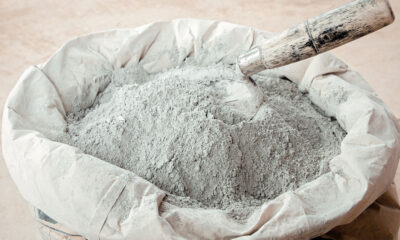
Today, after a longish journey of almost 200 years, our world is producing nearly 4,500 million tonnes of the commodity, and it is difficult to think of something truly revolutionary that has happened to this product in these 200 years. So, it has been a placid, plain, peaceful and predictable journey, except perhaps, the ripples caused by the interesting stories of some cement brands. But can commodities be branded?
If things like atta, petrol, water, salt and cooking oil can be distinguished and branded, cement brands need not spring any surprise. Product brands are premised on explicit or implicit promise to the buyers, and in case of commodities like cement, brands can differentiate themselves through superlative product attributes, freshness of product, catchy packaging, express delivery or after-sales service, or even a combination of these differentiators. However, an analysis of various reputed cement brand offerings indicates a clear preference for product quality attributes, such as compressive strength, durability, and so on. In general, such brands are far less relevant in case of commodities sold in bulk quantities to institutional customers, and assume a lot of significance for B2C products which are packaged and sold in retail. So it may stand to reason that cement brands gradually lose their sheen in markets where individual home builders no longer call the shots, such as the developed markets of Europe or USA or Australia.
For a long time, perhaps till as late as the seventies or eighties, India had a controlled cement supply situation, almost bordering on rationing, and there was no need for promoting a cement brand as such. Naturally, the product was sold by the name of the manufacturing companies themselves, there being no difference between the brand of the company and the brand of the product, and there was hardly any investment into developing brand identities. As the environment was decontrolled in the nineties, new capacities were set up and competition was in evidence, all of which encouraged cement manufacturers to invest in their brands, to achieve market leadership, price leadership. As Portland Pozzolana Cement (fly ash blended) and other product variants were introduced, the market witnessed first serious examples of product brands different from the company’s brand(s).
Around this time, the global community was gaining a heightened sensitivity to climate change and the cement industry was identified as one of the larger emitters of CO2. Being a natural resource based industry, consuming a lot of fossil fuels and other depleting minerals, the industry at large felt the need to segregate the corporate brand from the product brands, with a an approach to create a longer term reputational capital in the mind space of citizenry as well as opinion makers and regulators. As part of this strategy, the cement industry had to reach out to its target audience and communicate the efforts being made by them in the direction of sustainable development. Therefore, as opposed to the attributes touted in product branding, corporate brands started getting built on environmental performance, societal contributions and fair business practices in employment, procurement and last but not the least, competing in the marketplace.
All said and done, the cement industry has not yet been seen to be aggressively creating, growing, valuing and buying/selling brands, the way their peers in FMCG or healthcare or luxury goods industry do, and we can only wonder why this has been so.