Developments in pyro processing optimisation and technologies have made it possible to improve existing plants with high energy efficiencies and low emissions, while simultaneously reducing operating costs and preserving the environment and optimal use of fast depleting natural resources.
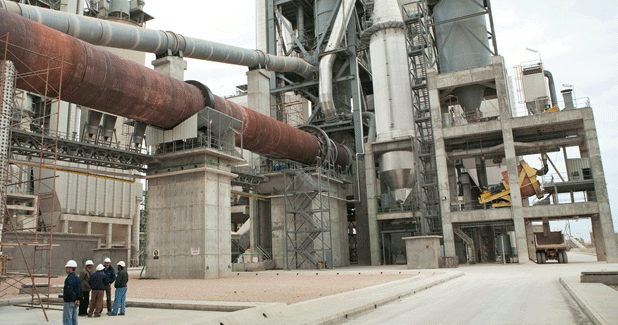
Kiln is said to be the heart of a cement plant, comparing the cement plant with that of human body. It is a continuous operation and the performance of a plant is judged by the number of days; the kiln runs without any stoppages. In the present economic scenario on an average, the plant utilisation is close to 70 per cent. For the operational function, it is much more challenging because if the production level further goes down for want of demand, then within no time, the plant operation runs into red. Therefore, it is extremely important to decide the equipment capacities precisely since it is a part of design. There is a tendency to go for higher capacity plants for the simple commercial considerations, but in the present situation, such plants in no time will turn into stressed asset if they are running below the bench mark level. Every unit knows its benchmark level to run it into profits. This is exactly the situation in few of the cement plants in the country as they were set up when there was a boom time for cement business which did last for few years but no further.
New approach
A few cement producers in the industry have been smart to decide on the capacities of the plant. Generally at design stage, while deciding on preheater it is preferred to have a single string of operation as a starting phase. Then after stabilisation and proper understanding of the market conditions, it is better to add another string. But then the kiln in the first phase must have been designed with sufficient margins. This has been the case with a few of plants in our country. The plant capacities have been enhanced over a period of time. Our design engineers along with FLSmidth, ThyssenKrupp, KHD Humboldt etc, have done wonderful jobs to add to the capacities of the plant in the country without diluting the performance of the kiln on any count like gaseous pollution or compromising on operational part. However, we strongly feel this has created tremendous load on the coolers and to some extent compromised its performance. The cooler as a hardware has limitations to enhance its capacity or either have modifications in the given space. In many cases, it has been noticed that it is the cooler which throttles the production and not the kiln or grinding.
Use of alternate fuels
Regarding the technology front, there is not much to say on the pyro process per se specifically that has happened in the last decade except more and more players in our country have been experimenting on alternate fuels or industrial waste which is encouraging. With more support coming from the government departments like Central Pollution Control Board (CPCB) and State Pollution Control Boards, the number of usage is only going to grow. There are some changes required in the kiln burner design before the fuels are changed or replaced. Plant would prefer to have a common burner for conventional fuel like coal and for alternate fuels like industrial waste and petcoke. The plants need to address the issue of safety while using hazardous waste since our experience in doing jobs in a safe manner is far below expectations.
Waste Heat Recovery (WHR) can reduce the operating costs and improve EBITDA margins of cement factories by about 10-15 per cent. On average, electric power expenses account for up to 25 per cent of total operating costs of a cement factory. However, to realise the full potential of WHR as of now $1,400 million is required, which is too high.
The other major advantage for Indian cement industry is minuscule presence of volatile matters like sulphur, chlorine, potassium etc. Therefor a majority of plants in India do not have bypass system as a part of design whereas the plants in Gulf countries have this as an additional system. In future as more and more plants will go for alternate fuels in the country they may have to go for by pass system as additional feature.
Focus emission
In pyro processing, the area of focus has been, reduction of NOX and SO2 emissions, and increase of production throughput without compromising on energy consumption but with flexible options on fuel.
Safety in pyro processing is extremely important since coal is used as a fuel. Generally, it is pulvisised at the plant and then fed into the kiln through burner. The conditions in the coal mill area are extremely hazardous and need more attention to reduce the number of unsafe incidences. Inertisation of coal mill is yet to be executed in many plants. There is a lot of scope for improvement here in the industry. Considering the capabilities exhibited till date, we feel Indian cement industry will fulfill this aspiration as well.
Conclusion
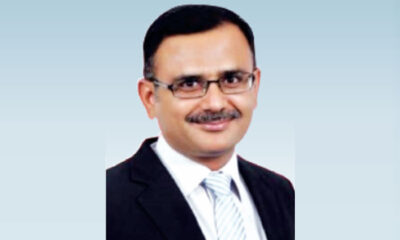
According to Kumar, developments in pyro processing optimisation and technologies have made it possible to improve existing plants with high energy efficiencies and low emissions, while simultaneously reducing operating costs and preserving the environment and optimal use of fast depleting natural resources. Process optimisation and performance improvement has become inevitable in cement industry. "Although every situation must be analysed carefully to evaluate real gains that can be achieved, most cement plants can achieve improved performance by implementing suitable modifications," he concludes.
TECHNOLOGY TRENDS IN PYRO PROCESSING
Kilns
- Redefinition of operating parameters – volumetric loadings up to 7.5 tpd/cu m
- Thermal loadings up to 5.5 Gcal/ sq m/kg clinker
- Filling % of 14-16 and kiln speeds up to 5.5 rpm
- 2-pier installations with a drop in L/D ratios to 10-11
- Low primary air, low NOx multi-channel burners
Pre-calciners
- Degree of calcination up to 95 per cent
- Calciner to kiln fuel ratio of 70:30
- Increased residence time up to 5.5 sec to improve combustion efficiency specially in case of petcoke
- Low NOx systems Pre-heater
- 6-stage, twin string preheaters with clinkering capacities up to 10,000 tpd
- Increased cyclone efficiency up to 96 per cent
- Reduction in L/D ratio in cyclones resulting in a pressure drop reduction from 700 to 400 mm WG and a tower height reduction of 10-15 m
- Reduction in the total sp. air requirement from 1.6 to 1.45 Nm3/kg clinker Improvement in fan efficiencies.
Coolers
- New generation (eg, walking-floor) coolers resulting in increased cooler recuperating efficiency from 68-76 per cent resulting in increase of secondary/tertiary air temperature to 1,000oC
- Drop in air requirement from 2.2 to 1.6 Nm3/ kg clinker
- Increase in cooler loading up to 50 t/d/sq m
Bypass system
Raw materials and fuels used for the manufacture of clinker generally contain some volatile constituents. These are mainly the compounds of potassium, sodium, sulphur and chlorine. Volatiles may also originate from water, refractory and wearing parts of equipment. These volatile constituents generally have low melting points. Hence, condensation of the volatile matters takes place on raw meal particles and the surrounding walls in the colder zones of the kiln. This causes build-ups on the cyclone walls and riser ducts that lead to blockages in the passage areas in the cyclones. The bypass system allows a high proportion of volatiles to be removed through the kiln gas stream and improves the performance and product quality.
Fuel solutions
Alternative fuels such as lignite, petcoke, tyres, bagasse, rice husk, industrial wastes etc, are being in use for sometime now. Several plants are using/ investigating hospital refuse and municipal waste as workable alternatives. The current reported thermal substitution rates (TSR) in the Indian cement industry is about one per cent. However, TSR levels as high as 60 per cent have been achieved in some of the developed nations. Action plans are needed to overcome technical, financial and regulatory barriers to the growth of alternate fuel (AF) usage. Technical solutions are in place for storage, handling and dosing the AF to the system.
– Kamal Kumar, Chief General Manager, Holtec
Diagnosis
Based on process measurements conducted following observations were made:
- The PH system is operating with about 28% leakage air. This is resulting in higher PH fan power consumption.
- The cooler vent gas volume of 1.63 Nm3/kg clinker and temperature of 369oC.
- High clinker temperature of 165oC value against the normal value of around 100oC.
- The heat balance of the pyro processing system indicated that the total heat consumption works out to 888 kcal/kg clinker.
| Implementations |
| Following suggestions were implemented: |
| Area |
2,000 t/d |
| Kiln size |
3.95 m dia x 56 m L |
| Preheater (PH) |
Single string 5-stage suspension preheater with in line calciner (ILC) |
| Kiln burner |
Duoflex |
| Fuel used |
Furnace oil |
| Preheater fan |
7,000 m3/min at 900 mm WG, 320oC |
| Cooler vent fan |
5,133 m3/min at 190 mm WG, 300oC |
| Clinker cooler |
Reciprocating grate cooler |
| Cooler effective area |
52.8 m2 |
| No. of grates |
2 |
| Specific heat consumption |
|
(A mass and heat balance
conducted jointly) |
854 kcal/kg clinker |
| Implementations |
| Following suggestions were implemented: |
| Area |
Recommendations |
Result |
| Fuel firing |
Conversion of oil firing to coal firing in kiln and PC |
Reduction in operation cost |
| Preheater |
Reducing preheater exhaust gas quantity to 1.60 Nm3/kg clinker by arrest false air leakage, reduce the PH outlet draft |
Reduction in heat consumption |
| |
PC primary air fan volume reduced, smaller capacity fan motor installed |
Reduction in power consumption |
| |
Coal transport air quantity to PC was reduced in phases |
Reduction in heat consumption |
| |
Maintaining PC outlet temperature as 840oC.A PID loop was provided for the PC firing. |
Reduction in heat consumption |
| Kiln |
Increase the kiln speed from 3.0 to 3.3 rpm |
Increased kiln output |
| |
Coal transport air to quantity to kiln was reduced in phases |
Reduction in heat consumption |
| |
Position of the inner burner pipe was retracted by 30 mm and pressure at burner pipe was increased by 10 per cent |
Sharp and intense flame resulting in saving in heat consumption |
| Clinker cooler |
To reduce the cooler vent air temperature |
Reduction in heat consumption. |
| |
Optimisation of cooler operation, commissioning of water spray system. |
Reduction in clinker temperature |
| |
First grate of the cooler is to be modified with the new generation static grate plates/grate systems. |
Improved heat recuperation to handle
increased clinker production |
| |
|
Stable cooler operation |