Connect with us

Technology

Equipments & Products

Published

on

Shares

Companies offering wide range of products, equipments and services provide crucial support to cement companies to keep them goingAwide array of products and equipments are in use in the cement industry. The comprehensive range of products and equipments are utilized in various applications such as automation, fabrication, pulverisation, engineering, etc. There is a range of process instrumentation, weighers and analytical devices offered by companies to cover electrical, automation, drive and instrumentation systems. Cement companies need blowers for application during the manufacturing process. There are a wide range of blowers available in the market, including twin lobe rotary air blowers, water cooled blowers, gas blowers, etc. Magnetic stirrers, overhead stirrers, dispersers, shakers, mills, rotary evaporator, calorimeters, laboratory reactors and incubating shakers make up the some of the cement plant’s laboratory and analytical equipment’s portfolio. The process technology section offers solutions for production scale stirring, mixing and kneading applications.Then there are concrete product equipments which are used for manufacturing of concrete products and plants to mixing and batching to automatic cubing and palletizing. Companies also offer flexible packaging machinery for production of packaging of cement. The emissions from a cement plant can cause serious environmental damage, hence filter bags are an essential imperative for sustainability. Filter bags and cages are essential in a cement plant and today these are easily available in India.A wide range of equipments for silo extraction systems and packing/loading plant, e.g. manual cut off gate, pneumatic cut off gate, flow control gate, air slides, fluid slides, roto packing machine, loading machines, belt weigh scale, solid flow meter, truck loading machine, bulk loading spout, belt conveyors are used in cement industry. Today, all these equipments are available in India.Cement plants also need geared motors and pumps for various purposes and a wide range of products, including geared motors, motors, frequency inverters; providing optimal drives solutions are available for the customers. Companies also offer energy saving solutions through the combination of energy-optimised motors and high efficiency gear units as well as inverters with energy saving functions. In the following pages, we give the profiles and contact details of manufacturers of equipments and products required by the cement companies.BASF India1st Floor, VIBGYOR Towers, Plot No. C – 62, ‘G’ Block, Bandra-Kurla Complex, Mumbai – 400 051Phone: +91 22 6661 8000 Fax: +91 22 6758 2753Prasad Chandran, Chairman & MDBASF in India manufactures dispersions and specialty chemicals, construction chemicals, etc. The company also markets a wide range of intermediates, catalysts and other chemicals. BASF has identified India as one of its major growth markets. BASF in India has over 2070 employees, 9 production sites as well as two R&D centres.Caterpillar IndiaInternational Tech Park, 7th Floor, Taramani, ChennaiTel.: 044-42691001Ajay Shankar, Managing DirectorCaterpillar is the world’s leading manufacturer of construction and mining equipment, diesel and natural gas engines, industrial gas turbines and diesel-electric locomotives. The company also is a leading services provider through Caterpillar Financial Services, Caterpillar Remanufacturing Services, Caterpillar Logistics Services and Progress Rail Services. In 2011, nearly 30 percent of Caterpillar sales were generated from the Asia Pacific.Everest Blowers424, Modern Industrial Estate, Phase-1, Bahadurgarh-124507TeleFax: 91-1276-267582, 268238, 268442 www.everestblowers.comYash Pal Kapur, Managing DirectorEverest started manufacturing twin lobe rotary air blowers in 1980. Manufacturers of water treatment plants, effluent treatment plants, cement plants, etc. have been doing business with the company. Everest’s broad product line of air blowers, water cooled blowers, gas blowers, vacuum booster pumps, acoustic hoods and enclosures are available in standard and custom modelsGrundfos Pumps India118 Old Mahabalipuram Road, Thoraipakkam, Chennai 600 097.Tel: 044- 2496 6800 www.in.grundfos.comN K Ranganath, Managing DirectorThe Indian operation of Grundfos started in 1998. The Chennai facility houses the production, warehouse, service, training centre and offices. Its design embodies all the values of Grundfos as a company when it comes to energy and environment. The manufacturing facility in Chennai was set up to assemble reliable energy efficient pumps to save the energy costs to the customer and the country and reduce their impact on the environment.IKA Group814/475, Survey No.129/1, Mysore Road, Kengeri Bangalore 560060,Tel: 080-2625 3900/3999 www.ika.inMrs NandiniThe IKA Group is a global market leader for laboratory equipment, analytical and process technology Magnetic stirrers, overhead stirrers, dispersers, shakers, mills, rotary evaporator, calorimeters, etc. make up the laboratory and analytical equipment’s portfolio. The process technology section offers solutions for production scale stirring, mixing and kneading applications. The company is headquartered in Staufen, Germany with subsidiaries in USA, China, India, etc. In 2010, the company employed 650 people and reported sales of 85.5 million euro (113.5 million US dollar).Industrial Filters & FabricRing Road Square, Musakheri, Indore – 452 001 (M.P).Tel: 0731- 422 1234, 422 3000 www.iffgroup.comPradeep Maheshwari, Chairman & MDPradeep Maheshwari started off with a trading company in the year 1972 and got into manufacturing of filter bag used for in the year 1985 and incorporated the company Industrial Filters and Fabric (IFF). Today IFF stands as the largest in filter bag and cage manufacturing service provider in Asia. IFF provides quick quotes, rapid lead-time, jet delivery and the quality filter products in the industry. Headquartered in Indore, the company has its office in Mumbai and Hyderabad.Intensiv Filter IndiaA-30, 2nd Floor, Satyam Arcade, Pune- Nagar Road, Wadgaon Sheri, Near Ramwadi Octroi Post, Pune – 411 014Tel: 020-2663 4466 www.intensiv-filter.comRavindra Vithal Phadke, Managing DirectorIntensiv-Filter, founded in 1922, is known as reliable dust remover in the industry. The company is a specialist in filtering installations in the international markets and offers its services to new installations and to conversions in various business areas. The organisation caters in various areas like cement, engineering, glass, energy etc and is renowned for its eco- friendly installations. With Intensiv-Filter filtering installations, dust emissions can be lowered by more than 99 per cent. Headquartered in Germany, the company has its offices in India, Brazil, France, Korea, etc.Laxmi EngineeringE-176, Mewar Industrial Area, Madri, Udaipur – 313 003Phone : 91-294-2490060, 2490735 Fax : 91-294-2491426 www.laxmiengineering.comD N Sharma PromoterLaxmi Engineering Works (LEW) is one of the leading manufacturer/fabricator of mini cement plants based on VSK technology 20 to 100 TDP, pulveriser, three and five roller mills, jaw crusher and all other engineering machines. LEW is appproved fabricator and turnkey contractor of NRDC, New Delhi. The company has full-fledged foundry, machining and fabrication shop with modern equipments. LEW has supplied number of mini cement plants all over the country.Mac Marketing Corporation

14A, Imperial Court, 33/1 Cunningham Road, Bangalore – 560 052Tel: 80-22200290M.K. Kumar, Managing DirectorMac Marketing Corporation (MMC) manufactures self lubricating bearings with a PTFE-filled over layer, a sintered bronze interlayer and a steel backing. These are light-weight and thin-walled and have been developed for application in high load and low speed operations. The company also offers a wide range of turn table bearings. They come in 4-point and 8-point contact ball types and with cross roller configurations, including wire race slewing ring.NORD Drivesystems,

Mauje Village Mann, Tal Mulshi, Adj. Hinjewadi Phase-II, 282/2, 283/2 Plot No. 15, Pune -411057.Tel: 020-3980 1200 www.nord.comP L Muthusekkar, Managing DirectorEstablished in the year 1999 at Hinjewadi in Pune to serve the customers in India and the SAARC countries, NORD Drivesystems is a 100% subsidiary of Getriebebau Nord (GBN). The product range includes geared motors, motors, frequency inverters; providing optimal drives solutions to our customers. NORD makes more than 30 million standard catalogue items and includes mechanical, electrical and electronic products in drivesystems. Client spreads include almost every industry such as steel and metals, infrastructure, cement, packaging, airports, pharma, etc.Novergy Energy Solutions1 Navlok Navratan Complex, Bedla Road, Udaipur 313001.Tel: 0294-2415487, 2450467 www.novergy.co.inAnand Damani, DirectorIncepted in the year 1997 and the company has catered to various prestigious clients in India as well as abroad. Offering a host of products like solar photovoltaic modules, wind turbines, solar power devices and hearts, the company has its offices in Udaipur, Bangalore, Hyderabad, Raipur and Pune. The products find use in both off-grid applications as well as grid-interactive applications.Power BuildAnand Sojitra Road, Vithal Udyognagar 388121, Vallabh Vidyanagar, Gujarat.Tel: 2692-231 070, 231 120, 231 170 www.pbl.co.inD M Patel, Whole Time DirectorPower Build is one of the largest manufacturers of geared motors and reducers in India since more than three decades. The company was established in the year 1972 at Vallabh Vidyanagar, Gujarat. The products of the company are built with the most modern methodology called "Kit concept" and are dimensionally interchangeable with other major brands. The company now manufactures range aluminum worm geared motors built with enhanced efficiency levels.Proflex SystemsMB House, Stadium Road, Ahmedabad – 380 014, GujaratTel: 079-2640 5563 / 2640 5572 / 2646 1314.Chirag Patel, Managing DirectorProflex started its operation in India in the year 2002. The company comes under the flagship of MB Engineering promoted by the M&B Group. Proflex introduced self supported steel roofing in India and in just 10 years, the company has completed more than 3,000 projects in the country. The company has offices in Pune, Mumbai, Bangalore, Kolkata, Chennai, Delhi and Hyderabad. The company has till date completed 50 lakh sq mt roofing.Siemens130, Pandurang Budhkar Marg, Worli, Mumbai 400 018. Tel: +91 22 3967 7000 Fax: +91 22 3967 7500 www.siemens.comDr. Armin Bruck, Managing DirectorSiemens offers a range of process instrumentation, weighers and analytical devices that are specifically matched to meet the demands of the cement industry. Solutions from Siemens cover electrical, automation, drive and instrumentation systems whereas multiple product ranges cater to all the factory needs: automation, CEMAT, drives, power generation and power distribution as well as building system engineering.SSAB IndiaUnit 101, 18/8 Saleh Centre Cunningham Road Bangalore 560052Mobile: +91 9972473473 Fax: +91 80 4123 1159 www.ssab.comSubhabrata Mukherjee, Regional Sales Manager – Automotive DocolSSAB is a leading producer of high strength steel. The company has a 6 million tonne capacity for crude steel. The company’s high strength steels amounts to 37 per cent of the total sales. SSAB has production plants in Sweden and the U.S.A. SSAB employs approximately 9000 persons in 45 countries. SSAB markets high strength steel under the trademarks Domex, Docol, Prelaq, Hardox, Weldox, Armox, and Toolox.

Continue Reading
Click to comment

Leave a Reply

Your email address will not be published. Required fields are marked *

Economy & Market

SEW-EURODRIVE India Opens Drive Technology Centre in Chennai

Published

on

By

Shares

The new facility strengthens SEW-EURODRIVE India’s manufacturing, assembly and service capabilities

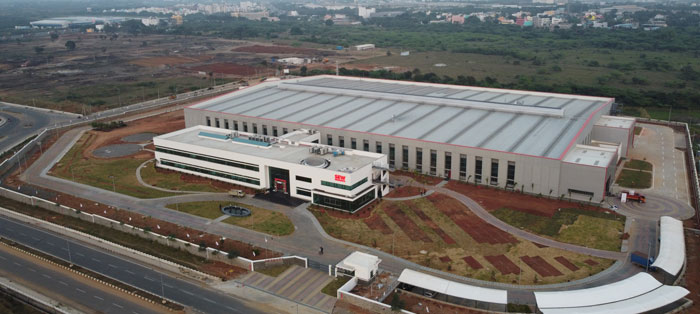
SEW-EURODRIVE India has inaugurated a new Drive Technology Centre (DTC) in Chennai, marking a significant expansion of its manufacturing and service infrastructure in South India. The facility is positioned to enhance the company’s responsiveness and long-term support capabilities for customers across southern and eastern regions of the country.

Built across 12.27 acres, the facility includes a 21,350-square-metre assembly and service setup designed to support future industrial growth, evolving application requirements and capacity expansion. The centre reflects the company’s long-term strategy in India, combining global engineering practices with local manufacturing and service capabilities.

The new facility has been developed in line with green building standards and incorporates sustainable features such as natural daylight utilisation, solar power generation and rainwater harvesting systems. The company has also implemented energy-efficient construction and advanced climate control systems that help reduce shopfloor temperatures by up to 3°C, improving production stability, product quality and working conditions.

A key highlight of the centre is the 15,000-square-metre assembly shop, which features digitisation-ready assembly cells based on a single-piece flow manufacturing concept. The facility also houses SEW-EURODRIVE India’s first semi-automated painting booth, aimed at ensuring uniform surface finish and improving production throughput.

With the commissioning of the Chennai Drive Technology Centre, SEW-EURODRIVE India continues to strengthen its manufacturing footprint and reinforces its long-term commitment to supporting industrial growth and automation development in India.

Continue Reading

Economy & Market

RAHSTA Roundtable Sets Agenda for Smarter, Safer Highways

Published

on

By

Shares

Roundtable discussions focus on innovation for safer highways.

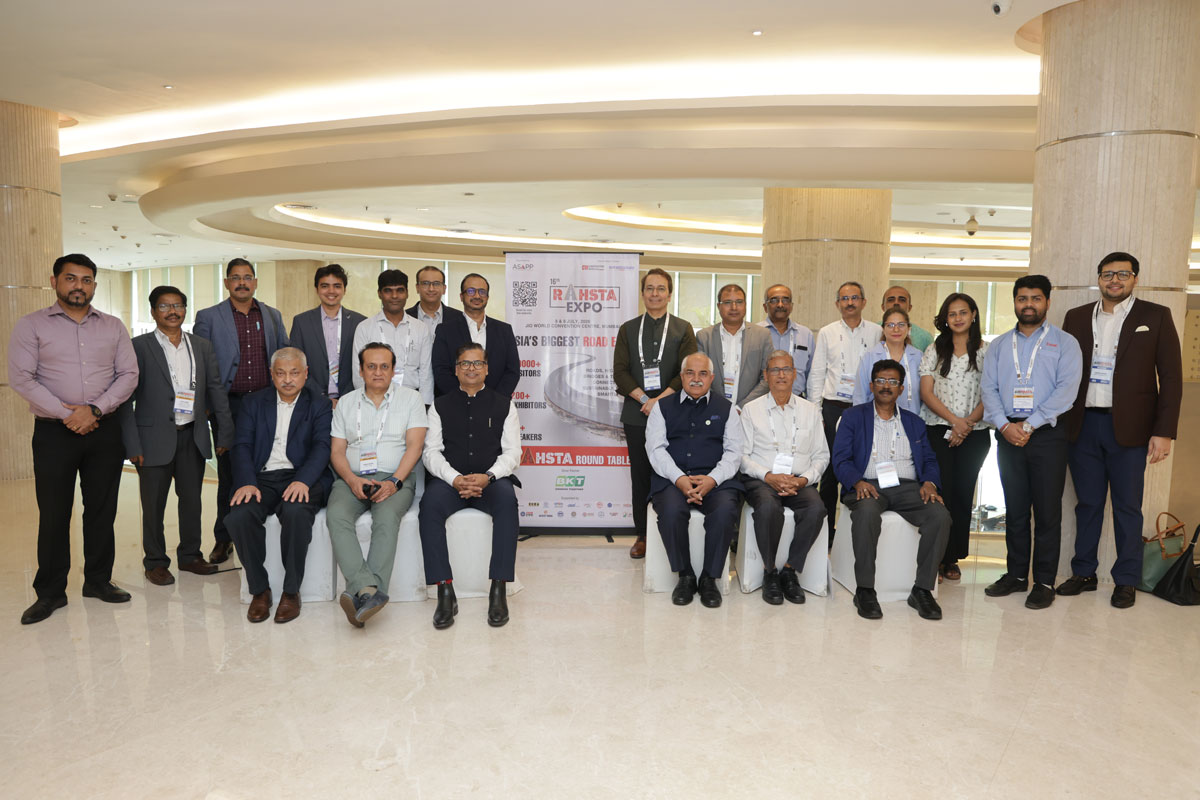
Held on 12 March 2026 at Courtyard by Marriott, Mumbai, alongside the Infrastructure Today Airport Conclave, the RAHSTA Roundtable brought together stakeholders from across the highways and infrastructure ecosystem to shape the agenda for the 16th RAHSTA 2026, scheduled for 8–9 July 2026 at the Jio Convention Centre, Mumbai. The session focused on key industry themes including road construction, technology, safety and long-term sustainability.

Opening the discussion, Pratap Padode, Founder, FIRST Construction Council, said the roundtable marked the beginning of a broader consultative process leading up to the July event. The aim, he noted, is to bring together industry stakeholders to refine the agenda for discussions on the future of roads, bridges, tunnels and allied infrastructure.

Padode noted that while central road project awards have slowed in recent years, states are increasingly driving the next phase of infrastructure growth. Maharashtra, with its long-term road development plans and agencies such as MSRDC and MSIDC, is expected to play a significant role in this expansion.

RAHSTA Expo 2026 as a specialised platform dedicated to road infrastructure, covering highways, tunnels, bridges and flyovers along with construction technologies, safety systems and maintenance solutions. He also highlighted the growing importance of rural connectivity and said the organisers are engaging with government bodies to highlight rural road development initiatives.

Tanveer Padode, CIO, ASAPP Info Group, presented insights from IMPACCT, the group’s infrastructure intelligence platform. He pointed to a strong project pipeline despite slower highway awards earlier in the year, noting that states such as Maharashtra, Odisha and Arunachal Pradesh are emerging as key drivers of new projects. The data also revealed that only a small group of contractors participates in large-value infrastructure bids.

Lt Gen Rajeev Chaudhary, former Director General, Border Roads Organisation and Chairman of the RAHSTA Expo Committee, emphasised the need for stronger collaboration across the ecosystem, including policymakers, contractors, technology providers and financiers. He also called for addressing systemic issues within the sector and encouraged greater participation of women in infrastructure leadership.

The discussion also explored the evolving economics of road development. Phani Prasad Mandalaparthy, Associate Director, CRISIL Intelligence, noted that the slowdown in project awards reflects a shift towards higher-value logistics corridors rather than simple road widening projects. However, private participation through BOT and TOT models remains limited.

From the contractors’ perspective, Sudhir Hoshing, Whole-Time Director, Ceigall, said companies are becoming more selective in bidding, favouring projects with clearer payment mechanisms and efficient processes. While NHAI continues to offer greater operational clarity, states such as Uttar Pradesh and Bihar were cited as relatively supportive environments for project execution.

Durability and sustainability also emerged as key themes. Himanshu Agarwal, COO – Road & Infrastructure, Zydex Group India, highlighted the need to prioritise lifecycle performance and resilient pavements, while participants discussed the potential of alternative materials such as plastic waste, steel slag and industrial by-products in road construction.

Dr LR Manjunatha, Vice President, JSW Cement, emphasised that India has abundant fly ash, slag and other industrial materials that can improve durability and sustainability if integrated into specifications and policy frameworks.

Technology and equipment challenges were also discussed. Dr Lakshmana Rao Mantri, Dy General Manager, Afcons Infrastructure, highlighted the shortage of tunnel boring machines (TBMs), which is delaying several underground infrastructure projects. Participants agreed that developing domestic TBM manufacturing capabilities will be critical for future infrastructure expansion.

The future of concrete pavements was another area of discussion. Dr V Ramachandra, President, Indian Concrete Institute, stressed that the debate should focus on lifecycle performance rather than material choice alone, noting that evolving design standards are improving the feasibility of concrete roads.

Prof Dharamveer Singh of IIT Bombay added that while India has made significant progress in infrastructure development, stronger capacity building and better execution practices are essential to ensure consistent road quality.

The discussion also touched upon technology adoption in the sector. Rushabh Mamania, Partner & CBO, Roadvision, highlighted the growing role of AI in road infrastructure, noting that AI-driven monitoring systems are already being deployed across large stretches of national highways.

Overall, the roundtable underscored that the future of highway infrastructure will depend not only on the pace of construction but also on durability, safety, technology integration and sustainable materials. The discussions offered valuable insights that will help shape the agenda for RAHSTA 2026 and guide future collaboration within the industry.

Continue Reading

Economy & Market

CTS Roundtable Charts Tech-Led Roadmap for Construction

Published

on

By

Shares

CTS Roundtable Maps Technology Roadmap for Construction

Ahead of the Construction Technology Show (Con Tech Show) 2026, industry leaders, technology innovators and academia came together in Mumbai to deliberate on how digitalisation, automation and industrialised construction can reshape the sector. The discussion made one thing clear: construction can no longer afford to treat technology as optional.

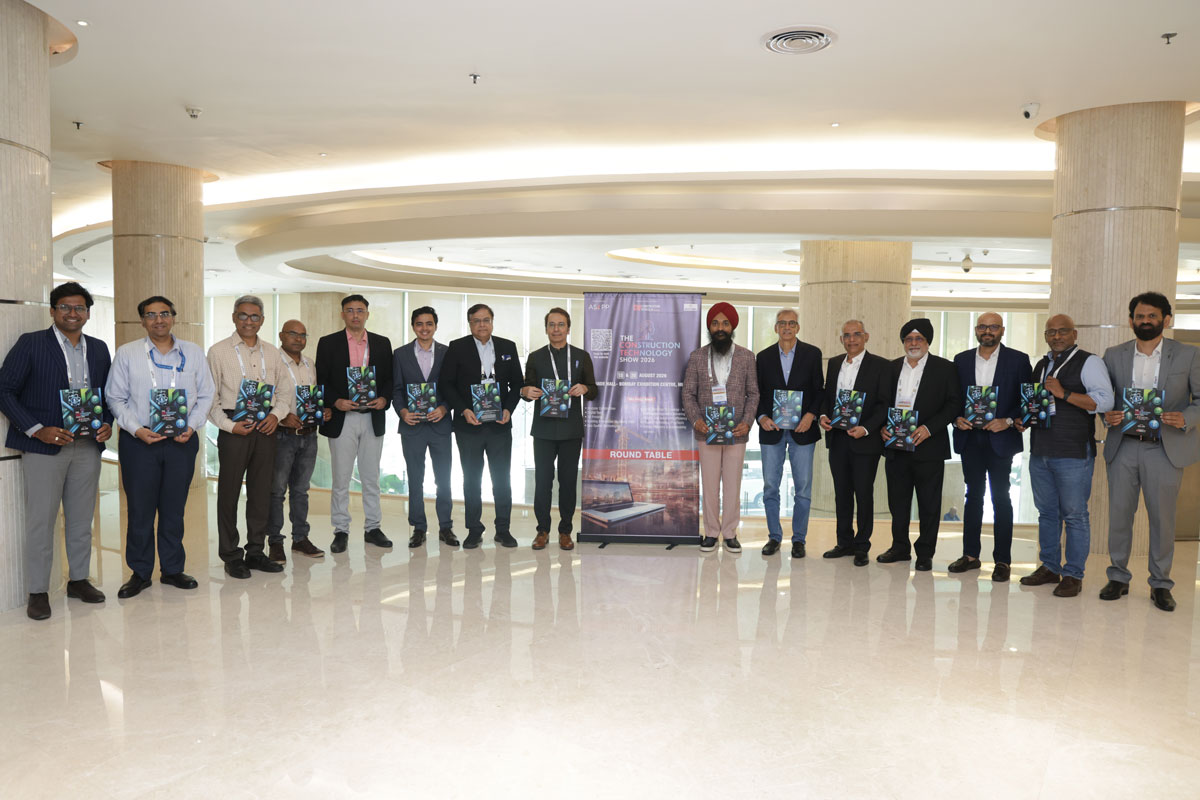
Held on 12 March 2026 at Courtyard by Marriott, Mumbai, alongside the Infrastructure Today Airport Conclave, the CTS Roundtable served as a precursor to the Construction Technology Show 2026, scheduled for 19–20 August 2026 at NESCO, Mumbai.

A platform to move from discussion to deployment

Opening the session, Pratap Padode, Founder and Editor-in-Chief, ASAPP Info Global Group, said construction technology has long remained close to his heart, especially given the sector’s traditionally slow pace of technology adoption. He noted that over the years, the Construction Technology Summit had steadily built interest, and the next step was now to expand it into a larger, more meaningful platform that could bring together technology providers, users, startups and innovators under one roof.

Padode said the vision for CTS is not limited to software alone. The platform aims to embrace all forms of technology that can improve construction efficiency, quality and execution—from digital tools and project management systems to lean construction, off-site fabrication and startup-led innovation. He also highlighted plans to deepen startup participation and create space for young companies to showcase emerging construction solutions.

Industry at a turning point

Moderating the roundtable, Naushad Panjwani, Chairman, Mandarus Partners, set the context by pointing out that the global construction industry, despite being a multi-trillion-dollar sector, continues to lag in productivity. He noted that while manufacturing has consistently improved efficiency, construction has remained slow to modernise.

Referring to both global and Indian trends, Panjwani underlined that the industry is now at a decisive moment. India, he said, is entering a major build cycle, and delivering the next phase of infrastructure and real estate growth through traditional methods alone is no longer viable. The goal of the roundtable, therefore, was not to debate technology in isolation, but to identify the most critical conversations that would bridge the gap between innovation and implementation.

His central message was clear: CTS 2026 must be shaped around themes that make CEOs, CIOs and CTOs feel they cannot afford to miss the event.

From BIM to AI, data to governance

A major theme that emerged through the discussion was the need for better data, better visibility and better decision-making. Dr Venkata Santosh Kumar of IIT Bombay echoed this, saying that the underlying data infrastructure itself needs attention. Construction projects, particularly remote ones, often face issues around connectivity, data collection and data use. Without this foundation, more advanced technologies cannot deliver their full value.

Chandra Vasireddy, CEO & Co-founder, Inncircles, expanded the discussion to governance, arguing that technology must help connect the many moving parts of a construction business. For him, the real value of digital transformation lies in creating better governance, clearer visibility and stronger business outcomes.

Tejas Vara of Inncircles stressed the importance of timely site data for leadership teams, especially in large and remote projects where decisions on materials, machinery and manpower often get delayed because information does not reach headquarters in time.

The role of AI also featured prominently. Rushabh Mamania, Partner and CBO, Roadvision said that while AI and machine learning are now common terms, vision intelligence and language intelligence have still not deeply penetrated the construction sector. He emphasised that startups in India are building relevant AI-led solutions and are already attracting international interest, showing that innovation need not be imported—it can be built locally and scaled globally.

Industrialised construction gains ground

The roundtable also placed strong emphasis on industrialised construction methods. Kalyan Vaidyanathan, CTO – Construction & R&D, Tvasta, called for greater focus on off-site fabrication and the broader industrialisation of construction. Bhargav Jog, General Manager, Dextra, highlighted precast technology and alternative sustainable materials as areas with immediate relevance.

Several participants agreed that modular, precast and pre-engineered approaches are no longer niche ideas. They are increasingly becoming practical responses to the sector’s challenges around labour shortage, timelines, quality control and predictability.

Anup Mathew, Sr VP & Business Head, Godrej, argued that the industry needs a fully integrated approach—from design and procurement to execution and asset management. Unless these are connected, technology adoption will remain fragmented and sub-optimal. He pointed to pre-engineered and modular systems as examples of how industrial thinking can compress timelines, improve quality and reduce dependence on difficult on-site conditions.

Adoption remains the biggest hurdle

While there was broad agreement on the promise of technology, the discussion repeatedly returned to one fundamental challenge: adoption.

Abhishek Kumar, COO, LivSYT, observed that the market is crowded with solutions, but many buyers still struggle to evaluate which technology suits which use case. According to him, the industry needs clearer frameworks to help users select, compare and adopt solutions, rather than expecting a single platform to solve every problem.

Dr Tenepalli JaiSai, Associate Professor, School of Construction(SoC), NICMAR University, noted that isolated technologies will not solve the productivity problem by themselves. What is required is an integrated Construction 4.0 approach, where digital, physical and cyber-physical systems work together rather than in silos.

That concern around silos was reinforced by Subodh Dixit, former Director, Shapoorji Pallonji, who said the issue is not just that technologies are disconnected, but that stakeholders are as well. Clients, consultants, contractors and partners often operate with different priorities. Unless these silos are broken, technology will struggle to percolate across the full project value chain.

Harleen Oberoi, Project Management, Tata Realty shared a practical perspective from the client side, saying that successful BIM implementation requires investment across the ecosystem, not just within one organisation. Trade partners, vendors and other stakeholders must also be trained and aligned if the technology is to deliver its intended results.

Beyond buzzwords

A notable takeaway from the session was that the industry is moving past the phase of treating technology as a buzzword. Participants repeatedly stressed that the real question is not whether technology should be used, but where it creates measurable value and how that value can be scaled.

The conversation also expanded beyond mainstream themes to include repairs and rehabilitation, construction and demolition waste, sustainability, circular economy, green sourcing, carbon measurement, design interoperability, generative design, robotics, and the role of horticulture and greener built environments.

Setting the agenda for CTS 2026

By the close of the session, the roundtable had surfaced a strong set of themes for the upcoming show: BIM and digital twins, AI and data platforms, industrialised construction, startup innovation, governance-led technology adoption, robotics, sustainable materials, and integrated project delivery.

More importantly, the session established CTS 2026 as more than an exhibition. It is shaping up to be a serious industry platform where users, technology providers, researchers and policymakers can collectively define the future of construction.

As Padode noted in his closing remarks, the conversation will continue through further consultations and possibly webinars in the run-up to the show. If the roundtable is any indication, CTS 2026 will aim not merely to showcase technology, but to push the industry towards meaningful adoption at scale.


Continue Reading

Trending News

SUBSCRIBE TO THE NEWSLETTER


Don't miss out on valuable insights and opportunities to connect with like minded professionals.


    This will close in 0 seconds