Connect with us

Technology

Equipments & Products

Published

on

Shares

Companies offering wide range of products, equipments and services provide crucial support to cement companies to keep them goingAwide array of products and equipments are in use in the cement industry. The comprehensive range of products and equipments are utilized in various applications such as automation, fabrication, pulverisation, engineering, etc. There is a range of process instrumentation, weighers and analytical devices offered by companies to cover electrical, automation, drive and instrumentation systems. Cement companies need blowers for application during the manufacturing process. There are a wide range of blowers available in the market, including twin lobe rotary air blowers, water cooled blowers, gas blowers, etc. Magnetic stirrers, overhead stirrers, dispersers, shakers, mills, rotary evaporator, calorimeters, laboratory reactors and incubating shakers make up the some of the cement plant’s laboratory and analytical equipment’s portfolio. The process technology section offers solutions for production scale stirring, mixing and kneading applications.Then there are concrete product equipments which are used for manufacturing of concrete products and plants to mixing and batching to automatic cubing and palletizing. Companies also offer flexible packaging machinery for production of packaging of cement. The emissions from a cement plant can cause serious environmental damage, hence filter bags are an essential imperative for sustainability. Filter bags and cages are essential in a cement plant and today these are easily available in India.A wide range of equipments for silo extraction systems and packing/loading plant, e.g. manual cut off gate, pneumatic cut off gate, flow control gate, air slides, fluid slides, roto packing machine, loading machines, belt weigh scale, solid flow meter, truck loading machine, bulk loading spout, belt conveyors are used in cement industry. Today, all these equipments are available in India.Cement plants also need geared motors and pumps for various purposes and a wide range of products, including geared motors, motors, frequency inverters; providing optimal drives solutions are available for the customers. Companies also offer energy saving solutions through the combination of energy-optimised motors and high efficiency gear units as well as inverters with energy saving functions. In the following pages, we give the profiles and contact details of manufacturers of equipments and products required by the cement companies.BASF India1st Floor, VIBGYOR Towers, Plot No. C – 62, ‘G’ Block, Bandra-Kurla Complex, Mumbai – 400 051Phone: +91 22 6661 8000 Fax: +91 22 6758 2753Prasad Chandran, Chairman & MDBASF in India manufactures dispersions and specialty chemicals, construction chemicals, etc. The company also markets a wide range of intermediates, catalysts and other chemicals. BASF has identified India as one of its major growth markets. BASF in India has over 2070 employees, 9 production sites as well as two R&D centres.Caterpillar IndiaInternational Tech Park, 7th Floor, Taramani, ChennaiTel.: 044-42691001Ajay Shankar, Managing DirectorCaterpillar is the world’s leading manufacturer of construction and mining equipment, diesel and natural gas engines, industrial gas turbines and diesel-electric locomotives. The company also is a leading services provider through Caterpillar Financial Services, Caterpillar Remanufacturing Services, Caterpillar Logistics Services and Progress Rail Services. In 2011, nearly 30 percent of Caterpillar sales were generated from the Asia Pacific.Everest Blowers424, Modern Industrial Estate, Phase-1, Bahadurgarh-124507TeleFax: 91-1276-267582, 268238, 268442 www.everestblowers.comYash Pal Kapur, Managing DirectorEverest started manufacturing twin lobe rotary air blowers in 1980. Manufacturers of water treatment plants, effluent treatment plants, cement plants, etc. have been doing business with the company. Everest’s broad product line of air blowers, water cooled blowers, gas blowers, vacuum booster pumps, acoustic hoods and enclosures are available in standard and custom modelsGrundfos Pumps India118 Old Mahabalipuram Road, Thoraipakkam, Chennai 600 097.Tel: 044- 2496 6800 www.in.grundfos.comN K Ranganath, Managing DirectorThe Indian operation of Grundfos started in 1998. The Chennai facility houses the production, warehouse, service, training centre and offices. Its design embodies all the values of Grundfos as a company when it comes to energy and environment. The manufacturing facility in Chennai was set up to assemble reliable energy efficient pumps to save the energy costs to the customer and the country and reduce their impact on the environment.IKA Group814/475, Survey No.129/1, Mysore Road, Kengeri Bangalore 560060,Tel: 080-2625 3900/3999 www.ika.inMrs NandiniThe IKA Group is a global market leader for laboratory equipment, analytical and process technology Magnetic stirrers, overhead stirrers, dispersers, shakers, mills, rotary evaporator, calorimeters, etc. make up the laboratory and analytical equipment’s portfolio. The process technology section offers solutions for production scale stirring, mixing and kneading applications. The company is headquartered in Staufen, Germany with subsidiaries in USA, China, India, etc. In 2010, the company employed 650 people and reported sales of 85.5 million euro (113.5 million US dollar).Industrial Filters & FabricRing Road Square, Musakheri, Indore – 452 001 (M.P).Tel: 0731- 422 1234, 422 3000 www.iffgroup.comPradeep Maheshwari, Chairman & MDPradeep Maheshwari started off with a trading company in the year 1972 and got into manufacturing of filter bag used for in the year 1985 and incorporated the company Industrial Filters and Fabric (IFF). Today IFF stands as the largest in filter bag and cage manufacturing service provider in Asia. IFF provides quick quotes, rapid lead-time, jet delivery and the quality filter products in the industry. Headquartered in Indore, the company has its office in Mumbai and Hyderabad.Intensiv Filter IndiaA-30, 2nd Floor, Satyam Arcade, Pune- Nagar Road, Wadgaon Sheri, Near Ramwadi Octroi Post, Pune – 411 014Tel: 020-2663 4466 www.intensiv-filter.comRavindra Vithal Phadke, Managing DirectorIntensiv-Filter, founded in 1922, is known as reliable dust remover in the industry. The company is a specialist in filtering installations in the international markets and offers its services to new installations and to conversions in various business areas. The organisation caters in various areas like cement, engineering, glass, energy etc and is renowned for its eco- friendly installations. With Intensiv-Filter filtering installations, dust emissions can be lowered by more than 99 per cent. Headquartered in Germany, the company has its offices in India, Brazil, France, Korea, etc.Laxmi EngineeringE-176, Mewar Industrial Area, Madri, Udaipur – 313 003Phone : 91-294-2490060, 2490735 Fax : 91-294-2491426 www.laxmiengineering.comD N Sharma PromoterLaxmi Engineering Works (LEW) is one of the leading manufacturer/fabricator of mini cement plants based on VSK technology 20 to 100 TDP, pulveriser, three and five roller mills, jaw crusher and all other engineering machines. LEW is appproved fabricator and turnkey contractor of NRDC, New Delhi. The company has full-fledged foundry, machining and fabrication shop with modern equipments. LEW has supplied number of mini cement plants all over the country.Mac Marketing Corporation

14A, Imperial Court, 33/1 Cunningham Road, Bangalore – 560 052Tel: 80-22200290M.K. Kumar, Managing DirectorMac Marketing Corporation (MMC) manufactures self lubricating bearings with a PTFE-filled over layer, a sintered bronze interlayer and a steel backing. These are light-weight and thin-walled and have been developed for application in high load and low speed operations. The company also offers a wide range of turn table bearings. They come in 4-point and 8-point contact ball types and with cross roller configurations, including wire race slewing ring.NORD Drivesystems,

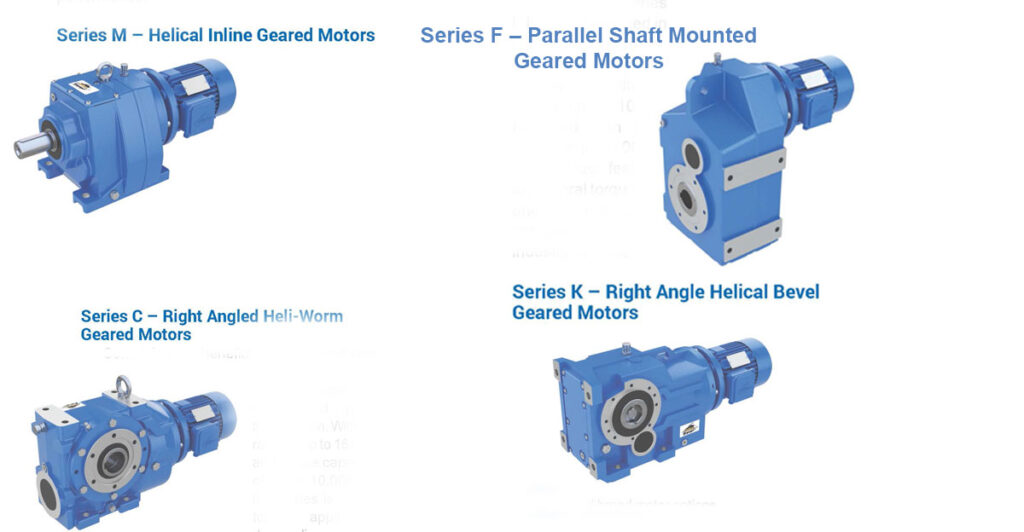
Mauje Village Mann, Tal Mulshi, Adj. Hinjewadi Phase-II, 282/2, 283/2 Plot No. 15, Pune -411057.Tel: 020-3980 1200 www.nord.comP L Muthusekkar, Managing DirectorEstablished in the year 1999 at Hinjewadi in Pune to serve the customers in India and the SAARC countries, NORD Drivesystems is a 100% subsidiary of Getriebebau Nord (GBN). The product range includes geared motors, motors, frequency inverters; providing optimal drives solutions to our customers. NORD makes more than 30 million standard catalogue items and includes mechanical, electrical and electronic products in drivesystems. Client spreads include almost every industry such as steel and metals, infrastructure, cement, packaging, airports, pharma, etc.Novergy Energy Solutions1 Navlok Navratan Complex, Bedla Road, Udaipur 313001.Tel: 0294-2415487, 2450467 www.novergy.co.inAnand Damani, DirectorIncepted in the year 1997 and the company has catered to various prestigious clients in India as well as abroad. Offering a host of products like solar photovoltaic modules, wind turbines, solar power devices and hearts, the company has its offices in Udaipur, Bangalore, Hyderabad, Raipur and Pune. The products find use in both off-grid applications as well as grid-interactive applications.Power BuildAnand Sojitra Road, Vithal Udyognagar 388121, Vallabh Vidyanagar, Gujarat.Tel: 2692-231 070, 231 120, 231 170 www.pbl.co.inD M Patel, Whole Time DirectorPower Build is one of the largest manufacturers of geared motors and reducers in India since more than three decades. The company was established in the year 1972 at Vallabh Vidyanagar, Gujarat. The products of the company are built with the most modern methodology called "Kit concept" and are dimensionally interchangeable with other major brands. The company now manufactures range aluminum worm geared motors built with enhanced efficiency levels.Proflex SystemsMB House, Stadium Road, Ahmedabad – 380 014, GujaratTel: 079-2640 5563 / 2640 5572 / 2646 1314.Chirag Patel, Managing DirectorProflex started its operation in India in the year 2002. The company comes under the flagship of MB Engineering promoted by the M&B Group. Proflex introduced self supported steel roofing in India and in just 10 years, the company has completed more than 3,000 projects in the country. The company has offices in Pune, Mumbai, Bangalore, Kolkata, Chennai, Delhi and Hyderabad. The company has till date completed 50 lakh sq mt roofing.Siemens130, Pandurang Budhkar Marg, Worli, Mumbai 400 018. Tel: +91 22 3967 7000 Fax: +91 22 3967 7500 www.siemens.comDr. Armin Bruck, Managing DirectorSiemens offers a range of process instrumentation, weighers and analytical devices that are specifically matched to meet the demands of the cement industry. Solutions from Siemens cover electrical, automation, drive and instrumentation systems whereas multiple product ranges cater to all the factory needs: automation, CEMAT, drives, power generation and power distribution as well as building system engineering.SSAB IndiaUnit 101, 18/8 Saleh Centre Cunningham Road Bangalore 560052Mobile: +91 9972473473 Fax: +91 80 4123 1159 www.ssab.comSubhabrata Mukherjee, Regional Sales Manager – Automotive DocolSSAB is a leading producer of high strength steel. The company has a 6 million tonne capacity for crude steel. The company’s high strength steels amounts to 37 per cent of the total sales. SSAB has production plants in Sweden and the U.S.A. SSAB employs approximately 9000 persons in 45 countries. SSAB markets high strength steel under the trademarks Domex, Docol, Prelaq, Hardox, Weldox, Armox, and Toolox.

Continue Reading
Click to comment

Leave a Reply

Your email address will not be published. Required fields are marked *

Concrete

Reimagining Logistics: Spatial AI and Digital Twins

Published

on

By

Shares

Digital twins and spatial AI are transforming cement logistics by enabling real-time visibility, predictive decision-making, and smarter multi-modal operations across the supply chain. Dijam Panigrahi highlights how immersive AR/VR training is bridging workforce skill gaps, helping companies build faster, more efficient, and future-ready logistics systems.

As India accelerates infrastructure investment under flagship programs such as PM GatiShakti and the National Infrastructure Pipeline, the pressure on cement manufacturers to deliver reliably, efficiently, and cost-effectively has never been greater. Yet for all the modernisation that has taken place on the production side, the end-to-end logistics chain, from clinker dispatch to the last-mile delivery of bagged cement to construction sites, remains a domain riddled with inefficiencies, opacity and manual decision-making.
The good news is that a new generation of spatial computing technologies is now mature enough to transform this reality. Digital twins, spatial artificial intelligence (AI) and immersive augmented and virtual reality (AR/VR) training platforms are converging to offer cement producers something they have long sought: real-time visibility, autonomous decision-making at the operational edge, and a scalable solution to the persistent skills gap that hampers workforce performance.

Advancing logistics with digital twins
The cement supply chain is uniquely complex. A single integrated plant may manage limestone quarrying, kiln operations, grinding, packing and despatch simultaneously, with finished product flowing through rail, road, and waterway networks to reach hundreds of regional depots and distribution points. Coordinating this network using spreadsheets, siloed ERP data, and phone calls is not merely inefficient; it is a structural liability in a competitive market where delivery reliability is a key differentiator.
Digital twin technology offers a way out. A cement logistics digital twin is a continuously updated, three-dimensional virtual replica of the entire supply chain, from the truck loading bays at the plant to the inventory levels at district depots. By ingesting data from IoT sensors on conveyor belts and packing machines, GPS trackers on road and rail fleets, weighbridge records, and weather feeds, the digital twin provides planners with a single, authoritative picture of where every ton of cement is, in real time.
The value, however, goes well beyond visibility. Because the digital twin mirrors the physical system in dynamic detail, it can run scenario simulations before decisions are executed. If a primary rail corridor is disrupted, logistics managers can model alternative routing options, shifting volumes to road or coastal shipping, and assess the cost and time implications within minutes rather than days. If a packing line at the plant is running below capacity, the twin can automatically recalculate dispatch schedules downstream and alert depot managers to adjust receiving resources accordingly.
For cement companies operating multi-plant networks across geographies as varied as Rajasthan and the North-East, this kind of end-to-end situational awareness is transformative. It collapses information latency from hours to seconds, enables proactive rather than reactive logistics management, and creates the data foundation upon which AI-driven decision-making can be built. Companies that have deployed logistics digital twins in comparable heavy-industry contexts have reported reductions in transit time variability of up to 20 per cent and meaningful decreases in demurrage and detention costs, savings that flow directly to the bottom line.

Smart logistics operations
A digital twin is only as powerful as the intelligence layer that sits on top of it. This is where Spatial AI becomes the critical differentiator for cement logistics.
Traditional logistics management systems are reactive. They record what has happened and flag exceptions after the fact. Spatial AI systems, by contrast, are proactive. They continuously analyse the state of the logistics network as represented in the digital twin, identify emerging bottlenecks before they crystallise into delays, and recommend corrective actions.
At the plant gate, AI-powered visual inspection systems using spatial depth-sensing cameras can assess truck conditions, verify load integrity and confirm seal tamper status in seconds, replacing the manual checks that currently slow throughput. At the depot level, Spatial AI can monitor stock drawdown rates in real time, cross-reference them against pending customer orders and inbound shipment ETAs, and automatically trigger replenishment orders when safety thresholds are approached. In transit, AI systems processing GPS and telematics data can detect anomalous vehicle behaviour, including extended stops, route deviations, speed irregularities and alert fleet managers instantly.
Perhaps most significantly for Indian cement logistics, Spatial AI can optimise the complex multi-modal routing decisions that are central to competitive cost management. Given the variability in road quality, seasonal accessibility, rail rake availability, and regional demand patterns across India’s vast geography, the combinatorial complexity of routing optimisation is beyond human planners working with conventional tools. AI systems can process this complexity continuously and adapt routing recommendations as conditions change, reducing empty running, improving vehicle utilisation and cutting fuel costs.
The agentic dimension of modern AI is particularly relevant here. Agentic AI systems do not merely analyse and recommend; they act. In a cement logistics context, this means an AI system that can, within pre-authorised boundaries, directly communicate revised dispatch instructions to plant teams, update booking confirmations with freight forwarders and reallocate available rail rakes across plant locations, all without waiting for a human to process a recommendation and make a call. For logistics executives, this represents a genuine shift from managing a workforce to setting the rules of engagement and reviewing outcomes. The operational tempo achievable with agentic AI simply cannot be matched by human-in-the-loop systems working at the pace of emails and phone calls.

Bridging the skills gap
Technology investments in digital twins and spatial AI will deliver diminishing returns if the human workforce cannot operate effectively within the new systems they create. This is a challenge that India’s cement industry cannot afford to underestimate. The sector relies on a large, geographically dispersed workforce, including truck drivers, depot managers, despatch supervisors, fleet maintenance technicians, many of whom have been trained on paper-based processes and manual workflows. Retraining this workforce for a digitised, AI-augmented environment is a substantial undertaking, and conventional classroom or on-the-job training methods are poorly suited to the scale and pace required.
Immersive AR and VR training platforms offer a fundamentally different approach. By creating photorealistic, interactive simulations of logistics environments, such as a plant dispatch bay, a depot yard, the interior of a cement truck cab, allow workers to practice complex procedures and decision-making scenarios in a safe, consequence-free virtual environment. A depot manager can work through a simulated rail rake delay scenario, making decisions about customer allocation and communication
without the pressure of real orders being affected. A truck driver can practice the correct procedure for securing a load of bagged cement without the risk of a road incident.
The learning science case for immersive training is compelling. Studies consistently show that experiential, simulation-based learning produces faster skill acquisition and higher retention rates than didactic instruction, with some research indicating retention rates three to four times higher for VR-based training compared to classroom methods. For complex operational procedures where muscle memory and situational awareness matter as much as conceptual knowledge, the advantage of immersive simulation is even more pronounced.
Today’s leading cloud-based spatial computing platforms enable high-fidelity AR and VR training experiences to be delivered on standard mobile devices, removing the hardware barrier that has historically made immersive training impractical for large, distributed workforces. This is particularly relevant for cement companies with depots and logistics operations in tier-two and tier-three locations, where access to specialised training hardware cannot be assumed.
The integration of AR into live operations also creates ongoing learning opportunities beyond formal training programs. As an example, maintenance technicians equipped with AR overlays can receive step-by-step guidance for equipment procedures directly in their field of view, reducing error rates and service times for critical plant and fleet assets.

New strategy, new horizons
India’s cement industry is entering a period of intensifying competition, rising logistics costs, and demanding customers with shrinking tolerance for delivery variability. The companies that will lead over the next decade will be those that treat logistics not as a cost centre to be minimised, but as a strategic capability to be built.
Digital twins, spatial AI and immersive AR/VR training are not distant future technologies, they are deployable today on infrastructure that Indian cement companies already operate. The question is not whether to adopt them, but how quickly to do so and where to begin.

About the author:
Dijam Panigrahi is Co-Founder and COO of GridRaster Inc., a provider of cloud-based spatial computing platforms that power high-quality digital twin and immersive AR/VR experiences on mobile devices for enterprises. GridRaster’s technology is deployed across manufacturing, logistics and infrastructure sectors globally.

Continue Reading

Concrete

Beyond Despatch: Building a Strategic Supply Chain Process

Published

on

By

Shares

Dr SB Hegde, Global Cement Industry Leader discusses the imperative need for modern cement plants to recognise packaging and bag traceability as critical components of quality assurance and supply chain management.

In cement manufacturing, considerable attention is given to clinker quality, kiln operation, grinding efficiency and laboratory control. Yet the final stage of the process, cement packaging and despatch, often receives less strategic focus. The cement bag leaving the plant gate represents the final interface between the manufacturer and the customer. Even if clinker chemistry, fineness and strength development are well controlled, weaknesses in packaging, handling, or distribution can affect product quality before it reaches the construction site.
Operational experience from cement plants across different regions shows that packaging efficiency and bag traceability have a significant influence on product reliability, logistics performance and brand credibility. In modern cement plants, packaging systems are no longer viewed merely as despatch equipment. They are increasingly recognised as an important part of quality assurance, supply chain management and customer confidence.

Operational importance of packaging
Cement packaging systems must operate with high speed, accuracy and reliability to support efficient despatch operations. Rotary packers equipped with electronic weighing systems have improved packing accuracy and productivity in many plants.
However, maintaining operational discipline remains essential. Regular calibration of weighing systems, maintenance of packer spouts and proper bag application are important for maintaining consistent bag weights and preventing cement loss.
Operational benchmarks observed in many cement plants are summarised in Table 1.
Plants that improved calibration discipline and equipment maintenance have reported packing loss reductions of about 1 per cent to 1.5 per cent, which represents significant annual savings.

Quality assurance beyond the plant gate
Quality control in cement plants traditionally focuses on laboratory parameters such as fineness, compressive strength and chemical composition. However, the condition of cement when it reaches the customer is equally important.
Cement bags may travel through several stages including plant storage, transport vehicles, dealer warehouses and retail outlets before reaching the construction site. During this journey, cement may be exposed to humidity, rough handling and improper storage conditions.
Table 2 shows common factors that may affect cement quality during distribution.
Studies indicate that cement stored under humid conditions for long periods may experience 10 per cent to 20 per cent reduction in early strength. Therefore, maintaining proper packaging integrity and traceability is essential.

Role of cement bag traceability systems
Traceability systems allow manufacturers to identify when and where cement was produced and despatched. These systems connect packaging operations with production records and logistics data.
When customer complaints occur, traceability enables manufacturers to identify:

  • Production batch
  • Packing date and time
  • Plant location
  • Laboratory test results

Several technologies are used to implement bag traceability, as shown in Table 3.
Among these technologies, QR code authentication systems are becoming popular because customers can verify product authenticity through smartphones.

Digital transformation
Digital technologies are transforming cement packaging operations. Modern packing lines now integrate:

  • automated rotary packers
  • electronic bag counting systems
  • robotic palletising systems
  • ERP-based despatch management
  • digital supply chain monitoring

These technologies improve operational efficiency and transparency across the supply chain.
Such systems help manufacturers track cement movement across the distribution network and respond quickly to quality concerns.

Case Study: Digital Cement Bag Authentication
Several cement manufacturers in Asia and the Middle East have implemented QR code-based bag authentication systems to improve supply chain transparency.
In one integrated cement plant, QR codes were integrated into the rotary packing machine. Each cement bag received a unique digital identity linked to the production database.
The QR code contained information such as:
• plant location
• manufacturing date and time
• product type
• batch number

Customers and dealers could scan the code using a mobile application to verify product authenticity.
After implementation, the company reported:
• reduction in counterfeit bag circulation
• improved despatch data accuracy
• faster resolution of customer complaints
• better visibility of distribution networks

The system was also integrated with the company’s ERP platform, enabling real-time monitoring of production and despatch activities.

Future-Smart Packaging Systems
The future of cement packaging lies in the integration of Industry 4.0 technologies with logistics and supply chain management.
Packaging lines will increasingly become part of connected digital ecosystems linking production, quality control, despatch and market distribution.
Artificial intelligence and data analytics may also help detect abnormalities in bag weight variations, equipment performance and despatch patterns.

Global benchmark indicators
Global benchmarking of cement packaging operations highlights the increasing importance of efficiency, automation and digital traceability in modern cement supply chains. Leading cement plants are now focusing on key performance indicators such as packer availability, bag weight accuracy, packing losses, truck turnaround time and digital traceability coverage. Studies show that overall equipment effectiveness (OEE) in many industrial operations is still around 65 per cent to 70 per cent, whereas world-class plants aim for levels above 85 per cent, indicating significant scope for improvement in operational efficiency.
At the same time, the global cement packaging sector is expanding steadily, supported by growing infrastructure demand and increased emphasis on reliable and moisture-resistant packaging solutions. The cement packaging market is projected to grow steadily in the coming decade as companies adopt automation, smart packaging technologies and integrated logistics systems to improve despatch efficiency and supply chain transparency. In this context, benchmarking against global indicators helps cement plants identify performance gaps and adopt best practices such as automated bagging systems, QR-based traceability, ERP-linked despatch monitoring, and predictive maintenance of packing equipment.

Strategic Recommendations
To fully benefit from packaging and traceability systems, cement manufacturers should consider the following approaches.
• Packaging systems should be treated as an integral part of the manufacturing value chain rather than simply despatching equipment.
• Investments in modern packers, automated loading systems and digital traceability technologies should be encouraged.
• Industry associations may also promote standard traceability practices to reduce counterfeit products and improve transparency in the cement market.
Finally, continuous training of plant personnel in packaging operations and maintenance practices is essential for sustaining operational efficiency.

Conclusion
Cement packaging has evolved from a routine mechanical operation into a strategic component of modern cement manufacturing. Efficient packaging systems ensure that the quality achieved within the plant is preserved during transportation and distribution. Traceability technologies allow manufacturers to track cement movement, investigate complaints and prevent counterfeit products.
As the cement industry moves toward digitalisation and integrated supply chains, packaging and bag traceability will play an increasingly important role in quality assurance, operational efficiency and customer confidence. Ultimately, the cement bag leaving the plant carries not only cement but also the reputation and responsibility of the manufacturer.

References

  1. Hewlett, P.C., & Liska, M. (2019). Lea’s Chemistry of Cement and Concrete. Butterworth-Heinemann.
  2. Schneider, M., Romer, M., Tschudin, M., & Bolio, H. (2011). Sustainable cement production. Cement and Concrete Research, 41(7), 642–650.
  3. International Cement Review. (2023). Advances in cement packaging and logistics systems.
  4. World Business Council for Sustainable Development (2021). Cement Industry Supply Chain Innovation Report.
  5. Gartner, E., & Hirao, H. (2015). Reducing CO2 emissions in cement production. Cement and Concrete Research.
  6. ScienceDirect Industry Studies. (2024). Operational efficiency benchmarks and overall equipment effectiveness in industrial manufacturing systems.
  7. World Cement Association. (2022). Digital Transformation in Cement Manufacturing and Logistics. London.
  8. Towards Packaging Research. (2024). Global cement
    packaging market trends and technology outlook. Industry Market Analysis Report.
  9. Towards Packaging Research. (2024). Global cement
    packaging market trends and technology outlook. Industry Market Analysis Report.

About the author:
Dr SB Hegde is a Professor at Jain College of Engineering, Karnataka, and Visiting Professor at Pennsylvania State University, USA. With 248 publications and 10 patents, he specialises in low-carbon cement, Industry 4.0, and sustainability, consulting with cement companies to support India’s net-zero goals.

Table 1. Key Operational Parameters for Cement Packaging Systems

Parameter Typical Industry Range Recommended Target Operational Significance
Rotary packer capacity 2400–3600 bags/hr 3000–4000 bags/hr Improves despatch efficiency
Bag weight tolerance ±0.5 kg ±0.25 kg Reduces customer complaints
Bag leakage rate 1 per cent to 2 per cent <0.5 per cent Minimises cement loss Packing accuracy 98 per cent to 99 per cent >99.5 per cent Ensure compliance with standards
Truck loading time 30–45 minutes 20–30 minutes Improves logistics efficiency

Table 2. Causes of Cement Quality Degradation During Distribution
Factor Typical Cause Impact on Cement
Moisture exposure Poor storage or rain exposure Lump formation
Long storage duration Slow inventory turnover Loss of early strength
Bag damage Rough handling Cement loss
Improper stacking Excessive loading Bag rupture
Counterfeit bag reuse Refilling of empty bags Brand damage

Table 3. Comparison of Cement Bag Traceability Technologies
Technology Advantages Limitations
Printed batch code Low cost and simple Limited traceability
Barcode Fast scanning Requires equipment
QR code Smartphone verification Requires digital platform
RFID tagging Automated tracking Higher cost
Blockchain systems High transparency Complex implementation

Continue Reading

Economy & Market

SEW-EURODRIVE India Opens Drive Technology Centre in Chennai

Published

on

By

Shares

The new facility strengthens SEW-EURODRIVE India’s manufacturing, assembly and service capabilities

SEW-EURODRIVE India has inaugurated a new Drive Technology Centre (DTC) in Chennai, marking a significant expansion of its manufacturing and service infrastructure in South India. The facility is positioned to enhance the company’s responsiveness and long-term support capabilities for customers across southern and eastern regions of the country.

Built across 12.27 acres, the facility includes a 21,350-square-metre assembly and service setup designed to support future industrial growth, evolving application requirements and capacity expansion. The centre reflects the company’s long-term strategy in India, combining global engineering practices with local manufacturing and service capabilities.

The new facility has been developed in line with green building standards and incorporates sustainable features such as natural daylight utilisation, solar power generation and rainwater harvesting systems. The company has also implemented energy-efficient construction and advanced climate control systems that help reduce shopfloor temperatures by up to 3°C, improving production stability, product quality and working conditions.

A key highlight of the centre is the 15,000-square-metre assembly shop, which features digitisation-ready assembly cells based on a single-piece flow manufacturing concept. The facility also houses SEW-EURODRIVE India’s first semi-automated painting booth, aimed at ensuring uniform surface finish and improving production throughput.

With the commissioning of the Chennai Drive Technology Centre, SEW-EURODRIVE India continues to strengthen its manufacturing footprint and reinforces its long-term commitment to supporting industrial growth and automation development in India.

Continue Reading

Video Thumbnail

    SIGN-UP FOR OUR GENERAL NEWSLETTER


    Trending News