Economy & Market
ACC introduces green cement
Published
15 years agoon
By
admin
ACC, India’s foremost cement manufacturer and pioneer in cement and concrete technology, launched ‘Concrete+’, a premium eco-friendly cement brand in Bengaluru. Concrete+ is technologically advanced cement in terms of higher strength and durability. This product will cater to the requirements of individual home builders in and around Bengaluru City. Concrete+ is specially formulated cement goes with a Tag Line "Faster.Stronger.Forever" which is produced by inter-grinding higher strength Ordinary Portland Cement clinker with high quality processed fly ash. This product utilises fly ash a hazardous industrial waste to help conserve natural resources, thus making it an eco-friendly product. Concrete+ is more cohesive, durable and best suited for reinforced cement concrete (RCC) work. Concrete+ will be available in specially designed 50-kg tamper proof bags with free value added technical services.
Concrete
Digital integration will be the unifying theme
Published
7 minutes agoon
May 14, 2026By
admin
Manoj Taneja, Head – India, Fuller Technologies, makes the case that digital integration, advanced process control, and alternative fuel adoption are converging to redefine how cement plants pursue efficiency and decarbonisation.
As India’s cement industry navigates the twin pressures of rapid capacity expansion and tightening emissions standards, the conversation around plant performance is shifting from isolated equipment upgrades to integrated, data-driven strategies. Manoj Taneja, Head – India at Fuller Technologies, brings a whole-flowsheet perspective to this challenge as he outlines how producers at every stage of their sustainability journey can align operational excellence with decarbonisation goals.
How is Fuller Technologies helping cement plants improve efficiency across the entire production value chain?
Efficiency in cement manufacturing is rarely a single-lever problem. Energy losses accumulate at every stage of the process: addressing them effectively requires a view of the entire flowsheet and the expertise to act on what you see, which is where Fuller Technologies can offer a perspective that few others can. For producers investing in new capacity, the priority is getting the fundamentals right. Our core capital equipment is engineered to deliver energy efficiency and reliability: two things that are inseparable over a plant’s operating life. Meanwhile, at existing plants, targeted upgrades can deliver measurable gains in energy consumption and availability. Here in India, where producers are under pressure to improve efficiency, such upgrades matter enormously, with returns coming quickly.
Looking beyond equipment, our Online Reliability Services combine real-time monitoring with 24/7 access to our engineering expertise, providing early warning of failures and prioritised maintenance recommendations. Automation and digital solutions add a further dimension, enabling producers to extract more value from existing assets through better data and smarter decision-making. Lastly, we deliver training through the Fuller Institute, covering pyroprocess optimisation, mechanical maintenance, automation, and safety.
What are the biggest operational challenges cement manufacturers face today, and how can integrated technology solutions address them?
Rising energy costs remain a dominant financial burden. At the same time, emissions standards for NOx, SO2, particulates, and CO2 are likely to tighten further. A further challenge relates to skills. Even as plant processes become increasingly automated, skilled personnel remain essential, while new skills in areas such as data science are in growing demand across the economy.
Integrated technology solutions address these broad challenges at every level. Advanced process control is a prime example: our ECS/ProcessExpert® (PXP) software optimises key performance indicators across the plant, delivering documented reductions in energy consumption and increases in throughput. Meanwhile, our QCX® automated sampling and analysis systems close the loop between the lab and the process, cutting variability and out-of-spec production. Online condition monitoring and predictive maintenance complete the picture, shifting plants from costly reactive stoppages to planned interventions.
How are pyroprocessing and grinding innovations improving productivity and energy efficiency?
Persistent sources of unplanned downtime and energy loss in the pyroprocess have driven some of our most important equipment developments. Take the Cross-Bar® Cooler as an example, designed to deliver efficient heat recuperation with high uptime, or the ABC™ Cooler Inlet, which we developed specifically to eliminate snowman formation in clinker coolers, a problem that has caused stoppages for decades.
In grinding, wear management has become an increasingly important consideration, particularly when grinding harder materials such as slag, which is the rationale behind both our OK Pro+ ceramic wear segments and our TRIBOMAX® wear surfaces for hydraulic roller presses. Meanwhile, thinking across grinding and pyroprocessing can unlock further
savings: at Cemento PANAM, we designed a system to transfer excess heat 350 metres from the clinker cooler to the finish mills, eliminating the need for a separate hot-gas generator.
How are digitalisation and Industry 4.0 transforming plant performance, and in what ways can automation and advanced control systems help optimise quality, consistency and throughput?
At its heart, Industry 4.0 is the opportunity to create intelligent, connected systems that turn data into actionable insights, enabling real-time decision-making and continuous improvement that maximises productivity and profitability. This means ensuring the right information reaches the right people at the right time. Operators make better decisions, engineers spend less time gathering data and more time
acting on it, and management gains a clear picture of plant performance, accessible via mobile solutions from anywhere.
Advanced process control, such as PXP, takes this further by continuously monitoring process conditions, making fine adjustments, and flagging situations that require human intervention. The performance gains are well documented: we have measured reductions in specific heat consumption of 2 per cent to 5 per cent and kiln throughput improvements of 3 per cent to 8 per cent, alongside meaningful reductions in process variability.
What role do predictive maintenance and condition monitoring systems play in reducing downtime and improving asset life?
Unplanned failures are costly events. Take the kiln, for instance. A typical kiln is designed to run continuously for at least a year before a scheduled maintenance shutdown. Any unplanned stoppage during this period can lead to significant production losses and costly restart expenses.
Our Online Condition Monitoring Services (OCMS) aim to prevent such events. Multiple sensors transmit real-time data to our 24/7 Global Remote Service Centre, where specialists analyse the information using the latest digital tools and decades of experience, monitoring key indicators of equipment health.
The service delivers specific maintenance recommendations grounded in OEM understanding of the equipment, rather than generic alerts. Continuous infrared thermal imaging via our ECS/CemScannerâ„¢ kiln shell monitoring system adds another layer, tracking refractory conditions and cooling fan performance in real time. Across all monitored assets, the outcome is maintenance planned on actual conditions rather than fixed intervals, reducing OPEX, extending asset life, and eliminating unplanned stoppages.
How is the industry approaching sustainability, and what technologies are enabling lower emissions and alternative fuel adoption?
Our approach starts with optimisation. For example, the fuel and energy savings delivered by advanced process control compared to manual operation translate directly into lower specific CO2 emissions per tonne of clinker, making digitalisation as much a sustainability tool as a productivity one.
Alternative fuel substitution then offers an immediately actionable route to reducing fossil fuel dependency. The journey looks different for every producer. Some are taking their first steps with entry-level feeding and dosing solutions from Pfister®. Others are pushing high thermal substitution rates in the calciner using technologies such as our HOTDISC® Reactor and FUELFLEX® Pyrolyzer, or focusing on achieving elevated substitution levels in the kiln.
Our portfolio is designed to support producers at every stage, including technologies that address NOx emissions alongside fuel substitution. For supplementary cementitious materials, calcined clay represents one of the most significant near-term opportunities. Fuller now has two full commercial-scale installations in operation – at Vicat in France and at CBI in Ghana – demonstrating that this technology can deliver in real-world conditions.
The common thread is that decarbonisation and operational performance are not in conflict. The most energy-efficient plant is also, in most cases, the lowest-emitting one.
Fuller has made some significant investments in India recently. Can you tell us about your recent activities?
India is not just the home of many important customers but also of many of our team members. In January, we inaugurated our new office at Pacifica Tech Park in Chennai, celebrating the occasion with around 25 customers representing 15 cement groups. Our CEO, Dennis Cassidy, along with Chief Human Resources Officer Pam Turay and Brendan Hart from our new owners, Pacific Avenue Capital Partners, also joined us.
What strikes me is that cement plants want a partner who is present, invested and building for the long term, which is exactly what we intend to be. This commitment is reflected in the launch of a major training programme between the Fuller Institute and Adani Cement, covering 450 graduate and diploma engineers. The first mechanical maintenance course at ACC Wadi drew positive feedback from leadership and participating engineers.
What key technological trends will shape the future of cement manufacturing over the next decade?
AI and soft-sensor technology will close the data gaps that have historically constrained advanced process control. Our partnership with Imubit is already demonstrating this: AI-based soft sensors generate real-time predictions of hard-to-measure parameters, which feed directly into PXP, enabling precision optimisation that was previously impossible.
The adoption of alternative fuels and supplementary cementitious materials will continue to accelerate, and ultimately, carbon capture, utilisation, and storage technologies, tailored to plant conditions and needs, will enter commercial deployment to address the residual emissions that process and fuel improvements alone cannot eliminate.
Through it all, digital integration will be the unifying theme. The plants that thrive will be those that invest not just in point technologies but also in the data foundations and human capabilities needed to use them effectively. For producers here in India, navigating both rapid capacity expansion and increasing pressure to decarbonise, the ability to pursue productivity and sustainability simultaneously will be the defining competitive advantage of the next decade.
- Kanika Mathur
Economy & Market
TSR Will Define Which Cement Companies Win India’s Net-Zero Race
Published
2 weeks agoon
April 27, 2026By
admin
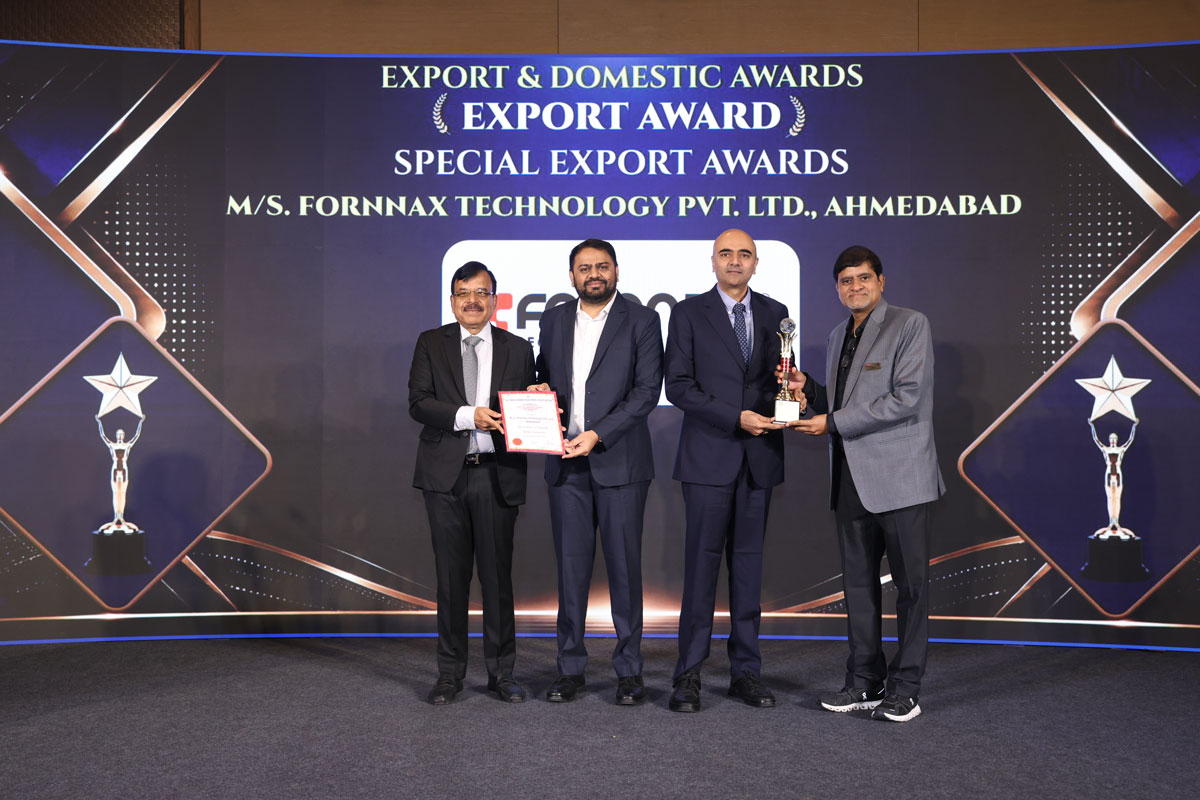
Jignesh Kundaria, Director and CEO, Fornnax Technology
India is simultaneously grappling with two crises: a mounting waste emergency and an urgent need to decarbonise its most carbon-intensive industries. The cement sector, the second-largest in the world and the backbone of the nation’s infrastructure ambitions, sits at the centre of both. It consumes enormous quantities of fossil fuel, and it has the technical capacity to consume something else entirely: the waste our cities cannot get rid of.
According to CPCB and NITI Aayog projections, India generates approximately 62.4 million tonnes of municipal solid waste annually, with that figure expected to reach 165 million tonnes by 2030. Much of this waste is energy-rich and non-recyclable. At the same time, cement kilns operate at material temperatures of approximately 1,450 degrees Celsius, with gas temperatures reaching 2,000 degrees. This high-temperature environment is ideal for co-processing, ensuring the complete thermal destruction of organic compounds without generating toxic residues. The physics are in our favour. The infrastructure is not.
Pre-processing is not the support act for co-processing. It is the main event. Get the particle size wrong, get the moisture wrong, get the calorific value wrong and your kiln thermal stability will suffer the consequences.
The Regulatory Push Is Real
The Solid Waste Management (SWM) Rules 2026 mandate that cement plants progressively replace solid fossil fuels with Refuse-Derived Fuel (RDF), starting at a 5 per cent baseline and scaling to 15 per cent within six years. NITI Aayog’s 2026 Roadmap for Cement Sector Decarbonisation targets 20 to 25 per cent Thermal Substitution Rate (TSR) by 2030. Beyond compliance, every tonne of coal replaced by RDF generates measurable carbon reductions which is monetisable under India’s emerging Carbon Credit Trading Scheme (CCTS). TSR is no longer a sustainability metric. It is a financial lever.
Yet our own field assessments across multiple Indian cement plants reveal a sobering reality: the primary barrier to scaling AFR adoption is not waste availability. It is the fragmented and under-engineered pre-processing ecosystem that sits between the waste and the kiln.
Why Indian Waste Is a Different Engineering Problem
Indian municipal solid waste is not the material that imported shredding equipment was designed for. Our waste streams frequently exceed 40 per cent to 50 per cent moisture content, particularly during monsoon cycles, saturated with abrasive inerts including sand, glass, and stone. Plants relying on imported OEM equipment face months of downtime awaiting proprietary spare parts. Machines built for segregated, low-moisture waste fail quickly and disrupt the entire pre-processing operation in Indian conditions.
The two most common failures we observe are what I call the biting teeth problem and the chewing teeth problem. Plants relying solely on a primary shredder reduce bulk waste to large fractions, but the output remains too coarse for stable kiln combustion. Others attempt to use a secondary shredder as a standalone unit without a primary stage to pre-size the feed, leading to catastrophic mechanical failure. When both stages are present but mismatched in throughput capacity, the system becomes a bottleneck. Achieving the 40 to 70 tonnes per hour required for meaningful coal displacement demands a precisely coordinated two-stage process.
Engineering a Made-in-India Answer
At Fornnax, our response to these challenges is grounded in one principle: Indian waste demands Indian engineering. Our systems are built around feedstock homogeneity, the holy grail of kiln stability. Consistent particle size and predictable calorific value are the foundation of stable kiln combustion. Without them, no TSR target is achievable at scale.
Our SR-MAX2500 Dual Shaft Primary Shredder (Hydraulic Drive) processes raw, baled, or loosely mixed MSW, C&I waste, bulky waste, and plastics, reducing them to approximately 150 mm fractions at throughputs of up to 40 tonnes per hour. The R-MAX 3300 Single Shaft Secondary Shredder (Hydraulic Drive), introduced in 2025, takes that primary output and produces RDF fractions in the 30 to 80 mm range at up to 30 tonnes per hour, specifically optimised for consistent kiln feeding. We have also introduced electric drive configurations under the SR-100 HD series, with capacities between 5 and 40 tonnes per hour, already operational at a leading Indian waste-processing facility.
Looking ahead, Fornnax is expanding its portfolio with the upcoming SR-MAX3600 Hydraulic Drive primary shredder at up to 70 tonnes per hour and the R-MAX2100 Hydraulic drive secondary shredder at up to 20 tonnes per hour, designed specifically for the large-scale throughput that higher TSR ambitions require.
The Investment Case Is Now
The 2070 Net-Zero target is not a distant goal for India’s cement sector. It starts today, with decisions being made on the plant floor.
The SWM Rules 2026 are already in effect, requiring cement plants to replace coal with RDF. Carbon credit markets are opening up, and coal prices are not going to get cheaper. Every tonne of coal a cement plant replaces with waste-derived fuel saves money on one side and generates carbon credit revenue on the other. Pre-processing infrastructure is no longer just a compliance requirement. It is a business investment with a measurable return.
The good news is that nothing is missing. The technology works. The waste is available in every Indian city. The government has provided the policy direction. The only thing standing between where the industry is today and where it needs to be is the commitment to build the right infrastructure.
The cement companies that move now will not just meet the regulations. They will be ahead of every competitor that waits.
About The Author

Jignesh Kundaria is the Director and CEO of Fornnax Technology. Over an experience spanning more than two decades in the recycling industry, he has established himself as one of India’s foremost voices on waste-to-fuel technology and alternative fuel infrastructure.
Concrete
WCA Welcomes SiloConnect as associate corporate member
Published
1 month agoon
April 13, 2026By
admin
The World Cement Association (WCA) has announced SiloConnect as its newest associate corporate member, expanding its network of technology providers supporting digitalisation in the cement industry. SiloConnect offers smart sensor technology that provides real-time visibility of cement inventory levels at customer silos, enabling producers to monitor stock remotely and plan deliveries more efficiently. The solution helps companies move from reactive to proactive logistics, improving delivery planning, operational efficiency and safety by reducing manual inspections. The technology is already used by major cement producers such as Holcim, Cemex and Heidelberg Materials and is deployed across more than 30 countries worldwide.
Digital integration will be the unifying theme
Guna Cement Plant to Create 1,500 Jobs
IHCL Posts Record Quarter And FY2026 Results
Top 10 Cement Companies in India
Rs 20 Million Road Revamp Linking Andada To National Highway 48 Begins
Digital integration will be the unifying theme
Guna Cement Plant to Create 1,500 Jobs
IHCL Posts Record Quarter And FY2026 Results
Top 10 Cement Companies in India
Rs 20 Million Road Revamp Linking Andada To National Highway 48 Begins
Trending News
-
Concrete1 month agoShree Cement Approves Rs 1,800 Crore Meghalaya Plant
-
Concrete4 weeks agoNuvoco FY26 Income Rises 10% as Expansion Advances
-
Concrete4 weeks agoSiyaram Recycling Secures Rs 21.03 mn Order From Anurag Impex
-
Concrete1 month agoBMC Cement Concretisation Cuts Pothole Repairs By 70 Per Cent