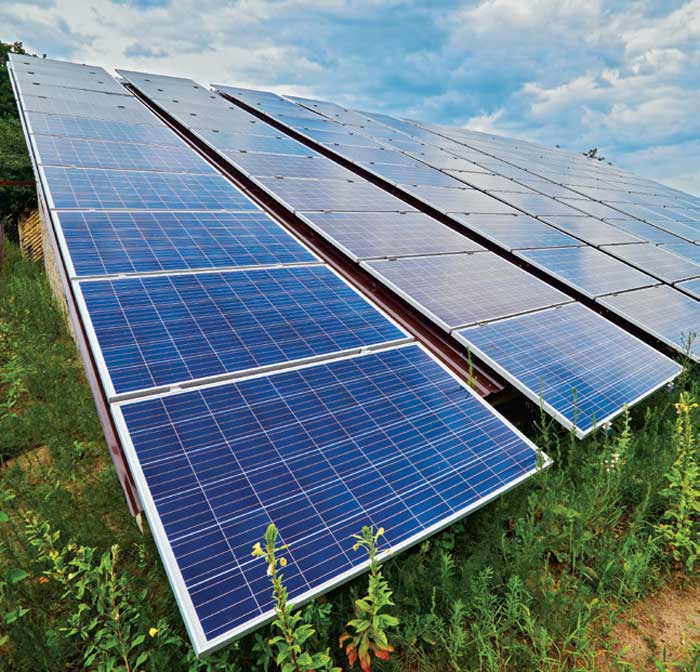
Sumit Banerjee, Vice Chairman, Reliance Cementation, discusses the cement industry from its infancy to growth, prospects of value-added products, environmental issues and future in an interview with Indian Cement Review.What was the major impact of decontrol? The most favourable impact of decontrol was that it pushed the industry’s growth to a higher trajectory. The process began in 1982 with partial decontrol and by 1989 the industry was completely out of government control. Had the industry been under control, prices would have still remained administered and, it would have not grown enough.Post-delicensing what course did the cement industry take in terms of capacity and demand? The capacity build-up happened in the 1990s, which was necessary to meet the increasing demand generated by liberalisation of the Indian economy. The buoyant economic growth and step up in investments created enormous demand for cement, which attracted investment into the cement industry. Increasing number of players and market determined pricing resulted in greater competitiveness, higher efficiency and increased productivity. The economies of scale expanded. The industry started setting up of one million tonne capacity plants, which was a complete novelty at that time. On hindsight, one could say that the industry did not do much for promoting demand. One more interesting thing that has emerged from decontrol is that India today is the second largest cement producer in the world and also the most efficient producers in terms of blended cement and therefore, of fuel and energy consumption.What were the factors for attracting investments in cement? The first point is the demand. Post delicensing, the cement industry could generate surplus cash, which they reinvested in setting up new capacities. Money was spent on state-of-the-art plants, innovation, expansion, etc. However, the demand was created by the economic reforms that started in early 1990s. Cement is one of the industries that made most of this opportunity.What is the comparative cost of production viz-a-viz other countries like China, given the increase in mining lease, royalty, coal prices in recent years?To compare costs of cement production across geographies, one should consider the differences in cost of labour, power, interest, taxation inherited by different economies. Hence the comparison should really be done considering two parameters – one cement price and, the other profitability of the cement industry in those economies. Prima facie, going by the efficiency of large cement plants, India should be in the top quartile of cost planet globally. There would be very few countries where the cost could be lower. China is one of those countries, where the comparative cost would be lower. But of course there are few reasons to it. Firstly, the interest cost is much lower and second there is a lot of inland water transportation there. Nevertheless, profitability of many Chinese cement companies is much lower as compared to India. Indonesian cement companies are quite profitable and so are the companies in New Zealand which are even more profitable. But the highest cement prices are in New Zealand although the market there is quite small.In India, there are certain things that work against the industry. Here, tax incidence is very high and logistic efficiency is low. In China and USA, cement is hardly hauled by road over long distances. There cement is transported in bulk, by waterways and, only the last mile is by road. So logistics cost, which is one of the large components of the cost structure in India, is lower in these countries, on apple to apple basis.What about input costs?Regarding energy, the Indian cement companies have somehow managed to resolve the problems. For example, look at the captive power plants. Nowhere in the world, power plants of 30 MW or 60 MW are set up for captive use. Indian cement companies have time and again been able to justify captive power plants on the twin considerations of cost & reliability. To address the issue of high coal cost, high power cost, the industry has found solutions in other areas of the cost structure. For example, India has reduced cost through adoption of blended cement. India is the highest amongst the major cement producing countries in terms of blending ratio, and is the lowest in the clinker factor. Blended cement, both fly-ash and slag blends, have been very well accepted in many applications. Ash blending can go up to 35 per cent while in case of slag it can go up to 55 per cent.What about composite cement, are they cheaper than blended?Composite cement is a blend of both flyash and slag. The Bureau of Indian Standards as of now, has approved only blends of either flyash-based PPC or slag-based PSC cement. In Europe, America and in some of the Asian countries, composite cement has already been approved, with controls on the proportion of blending depending on the properties required for different applications.Bureau of Indian Standards is a body where all the stake holders come from different spheres comprising of users, manufacturers, technical experts, etc. So far, in BIS, there is no unanimity on introduction of composite cement. But I guess it will be only a matter of time when composite cement will also be introduced in India.What are the growth drivers for cement in coming years? I think the growth drivers would be infrastructure, industrial, commercial and housing. Urban housing will not show magical growth while industrial and commercial growth will be tardy. Our big hope is pinned on infrastructure and rural housing. A good monsoon this year and year on year, will also generate demand growth for rural housing.What is the proportion of branded and unbranded cement?Cement is a branded commodity in India because 80-85 per cent is still sold in bags. Cement is sold in retail, thus it has to be branded. Even bulk buyers prefer branded cement. The buyers trust a given brand for quality and are therefore ready to pay premium price for top brands. There are some national brands which are lesser known in some regions while there are localised brands which perform well since they are regional leaders. There is brand hierarchy in every market, but in the retail segment there is no cement without a brand name.What about value-added products? Are they catching up?Apart from ready-mix concrete (RMC) the demand for value-added products are very low in India. Prefab which includes concrete pavements, concrete hume pipes, railway sleepers, etc are termed as concrete products. Currently, the market size of these concrete products is very small but has tremendous potential to grow. There are countries like Netherlands, that are leaders in concrete products, where the houses are completely built using prefab concrete whereas, in India most constructions are still made using on-site concrete.Are cement companies foraying into prefab business, especially RMC? Cement companies are not that keen on investing in the prefab business because of its small current market size. Ultimately, the concrete product will become a value-added product and will have to be made nearer to the consumption point. Therefore, smaller players will develop this segment, like in case of RMC. RMC industry has grown faster than cement consumption. If cement consumption is growing at 5-9 per cent, RMC is growing at 25-30 per cent, particularly in larger cities. Other value-added segments are insignificant today.RMC is a low capital industry but profit margins are absolute wafer thin. An RMC plant can be set up by investing Rs 1.5 crore to Rs 5 crore. There is no entry barrier at this cost. In terms of the growth, the future is bright. Today the RMC penetration has just touched 10-15 per cent. The returns will maximize when this grows beyond 50 per cent, and also industry consolidation happens.What are the environmental issues facing the cement industry? Cement industry, globally has got a bad name in the climate change debate, because it generates 4-5 per cent of the CO2 globally. This apart, the most important environmental benefit of cement manufacturing is the possibility of incineration of hazardous materials. In Europe, the debate is intense and companies are keenly looking at alternative sources of disposal of these hazardous materials. So, with the pressure of CO2 and the urgent need for safe disposal of hazardous material, European companies have recognised that cement kiln is a better way to dispose hazardous wastes instead of an incinerator and this has been technically verified. In Europe, rules on hazardous waste disposal are very stringent. In India, the rules are inadequate, but they will become tough over time, opening up this as a great opportunity for the cement industry.What about use of green energy in cement industry? To begin with ‘Green Energy’ is a debatable subject because of its unclear definition. For example, I would state that bio-fuel is not green. Green energy will rather include all those sources that can substitute fossil fuel or non-renewable sources, like wind, solar and, hydel power. They are green because they serve two purposes. Firstly, they are non depleting natural resources, and secondly they do not generate CO2. In case of cement industry, green energy will be used only when there is permitting and regulatory environment which will incentivise its use. The beginning has been made but in a small way. We have few examples of companies like ACC and Madras Cement, which have set up wind farms.In Europe, there are cement companies completely running on non-conventional fuels and many plants have substituted conventional fuels to the extent of 25-30 per cent. In India, the substitution rate has just reached 1-2 per cent.Many of the upcoming projects have captive power plant? Will there be cases where wind/solar power plants will come up meet all the energy needs? Unless the permitting and regulatory environment nudges investment in that direction, nothing magical will happen. There will only be stray cases of green energy usage in cement plants. In a smaller move, a legal requirement is being introduced wherein any power generator using conventional sources will have to generate a certain percentage of power from green sources or, will have to buy credit from other green generators. To make this smoother, there has to be a market for credits of green power generation. There is huge investment potential in solar power and when these plants come up, the credit market for green power could open up.About Reliance Cement Reliance Cement is setting-up its first two cement plants – one each in Madhya Pradesh and Maharashtra with a combined capacity of 10 million tonnes a year with satellite grinding plants. Financial closure for one has been achieved. Land has already been acquired and, letters of intent for the major & critical equipment issued. The construction work will begin in the current financial year and will be completed by 2013.