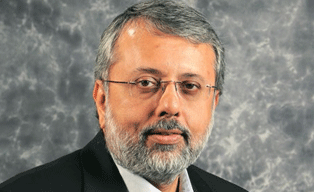
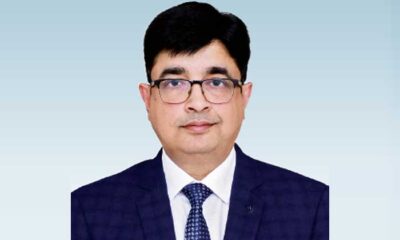
Ranganath NK
Managing Director, Grundfos Pumps India
Those who deal with industrial pumps ought to have heard the name Grundfos. Those who have used it would vouch for their reliability. Such is the status of this 60-year-old pump manufacturer. The company has defined its goals clearly. Though now China is a second home for Grundfos, the company is on its way to be the largest industry partner in India and Russia. It is aggressively introducing innovative products in the market that meet efficiency norms years before they are mandated. ICR interacted with Ranganath NK, Managing Director, Grundfos Pumps India, to take a closer look at the company. Excerpts from the interaction.
Tell us a bit about Grundfos India?
Grundos India is a wholly owned subsidiary of Grundfos A/S, Denmark. Set up in 1998, Grundfos India started with its commercial operations in 1999. Prior to that, Grundfos supplied to India through its warehouse in Dubai. Initially the company started with sales and service in India and later moved to local assembly and then to localising components in India. Of course, provided that the quality is maintained at the same level that we have at all other plants internationally.
Today, Grundfos India, headquartered in Chennai, is responsible for sales in India, Bangladesh, Bhutan and Maldives.
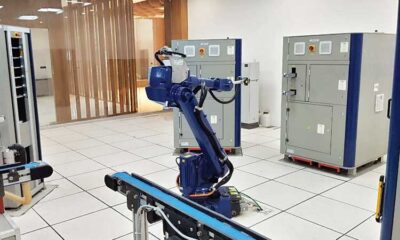
We have more than 250 employees working with 200 distributors and dealers with 20 offices across India. We have two production facilities, one adjoined the corporate office here in Chennai and another in the Special Economic Zone (SEZ) on the East Coast Road, Tamil Nadu.
So do you manufacture all components here in India?
No, not all. Initially we focused on building systems. The pumps were sourced from Dubai. When we started production of pump components, we started making about 20 per cent of the components. Now we are making about 40 per cent components locally. We don?t make steel or sheet metal components in India at all. It is not possible to manufacture them economically in India while adhering to high quality standards of Grundfos. Similarly for motors we are still dependent on imports from our international counterparts. We have so far not been able to identify a local supplier in India who can supply motors adhering to Grundfos standards and at an economical rate. It is much cheaper to get them manufactured abroad and import in India. We do casting work in India.Tamil Nadu.
How many units are assembled at Grundfos every year?
If we consider pumps of various sizes assembled in India, then it would be close to 50,000 units a year. But the number of units sold by us would be close to 1 to 1.5 lakh. We assemble only large size pumps (3 kW upwards), 62 per cent of which are used in the industrial sector.Tamil Nadu.
Has the recent slow down in industry affected you?
Though the growth was not negative, nor did we hit the bottom, we were influenced by the slowdown. Right from inception, for some 15 years now, we had maintained a CAGR of 30 per cent. But during the slowdown it was around 12 per cent.
Grundfos pumps have a very strong brand loyalty in the market. What is the secret?
There are a few key drivers for this brand attachment. One is our products are of high quality and run efficiently. Grundfos pumps are very reliable and have a life cycle of 10-15 years on an average. If you look at the life cycle cost of a pump, the cost of pump and its maintenance is negligible in comparison to the cost of energy consumed by it. Grundfos pumps offer 30-35 per cent savings in energy costs, so it makes sense to opt for these pumps. The pay back period of our pumps is less than a year to 18 months in most of the cases.
The pump to a plant is like the heart to the body. When a pump fails, it is like the plant having a heart attack. Maintenance people have to continuously monitor pump health to keep the processes running smoothly. A reliable pump that gives them less maintenance headaches will naturally be their favourite.
Plus we keep introducing new advanced pumps in the market and upgrading existing products. So our customers now expect the latest and best from us.
Does Grundfos have an R&D centre in India and if so what are the projects that you are working on?
Yes we have recently established an R&D unit here, which is mainly focused on embedded software development for pumps. We have also assembled a 5-6-member team recently to develop specific products catering to the Indian market. What is requested in local market may not sell in America. So these products are tailor made as per the specific needs of the local market.
Besides this, we are working on solar driven water pumps. We are developing very energy efficient pumps that reduce the requirement of solar panel size, making the whole system energy efficient and affordable.
You are also in manufacturing of motors and recently you have upgraded IE2 standards. Tell us more about this upgrade.
Grundfos has manufactured electrical motors since the beginning of the 1970s. These include a range of energy-efficient standard motors and motors with integrated frequency converters up to 22 kW that meet the current EU energy efficiency classification?s highest class.
Now the company will be switching from IE1 to IE2 motors as standard from August 01, 2014. To begin with, it will be implemented in the CR range of pumps and will be gradually extended to other products as well. In alignment with the global trend of shifting towards energy efficient motors, which was introduced in Europe in 2011, and in China this year, Grundfos is the first pump company in India to move to these energy efficiency IE2 motors.
Pumps consume about 10 per cent of global electricity. Without precisely the right motor, even the best pump will consistently waste energy. With Grundfos high efficiency pump and motor technology, it reduces the average pump?s energy consumption by up to 60 per cent.
Tell us about the Blueflux label pumps from Grundfos?
Blue indicates energy. These pumps are very energy efficient and have integrated electronic drives. They almost learn how to operate based on the usage pattern. The Grundfos Blueflux label ensures that the pump motor runs at the highest possible efficiency standard, IE3, under the EU Directive specifying ecodesign requirements for electric motors. Grundfos Blueflux technology represents the best from Grundfos within energy efficient motors and variable frequency drives (MG motors, MGE motors and CUE drives). Most pumps are needlessly inefficient. This is largely due to the motors driving the pumps. Most run continuously at their top speed regardless of actual requirements. The Grundfos Blueflux motor combined with a variable speed drive can decrease a pump?s energy consumption by up to 60 per cent, depending on the pump?s load profile.
Tell us about the green building initiatives taken by you?
While manufacturing products that help our clients save energy, we are also trying to contribute towards energy and water conservation by reducing our impact on the environment. I believe in walking the talk. So when it came to green buildings, we decided to set an example at home. Our headquarters in Chennai is India?s first gold-rated green building (LEED certification by USGBC in 2005) and is energy efficient with 100 per cent recycling of the sewage, rain water harvesting and with solar collectors and photovoltaics. Grundfos India?s factory also received the gold certification in 2011 from the Indian Green Building Council (IGBC). In August 2013, the Grundfos office building reapplied for certification, and that too against stricter norms. Our facility got the LEED EB Platinum rating.
Grundfos India has launched a forum through the social media site, Facebook, called ?Ek Boond Pani?. The name translates to ?a drop of water? in Hindi signifying the importance of each drop of water. Through this page, members share water conservation tips and facts to encourage this awareness to be driven home. Grundfos India is also working with students from elementary schools to universities to spread awareness on sustainability (energy and water conservation). We encourage school visits to its facility to showcase the Green Building concept.
Grundfos Group
An annual production of more than 16 million pump units makes Grundfos one of the world?s leading pump manufacturers. Circulator pumps for heating and air-conditioning as well as other centrifugal pumps for the industry, water supply, sewage and dosing are the main products. Today Grundfos is the world?s largest manufacturer of circulators, covering approximately 50 per cent of the world market of these pumps. In addition to pumps, Grundfos produces standard and submersible motors as well as electronics for monitoring and controlling pumps. Additional products are produced in the BioBooster and Lifelink divisions, which are part of the company?s new business activities.
The company was established in 1945 in Bjerringbro, a small town in Denmark. Grundfos DK the Sales Company, Grundfos A/S the Production Company and Grundfos Holding A/S are operated from this town. In addition, Grundfos has facilities in Aalestrup, Arslev, Brondby and and Farum.
The Grundfos Group is represented by more than 80 companies in more than 55 countries. The company has experienced more than 60 years of continual growth.
The pump to a plant is like the heart to the body. When a pump fails, it is like the plant having a heart attack. Maintenance people have to constantly monitor pump health to keep the processes running smoothly.
Ranganath NK
Ranganath NK joined Grundfos group in February 1998 and established Grundfos India as a company in March 1998. He oversees the operations of the company in India, Bangladesh, Bhutan and Maldives. Ranganath has more than 33 years of industry experience covering marketing, sales, design, project management, finance and human resources.
Prior to joining Grundfos, he was the Director of IAEC Industries. His first job was with Eicher Tractors in sales. Ranganath has been involved in technology transfer to India from other countries including Denmark. His focus has been and is water and energy conservation.
Ranganath was Chairman of Confederation of Indian Industry (CII), Tamil Nadu Council. He is also involved with the CII Councils for water, skill development and sustainability. He is a member of the Executive Council of Indian Green Building Council (IGBC).