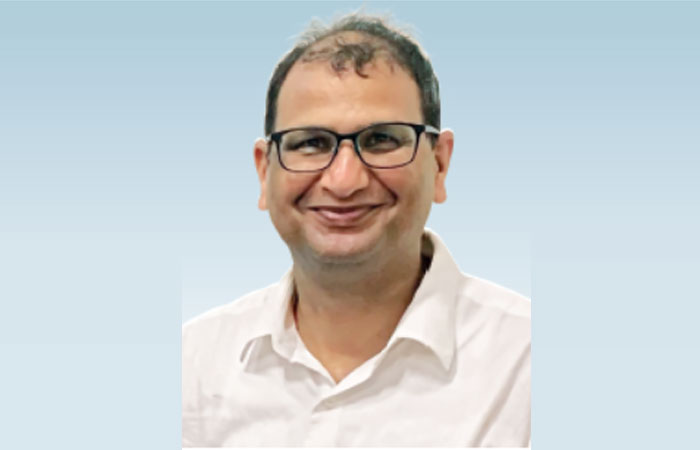
Gaurav K Mathur, Director & Chief Executive, Global Technical Services, argues that lubrication excellence is no longer a maintenance function but a strategic discipline that directly influences reliability, sustainability, and manufacturing profitability.
In an industry where contamination, equipment wear, and unplanned downtime can quietly erode profitability, lubrication is emerging as a critical pillar of operational excellence. Gaurav K Mathur explains how Total Lubrication Management (TLM), oil diagnostics, condition monitoring, and AI-driven reliability intelligence are transforming maintenance strategies across cement plants. He highlights why contamination control, prescriptive maintenance, and closer collaboration between OEMs, lubricant suppliers, and asset owners will be essential for achieving higher equipment reliability, lower lifecycle costs, and long-term sustainability.
How are lubricant technologies evolving to meet the demanding operating conditions of modern cement plants?
Modern manufacturing is becoming increasingly challenging due to rising costs and shrinking profit margins. In this context, sustainability is no longer optional; it has become essential from both economic and environmental perspectives. As industries strive to remain competitive, tribologists and researchers are actively developing advanced lubricant solutions that not only deliver superior lubrication performance but also enhance energy efficiency and extend equipment life.
A well-engineered combination of base oils and additives plays a critical role in achieving the optimal balance between cost and performance. Through innovative formulations, manufacturers can significantly improve operational efficiency while supporting sustainability objectives. Lowering
the coefficient of friction in base oils through effective additive blending remains a key focus area for achieving these benefits.
However, in industries such as cement manufacturing, operational conditions are exceptionally harsh. High levels of dust and contaminants, along with extreme environments, make lubrication management significantly more complex. In such conditions, contamination becomes a critical barrier to achieving the full potential of high-performance lubricants. Therefore, ensuring contamination-free lubrication and implementing robust contamination control strategies within lubrication systems, particularly in sumps, is essential. Even the most advanced lubricants cannot deliver expected performance if lubrication practices are poorly managed. Ineffective lubrication management ultimately leads to wasted resources, reduced equipment life, and increased operational costs.
In essence, while selecting the right lubricant is important, disciplined lubrication practices and contamination control are equally vital to fully realise both performance and sustainability benefits.
How is the cement industry balancing sustainability goals with the need for heavy-duty lubrication performance?
Industry has progressively adopted the concept of Total Lubrication Management (TLM), which encompasses all critical aspects of lubrication, including lubricant indenting, storage, handling, dispensing, and contamination control. A well-structured and scientifically driven lubrication approach plays a vital role in enhancing lubricant life and ensuring optimal equipment performance.
Lubricants, when handled with proper care, discipline, and sensitivity, deliver significantly better reliability and efficiency. Organisations today are increasingly focusing on selecting the right balance between optimum lubricant quality and desired service life, rather than relying solely on periodic replacement practices. Hydrocarbon-based lubricants, in principle, do not have a fixed expiry date. Their usable life can be extended substantially through effective condition monitoring and contamination control. Therefore, lubricant life is less a function of time and more dependent on the lubrication strategy adopted and its consistency in implementation.
This approach aligns with modern TLM practices, where condition-based maintenance, contamination control, and systematic monitoring enhance both lubricant longevity and overall asset reliability.
In what ways are predictive maintenance and lubricant monitoring reshaping maintenance strategies in cement manufacturing?
Oil in a machine plays a role similar to blood in the human body. Just as blood diagnostics reveal the health condition of a person, oil analysis provides deep insights into both the lubricant condition and the mechanical health of equipment.
Having an oil analysis laboratory within the plant provides significant advantages, as test results are available immediately. This short turnaround time is critical because mechanical wear can begin to develop within 48 hours. Therefore, an on-site laboratory for monitoring oil condition and machine wear becomes essential for proactive maintenance and preventing equipment failure.
Through systematic oil and grease analysis, supported by professionals with extensive maintenance and lubrication expertise, organisations can identify wear patterns, contamination, and early signs of failure. This enables data-driven decisions that go beyond reactive or preventive maintenance. With advancements in analytics and domain expertise, the industry is moving from predictive maintenance to prescriptive maintenance. Predictive maintenance identifies what is likely to fail and when.
Prescriptive maintenance goes a step further by recommending what actions to take, why, and how to prevent recurrence. This shift is equivalent to having an expert doctor, not only diagnosing a condition but also prescribing precise treatment and, in some cases, eliminating the root cause entirely.
Global Technical Services brings over 25 years of experience in Total Lubrication Management. With a core team rooted in petroleum and maintenance backgrounds, the organisation has developed strong capabilities in:
• Lubricant performance evaluation
• Equipment condition monitoring
• Failure analysis and prevention strategies
• Maintenance optimisation
Building on the expertise of REMO: AI-Powered Reliability Intelligence, a machine learning-based AI platform named REMO (Reliable Equipment Manufacturing Operations) has been developed. REMO aims to:
• Predict Remaining Useful Life (RUL) of both lubricants and assets
• Analyse complex datasets from oil diagnostics and operating conditions
• Deliver actionable, prescriptive insights for maintenance teams
The model is continuously evolving, with ongoing research focused on achieving higher maturity, potentially enabling future predictions from even a single data point.
The Future: Intelligent, Prescriptive Reliability.
The combination of:
• Domain expertise
• Oil diagnostics
• AI-driven intelligence
is shaping a future where maintenance becomes proactive, precise, and outcome-driven.
In simple terms, the industry is entering an era where machines are monitored like patients-continuously, intelligently, and with expert-backed recommendations that ensure reliability, efficiency, and longevity.
What are the biggest lubrication challenges faced in critical cement equipment such as kilns, crushers, and gear systems?
With diminishing interest among youth in pursuing careers in core industries, organisations across the globe are facing a significant talent gap. Despite billions of dollars invested in infrastructure and industrial assets, the absence of skilled domain experts threatens to make these investments underutilised and less productive.
We continue to live in an industrial world that depends heavily on advanced materials and cost-efficient production systems. However, sustaining this ecosystem requires not only capital investment but also a capable workforce to operate, maintain, and innovate within it. The shortage of proficient professionals is therefore emerging as a critical challenge.
To address this gap, industries must increasingly rely on systems, mechanisation, robotics, automation, and artificial intelligence as complementary forces. These technologies are not replacements for humans, but enablers that can bridge capability gaps and enhance productivity. Machine learning and artificial intelligence, in particular, will play a pivotal role in supporting management decision-making through data-driven insights and predictive analytics.
The future of industry will depend on how effectively organisations balance human expertise with technological advancement to build resilient, efficient, and sustainable operations.
How do you see synthetic and specialty lubricants influencing the future efficiency of Indian cement plants?
At the end of the day, decisions should be driven by the overall cost of manufacturing and the total cost of ownership (TCO). Regardless of the lubricant selected, these factors must be addressed by the product.
With diminishing margins, decision-making is increasingly shifting toward a TCO-based evaluation rather than just upfront performance claims. While there may be a bias toward recommending high-performance products, the critical question remains: if the expected maximum service life cannot be realised due to operational constraints, is the investment justified?
In such cases, the focus must shift from theoretical performance to achievable value in real operating conditions. A solution that delivers consistent, optimised performance within constraints often provides better value than a premium product whose full potential cannot be utilised.
How important is collaboration between lubricant providers, OEMs, and cement manufacturers in driving operational excellence?
OEMs possess a deep understanding of the metallurgy and design limitations of equipment, while lubricant providers bring expertise in tribological requirements specific to each application. The cement plant asset owner, in turn, defines the overarching operational and strategic objectives.
Bridging these three critical stakeholders are professional lubrication companies, which act as reliability and sustainability partners. Organisations such as Global Technical Services play this integrative role by implementing Total Lubrication Management (TLM) across core industries, including cement.
TLM is a holistic concept that encompasses all aspects of lubrication, ranging from product selection and storage to application, monitoring, and optimisation, with the ultimate goal of operating assets in alignment with management’s performance, reliability, and sustainability objectives.















 Concrete4 weeks ago
 Concrete4 weeks ago
 Concrete4 weeks ago
 Concrete4 weeks ago