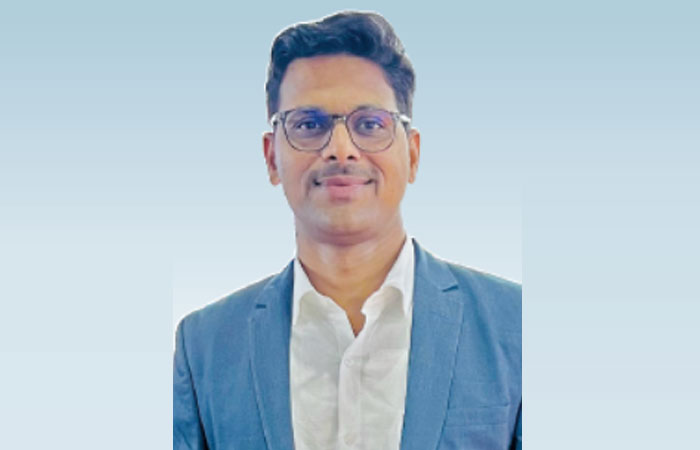
Swapnil Jadhav, Director, SIDSA Environmental, explains how advanced waste pre-treatment technologies are helping cement plants convert challenging waste streams into high-quality alternative fuels, driving sustainability, efficiency and circular economy goals.
As cement manufacturers accelerate their decarbonisation journey, alternative fuels have emerged as a critical lever for reducing dependence on fossil fuels and lowering carbon emissions. Swapnil Jadhav, Director, SIDSA Environmental, discusses how advanced shredding, sorting, and waste pre-treatment technologies are transforming complex waste streams into consistent, kiln-ready fuels. He highlights the role of customised process solutions, real-time quality monitoring, and intelligent waste processing in enabling higher thermal substitution rates, stable kiln operations, and a more sustainable future for the cement industry.
Could you provide an overview of SIDSA Environmental’s role in waste treatment and process technologies?
We are a technology partner; we bridge the waste management and heavy industry sectors. Our expertise lies in designing turnkey process lines that transform complex waste streams into high-value, standardised fuels for cement kilns. Covering everything from waste conveying and sorting to advanced shredding, we provide cement plants with the solutions to effectively substitute fossil fuels, and we guarantee a reliable, safe energy supply.
What are the key advantages of using alternative fuels such as RDF in cement kilns?
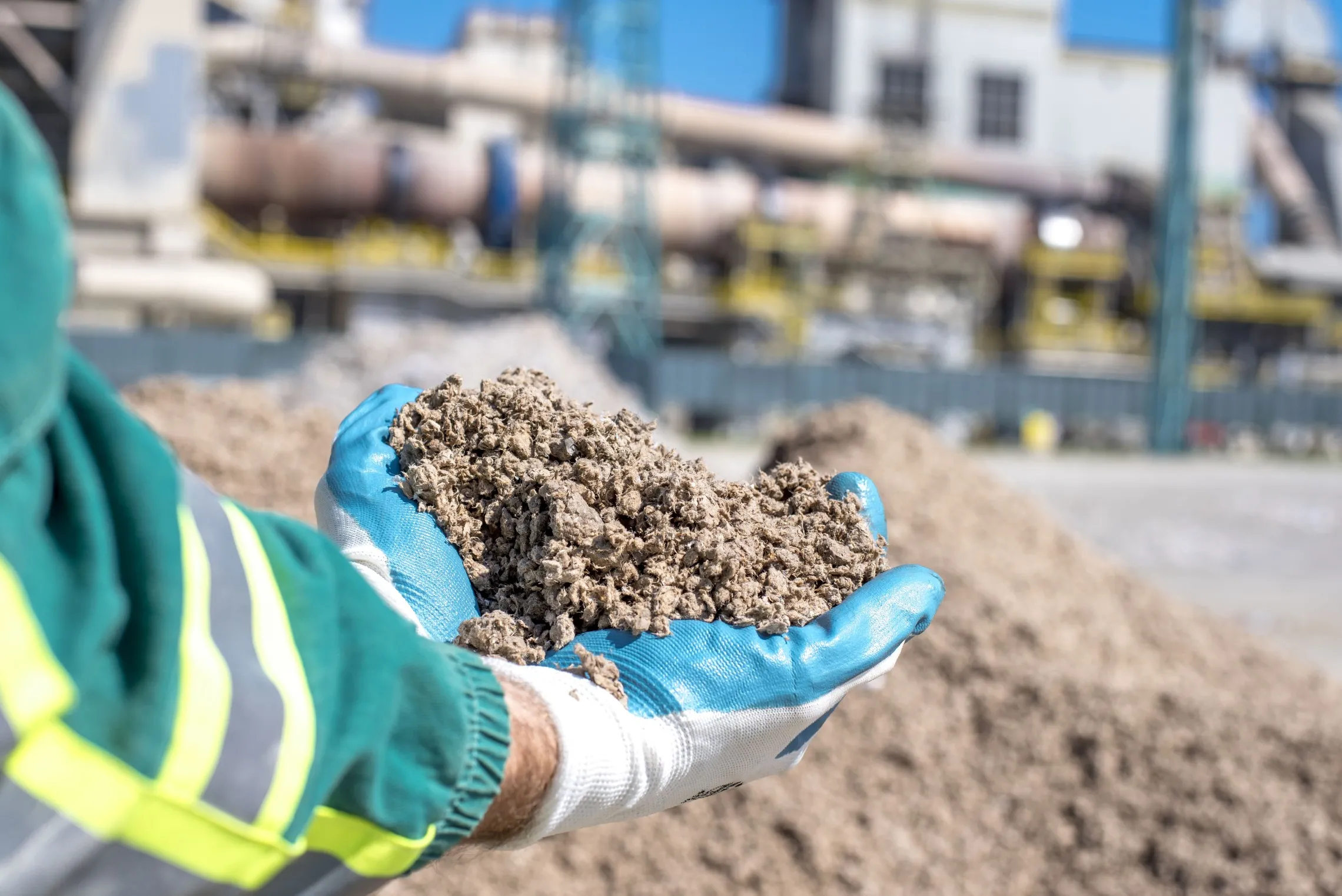
The advantages are environmental, operational, and economic. The most critical is a drastic reduction in the carbon footprint by replacing CO2 emissions due to fossil fuels. Another key advantage lies in the kiln’s 1,450°C process that ensures complete, residue-free destruction of the hazardous compounds, which is not the case of traditional incinerators (even advanced ones). If this is not enough, minerals from RDF are incorporated directly into the clinker. Economically, it decouples a plant’s costs from volatile coal and gas markets. In fact, co-processing systems such as SID’s SMP deliver remarkably fast ROI. It also positions the cement plant as an essential public service, diverting non-recyclable waste from landfills and preventing methane emissions.
What innovations has your organisation introduced in W2E and recycling solutions?
Our innovations all focus on transforming complex waste into precisely defined products. With more than 50 years of experience, we’ve pioneered low-speed, high-torque shredding systems that minimise dust and contaminants (also critical for stable kiln operation). More recently, SID earned a reputation for flexible pre-treatment lines, engineered to process the most challenging, wet, and unsorted wastes where other systems cannot. We are also integrating sensor-based sorting and AI-driven analytics to auto-regulate fuel quality in real-time, guaranteeing always more consistent calorific value and particle size.
How does your shredding technology specifically support RDF production for cement?
Shredding is a critical first step. Our technology is engineered to deliver a homogeneous particle size from bulky, high-tensile materials, which is key to stable combustion. We often use a two-stage approach: a primary shredder for a first round of size reduction, followed by a fine shredder that calibrates the material precisely, typically below 30-80mm. Our integrated sorting systems are able to remove heavy inerts, protecting the shredders’ blades, as well as wet organics, thus significantly reducing the waste moisture before even drying it.
How does your machinery handle the challenges of hazardous and bulky waste?
Safety and durability are foundational at SID. Our systems incorporate ATEX-certified explosion prevention and are built with extreme wear-resistant materials. The low-speed, high-torque shredding principle of our shredders is inherently safer, generating minimal heat and dust. The entire process is enclosed under negative pressure with high-efficiency air filtration, guaranteeing zero fugitive emissions and creating a sealed, controlled environment for the operator. What truly sets SID solutions apart, however, is the synergy between each machine within our turnkey systems like the SMP. The machines are designed to work in concert, anticipating and neutralising potential hazards.
What future trends do you anticipate for alternative fuels in the cement industry?
We think tomorrow’s cement plants will require unprecedented precision in controlling particle size, moisture, and critical contaminants such as chlorine. Our response is to develop robust systems that make it possible. We are engineering pre-treatment lines that deliver always more refined, ‘calciner-ready’ fuel. One of our focuses is embedding real-time monitoring directly into the shredding line, giving operators a live digital readout of fuel consistency. The goal is precise mechanical separation: a clean, high-calorific fuel for the kiln. We deliver the homogeneous feedstock that advanced cement processes actually need to succeed.
How do your customised solutionsenhance a cement plant’s sustainability and efficiency?
A standard solution can be the enemy of efficiency. We begin with a deep audit of the client’s specific waste supply and kiln technology. By custom-engineering the line, the resulting fuel consistently meets ideal parameters, enabling higher thermal substitution rates and very stable kiln operation. That’s a lesson we’ve applied across more than 130 SMP references for hazardous waste co-processing in cement kilns over the last 28 years.














 Concrete4 weeks ago
 Concrete1 month ago
 Concrete4 weeks ago
 Concrete4 weeks ago