Connect with us

Concrete

Digital integration will be the unifying theme

Published

on

Shares

Manoj Taneja, Head – India, Fuller Technologies, makes the case that digital integration, advanced process control, and alternative fuel adoption are converging to redefine how cement plants pursue efficiency and decarbonisation.

As India’s cement industry navigates the twin pressures of rapid capacity expansion and tightening emissions standards, the conversation around plant performance is shifting from isolated equipment upgrades to integrated, data-driven strategies. Manoj Taneja, Head – India at Fuller Technologies, brings a whole-flowsheet perspective to this challenge as he outlines how producers at every stage of their sustainability journey can align operational excellence with decarbonisation goals.

How is Fuller Technologies helping cement plants improve efficiency across the entire production value chain?
Efficiency in cement manufacturing is rarely a single-lever problem. Energy losses accumulate at every stage of the process: addressing them effectively requires a view of the entire flowsheet and the expertise to act on what you see, which is where Fuller Technologies can offer a perspective that few others can. For producers investing in new capacity, the priority is getting the fundamentals right. Our core capital equipment is engineered to deliver energy efficiency and reliability: two things that are inseparable over a plant’s operating life. Meanwhile, at existing plants, targeted upgrades can deliver measurable gains in energy consumption and availability. Here in India, where producers are under pressure to improve efficiency, such upgrades matter enormously, with returns coming quickly.
Looking beyond equipment, our Online Reliability Services combine real-time monitoring with 24/7 access to our engineering expertise, providing early warning of failures and prioritised maintenance recommendations. Automation and digital solutions add a further dimension, enabling producers to extract more value from existing assets through better data and smarter decision-making. Lastly, we deliver training through the Fuller Institute, covering pyroprocess optimisation, mechanical maintenance, automation, and safety.

What are the biggest operational challenges cement manufacturers face today, and how can integrated technology solutions address them?
Rising energy costs remain a dominant financial burden. At the same time, emissions standards for NOx, SO2, particulates, and CO2 are likely to tighten further. A further challenge relates to skills. Even as plant processes become increasingly automated, skilled personnel remain essential, while new skills in areas such as data science are in growing demand across the economy.
Integrated technology solutions address these broad challenges at every level. Advanced process control is a prime example: our ECS/ProcessExpert® (PXP) software optimises key performance indicators across the plant, delivering documented reductions in energy consumption and increases in throughput. Meanwhile, our QCX® automated sampling and analysis systems close the loop between the lab and the process, cutting variability and out-of-spec production. Online condition monitoring and predictive maintenance complete the picture, shifting plants from costly reactive stoppages to planned interventions.

How are pyroprocessing and grinding innovations improving productivity and energy efficiency?
Persistent sources of unplanned downtime and energy loss in the pyroprocess have driven some of our most important equipment developments. Take the Cross-Bar® Cooler as an example, designed to deliver efficient heat recuperation with high uptime, or the ABC™ Cooler Inlet, which we developed specifically to eliminate snowman formation in clinker coolers, a problem that has caused stoppages for decades.
In grinding, wear management has become an increasingly important consideration, particularly when grinding harder materials such as slag, which is the rationale behind both our OK Pro+ ceramic wear segments and our TRIBOMAX® wear surfaces for hydraulic roller presses. Meanwhile, thinking across grinding and pyroprocessing can unlock further
savings: at Cemento PANAM, we designed a system to transfer excess heat 350 metres from the clinker cooler to the finish mills, eliminating the need for a separate hot-gas generator.

How are digitalisation and Industry 4.0 transforming plant performance, and in what ways can automation and advanced control systems help optimise quality, consistency and throughput?
At its heart, Industry 4.0 is the opportunity to create intelligent, connected systems that turn data into actionable insights, enabling real-time decision-making and continuous improvement that maximises productivity and profitability. This means ensuring the right information reaches the right people at the right time. Operators make better decisions, engineers spend less time gathering data and more time
acting on it, and management gains a clear picture of plant performance, accessible via mobile solutions from anywhere.
Advanced process control, such as PXP, takes this further by continuously monitoring process conditions, making fine adjustments, and flagging situations that require human intervention. The performance gains are well documented: we have measured reductions in specific heat consumption of 2 per cent to 5 per cent and kiln throughput improvements of 3 per cent to 8 per cent, alongside meaningful reductions in process variability.

What role do predictive maintenance and condition monitoring systems play in reducing downtime and improving asset life?
Unplanned failures are costly events. Take the kiln, for instance. A typical kiln is designed to run continuously for at least a year before a scheduled maintenance shutdown. Any unplanned stoppage during this period can lead to significant production losses and costly restart expenses.
Our Online Condition Monitoring Services (OCMS) aim to prevent such events. Multiple sensors transmit real-time data to our 24/7 Global Remote Service Centre, where specialists analyse the information using the latest digital tools and decades of experience, monitoring key indicators of equipment health.
The service delivers specific maintenance recommendations grounded in OEM understanding of the equipment, rather than generic alerts. Continuous infrared thermal imaging via our ECS/CemScanner™ kiln shell monitoring system adds another layer, tracking refractory conditions and cooling fan performance in real time. Across all monitored assets, the outcome is maintenance planned on actual conditions rather than fixed intervals, reducing OPEX, extending asset life, and eliminating unplanned stoppages.

How is the industry approaching sustainability, and what technologies are enabling lower emissions and alternative fuel adoption?
Our approach starts with optimisation. For example, the fuel and energy savings delivered by advanced process control compared to manual operation translate directly into lower specific CO2 emissions per tonne of clinker, making digitalisation as much a sustainability tool as a productivity one.
Alternative fuel substitution then offers an immediately actionable route to reducing fossil fuel dependency. The journey looks different for every producer. Some are taking their first steps with entry-level feeding and dosing solutions from Pfister®. Others are pushing high thermal substitution rates in the calciner using technologies such as our HOTDISC® Reactor and FUELFLEX® Pyrolyzer, or focusing on achieving elevated substitution levels in the kiln.
Our portfolio is designed to support producers at every stage, including technologies that address NOx emissions alongside fuel substitution. For supplementary cementitious materials, calcined clay represents one of the most significant near-term opportunities. Fuller now has two full commercial-scale installations in operation – at Vicat in France and at CBI in Ghana – demonstrating that this technology can deliver in real-world conditions.
The common thread is that decarbonisation and operational performance are not in conflict. The most energy-efficient plant is also, in most cases, the lowest-emitting one.

Fuller has made some significant investments in India recently. Can you tell us about your recent activities?
India is not just the home of many important customers but also of many of our team members. In January, we inaugurated our new office at Pacifica Tech Park in Chennai, celebrating the occasion with around 25 customers representing 15 cement groups. Our CEO, Dennis Cassidy, along with Chief Human Resources Officer Pam Turay and Brendan Hart from our new owners, Pacific Avenue Capital Partners, also joined us.
What strikes me is that cement plants want a partner who is present, invested and building for the long term, which is exactly what we intend to be. This commitment is reflected in the launch of a major training programme between the Fuller Institute and Adani Cement, covering 450 graduate and diploma engineers. The first mechanical maintenance course at ACC Wadi drew positive feedback from leadership and participating engineers.

What key technological trends will shape the future of cement manufacturing over the next decade?
AI and soft-sensor technology will close the data gaps that have historically constrained advanced process control. Our partnership with Imubit is already demonstrating this: AI-based soft sensors generate real-time predictions of hard-to-measure parameters, which feed directly into PXP, enabling precision optimisation that was previously impossible.
The adoption of alternative fuels and supplementary cementitious materials will continue to accelerate, and ultimately, carbon capture, utilisation, and storage technologies, tailored to plant conditions and needs, will enter commercial deployment to address the residual emissions that process and fuel improvements alone cannot eliminate.
Through it all, digital integration will be the unifying theme. The plants that thrive will be those that invest not just in point technologies but also in the data foundations and human capabilities needed to use them effectively. For producers here in India, navigating both rapid capacity expansion and increasing pressure to decarbonise, the ability to pursue productivity and sustainability simultaneously will be the defining competitive advantage of the next decade.

  • Kanika Mathur

Concrete

ABB Extends Drive Lifespan at ACC Cement Plant Without Production Shutdown

Published

on

By

Shares

ABB reconditions 25 drives at ACC’s Jamul cement plant, avoiding 16 tonnes of CO₂ emissions while improving reliability through predictive maintenance.
Chhattisgarh

ABB has signed a multi-year Motion OneCare service agreement with ACC Limited, part of the Adani Group, to modernise ageing industrial drives at its Jamul cement plant in Chhattisgarh, improving operational reliability while avoiding approximately 16 tonnes of carbon dioxide (CO₂) emissions without disrupting production.

Announced on 27 October 2026, the agreement combines scheduled drive reconditioning, digital condition monitoring and energy appraisals to extend equipment lifespan, improve plant uptime and optimise maintenance costs. The initiative marks a shift from conventional equipment replacement towards a more resource-efficient approach to industrial asset management.

The first phase, completed in April 2026, involved the on-site reconditioning of 25 ABB ACS800 variable speed drives without a major plant shutdown. By retaining the existing cabinets and restoring the drive modules rather than replacing entire panels, ABB helped ACC preserve capital investment, minimise material consumption and avoid approximately 16 tonnes of CO₂ emissions.

A second phase, covering an additional 25 ACS800 drive modules, is scheduled for the fourth quarter of 2026. The programme is designed to improve long-term equipment reliability while allowing maintenance activities to be aligned with the plant’s operational schedules.

The ACS800 drives, installed at Jamul in 2010, had delivered more than a decade of near-continuous service in demanding cement manufacturing conditions. However, ageing electrical components and changing fault patterns had begun to affect their ability to meet the plant’s reliability requirements.

Rather than opting for complete equipment replacement, ACC engaged ABB’s certified engineers to conduct a comprehensive asset health assessment. The evaluation found that the existing cabinets and enclosures remained structurally sound, making targeted reconditioning a technically viable and cost-effective alternative to full replacement.

Drawing on nearly two decades of experience with ACC’s equipment and operating requirements, ABB developed a maintenance framework tailored to the plant’s shutdown windows, budget cycles and production priorities.

The Motion OneCare agreement incorporates planned equipment restoration, condition-based monitoring and energy assessments, enabling ACC to adopt a more systematic approach to maintaining critical electrical infrastructure.

As part of the programme, ACC has implemented ABB Ability™ Digital Powertrain Insights to monitor drive performance and identify emerging operational issues before they result in equipment failures.

The digital platform provides continuous visibility into parameters such as temperature, current, vibration and fault patterns. These insights allow maintenance teams to detect early signs of equipment deterioration, schedule interventions more effectively and reduce the likelihood of unexpected downtime.

Amit Gupta, Local Division Manager, Motion Services, ABB India, said: “We know what unchecked wear costs over time: a small inefficiency that eats away at ROI for years. At Jamul, the evidence pointed clearly to assets with productive life still in them.”

“Our job was to restore them properly and give the team the tools to stay ahead of the next problem. At ABB, we don’t just fix what fails. We want to protect what works.”

The initiative also demonstrates the growing relevance of circular economy principles in cement manufacturing, where extending the service life of existing industrial equipment can reduce capital expenditure, material consumption and the environmental impact associated with manufacturing replacement components.

According to ABB, drive reconditioning can reduce lifecycle emissions by 50 to 80 per cent compared with complete equipment replacement. By preserving functional components and restoring critical modules, the process helps retain the economic and material value of existing industrial assets.

The addition of energy appraisals in subsequent phases will further expand the programme beyond equipment restoration, enabling ACC to assess drive performance, identify energy-saving opportunities and improve operating efficiency.

For cement manufacturers, variable speed drives play an important role in controlling motors and optimising energy consumption across production processes. Maintaining their reliability and efficiency is essential for minimising operational disruptions and managing electricity costs.

Vinod Bahety, CEO – Cement Business, Adani Group, said: “Moving from reactive firefighting to a structured maintenance plan was exactly what this operation needed. That kind of peace of mind doesn’t come easily. It comes from a partner that understands how your business runs.”

“We didn’t need a full system overhaul; we needed expert support, actionable insights, and a plan we could execute around our schedule. That’s what we got.”

The project supports ACC’s broader strategy to improve manufacturing efficiency through digital transformation, preventive maintenance and sustainable asset management.

ACC, a subsidiary of Ambuja Cements and part of the Adani Group, operates 20 cement manufacturing facilities and 119 ready-mix concrete plants across India. The company has been advancing initiatives focused on renewable energy, circular economy practices and technology-driven operational improvements.

Alongside Ambuja Cements, ACC is part of a large-scale building materials business committed to achieving net-zero emissions by 2050, with near-term and net-zero targets validated by the Science Based Targets initiative (SBTi).

The Jamul initiative aligns with these sustainability objectives by demonstrating how equipment life extension and digital monitoring can contribute to resource efficiency without requiring large-scale replacement of existing infrastructure.

ABB, a global technology company specialising in electrification and automation, brings more than 140 years of industrial expertise and employs approximately 110,000 people worldwide. Its Motion Services business supports industrial customers through equipment maintenance, modernisation, digital monitoring and lifecycle management solutions.

The agreement also reflects a wider shift in industrial maintenance practices, with manufacturers increasingly adopting predictive technologies to improve equipment availability, manage costs and reduce unplanned shutdowns.

With 25 drives already reconditioned and another 25 scheduled for restoration, ABB’s collaboration with ACC illustrates how targeted modernisation, digital monitoring and circular maintenance practices can extend the operational life of critical equipment while supporting more efficient and sustainable cement production.


Continue Reading

Concrete

ABB Drives Digital Transformation at TCI MAX Cement Plant in J&K

Published

on

By

Shares

ABB deploys advanced process control at TCI MAX’s Srinagar cement plant to improve clinker quality, energy efficiency and sustainable manufacturing.

Kashmir 

ABB has deployed its advanced process control technology at TCI MAX Cement’s Srinagar facility in Jammu and Kashmir, marking the region’s first reported implementation of advanced process control (APC) in cement manufacturing and strengthening efforts towards more efficient, digitally enabled production.

Announced on 5 November 2026, the deployment of ABB Ability™ Expert Optimizer at the facility, operated by Trumboo Industries Pvt. Ltd., aims to improve process stability, clinker quality, energy efficiency and overall plant productivity. The implementation forms part of TCI MAX’s strategy to modernise its manufacturing operations through automation and digital technologies.

Following the integration of ABB’s advanced process control solution and supporting IT infrastructure, TCI MAX has reported improvements in operational productivity, product quality and sustainability-related performance indicators. The technology focuses on optimising the cement pyro process, a critical stage of production involving high-temperature processing and clinker formation.

Waseem Ahmed Trumboo, Director, Trumboo Industries Pvt. Ltd., said: “Introducing advanced process control at TCI MAX is an important step in how we are evolving our operations. Our focus is on improving the stability and efficiency of our processes while maintaining consistent clinker quality. We have been encouraged by the performance of the solution during commissioning and by the support from the ABB team, and we look forward to realizing its full potential.”

ABB Ability™ Expert Optimizer combines advanced process control, model predictive control (MPC) and artificial intelligence (AI) to continuously monitor and optimise manufacturing operations. By analysing process conditions, predicting operational behaviour and automatically adjusting key parameters, the system enables more consistent production while reducing process variability.

In cement manufacturing, maintaining stable pyro-processing conditions is essential for achieving uniform clinker quality and optimising thermal energy consumption. Fluctuations in operating parameters can affect fuel efficiency, production output and product consistency.

The deployment is designed to address these challenges through real-time process optimisation, helping operators maintain more stable kiln operations while improving the utilisation of fuel, electricity and raw materials.

Kapil Agarwal, Senior Vice President and Local Division Manager, Process Industries Division, ABB India, said: “Cement producers are increasingly looking to adopt digital technologies to achieve greater consistency and efficiency while addressing their sustainability priorities. ABB Ability™ Expert Optimizer brings advanced process control and deep cement process expertise together to help operators make their processes more stable and efficient. We are pleased to support TCI MAX as it takes this important step in its digital transformation.”

The technology also supports sustainability objectives by optimising fuel consumption, improving electrical energy efficiency and minimising process waste. More stable operations can contribute to lower energy intensity and reduced emissions associated with cement production.

For TCI MAX, the investment represents a move towards data-driven manufacturing, where automated control systems complement operator expertise to improve production performance and operational reliability.

The implementation is particularly significant for Jammu and Kashmir’s cement industry, as it introduces advanced process optimisation technology to a regional manufacturing facility. Its deployment could demonstrate the potential for wider adoption of digital automation across cement plants seeking to modernise their operations.

The project builds on ABB’s experience in delivering advanced process control solutions to cement manufacturers worldwide. Through the integration of industrial automation, predictive technologies and process engineering expertise, the company supports manufacturers in improving resource efficiency and maintaining consistent production quality.

As cement producers face increasing pressure to manage energy costs, improve productivity and reduce their environmental footprint, technologies such as AI-enabled process control and predictive optimisation are becoming important components of plant modernisation strategies.

ABB’s Expert Optimizer provides a platform for addressing these priorities by enabling automated adjustments based on changing process conditions, reducing reliance on manual intervention and supporting more efficient plant operation.

ABB, a global technology company specialising in electrification and automation, has more than 140 years of industrial experience and approximately 110,000 employees worldwide. Its Automation business employs around 26,000 people and provides technologies and services across process, hybrid and maritime industries.

The TCI MAX deployment reinforces ABB’s growing role in the digital transformation of cement manufacturing in India, where improving process efficiency and reducing energy consumption remain critical to the industry’s long-term sustainability.

With the advanced process control system now implemented at its Srinagar facility, TCI MAX aims to build on the initial operational improvements and further optimise production efficiency, clinker consistency and environmental performance.

Continue Reading

Concrete

Ramco Cements’ Hard Worker Wins Eight Awards at ‘Love of Advertising Awards 2026’

Published

on

By

Shares

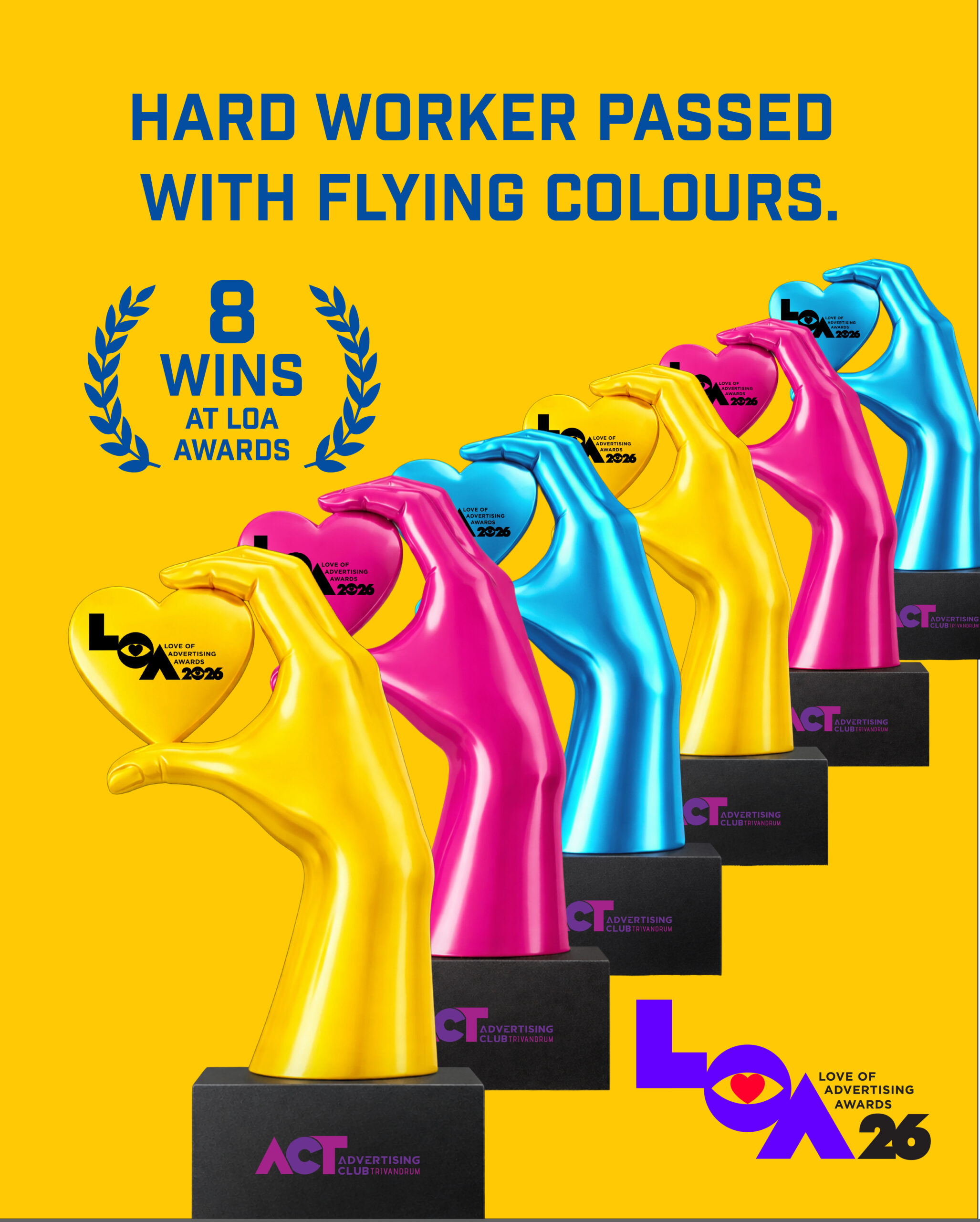
Ramco Cements’ Hard Worker brand wins eight awards for excellence in advertising, packaging and brand identity at the Love of Advertising Awards 2026.

Hyderabad 

The Ramco Cements Limited’s construction chemicals brand, Hard Worker, has secured eight awards at the Love of Advertising Awards 2026, recognising its creative excellence across television, digital advertising, packaging design and brand identity.

Organised by the Advertising Club of Trivandrum, the awards were presented at a ceremony held at The Leela Raviz, Kovalam, on 24 October 2026. The recognition highlights Hard Worker’s integrated marketing strategy and its efforts to establish a distinctive presence in India’s competitive construction chemicals market.

The eight awards span multiple creative categories, reflecting the brand’s approach to combining product-focused communication with engaging storytelling, humour and innovative design. Through its campaigns, Hard Worker has sought to simplify technical product benefits and make construction chemicals more accessible and relatable to consumers and construction professionals.

Built around the philosophy of “Hard-working products for hardworking people”, the brand focuses on communicating practical product advantages through memorable advertising narratives while maintaining a consistent identity across different marketing platforms.

Its campaigns for Ramco Hard Worker Eco Plaster and Tile Fix have been central to this approach. The Eco Plaster campaign highlights water conservation through the product’s self-curing properties, positioning it as a solution that supports more efficient construction practices. Meanwhile, Tile Fix promotes specialised tile-fixing solutions by presenting their practical benefits through relatable situations and creative storytelling.

Beyond advertising, Hard Worker has invested in distinctive packaging and brand identity development to improve product recognition and maintain consistency across customer touchpoints. This integrated approach has helped the brand differentiate itself in a category where marketing communication has traditionally focused on technical specifications and functional performance.

A V Dharmakrishnan, CEO, Ramco Cements, said, “Winning eight awards at the Love of Advertising Awards is a proud moment for Ramco Cements and the Hard Worker team. We believe that building a strong brand requires not only quality products but also the ability to communicate their value in a compelling and differentiated manner. Hard Worker’s journey reflects our commitment to combining product performance with innovative marketing to create meaningful connections with our customers and strengthen our presence in the construction chemicals market.”

The recognition comes as building materials manufacturers increasingly focus on brand differentiation, product awareness and customer engagement to strengthen their position in the construction chemicals segment.

By using humour and storytelling to explain product applications and benefits, Hard Worker aims to bridge the communication gap between technical construction solutions and the practical requirements of contractors, applicators and end-users.

Balaji K. Moorthy, Executive Director – Marketing, Ramco Cements, said, “Hard Worker was conceived to bring a fresh perspective to the construction chemicals category, where product communication has traditionally been functional and technical. Our endeavour has been to break through the clutter with distinctive ideas, humour and storytelling, while keeping the product proposition at the heart of every campaign. The recognition across TV and digital advertising, packaging design and brand identity design demonstrates our integrated approach to building the brand. These eight awards are an encouraging recognition of the creative thinking and collaborative effort behind Hard Worker’s marketing initiatives.”

The awards add to Hard Worker’s growing portfolio of creative recognitions and reinforce Ramco Cements’ emphasis on integrating product innovation with strategic marketing.

The brand’s communication initiatives also reflect a wider shift in the construction materials industry, where manufacturers are increasingly adopting consumer-focused marketing strategies to improve product understanding and strengthen relationships with construction professionals.

With its portfolio of construction chemicals, Hard Worker aims to address evolving requirements for durability, application efficiency and construction quality. Its marketing efforts seek to complement these product attributes by building stronger awareness and encouraging the adoption of specialised construction solutions.

Ramco Cements, one of India’s established cement manufacturers, operates across cement and allied building solutions. Through Hard Worker, the company is expanding its presence in the construction chemicals segment with products designed to enhance performance, quality and durability in modern construction applications.

The latest recognition strengthens Hard Worker’s brand visibility and underscores the growing importance of creative communication in promoting technical building materials. Ramco Cements intends to continue combining product development with distinctive marketing initiatives to support the brand’s growth in India’s construction chemicals market.

Continue Reading

Video Thumbnail
▶

    SIGN-UP FOR OUR GENERAL NEWSLETTER

    Trending News

    SUBSCRIBE TO THE NEWSLETTER


    Don't miss out on valuable insights and opportunities to connect with like minded professionals.


      This will close in 0 seconds