Concrete
Indian Cement Industry Set to Build 100-150MT Capacity

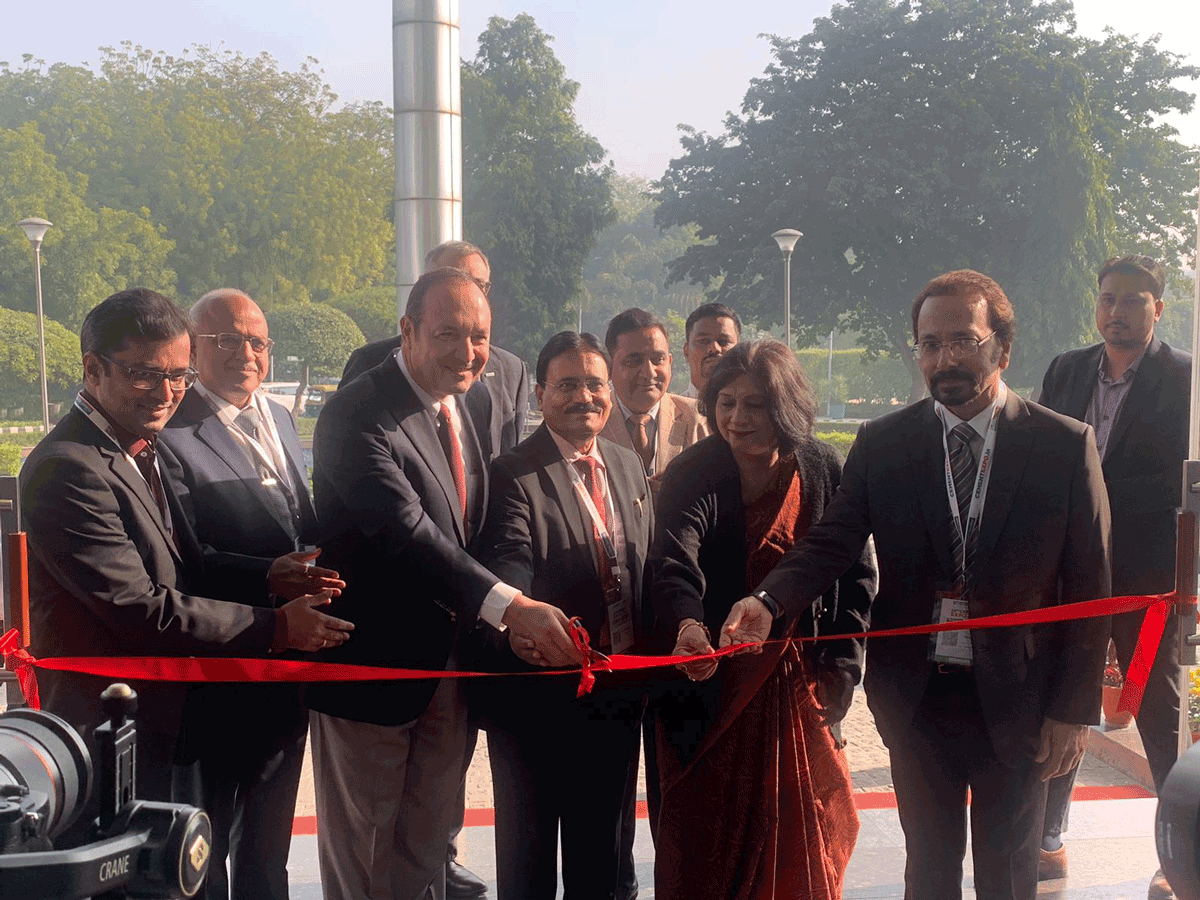
The 14th Cement Expo and 9th Indian Cement Review Conference 2023 flags off
- The two-day event was inaugurated by Dr Vibha Dhawan, Director General, TERI; and Ali Emir Adiguzel, Founder and Director, World Cement Association
- The chief guests in their speeches reaffirmed their confidence in the Indian cement industry’s stance of ‘Driving Sustainability Through Technology.’
- The 9th Indian Cement Review Conference 2023 proved to be a melting pot of ideas in technological innovations that will help the cement industry become more sustainable and achieve its net zero targets.
- The Conference and EXPO charted the journey of the Indian cement industry – from hard-to-abate to possible-to-abate.
DELHI, December 14, 2023: The prestigious Manekshaw Centre, New Delhi, came alive on the morning of December 14th, as luminaries, exhibitors, visitors and delegates converged for the grand inauguration of the 14th Cement Expo and 9th Indian Cement Review Conference 2023. The momentous occasion witnessed the ceremonial ribbon-cutting by Dr Vibha Dhawan, Director General, TERI; and Ali Emir Adiguzel, Founder and Director, World Cement Association, initiating two days of insightful discussions and collaborative initiatives.
Pratap Padode, Founder, FIRST Construction Council (FCC) guided the esteemed dignitaries to the Expo, facilitating introductions with exhibitors and detailed discussions on the showcased products and services. Cement EXPO 2023, seamlessly co-located with the 9th Indian Cement Review (ICR) Conference and the 7th Indian Cement Review Awards, is masterfully organised by FCC, an eminent infrastructure think tank, and Indian Cement Review (ICR), India’s foremost cement publication with a rich 38-year legacy. The 14th Cement EXPO garnered significant support from the Ministry of Road Transport and Highways, Government e Marketplace (GeM), and the Department for Promotion of Industry and Internal Trade (DPIIT), Ministry of Commerce and Industry, Government of India (GoI).
The formal inauguration of the 9th Indian Cement Review Conference 2023 commenced with the traditional lamp lighting ceremony, accompanied by keynote addresses and speeches from distinguished chief guests and dignitaries. Among the notable speakers were Dr Vibha Dhawan, Emir Adiguzel, Dr LP Singh, Director General, National Council for Cement and Building Material, and Kaustubh Phadke, India Head, Global Cement and Concrete Association.
Reiterating their confidence in the Indian cement industry’s commitment to ‘Driving Sustainability Through Technology,’ the chief guests set the tone for the conference. The 9th Indian Cement Review Conference 2023 served as a dynamic forum, bringing together diverse perspectives and fostering discussions on technological innovations crucial for the industry’s sustainability journey. With a focus on the theme ‘Driving Sustainability Through Technology,’ the conference aimed to spotlight advancements and suggest strategies for leveraging technology’s transformative power in the cement sector.
In his opening address, Padode said, “All the big players of the Indian cement industry are focussing on increasing their capacity, with an estimated projection of 200 million tonnes of fresh capacity to be added in the coming years. Emphasis is also laid on being the lowest-cost cement producer in India. In fiscal 2023, 30-32 MT (inclusive of grinding and integrated units) capacity addition is reportedly expected. Given that the higher input costs have moderated we could see capacity addition picking up pace in fiscal 2024 at over 30-32 MT leading up to the addition of 150 MT by fiscal 2027. Considering this speed of expansion, the tug of competition and a buoyant demand from infrastructure and housing segments, the Indian cement sector is poised to take a giant leap.”
In his keynote address, Dr Singh said, “The definition of sustainability means we continue development and growth of our infrastructure while protecting the environment for our future generations. As far as sustainability in cement and concrete is concerned, NCCBM is working on every aspect of cement and concrete sustainability.”
Phadke further added, “Indian cement sector is most energy efficient, with more than 40 per cent of CO2 intensity reduced at India level. The industry progress report highlights the work done by cement industry globally. It follows the roadmap released globally by GCCA at the Glassdoor Summit to deliver a Net Zero concrete by 2050. The report also highlights our progress towards 2030.”
Dr Dhawan addressed the issue of climate change: “Nearly two-third of infrastructure development in India is still pending. Cement and steel are materials that are required in bulk to support this kind of development. This gives an insight into a higher demand, leading to the need of higher production, which is an opportunity for cement manufacturers to grow their business and develop the nation.”
She added, “The unfortunate part of climate change is that it was established that a 1.5oC increase in temperature is acceptable as per norms, but that is slowly shifting to 2.5oC. Temperature above 52oC will not support human life. It will also impact biodiversity and climate change will bring along with itself a plethora of diseases known and unknown. The impact will not be uniform across the globe. Countries like ours will be impacted more as we are already affected by climate change.”
In his speech, Adiguzel said, “The power of Indian Cement industry goes beyond its sheer size. It is a catalyst for economic growth driving employment, investment and innovation, creating job opportunities directly or indirectly. The question is – are global Net Zero policies colliding with economic growth in India? Navigating the interplay between Net Zero policies, economic policies and emission targets in the cement industry is a global conversation.”
Jaxay Shah, Chairperson, Quality Council of India, joined the event via a video message. In his message, he said, “The Cement Expo stands as a testament of the dynamic adaptive nature of our industry. It is crucial that ideas, best practices and technology come together to forge the future of the cement and construction centres. This year’s theme ‘Driving Sustainability Through Technology’ highlights the intersection of technological innovations and sustainable practices. This synergy is essential for the growth of the cement industry in harmony with environment conservation.”
The conference included presentations by Flender, Gebr. Pfeiffer, Loesche India and ATS Conveyors.

Panel Discussions
The panel discussion on ‘Driving sustainability: Challenges and opportunities in cement industry’ covered the importance of collaboration, innovation, and knowledge sharing to drive the industry towards a more sustainable future. The panel included Manoj Rustagi, EVP & CSO, JSW Cement; Kaustubh Phadke, India Head, Global Cement & Concrete Association (moderator), Sameer Bharadwaj – Head Manufacturing Excellence, JK Cement; Soundararaj Naveenthakrishna – General Manager, IKN Engineering; and Aashish Maheshwari, Associate Business Director, Evonik India Pvt Ltd.
‘Exploring Alternative Materials and Technologies for Sustainable Cement Manufacturing’ was another topic that was discussed by an industry panel, which included Dr SB Hegde, Prof Jain University & Visiting Professor Pennsylvania State University, USA, (moderator); Ashwani Pahuja, Chairman & Managing Director, NextCem Consulting; KN Rao, My Home Industries; Dr Bibekanand Mohapatra, Advisor & Consultant, Ultratech; and Rajesh Khanna, Director Sales & Marketing, Loesche India.
Ulhas Parlikar, Global Consultant, presented a technical paper on ‘Circular Economy Practices in Cement Production,’ while Dr LP Singh, Director General, NCB, presented a paper on Role of CCUS in decarbonising Indian Cement Industry.
Day 1 of the 14th Cement Expo and 9th Indian Cement Review Conference unfolded as a melting pot of ideas, showcasing technological innovations poised to make the cement industry more sustainable and accelerate progress toward net-zero targets. The event effectively charted the trajectory of the Indian cement industry, transitioning from hard-to-abate challenges to a realm of possibilities achievable through technological advancements.





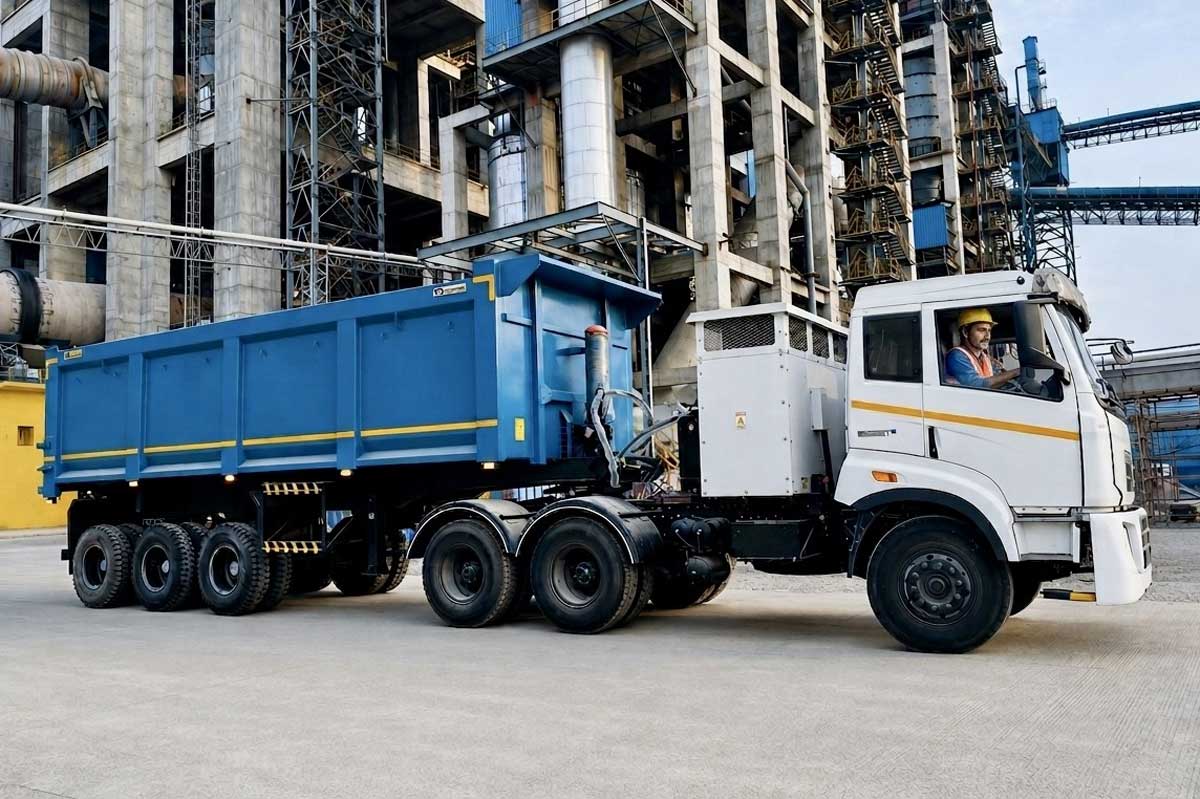


UltraTech to Deploy 600+ Electric Trucks by Dec 2026

UltraTech Cement expands green logistics with 600+ electric truck fleet

CarbonStrong Raises Rs 125 Million To Scale Low Carbon Cement Tech

Protect Your Margins

More Oversight Makes Cement Plants Less Safe
UltraTech to Deploy 600+ Electric Trucks by Dec 2026
UltraTech Cement expands green logistics with 600+ electric truck fleet
CarbonStrong Raises Rs 125 Million To Scale Low Carbon Cement Tech
Protect Your Margins