

Concrete
An Open and Shut


The Indian Cement Industry presents its multi-faceted approach to manufacturing environmentally compatible cement a.k.a. Green Cement as it races against time to minimise carbon footprint of cement production and accelerate the nation’s efforts towards achieving Net Zero deadline.
Cement production is one of the highest-emitting industrial sectors, responsible for about 6 to 7 percent of global CO2 emissions. About 40 per cent of the emissions come from the fossil-fuel combustion used to power the precalciners and kilns in cement plants, the rest from a chemical reaction inherent in cement making.
To bring down the carbon emission from cement manufacturing would require efficient energy usage systems, low carbon alternative fuels and raw materials as well as machinery, equipment, automation, and technology to support the functionality of cement plants, making them productive and cost efficient. Newer processes may also lead to a rise in cost of production, however, this may as well be rewarding for cement manufacturers as the consumption and production of cement is expected to rise in the coming decade globally.
According to Statista, by 2030, China is expected to maintain its status as the world’s leading cement producing nation, albeit by a smaller share. At the beginning of the 2020’s, China accounted for more than half of the world’s cement production, and this is forecast to decrease to 35 per cent of global production by 2030. In second place, India is expected to maintain its ranking. Unlike China, India’s cement production share is anticipated to double by
2030 compared to its 2018 volume, to 16 percent of global production.
The Indian government is highly focused on infrastructure development to boost economic growth. Since the pandemic, India and the world are now pushing harder than ever to meet climate goals. Moreover, for India, the need and importance to cut down on emissions is double; to target climate change and to reduce the current dangerous levels of air pollution. The usage and demand for cement are only going to increase due to the burgeoning population and the need for housing and infrastructure.

The concern for the cement industry is the emission from chemical reaction of limestone in the kiln and the combustion of coal releasing carbon dioxide in the atmosphere making the cement sector a major contributor to the climatic change and rising global warming.
Dr BN Mohapatra, Director General, NCB says, “The production of blended cements like PPC and PSC has seen constant increase since the year 1995 when only 30 per cent blended cements were produced in India as compared to 2017 when the production of blended cements has increased to 73 per cent. This could have been achieved due to acceptance of blended cements in Indian markets by the awareness efforts of cement companies and research organisations like NCB. Keeping in line with the current global scenario, the National Council for Cement and Building Materials (NCB) in its endeavor to help the cement industry realise the target of net zero carbon by 2070 has been working on various levers of CO2 reduction, especially Clinker Substitution.”
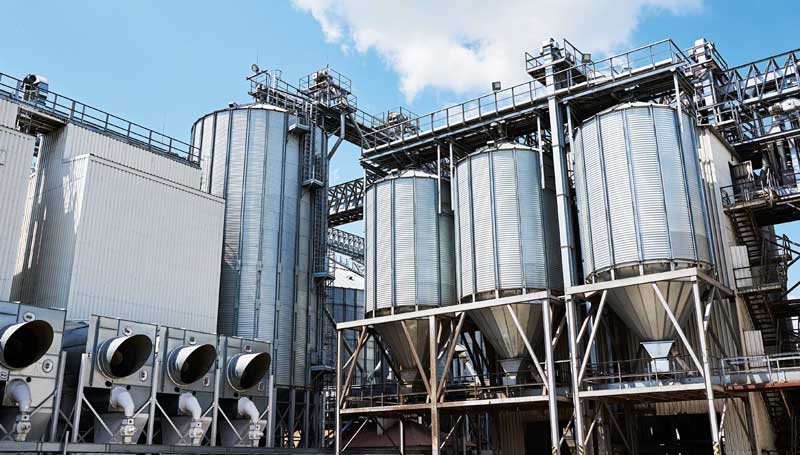
India’s cement production share is anticipated to double by 2030 compared to its 2018 volume to 16 per cent of global production.
Efforts are being taken in the direction to combat this damage to the environment, by making huge emission reductions by using supplementary cementitious materials, by improving energy efficiency, substituting fossil fuels with alternative fuels, using waste heat to generate electricity, and scientifically trying new production techniques and process improvements. Cement manufacturing organisations are also adapting to new technologies like Waste Heat Recovery and alternative energy sources like solar energy for eco-friendly and sustainable cement making.
“The industry has an intention to reduce their carbon footprint and make cement production friendly for the environment. However, without governance and regulation, the implementation will be a challenge and there will be no standard practice. If you go back 30 years when stacks in cement plants had a lot of dust. It was the government that made norms and kept making stricter laws which has led to a highly reduced dust emission from cement plants. Similarly, usage of technology for reduction of carbon footprint will require intervention and regulation for cement players. In Europe, there is a penalty known as carbon tax while the talk of Indian industry is Sustainability Incentive. Either way, there needs to be an intervention to bring down emission levels in any industry,” says Sridhar S Sundaram, VP -Head of Cement Africa, Middle East & South Asia, FLSmidth Private Limited.
COST EFFICIENCY
The rising cost of raw materials, fuel, machinery, and technology is leading to the cost of cement production going up. Cement manufacturers today are investing in making cement production greener and sustainable by relying on efficient systems that enhance the productivity of the process and make full utilisation of the available resources.
V N Balasubramanian, Director – Head BU Cement, Thyssenkrupp Industries India, says, “Costs are increasing every day. The goal is to reduce the production cost to the best possible extent for the customers. At the start of my career there used to be about 800 people working at a cement plant, today there are less than 100. This has been possible due to automation. It is also gradually increasing in the cement industry. Manual intervention not only reduces the chances of risk but also helps in achieving greater accuracy. Automation is not just a buzz word but also the need of the day.”
“For example, German headquarters can evaluate the performance of a plant in India without physically visiting. It comes at a price but there are ways and means to do it and customers are asking for it as well. Developing a solution for this is a challenge, but with us, the advantage is the technical know-how. We understand what needs to be measured, at what time and what frequency. We provide this as part of our package as an offering that is a plus. The advantage of getting this solution from us is because we understand the technology as well as its functionality. Thus, the result and output from our automation solutions are more precise and accurate. We also interpret the results and give recommendations,”
he adds.
Although investment in newer and high-tech machinery and equipment is a large CAPEX, according to the experts it leads to lower OPEX, which in the long run brings cost efficiency to production of
cement by giving machinery a longer life and more precise functionality.
“Sustainability today is not a choice anymore. It has become a part and parcel of boardroom discussions. It is important to understand and appreciate some of the most polluting industries, like the cement industry, are paying close attention to the matter and taking steps to make the environment
better.” says Hitendra Grover, Director – CAD & MSD – India and South Asia, Thermo Fisher Scientific India.
“There are two ways to look at sustainability, on the process side and the utility side. Thermo Fisher plays on the process and environment side. We help the sector to contribute towards the overall sustainability by measuring the level of harmful gasses emitted at the plant,” he adds.
AUTOMATION
The world is moving towards Industry 4.0 and so is the Indian cement industry. Technology, innovation and automation are key components to building a stronger future for the industry. As a mission to achieve Net Zero, efforts are being taken in the direction to reduce carbon foortprint as well as use of energy or make use of alternative fuels and raw materials to achieve desired results.
Technology plays a key role in the same as it brings real time monitoring and accuracy to the functionality of cement plants. This leads to lesser wastage, less lead times and reduces the chances of plant shutdown due to sudden
“According to the cement history of India, the optimum size of the plant is changing every 6 years. Primarily this change relates to the technology that is available to the Indian manufacturers along with the location of mines, location of the market and transportability. These factors play a role in defining the change of the size of the plant. Today I think apart from the selection of technology, availability of the size is also important. For a 10,000 tonne plant to be sustainable, peripheral equipment also needs to be available. Today we have reached that stage,” say Vivek Bhatia, Managing Director and CEO and Makarand Marathe, Business Advisor – Cement, thyssenkrupp.
Newer technologies like Waste Heat Reduction (WHR) and Carbon Capture (CC) are making the rounds which are going to be beneficial for the decarbonisation future of the cement industry. Though these systems are in their nascent stage, they are making their way into the cement manufacturer’s sustainability plans.
“There are some frontier technologies where we increase the density of carbon dioxide speed from 20 per cent to 90 per cent which allows easy carbon capture. We are also working on various carbon capture technologies. As far as carbon capture in India is concerned, we are still at a nascent stage and have to create a situation where carbon can be easily captured. The question is about its storage and subsequent utilisation and disbursement. This technology still has some more distance to cover, but India will reach there,” they add.
Precision and accuracy play a very important role in making the overall process of cement manufacturing cost effective, energy efficient and sustainable. Most equipment makers are making keen efforts in deriving perfection for measurement accuracy. This allows the manufacturers to measure every activity in the manufacturing process accurately and take corrective actions. This helps avoid any errors, thus, saving cost, effort, time and wastage at the plant.
“Today, with new technology the demand for accuracy has increased and it is the call of the technology and customer expectation for parameters in systems to fulfill their requirements. We believe in creating systems that meet customer expectations and add value to their processes without them demanding for it. That is changing from push principle to the pull principle. Cement manufacturers do not incur a high maintenance cost on our equipment; thus, it becomes a cost effective purchase in the long run, giving a better return on investment. Cement manufacturers do not incur a high maintenance cost on our equipment; thus, it becomes a cost-effective purchase in the long run, giving a better return on investment” says Rajesh Pathak, Managing Director, Schenck Process.
SKILLING
The cement industry is a machinery heavy industry. With a technological wave on the horizon and automation taking up a large part of the manufacturing system, it is imperative for the manpower to be trained efficiently in the systems.
The personnel working at cement plants should be able to derive equipment readings as well as understand the data provided by them and make adjustments to the feeds of the machinery. This training in reading data will also help identify markers that indicate a probable need of repair or damage.
“Earlier people used to monitor the output from our systems and monitor them on screens, but now with automation in the picture, everything is in a closed loop control. All systems share selected data with plant control systems. For example, a thermal imaging camera in the burning zone informs about the flame temperature, it also informs about the clinker outgoing temperature as well. This data is given to the kiln optimising package which uses this information to automate their burning process,” says Keyur Shah, Business Manager, SB Engineers
ENERGY EFFICIENCY
According to the International Energy Agency, the cement sector is the third-largest industrial energy consumer in the world, consuming seven per cent of industrial energy use. It is also the second-largest industrial emitter of carbon dioxide, responsible for seven per cent of global emissions. Most emissions occur when raw materials, typically clay and limestone, are heated to more than 2500oF to become the super-strong binding material. Roughly 600 kilograms of carbon dioxide are released per ton of cement produced.
“We have reduced fuel consumption and power consumption as compared to previous years and that is an on-going process. We are an efficient plant and have installed a waste heat recovery system and perhaps it is one of India’s best in the cement industry. It is a 22.5-megawatt WHRS plant, which is of much higher capacity than other cement plants. We have also installed a 30-megawatt solar power plant and are using approximately 35 per cent renewable energy. We are looking forward to increasing this capacity and steps are being taken in this direction” says Vivek Agnihotri, CEO and Executive Director Cement, Prism Johnson.
CONCLUSION
India is the second largest producer of cement in the world. Which means it serves a large consumer base. Therefore, change in consumer preference will also have The Mission Possible Partnership reported in their Concrete Action for Climate plan that global cement production could increase by as much as 23 per cent by 2050. Just as cement and concrete are shaping our built environment, their impacts also shape our climate future. The cement industry will need to decrease its annual emissions by at least 16 per cent by 2030 to meet the Paris Agreement on climate change standards. And because cement and concrete will be crucial for future development, researchers argue that making the material inputs to cement will be one of the fastest ways to reduce emissions and environmental impact.
“Decarbonising the cement industry is likely to require significant advances on three fronts: operational efficiency, technological innovation, and business model reorientation. More collaboration across the cement ecosystem will be pivotal. Despite the increasing complexity and challenges each ecosystem player faces, first movers may gain the upper hand by taking immediate action across the value chain to help the industry reach its decarbonisation targets. These green-cement disruptors are likely to capture headwinds as sustainability becomes increasingly urgent,” says Pankaj Kejriwal, Whole Time Director and COO, Star Cement.
Opportunities could arise across the low-emissions cement industry and its value chain, as well as in the markets and value chains for alternative materials. Collection and recycling of concrete waste, adoption of other building materials, and the application of modular-construction methods and building-information-modeling systems can enable more efficient construction and reduce the need for cement and concrete. New, innovative technologies to alter the composition of cement and to offer alternative solutions may be needed to reach the decarbonisation targets set for 2050.
The growing infrastructure of India and the world will not be slowing down anytime soon. But using greener alternatives to the main building material, cement, shall definitely reduce the adverse effects on the environment. It has become imperative for the cement industry and its partners in technology and allied industries to collectively work towards the better of the environment by taking steps to reduce their carbon footprint. The value chain of cement production needs a strong shift in a sustainable direction, and that change has just begun.
-Kanika Mathur









Concrete
UltraTech Cement Expands in Andhra Pradesh with Rs. 26.5 bn
Petnikota plant adds 3.6 MTPA cement dispatch capacity
Concrete
Nuvoco reports 13.5% revenue growth in Q2 FY27
Cement sales rose 9% to 4.7 MMT, while EBITDA increased 11%.

Concrete
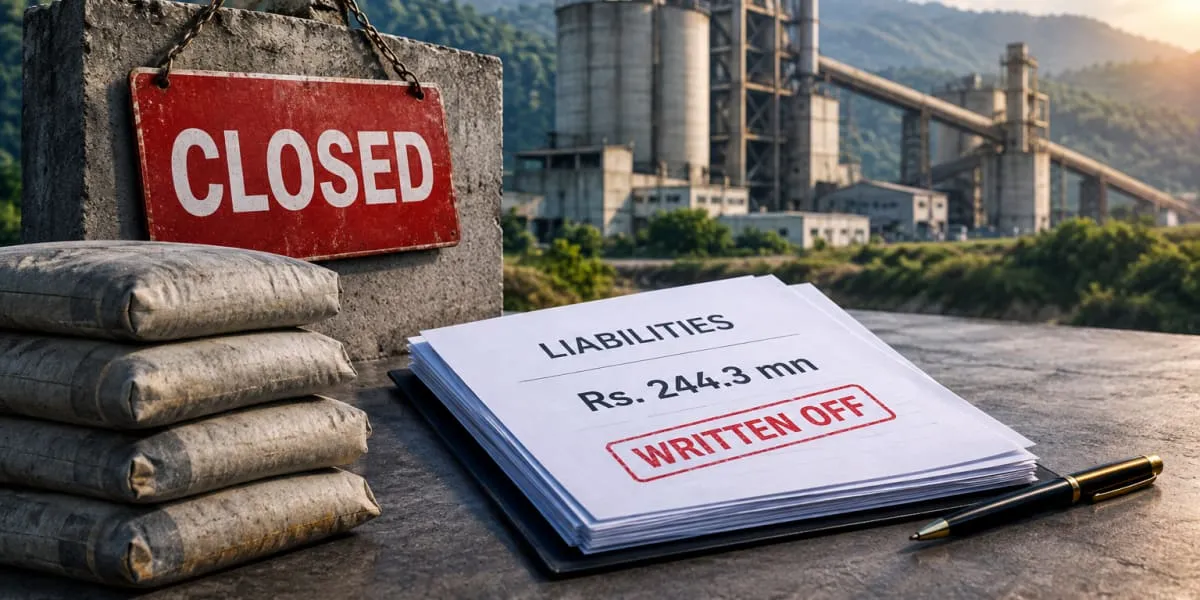
Meghalaya Cabinet Approves MCCL Closure, Writes Off Rs. 244.3 mn
Cabinet approves winding up of state-owned cement company


UltraTech Cement Expands in Andhra Pradesh with Rs. 26.5 bn

Nuvoco reports 13.5% revenue growth in Q2 FY27

Meghalaya Cabinet Approves MCCL Closure, Writes Off Rs. 244.3 mn

Fornnax Wins AIRIA’s Special Export Award for Rubber Machinery in 2025-26

Cement Prices Likely to Rise Rs. 10-15 per Bag from Mid-October
UltraTech Cement Expands in Andhra Pradesh with Rs. 26.5 bn
Nuvoco reports 13.5% revenue growth in Q2 FY27
Meghalaya Cabinet Approves MCCL Closure, Writes Off Rs. 244.3 mn
Fornnax Wins AIRIA’s Special Export Award for Rubber Machinery in 2025-26
Cement Prices Likely to Rise Rs. 10-15 per Bag from Mid-October
-

 Concrete4 weeks ago
JSW Cement Receives Rs. 2.3 bn GST Demand Notice
-

 Concrete3 weeks ago
Andhra Pradesh Clears Rs. 30 bn My Home Cement Plant
-
 Concrete4 weeks ago
Montra Electric, Wonder Cement Deploy 250-Vehicle EV Fleet
-
 Concrete3 weeks ago
Cement Prices Rise Rs. 7 per Bag in September; October Hikes Expected