Connect with us

Concrete

Promoting a circular economy is the key

Published

on

Shares

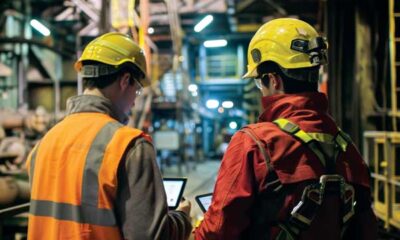
Prakhar Shrivastava, Corporate Quality, JK Cement, sheds light on the use of automation and sustainability in processing gypsum.

Explain the role of gypsum in the cement manufacturing process?
Gypsum plays a crucial role in manufacturing cement. It is used to delay cement setting by slowing down the reaction of mixing cement with water to prevent rapid hardening of cement and increase its workability for construction. Gypsum enhances cement strength at all ages. If we grind the clinker without gypsum, then the cement will set immediately after mixing with water and the strength development will be lesser.

What are the proportions of gypsum that are added in various types of cements produced? Tell us in details of the composition and percentage.
Presently different types of gypsum are available and are being added to meet the SO3 in cement, like mineral gypsum, chemical, phospho, marine gypsum, anhydrite, FGD and synthetic gypsum. The composition and percentage depend on the chemistry of clinker and gypsum to adhere to the desired SO3 target in cement. Normally the percentage addition of gypsum is 5 to 8 in cement mix as per gypsum quality and its availability. Few gypsums, which have higher purity above 85 per cent like imported mineral, anhydrite and phospho gypsum usage are less, whereas, Indian mineral gypsum having purity <40 per cent required higher percentage usage to meet the SO3 requirement.

Tell us about the process of obtaining gypsum by your organisation. What are the key resources utilised?
The different sources of gypsum and vendors are identified by our central procurement team. After getting the test report and sample from the supplier, and its testing in our laboratories then clearance by the QC team about the desired quality of gypsum, the procurement of bulk quantity of gypsum gets initiated. The gypsum is transported by road and rail to the plant. The receipt quality and quantity of gypsum is continuously monitored and if any deviation is found, it is immediately informed to the procurement team as well as the vendor. After this, the gypsum is used to feed into the hopper by Raw material handling equipment (eg. JCB, Payloader etc.) and its usage control through a weight feeder from CCR (central control room) to get the desired SO3 level according to the product requirement during the cement manufacturing process.

Tell us about the key technical feasibility factors that make gypsum viable for mixing with cement.
The size, purity, P2O5, chloride and moisture content of gypsum are the key technical feasibility factors that make gypsum viable for its usages. High moisture content and powdery gypsum are a major concern during cement production whereas the dry and adequate size gypsum is easy to use.
Similarly, low purity gypsum required higher usage to meet the SO3 requirement in cement resulted in increased insoluble residue (IR), which affected the product quality and also the fly ash addition in PPC. To consume such a low purity gypsum requirement of high purity gypsums like imported mineral gypsum to meet the SO3 and IR requirement which is not a cost effective solution.
Phospho gypsum has higher P2O5, which causes delay in the setting of cement and lesser early days compressive strength. Hence, it is mandatory to use it in a very controlled manner by blending it with other available gypsums to meet the product quality requirement.

What is the preparation or processing required to make gypsum ready to mix with the clinker?
Presently, preparation or processing of the different types of gypsum is done by handling equipment manually (eg. loader, dozer and JCB, etc.) as per recommended target and quality. Mixed gypsum is then fed to a separate hopper and controlled by a weight feeder and a controlled quantity of gypsum is mixed with clinker in the cement grinding process.
A more suitable solution to prepare uniform gypsum is to mix it separately before feeding
by blending various types of gypsums through
multi hoppers and controlled dosage to get targeted gypsum quality.

How does automation help in obtaining this mineral and increasing productivity of the unit?
The automation gives a timely update about the whole process to track the status and progress of procured material which saves time and avoids delays in procurement. It also helps to increase efficiency by fast process, productivity, growth and profitability of the organisation.
In all our units, the LIMs System has been implemented. All the quality test equipment is linked with the LIMs software and test results are directly transferred in LIMs and SAP. The quality analysis results of each type of gypsum and vendor wise are available in the automation system which helps to identify the deviation and consistency in quality thereby reducing error and confusion.

What are the sustainability measures taken by your organisation in obtaining and processing the desired quality of gypsum?
As part of our sustainability goals we have taken significant measures to replace natural or mineral gypsum with industrial waste. All our manufacturing units are utilising available industrial waste such as chemical gypsum, anhydrite gypsum, FGD, synthetic gypsum etc.
Blending of mineral gypsum with industrial waste as an economical and sustainable solution to replace natural minerals. Promoting a circular economy is our key pillar of the sustainability journey to reduce the environmental impact of our product by replacing natural resource consumption with industrial wastes which in turn has reduced our dependency on natural resources and is economical as well. It benefits our business, society and the environment by eliminating waste and decoupling our growth from the consumption of natural resources.

What are the major challenges faced in handling and obtaining gypsum for the manufacturing process?
The major challenges in handling and obtaining gypsum are moisture, SO3 and purity, which are the key parameters in deciding the quality of gypsum. Some minor elements also affect the quality of gypsum like phosphorus pentoxide and chloride percentage.
The deviation in SO3 content increases or decreases the quantity of gypsum in cement. Also, typically, a decrease in the SO3 content increases the insoluble residues, especially in Indian mineral gypsum, which causes higher IR in cement and lowers the performance/durability of cement.
In chemical gypsum, the main concern is the moisture of material and colour, which directly affects the operation with reference to jamming, choking and product quality.

-Kanika Mathur

Concrete

HeidelbergCement India Receives Consent For Khandwa Grinding Unit

Consent granted by Madhya Pradesh Pollution Control Board

Published

on

By

Shares


HeidelbergCement India (HeidelbergCement India) has received regulatory consent to establish a cement blending and grinding unit at Village Dongaliya, Tehsil Punasa, District Khandwa in Madhya Pradesh. The consent was granted by the Madhya Pradesh Pollution Control Board under the Water (Prevention & Control of Pollution) Act, 1974 and the Air (Prevention & Control of Pollution) Act, 1981 and is dated 17 May 2026. The company disclosed the development in a filing made under Regulation 30 of the SEBI (Listing Obligations and Disclosure Requirements) Regulations, 2015.

The project plan envisages procurement of long term availability of fly ash and the allotment of land on lease for setting up the unit. The proposed facility is described as a blending and grinding installation which will process cementitious materials sourced from nearby operations and suppliers. Company filings state the measures required to secure raw material logistics and statutory compliance before commencing construction.

The addition of a grinding unit in Khandwa is intended to strengthen regional supply and improve logistical efficiency by reducing haulage distances for finished product. The unit is expected to complement existing capacities in central India and to offer flexibility in product mix through blending operations. The reliance on fly ash as a supplementary cementitious material will necessitate long term supply agreements with thermal power producers and coordination with waste utilisation policies.

The disclosure to the regulator and to the stock exchanges follows standard corporate governance practice and aims to keep investors apprised of capital expenditure initiatives. The company indicated that subsequent permits and clearances would be sought in accordance with applicable environmental and land use rules. The project is presented as part of HeidelbergCement India’s broader strategy to optimise capacity distribution and to respond to regional demand dynamics.

Continue Reading

Concrete

PROMECON introduces infrared-based tertiary air measurement system for cement kilns

Published

on

By

Shares

The new solution promisescontinuous, real-time tertiary air flow measurement in cement plant operations.

PROMECON GmbH has launched the McON IR Compact, an infrared-based measuring system designed to deliver continuous, real-time tertiary air flow measurement in cement plant operations. The system addresses the longstanding process control challenge of accurate tertiary air monitoring under extreme kiln conditions. It uses patented infrared time-of-flight measurement technology that operates without calibration or maintenance intervention.

Precise tertiary air measurement is a critical requirement for stable rotary kiln operation. The McON IR Compact is engineered to function reliably at temperatures up to 1,200°C and in the presence of abrasive clinker dust. Its vector-based digital measurement architecture ensures that readings remain unaffected by swirl, dust deposits or drift. Due to these conditions conventional measurement systems in pyroprocess environments are often compromised.

The system is fully non-intrusive and requires no K-factors, recalibration or periodic readjustment, enabling years of uninterrupted operation. This design directly supports plant availability and reduces the maintenance overhead typically associated with process instrumentation in high-temperature zones.

PROMECON has deployed the McON IR Compact at multiple cement facilities, including Warta Cement in Poland. Plant operators report that the system has aided in identifying blockages, optimising purging cycles for gas burners, and supplying accurate flow data for AI-based process optimisation programmes. The practical outcomes include more stable kiln operation, improved process control, and earlier detection of process disturbances.

On the energy side, real-time tertiary air data enables reduction in induced draft fan load and helps flatten process oscillations across the pyroprocess. This translates to lower fuel and energy consumption, fewer unplanned shutdowns, and a measurable reduction in NOx peaks. This directly reflects on the downstream cost implications for plants operating SCR or SNCR systems for emissions compliance.

Continue Reading

Concrete

Adani Group To Set Up Cement Factory In Madhya Pradesh

Chief Minister Mohan Yadav inaugurates plant in Guna

Published

on

By

Shares


Adani Group (Adani) will set up a cement factory in Madhya Pradesh, the chief minister of the state announced after an inauguration ceremony in Guna. The chief minister, Mohan Yadav, described the occasion as a historic day for the state and said the project will strengthen industrial capacity. The event was presented as a milestone in efforts to broaden manufacturing and attract large-scale investment. Officials said the facility will add to regional production capability and support related industries.

State officials outlined that the plant will enhance supply chains for construction and infrastructure projects across the region. The company will bring technical expertise and logistical resources to the site, with government agencies coordinating approvals and land allocation. Local suppliers and service providers will benefit from increased demand, and training initiatives will be developed to build workforce readiness. Officials indicated that the project complements broader plans to modernise industrial clusters in the state.

The state administration said it has facilitated clearances and infrastructure support to accelerate implementation. Local officials have coordinated with the company to ensure connectivity and utilities are in place ahead of commissioning. The chief minister emphasised that collaboration between private investors and the government aims to create sustainable economic growth. Community outreach programmes will address local concerns and establish grievance mechanisms as construction proceeds.

Officials said the inauguration in Guna marks a new phase in the state industrial story and will serve as a reference for future investments. Administrators noted that close monitoring and periodic reviews will guide timely execution and adherence to environmental and safety norms. The government affirmed its commitment to facilitating responsible industrial expansion while ensuring benefits reach local communities. Stakeholders will continue discussions on supply chain integration and long term maintenance arrangements.

Continue Reading

Video Thumbnail
â–

    SIGN-UP FOR OUR GENERAL NEWSLETTER


    Trending News

    SUBSCRIBE TO THE NEWSLETTER


    Don't miss out on valuable insights and opportunities to connect with like minded professionals.


      This will close in 0 seconds