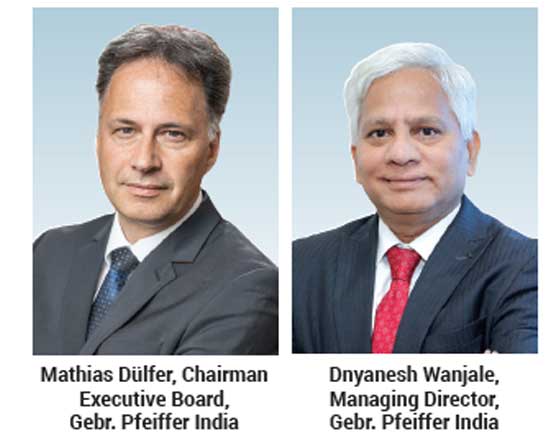
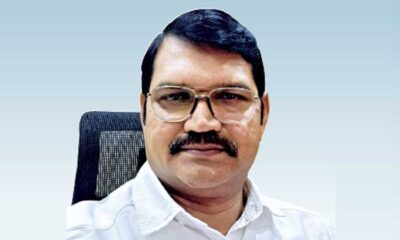
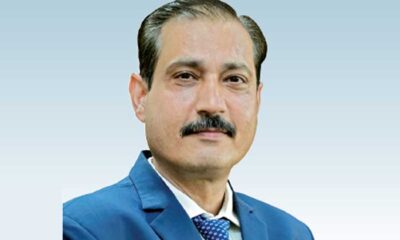
Mathias Dülfer, Chairman of the Executive Board, and Dnyanesh Wanjale, Managing Director, Gebr. Pfeiffer India, make the case that the future of cement grinding lies in the deep integration of energy efficiency, material flexibility and AI-driven process optimisation.
How are changing market expectations influencing the demand for advanced grinding solutions
in the cement industry?
Mathias Dülfer, Chairman of the Executive Board: In our view, changing market expectations are driven by three key factors: efficiency, sustainability and digitalisation.
Our customers are investing in sustainable solutions that reduce CO2 emissions through the use of SCMs, while achieving maximum efficiency in terms of energy and operating costs. Digitalisation and the use of artificial intelligence support this by optimising processes, maximising availability and enabling the best possible plant operation.
In short, demand is shifting towards grinding technology solutions that integrate these three dimensions in a future-proof manner.
At Gebr. Pfeiffer, efficiency, sustainability and digitalisation have long been the focus, driving all development activities. In recent years, we have incorporated a multitude of innovations into our machine and plant technology, offering our customers measurable benefits.
What key trends are currently shaping investment decisions among cement manufacturers in India and globally?
Dnyanesh Wanjale, Managing Director: Investment decisions among cement manufacturers today are increasingly guided by a strong focus on efficiency, digital transformation, and sustainability. Rising energy and fuel costs are compelling producers to prioritise energy-efficient technologies. Advanced grinding systems, such as high-efficiency Pfeiffer MVR mills, play a crucial role in reducing specific power consumption (kWh/ton), lowering operating costs, and improving overall profitability.
At the same time, digital adoption has emerged as a major trend. Cement producers are embracing automation, advanced process control, and data-driven optimisation to enhance operational efficiency. Digital solutions like Pfeiffer GPpro AI and GPcms not only improve productivity and ensure consistent product quality but also minimise downtime, thereby strengthening plant performance and margins.
Sustainability is another critical driver shaping investments. With increasing regulatory pressures and growing environmental, social, and governance (ESG) commitments, manufacturers are actively investing in technologies that reduce carbon emissions and improve resource efficiency. This includes focusing on lowering the clinker factor, increasing the use of alternative raw materials, and implementing more energy-efficient processes, all of which support the transition toward low-carbon cement production. Our MVR vertical roller mill is the preferred choice for our customer in this regard.
How is Gebr. Pfeiffer positioning itself to support the industry’s transition towards energy-efficient and low-carbon production?
Dülfer: As mentioned earlier, efficiency, sustainability and digitalisation are the key drivers, with efficiency and sustainability being central to the current transformation in the industry and digitalisation being more of an enabler.
At Gebr. Pfeiffer, we focus on supporting our customers significantly reduce their carbon footprint through SCM-based cements and lower clinker content. Our grinding plants are designed to process a wide range of materials, such as slag, fly ash, clay and limestone, with high flexibility and to the required degree of fineness.
At the same time, sustainability is closely linked to energy efficiency. We have made significant advances in our mills to minimise energy consumption while ensuring high throughput and maximum reliability. Reducing pressure loss and increasing power density were key to achieving this.
A third key driver is digitalisation. By utilising advanced data analytics, we enable our customers to operate their systems with full transparency and cost-effectiveness. Our comprehensive condition monitoring concept goes far beyond simply gearbox monitoring to ensure maximum uptime and enable predictive maintenance. We optimise throughput and specific energy consumption through the use of our artificial intelligence.
Essentially, we take a holistic approach. Combining energy efficiency, maximum throughput, material flexibility and intelligent process optimisation helps our customers balance environmental responsibility with economic performance.
What factors are driving the growing adoption of vertical roller mill technology in modern cement plants?
Dülfer: The growing adoption of vertical roller mills is mainly driven by four factors:
First, energy efficiency, as VRMs significantly reduce power consumption and operating costs.
Second, sustainability, since they enable
lower CO2 emissions and the increased use of blended cements.
Third, process flexibility, allowing efficient handling of diverse and moist raw materials in a single system.
And finally, total cost of ownership, where long-term savings in energy, maintenance, and footprint outweigh initial investment considerations.
In short, VRMs, in particular our MVR, combine economic efficiency with sustainability and operational flexibility—key requirements for modern cement production.
How important are digitalisation and service-driven solutions in strengthening customer relationships today?
Wanjale: Digitalisation and service-driven solutions have become essential in building and sustaining strong customer relationships. They are no longer just value additions but key differentiators in today’s competitive landscape. By leveraging digital tools and advanced analytics, companies can deliver measurable performance improvements—for example, through our AI-driven optimisation solution GPpro AI, that enhances throughput and reduces energy consumption, by 5 per cent, even in already optimised systems.
Beyond performance gains, digitalisation enables proactive support through our real-time monitoring and predictive maintenance
solution GPcms, which significantly improves reliability and uptime. It also brings greater transparency, offering customers clear insights into plant performance and helping them make informed decisions.
Importantly, this shift fosters a lifecycle partnership approach, where the relationship extends beyond equipment supply to long-term value creation. By turning data into actionable insights, companies can build trust and develop enduring partnerships with their customers.
How do you see the Indian cement market evolving in terms of capacity expansion, technology adoption, and sustainability priorities?
Wanjale: The Indian cement market is rapidly evolving into one of the most dynamic and forward-looking markets globally. It is not only expanding in scale but also transforming in terms of efficiency, innovation, and sustainability.
One of the key developments is the growing shift towards calcined clay-based cements, such as LC3, and other blended products. This reflects a clear industry effort to reduce clinker dependency, which in turn is driving demand for advanced grinding technologies, like Pfeiffer MVR mills, capable of handling a wider range of materials, shifting from one cement product type to another cement product type within few minutes and produce cement with higher fineness requirements.
Sustainability continues to be at the forefront of this transformation. With heightened ESG commitments and stricter regulatory frameworks, the industry is prioritising the reduction of
carbon intensity, improved energy efficiency, and greater utilisation of alternative materials. Investments are increasingly aligned with long-term decarbonisation strategies and resource optimisation, positioning India as a leader in sustainable cement production.
(Communication by the management of the company)

















 Concrete4 weeks ago
 Concrete3 weeks ago
 Concrete2 weeks ago
 Concrete4 weeks ago