Professor Procyon Mukherjee explains how end-to-end logistics, driven by network redesign, digital control towers and multimodal integration, is emerging as the primary lever of competitive advantage in the cement industry.
On the surface, cement is a commodity business—heavy, low-margin, and seemingly undifferentiated. But beneath that simplicity lies one of the most complex logistics challenges in global industry. Moving raw materials, clinker, and finished cement across vast geographies—often under volatile demand and razor-thin margins—means that logistics is not just a support function. It is the strategy.
In many markets, logistics accounts for up to 30 per cent of total cost. The implication is stark: companies that redesign their end-to-end logistics—from inbound flows to last-mile delivery—can fundamentally alter their competitive position. Across India, Europe, and China, leading cement players are doing exactly that. Their playbook offers a powerful lesson: the future of cement lies not in production efficiency alone, but in logistics intelligence.
From plant-centric to market-centric networks
For decades, cement companies designed their networks around limestone availability. Plants were built near quarries, and finished cement was transported long distances to markets. This model, while logical from a production standpoint, created massive outbound logistics costs.
Indian cement companies have begun to challenge this logic. The shift: decoupling clinker production from cement grinding. Clinker plants remain near limestone reserves, but grinding units are increasingly located close to consumption centers.
Case in point: India’s split-network model
Leading players such as UltraTech and Shree Cement have invested heavily in grinding units near urban demand clusters. The result:
• Lead distances reduced from 400–500 km to nearly 100–150 km
• Freight costs per ton significantly lowered
• Faster response to regional demand spikes
The insight is simple but powerful: move semi-finished goods (clinker), not finished goods (cement).
European players took a different but equally effective route.
Case: Port-centric logistics in Europe
Companies like Holcim and Cemex use
coastal shipping to move clinker and bulk
cement to strategically located port terminals. These terminals act as processing and distribution hubs. This model delivers:
• Lower inland transportation costs
• Flexibility to serve multiple markets
• Reduced carbon footprint through maritime transport
China, operating at an entirely different scale, has optimised networks through density and integration.
Case: China’s regional cluster model
Large producers coordinate production and distribution across tightly integrated regional
clusters, supported by rail and inland waterways. Centralised planning systems dynamically allocate supply across markets.
The common thread across all three regions is unmistakable: network design has shifted from production efficiency to market responsiveness.
The overlooked lever: Inbound logistics
While outbound logistics gets most of the attention, inbound flows—limestone, coal, gypsum, and alternative fuels—are equally critical. Yet, many companies still treat inbound logistics as a static function. In almost all firms inbound is still separate from outbound organisationally. Leaders are taking a different approach.
Case: Conveyor and short-haul rail systems (India and China)
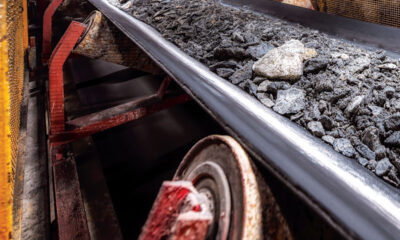
Instead of relying on trucks, companies are investing in conveyor belts and dedicated rail links between quarries and plants. This reduces:
• Transportation cost variability
• Fuel dependency
• Operational disruptions
Case: Alternative fuel logistics (Europe)
European cement companies are aggressively using biomass and waste-derived fuels. This requires reverse logistics networks to collect, process, and transport waste materials. The payoff:
• Lower fuel costs
• Reduced emissions
• Greater supply resilience
The emerging principle: inbound logistics is not just about cost—it is about securing continuity and flexibility in production.
Winning the last mile
If inbound logistics ensures production continuity, outbound logistics determines market success.
Cement demand is fragmented, unpredictable, and often time-sensitive. Construction sites require reliable, just-in-time delivery. Delays can halt projects, making service reliability a key differentiator.
Case: Direct-to-site delivery in India
Cement companies are increasingly bypassing traditional dealer networks for large customers, delivering directly to construction sites. This model:
• Reduces handling and damage
• Improves delivery predictability
• Strengthens customer relationships
Case: Ready-Mix Concrete (RMC) integration
The rise of RMC has transformed cement logistics into a service business. Cement is no longer just transported—it is integrated into time-sensitive delivery cycles. This requires:
• Tight coordination between batching plants and delivery trucks
• Real-time scheduling
• Minimal buffer times
The lesson: logistics is no longer about moving products—it is about delivering outcomes.
The digital backbone: Real-time data
Perhaps the most transformative shift in cement logistics is the adoption of real-time data systems. Historically, cement supply chains operated with limited visibility. Dispatch decisions were often reactive, based on static plans and delayed information. That is changing rapidly.
Case: Holcim India’s Transport Analytics Centre
Holcim has built a centralised system connecting tens of thousands of trucks across its network. The platform tracks:
• Vehicle location
• Route efficiency
• Driver behaviour
• Fuel consumption
This enables dynamic routing, improved safety, and lower emissions.
Case: Dalmia Cement’s smart fleet management
Dalmia uses GPS-enabled tracking and analytics to optimise fleet utilisation. Real-time insights allow:
• Faster dispatch decisions
• Reduced idle time
• Improved on-time delivery
Case: Integrated Transport Management Systems (global)
Leading companies are deploying end-to-end TMS platforms that connect:
• Plants
• Warehouses
• Transporters
• Customers
The impact:
• Significant reduction in delivery delays
• End-to-end visibility
• Better coordination across stakeholders
The shift is profound: from fragmented logistics operations to centralised, data-driven control towers.
Inventory: From buffers to flow
Inventory has traditionally been the safety net of cement supply chains. Companies maintained high stock levels at depots to manage demand uncertainty.
But this came at a cost:
• High working capital
• Storage inefficiencies
• Risk of obsolescence
Leaders are now rethinking this approach.
Case: IoT-enabled inventory management (India)
Companies like ACC have deployed sensors in silos and warehouses to monitor stock levels in real time. This enables:
• Continuous visibility
• Automated replenishment
• Reduced stockouts and excess inventory
Case: Predictive replenishment (Europe and China)
Using demand forecasting models, companies dynamically adjust inventory levels across their networks. The result:
• Lower inventory holding costs
• Improved service levels
• Faster response to demand fluctuations
The new model is clear: inventory is no longer a buffer—it is a flow variable optimised in real time.
Multimodal logistics: the cost advantage
Given cement’s low value-to-weight ratio, transportation mode selection is critical.
Case: Ambuja Cement’s captive port strategy (India)
Ambuja has invested in ports and ships to move bulk cement and clinker along India’s coastline.
Benefits include:
• Lower transportation cost per ton
• Reduced dependency on road transport
• Improved delivery reliability
Case: Inland waterways in Europe and China
Both regions extensively use rivers and canals for bulk transport, significantly reducing costs and emissions. The takeaway: cost leadership in cement increasingly depends on multimodal integration.
Sustainability as strategy
Logistics is also central to the cement industry’s decarbonisation efforts.
Case: LNG-powered trucks (India)
Companies are experimenting with cleaner fuels to reduce emissions in road transport.
Case: CO2 transport networks (Europe)
As carbon capture technologies scale, logistics networks are being designed to transport captured CO2 for storage or reuse. Sustainability is no longer a compliance issue—it is becoming a source of competitive advantage.
Conclusion
In an industry where margins often hover in the single digits, logistics is no longer a back-end efficiency lever—it is the profit engine. With logistics accounting for 20 per cent to 30 per cent of total cement costs, even a 5 per cent to 10 per cent optimisation can expand EBITDA margins by 150–300 basis points—a swing large enough to redefine market leadership. Companies that have invested in network redesign, multimodal transport, and real-time control towers are already seeing double-digit reductions in freight costs and 20 per cent to 30 per cent improvements in delivery reliability. The implication is clear: in cement, the next wave of competitive advantage will not be mined from quarries—it will be engineered through smarter, faster, and more intelligent logistics networks.
About the author:
Professor Procyon Mukherjee, ex-CPO Lafarge-Holcim India, ex-President Hindalco, ex-VP Supply Chain Novelis Europe, has been an industry leader in logistics, procurement, operations and supply chain management. His career spans 38 years starting from Philips,
Alcan Inc (Indian Aluminum Company), Hindalco, Novelis and Holcim. He authored the book, ‘The Search for Value in Supply Chains’. He serves now as Visiting Professor in SP Jain Global, SIOM and as the Adjunct Professor at SBUP.