Connect with us

Concrete

Industry Bodies Call for Wider Use of Cement Co-Processing

Joint statement seeks policy support for sustainable waste management

Published

on

Shares
Leading industry organisations have called for stronger policy support to accelerate the adoption of cement industry co-processing as a sustainable solution for managing non-recyclable and non-reusable waste. In a joint statement, bodies including the Global Cement and Concrete Association, European Composites Industry Association, International Solid Waste Association – Africa, Mission Possible Partnership and the Global Waste-to-Energy Research and Technology Council highlighted the role co-processing can play in addressing the growing global waste challenge.
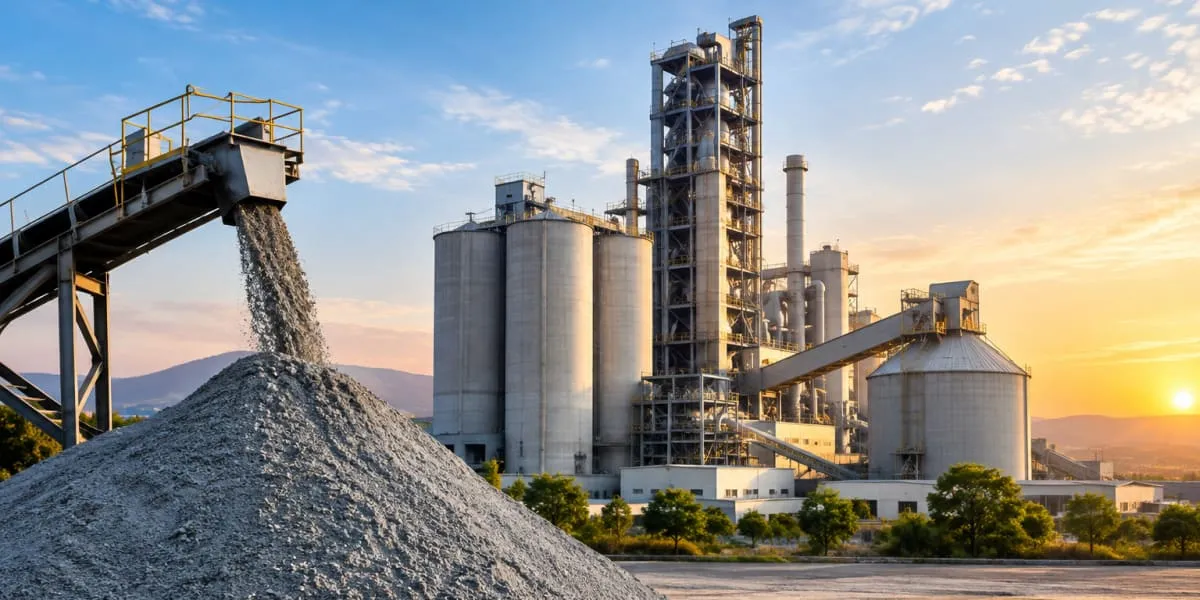
Co-processing enables the use of waste as an alternative to fossil fuels in cement kilns, while residual ash is incorporated into cementitious materials, resulting in a zero-waste process. The approach supports both energy recovery and material recycling, complements conventional recycling systems and reduces reliance on landfill infrastructure. It is primarily applied to waste streams that are contaminated or unsuitable for recycling.
The organisations noted that co-processing is already recognised in regions such as Europe, India, Latin America and North America, operating under regulated frameworks to ensure safety, emissions control and transparency. However, adoption remains uneven globally, with some plants achieving over 90 per cent fuel substitution while others lack enabling policies.
The statement urged governments and institutions to formally recognise co-processing in waste management frameworks, streamline environmental permitting, incentivise waste collection and pre-treatment, account for recycled material content in national targets, and support public-private partnerships. The call comes amid rising global waste volumes, which are estimated at over 11 billion tonnes annually, with unmanaged waste contributing to greenhouse gas emissions, pollution and health risks.

Concrete

Jammu Division Begins First Cement Rail Traffic to Anantnag

Cement Loading From Kathua for Anantnag to Begin on September 14

Published

on

By

Shares

Jammu Railway Division has placed an indent for the first movement of cement by rail within the division, linking Shaheed Captain Sunil Kumar Choudhary Kathua Railway Station with Anantnag Railway Station. Loading for the consignment is scheduled to begin on September 14.

Continue Reading

Concrete

Hard Worker Wins Three Honours at Kyoorius Design Awards

Ramco Cements’ brand secures Grand Prix and two Blue Elephant honours.

Published

on

By

Shares
The Ramco Cements Limited’s construction chemicals brand, Hard Worker, has won three honours at the Kyoorius Design Awards 2026, including the Grand Prix – Grey Elephant in the Design in Action category.
The brand also secured two Blue Elephant honours, one for Design in Action and another for Packaging, recognising the design approach behind its brand identity and packaging.
Launched in 2025, Hard Worker entered the construction chemicals segment with the brand promise, “Hard-working products for hardworking people.” Its visual identity uses animals and birds to represent product benefits. The camel represents the water-retention capability of Hard Worker Eco Plaster, while the cheetah represents the speed and performance of Hard Worker Block Fix.
The visual language has been extended across packaging, retail, communication, literature, digital platforms and other brand touchpoints. Hard Worker uses bold colours, distinctive animal illustrations and simple visual storytelling to communicate product benefits across markets and audiences, including construction workers and applicators.
“For Hard Worker, design was never an afterthought. It was fundamental to how we wanted to build the brand. In a category that is largely functional, we wanted to create a brand that people could recognise, understand and remember instantly. The Kyoorius recognition is a wonderful validation of this design-led approach,” said Mr. AV Dharmakrishnan, CEO, The Ramco Cements Limited.
Mr. Balaji K. Moorthy, Executive Director – Marketing, Ramco Cements said “In a category where communication has traditionally been product-led and functional, we wanted Hard Worker to stand apart by making design an integral part of the brand experience. From the distinctive animal-led packaging to our communication across consumer and trade touchpoints, every element was designed to make the brand more memorable and the product benefits easier to understand.”
Within its first 12 months, Hard Worker crossed Rs 3.5 bn in sales. The latest recognition follows six honours secured by the brand’s campaign at the Kyoorius Creative Awards earlier in 2026, including the Grey Elephant Grand Prix for its Eco Plaster film.
The Kyoorius Design Awards recognise outstanding design work in India’s visual communications sector across multiple categories and platforms. The 2026 awards were announced on 12 September in Goa.
The Ramco Cements Limited is part of the Ramco Group and operates across cement and allied building-material solutions. Hard Worker is its construction chemicals brand, offering solutions across key construction applications.

Continue Reading

Concrete

Cement Firms to Invest Rs. 130 bn in Green Energy by FY28

Cement companies plan to expand clean energy capacity to 6 GW by FY28

Published

on

By

Shares

India’s major cement companies are set to raise their clean energy capacity to 6 GW by March 2028 from around 4 GW at the end of March 2026, according to ratings agency ICRA. The planned expansion is expected to involve investments of Rs. 130 bn over the next two years.

The additional capacity could generate annual savings of Rs. 62 bn to Rs. 67 bn, resulting in an estimated payback period of 1.8 to 2.2 years. Cement is an emission-intensive industry, and leading producers have established net-zero roadmaps covering the next 15 to 20 years.

The calcination process accounts for 57 to 60 per cent of the sector’s total emissions, while fuel combustion contributes 27 to 30 per cent and electricity consumption accounts for 10 to 13 per cent. ICRA said the figures highlighted the need for a broad decarbonisation strategy involving green power, blended cement, alternative fuels and improvements in clinker efficiency.

Green energy is considered one of the most commercially attractive decarbonisation options because it can reduce emissions while lowering operating costs. Every 5 per cent increase in green power replacement can reduce power and fuel costs by Rs. 15 to Rs. 16 per tonne. A 25 per cent replacement level could therefore save Rs. 75 to Rs. 80 per tonne and expand operating margins by 140 to 160 basis points.

Cement producers are also assessing carbon capture, utilisation and storage, although high implementation costs, energy requirements and limited transport and storage infrastructure are expected to slow commercial adoption. The government has proposed Rs. 200 bn over five years to support deployment across key sectors. Meanwhile, companies are targeting thermal substitution rates of 10 to 15 per cent over the next three to five years, compared with the current industry level of around 6 per cent.

Continue Reading

Video Thumbnail

    SIGN-UP FOR OUR GENERAL NEWSLETTER

    Trending News

    SUBSCRIBE TO THE NEWSLETTER


    Don't miss out on valuable insights and opportunities to connect with like minded professionals.


      This will close in 0 seconds