Connect with us

Concrete

Cement Additives for Improved Grinding Efficiency

Published

on

Shares

In a two-part series, Consultant and Advisor Shreesh A Khadilkar, discusses how advanced additive formulations allow for customised, high-performance and niche cements.

Cement additives are chemicals (inorganic and organic) added in small amounts (0.01 per cent to 0.2 per cent by weight) during cement grinding. Their main job? Reduce agglomeration, prevent pack-set, and keep the mill running smoother. Thus, these additions primarily improve, mill thru-puts, achieve lower clinker factor in blended cements PPC/PSC/PCC. Additionally, these additives improve concrete performance of cements or even for specific special premium cements with special USPs like lower setting times or for reduced water permeability in the resultant cement mortars and concrete (water repellent /permeation resistant cements), corrosion resistance etc
The Cement additives are materials which could be further differentiated as:

Grinding aids

  • Bottlenecks in cement grinding capacity, such materials can enhance throughputs
  • Low specific electrical energy consumption during cement grinding
  • Reduce “Pack set” problem and improve powder flowability

Quality improvers

  • Opportunity for further clinker factor reduction
  • Solution for delayed cement setting or strength development issues at early or later ages.
  • Others: Materials which are used for specific special cements with niche properties as discussed in the subsequent pages.

When cement additives are used as grinding aids or quality improvers, in general the additives reduce the inter-particle forces; reduce coating over grinding media and mill internals. Due to creation of like charges on cement particles, there is decreased agglomeration, much improved flowability, higher generation of fines better dispersion of particles in separator feed and reduction of mill filling level (decrease of residence time). However, in VRM grinding; actions need to be taken to have stable bed formation on the table.
It has been reported in literature and also substantiated by a number of detailed evaluations of different cement additive formulations in market, that the cement additive formulations are a combination of different chemical compounds, composed of:
1. Accelerator/s for the hydration reaction of cements which are dependent on the acceleration effect desired in mortar compressive strengths at early or later ages, the choice of the materials is also dependent on clinker quality and blending components (flyash / slag) or a mix of both.
2. Water reducer / workability / wet-ability enhancer, which would show impact on the resultant cement mortars and concrete. Some of the compounds (retarders) like polysaccharide derivatives, gluconates etc., show an initial retarding action towards hydration which result in reducing the water requirements for the cements thus act as water reducers, or it could be some appropriate polymeric molecules which show improved wet-ability and reduce water demand. These are selected based on the mineral component and type of Cements (PPC/PSC /PCC).
3. Grinding aids: Compounds that work as Grinding Aid i.e. which would enhance Mill thru-put on one hand as well as would increase the early strengths due to the higher fines generation/ or activation of cement components. These compounds could be like alkanol-amines such as TIPA, DEIPA, TEA etc. or could be compounds like glycols and other poly-ols, depending on whether it is OPC or PPC or PSC or PCC manufacture.

Mechanism of action
1. Reduce Agglomeration ; Cement particles get electrostatically charged during grinding; stick together ; form “flocs” ; block mill efficiency ; waste energy. Grinding aid molecules adsorb onto particle surfaces ; neutralise charge ; prevent re-agglomeration.
2. Improve Powder Flowability; Adsorbed molecules create a lubricating layer; particles slide past each other easier ; better mill throughput ; less “dead zone” buildup.
;Also reduces caking on mill liners, diaphragms, and separator screens ; less downtime for cleaning.
3. Enhance Grinding Efficiency (Finer Product Faster) ; By preventing agglomeration, particles stay dispersed ; more surface area exposed to grinding media ? finer grind achieved with same energy input ; Or: same fineness achieved with less energy ; huge savings.

Example:

  • Without aid ? 3500 cm²/g Blaine needs 40 kWh/ton
  • With use of optimum grinding aid ? same fineness at 32 kWh/ton ? 20 per cent energy savings

4. Reduce Pack Set and Silo Caking, Grinding aids (GA) inhibit hydration of free lime (CaO) during storage ,  prevents premature hardening or “pack set” in silos. , especially critical in humid climates or with high free lime clinker.

It may be stated here that overdosing of GA , can cause: – Foaming in mill (especially with glycols) ? reduces grinding efficiency, retardation of cement setting (especially with amines/acids), odor issues (in indoor mills) – Corrosion of mill components (if acidic aids used improperly)
The best practice to optimise use of GA is , Start with 0.02 per cent to 0.05 per cent dosage , test fineness, flow, and set time , adjust up/down. Due to static charge of particles, the sample may stick to the sides of sampler pipe and so sampling need to be properly done.
Depending on type of Cements i.e. OPC, PPC, PSC, PCC, the grinding aids combinations need to be optimised, a typical Poly carboxylate ether also could be a part of the combo grinding aids

Cement additives for niche properties of the Cement in Concrete.
The cement additives can also be tailor made to create specific niche properties in Cements, OPC, PPC, PSC and PCC to create premium or special brands. The special niche properties of the cement being its additional USP of such cement products, and are useful for customers to build a durable concrete structure with increased service life.
Such properties could be:

  • Additives for improved Concrete performance of Cements, High early strength in PPC/PSC/PCC, much reduced water demand in cement, cements with improved slump retentivity in concrete, self-compacting, self levelling in concrete, cements with improved adhesion property of the cement mortar
  • Water repellence / water proofing, permeability resistance in Mortars and Concrete.
  • Biocidal cement
  • Photo catalytic cements
  • Cements with negligible ASR reactions etc.

Additives for cements for improved concrete performance
High early strengths: Use of Accelerators. These are chemical compounds which enhance the degree of hydration of cement. These can include setting or hardening accelerators depending on whether their action occurs in the plastic or hardened state respectively. Thus, the setting accelerators reduce the setting time, whereas the hardening accelerators increase the early age strengths. The setting accelerators act during the initial minutes of the cement hydration, whereas the hardening accelerators act mainly during the initial days of hydration.
Chloride salts are the best in class. However, use of chloride salts as hardening accelerators are strongly discouraged for their action in promoting the corrosion of rebar, thus, chloride-free accelerators are preferred. The hardening accelerators could be combinations of compounds like nitrate, nitrite and thiocyanate salts of alkali or alkaline earth metals or thiosulphate, formate, and alkanol amines depending on the cement types.
However, especially in blended Cements (PPC/PSC/PCC the increased early strengths invariably decrease the 28 Day Strengths. These aspects lead to creating combo additives along with organic polymers to achieve improved early strengths as well as either same or marginally improved 28 Days strengths with reduced clinker factor in the blended cement, special OPC with reduced admixture requirements. With use of appropriate combination of inorganic and organic additives we could create an OPC with substantially reduced water demand or improved slump retentivity. Use of such an OPC would show exceptional concrete performance in high grade concretes as it would exhibit lower admixture requirements in High Grade Concretes.
PPC with OPC like Properties: With the above concept we could have a PPC, having higher percentage flyash, with a combo cement additive which would have with concrete performance similar to OPC in say M40/M50 concrete. Such a PPC would produce a high-strength PPC concrete (= 60 MPa @ 28d) + Improved Workability, Durability and Sustainability.
Another interesting aspect could also be of using Ultrafine fine flyash /ultrafine slags as additions in OPC/PPC/PSC for achieving lower clinker factor as well as to achieve improved later age strengths with or without a combo cement additive.
The initial adhesion property at sites of especially PPC/PSC/PCC based mortars can be improved through use of appropriate organic polymers addition during the manufacture of these cements. Such Cements would have a better adhesion property for plastering/brick bonding etc., as it has much lower rebound loss of their Mortars in such applications.
It is needless to mention here that with use of additives, we could also have cement with viscosity modifying cement additives, for self-compaction and self-leveling concrete performance.
Use of Phosphogypsum retards the setting time of cements, we can use additive different additive combos to overcome retardation and improve the 1 day strengths of the cements and concretes.

The concluding part of this article will appear in the next issue of ICR.

About the author:
Shreesh Khadilkar, Consultant & Advisor, Former Director Quality & Product Development, ACC, a seasoned consultant and advisor, brings over 37 years of experience in cement manufacturing, having held leadership roles in R&D and product development at ACC Ltd. With deep expertise in innovative cement concepts, he is dedicated to sharing his knowledge and improving the performance of cement plants globally.

Concrete

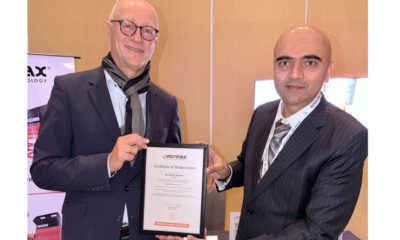
FORNNAX Appoints Dieter Jerschl as Sales Partner for Central Europe

Published

on

By

Shares

FORNNAX TECHNOLOGY has appointed industry veteran Dieter Jerschl as its new sales partner in Germany to strengthen its presence across Central Europe. The partnership aims to accelerate the adoption of FORNNAX’s high-capacity, sustainable recycling solutions while building long-term regional capabilities.

FORNNAX TECHNOLOGY, one of the leading advanced recycling equipment manufacturers, has announced the appointment of a new sales partner in Germany as part of its strategic expansion into Central Europe. The company has entered into a collaborative agreement with Mr. Dieter Jerschl, a seasoned industry professional with over 20 years of experience in the shredding and recycling sector, to represent and promote FORNNAX’s solutions across key European markets.

Mr. Jerschl brings extensive expertise from his work with renowned companies such as BHS, Eldan, Vecoplan, and others. Over the course of his career, he has successfully led the deployment of both single machines and complete turnkey installations for a wide range of applications, including tyre recycling, cable recycling, municipal solid waste, e-waste, and industrial waste processing.

Speaking about the partnership, Mr. Jerschl said,
“I’ve known FORNNAX for over a decade and have followed their growth closely. What attracted me to this collaboration is their state-of-the-art & high-capacity technology, it is powerful, sustainable, and economically viable. There is great potential to introduce FORNNAX’s innovative systems to more markets across Europe, and I am excited to be part of that journey.”

The partnership will primarily focus on Central Europe, including Germany, Austria, and neighbouring countries, with the flexibility to extend the geographical scope based on project requirements and mutual agreement. The collaboration is structured to evolve over time, with performance-driven expansion and ongoing strategic discussions with FORNNAX’s management. The immediate priority is to build a strong project pipeline and enhance FORNNAX’s brand presence across the region.

FORNNAX’s portfolio of high-performance shredding and pre-processing solutions is well aligned with Europe’s growing demand for sustainable and efficient waste treatment technologies. By partnering with Mr. Jerschl—who brings deep market insight and established industry relationships—FORNNAX aims to accelerate adoption of its solutions and participate in upcoming recycling projects across the region.

As part of the partnership, Mr. Jerschl will also deliver value-added services, including equipment installation, maintenance, and spare parts support through a dedicated technical team. This local service capability is expected to ensure faster project execution, minimise downtime, and enhance overall customer experience.

Commenting on the long-term vision, Mr. Jerschl added,
“We are committed to increasing market awareness and establishing new reference projects across the region. My goal is not only to generate business but to lay the foundation for long-term growth. Ideally, we aim to establish a dedicated FORNNAX legal entity or operational site in Germany over the next five to ten years.”

For FORNNAX, this partnership aligns closely with its global strategy of expanding into key markets through strong regional representation. The company believes that local partnerships are critical for navigating complex market dynamics and delivering solutions tailored to region-specific waste management challenges.

“We see tremendous potential in the Central European market,” said Mr. Jignesh Kundaria, Director and CEO of FORNNAX.
“Partnering with someone as experienced and well-established as Mr. Jerschl gives us a strong foothold and allows us to better serve our customers. This marks a major milestone in our efforts to promote reliable, efficient and future-ready recycling solutions globally,” he added.

This collaboration further strengthens FORNNAX’s commitment to environmental stewardship, innovation, and sustainable waste management, supporting the transition toward a greener and more circular future.


Continue Reading

Concrete

Budget 2026–27 infra thrust and CCUS outlay to lift cement sector outlook

Published

on

By

Shares

Higher capex, city-led growth and CCUS funding improve demand visibility and decarbonisation prospects for cement

Mumbai

Cement manufacturers have welcomed the Union Budget 2026–27’s strong infrastructure thrust, with public capital expenditure increased to Rs 12.2 trillion, saying it reinforces infrastructure as the central engine of economic growth and strengthens medium-term prospects for the cement sector. In a statement, the Cement Manufacturers’ Association (CMA) has welcomed the Union budget 2026-27 for reinforcing the ambitions for the nation’s growth balancing the aspirations of the people through inclusivity inspired by the vision of Narendra Modi, Prime Minister of India, for a Viksit Bharat by 2047 and Atmanirbharta.

The budget underscores India’s steady economic trajectory over the past 12 years, marked by fiscal discipline, sustained growth and moderate inflation, and offers strong demand visibility for infrastructure linked sectors such as cement.

The Budget’s strong infrastructure push, with public capital expenditure rising from Rs 11.2 trillion in fiscal year 2025–26 to Rs 12.2 trillion in fiscal year 2026–27, recognises infrastructure as the primary anchor for economic growth creating positive prospects for the Indian cement industry and improving long term visibility for the cement sector. The emphasis on Tier 2 and Tier 3 cities with populations above 5 lakh and the creation of City Economic Regions (CERs) with an allocation of Rs 50 billion per CER over five years, should accelerate construction activity across housing, transport and urban services, supporting broad based cement consumption.

Logistics and connectivity measures announced in the budget are particularly significant for the cement industry. The announcement of new dedicated freight corridors, the operationalisation of 20 additional National Waterways over the next five years, the launch of the Coastal Cargo Promotion Scheme to raise the modal share of waterways and coastal shipping from 6 per cent to 12 per cent by 2047, and the development of ship repair ecosystems should enhance multimodal freight efficiency, reduce logistics costs and improve the sector’s carbon footprint. The announcement of seven high speed rail corridors as growth corridors can be expected to further stimulate regional development and construction demand.

Commenting on the budget, Parth Jindal, President, Cement Manufacturers’ Association (CMA), said, “As India advances towards a Viksit Bharat, the three kartavya articulated in the Union Budget provide a clear context for the Nation’s growth and aspirations, combining economic momentum with capacity building and inclusive progress. The Cement Manufacturers’ Association (CMA) appreciates the Union Budget 2026-27 for the continued emphasis on manufacturing competitiveness, urban development and infrastructure modernisation, supported by over 350 reforms spanning GST simplification, labour codes, quality control rationalisation and coordinated deregulation with States. These reforms, alongside the Budget’s focus on Youth Power and domestic manufacturing capacity under Atmanirbharta, stand to strengthen the investment environment for capital intensive sectors such as Cement. The Union Budget 2026-27 reflects the Government’s focus on infrastructure led development emerging as a structural pillar of India’s growth strategy.”

He added, “The Rs 200 billion CCUS outlay for various sectors, including Cement, fundamentally alters the decarbonisation landscape for India’s emissions intensive industries. CCUS is a significant enabler for large scale decarbonisation of industries such as Cement and this intervention directly addresses the technology and cost requirements of the Cement sector in context. The Cement Industry, fully aligned with the Government of India’s Net Zero commitment by 2070, views this support as critical to enabling the adoption and scale up of CCUS technologies while continuing to meet the Country’s long term infrastructure needs.”

Dr Raghavpat Singhania, Vice President, CMA, said, “The government’s sustained infrastructure push supports employment, regional development and stronger local supply chains. Cement manufacturing clusters act as economic anchors across regions, generating livelihoods in construction, logistics and allied sectors. The budget’s focus on inclusive growth, execution and system level enablers creates a supportive environment for responsible and efficient expansion offering opportunities for economic growth and lending momentum to the cement sector. The increase in public capex to Rs 12.2 trillion, the focus on Tier 2 and Tier 3 cities, and the creation of City Economic Regions stand to strengthen the growth of the cement sector. We welcome the budget’s emphasis on tourism, cultural and social infrastructure, which should broaden construction activity across regions. Investments in tourism facilities, heritage and Buddhist circuits, regional connectivity in Purvodaya and North Eastern States, and the strengthening of emergency and trauma care infrastructure in district hospitals reinforce the cement sector’s role in enabling inclusive growth.”

CMA also noted the Government’s continued commitment to fiscal discipline, with the fiscal deficit estimated at 4.3 per cent of GDP in FY27, reinforcing macroeconomic stability and investor confidence.

Continue Reading

Concrete

Steel: Shielded or Strengthened?

CW explores the impact of pro-steel policies on construction and infrastructure and identifies gaps that need to be addressed.

Published

on

By

Shares

Going forward, domestic steel mills are targeting capacity expansion
of nearly 40 per cent through till FY31, adding 80-85 mt, translating
into an investment pipeline of $ 45-50 billion. So, Jhunjhunwala points
out that continuing the safeguard duty will be vital to prevent a surge
in imports and protect domestic prices from external shocks. While in
FY26, the industry operating profit per tonne is expected to hold at
around $ 108, similar to last year, the industry’s earnings must
meaningfully improve from hereon to sustain large-scale investments.
Else, domestic mills could experience a significant spike in industry
leverage levels over the medium term, increasing their vulnerability to
external macroeconomic shocks.(~$ 60/tonne) over the past one month,
compressing the import parity discount to ~$ 23-25/tonne from previous
highs of ~$ 70-90/tonne, adds Jhunjhunwala. With this, he says, “the
industry can expect high resistance to further steel price increases.”

Domestic HRC prices have increased by ~Rs 5,000/tonne
“Aggressive
capacity additions (~15 mt commissioned in FY25, with 5 mt more by
FY26) have created a supply overhang, temporarily outpacing demand
growth of ~11-12 mt,” he says…

To read the full article Click Here

Continue Reading

Trending News

SUBSCRIBE TO THE NEWSLETTER


Don't miss out on valuable insights and opportunities to connect with like minded professionals.


    This will close in 0 seconds