Connect with us

Concrete

Sustainable Pathways

Published

on

Shares

Strategic innovation and public-private collaboration are enabling net zero goals for one of the country’s most carbon-intensive sectors. Neeti Mahajan, Consultant, EY India, discusses green technologies, renewable energy, and circular economy principles.

For the first time in India’s history, the percentage of renewable energy in our overall energy mix crossed the percentage of energy powered by fossil fuels. A marquee historic moment for India, and also a reminder that the Nationally Determined Contributions (NDCs)
taken by India are not far from reality. They rather have become more tangible and achievable as we move ahead.
The cement industry is among India’s most carbon-intensive sectors, contributing approximately 7 to 8 per cent of total national carbon dioxide emissions, with an estimated 0.6 to 0.8 tonnes of carbon dioxide emitted per tonne of cement produced. Of this, about 60 to 65 per cent of emissions originate from the calcination process, 30 to 35 per cent from the combustion of fossil fuels, and the remainder from indirect energy consumption in grinding, transportation, and auxiliary processes. As India advances toward its commitments under the Paris Agreement, these include a 45 per cent reduction in GDP carbon intensity by 2030 (from 2005 baseline) and achieving 50 per cent of cumulative installed electricity capacity from non-fossil sources by 2030. Hence, as we leap towards a greener India, the cement industry – one of the most fundamental yet hard-to-abate industries remains at the cusp of being instrumental to this transformation.
To align with India’s NDC targets, the cement sector is transitioning toward low-carbon production pathways that combine technology, innovation, and circular economy principles. A key lever is the adoption of green cement, produced by reducing the clinker-to-cement ratio through the incorporation of supplementary cementitious materials such as fly ash, ground granulated blast furnace slag (GGBS), calcined clay, and silica fume. This approach can lower carbon dioxide emissions by up to 30 to 40 per cent per tonne of cement compared to Ordinary Portland Cement. India, one of the world’s largest producers of blended cements, already uses over
35 per cent fly ash and 25 per cent slag in its cement mix, reflecting progress toward greener manufacturing.
Another major pathway is energy transition and efficiency enhancement. Cement plants are increasingly adopting waste heat recovery systems (WHRS), capable of meeting up to 25 to 30 per cent of their power needs, and shifting toward renewable electricity through solar and wind power purchase agreements. Sector leaders such as UltraTech, Dalmia Bharat and ACC have installed solar capacities exceeding 100 MW collectively, contributing to India’s broader target of 500 GW of non-fossil energy capacity by 2030. Additionally, the use of alternative fuels and raw materials, including biomass, municipal solid waste, and industrial by-products is expanding. Substitution rates of alternate raw materials, currently at around 4 to 5 per cent in India, have the potential to reach 25 per cent by 2030, further cutting fossil fuel dependence and aligning with circular economy objectives.
In parallel, the sector is exploring Carbon Capture, Utilisation and Storage (CCUS) technologies, particularly for process emissions that cannot be avoided through efficiency measures. Pilot projects by leading producers aim to capture and reuse CO2 in concrete curing, carbonated building materials, and chemical feedstocks. Such innovation aligns with India’s long-term net-zero commitment for 2070 and offers scope for integration with international technology transfer initiatives under Article 6 of the Paris Agreement.
India’s evolving carbon market ecosystem is another enabler for cement industry decarbonisation. The Indian Carbon Market (ICM), launched in 2023 under the Bureau of Energy Efficiency (BEE), provides a mechanism for industries to earn carbon credits by exceeding emission reduction benchmarks, which can then be traded or used to meet compliance obligations. Cement companies can leverage these credits from renewable energy use, waste heat recovery, or green cement production, providing both financial and reputational incentives. This complements voluntary markets and corporate net-zero frameworks that increasingly demand traceable, high-quality offsets. Recently, cement companies have targets to achieve through the ICM and the Carbon Credit Trading Mechanism (CCTS), leading to cleaner energy powered by greener finance.
Further, the cement industry’s contribution to India’s carbon sink target – creating an additional 2.5 to 3 billion tonnes of CO2 equivalent through forest and tree cover by 2030 – can be strengthened through afforestation initiatives, biodiversity conservation, and mine rehabilitation programs linked to cement plant operations. Policy instruments such as the Perform, Achieve, Trade (PAT) Scheme, Renewable Energy Certificates (RECs), and Energy Conservation Act, 2022 provide additional regulatory and market-based tools to encourage decarbonisation and resource efficiency.
Collectively, these initiatives position the cement industry as a key contributor to India’s NDC implementation. Through a combination of green cement innovation, renewable energy adoption, carbon market participation, and technology advancement, the sector can significantly reduce its emission intensity while ensuring competitiveness and sustainability.
As the government, leading organisations and we as the people, head towards a greener and cleaner future. The public private partnership here can really be a game changer. Think tanks, policy-research organisations, consulting companies can help all involved parties to better achieve a holistic target and a better future for all.

ABOUT THE AUTHOR:
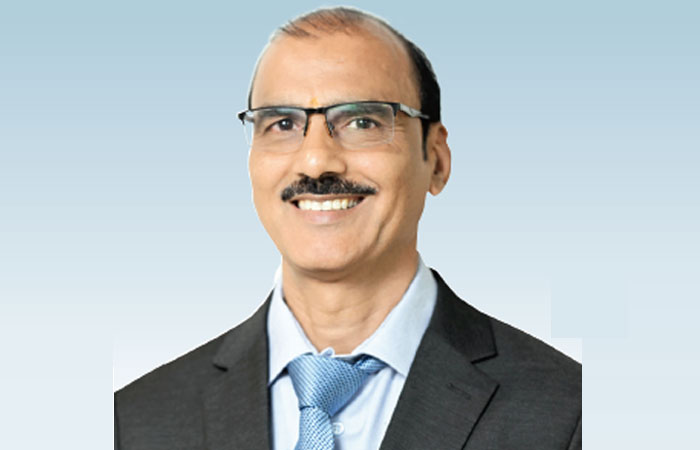
Neeti Mahajan, Consultant, EY India, is a climate and sustainability professional, blending consulting and communication to drive people-centered climate action.

Concrete

Niraj Cement JV Wins Railway and Metro Contracts

Two orders worth over Rs 1.64 billion boost infrastructure portfolio

Published

on

By

Shares

Niraj Cement Structurals (JV) has secured two major contracts from the Northeast Frontier Railway (NF Railway) and the Mumbai Metropolitan Region Development Authority (MMRDA), strengthening its position in large-scale infrastructure development.

The first contract, valued at Rs 815.2 million, has been awarded by NF Railway. It involves the construction of multiple-span 12.20-metre PSC slab underpasses, a major bridge (No. 727), retaining and guide walls, embankments and one minor bridge along the proposed UP and Down line near Deepor Beel. The project covers Km 163/00 to 164/200 between Azara and Kamakhya stations and forms part of the New Bongaigaon–Goalpara Town–Kamakhya (NBQ–GLPT–KYQ) railway doubling programme.

The second contract, worth Rs 826.6 million, has been awarded by MMRDA for constructing a foot overbridge (FOB) equipped with a travellator to improve connectivity between the SGMC monorail station and the Mahalaxmi metro and suburban railway stations.

The two projects underscore the company’s technical capabilities in both transportation infrastructure and environmentally sensitive construction, further strengthening its portfolio in key railway and urban mobility developments.

Continue Reading

Concrete

Peddapalli MP Seeks Clear Timelines for Rs 42.10 Bn Projects

Peddapalli MP Gaddam Vamshi Krishna has urged the Union Government to specify execution timelines for major infrastructure projects worth Rs 42.10 billion in his constituency.

Published

on

By

Shares

Peddapalli MP Gaddam Vamshi Krishna has called on the Centre to provide definitive timelines for a series of sanctioned infrastructure works that he said are essential for the region’s economic progress. Speaking in the Lok Sabha, he stressed that many approved projects remain stalled without clear implementation schedules, limiting their potential impact on connectivity and employment.

A key pending work is the Peddapalli–Manuguru Railway Line, a 137 km stretch linking Peddapalli with Manuguru in Bhadradri Kothagudem district. Although the line has received required approvals and special project status, the execution schedule has not yet been announced. The project is expected to support freight efficiency, improve coal logistics, and strengthen local job creation.

Extending his appeal beyond physical infrastructure, the MP urged the Centre to consider including Peddapalli in the India Semiconductor Mission, citing the district’s industrial ecosystem, skilled workforce, and readiness to support advanced manufacturing.

By pressing for structured timelines, Krishna emphasised the need for coordinated planning and timely execution to advance the constituency’s long-term development goals.

Continue Reading

Concrete

IndiaAI, Gujarat Govt Host Regional Conclave Ahead of 2026 AI Summit

A regional pre-summit event in Gandhinagar recently gathered leaders to advance AI for good governance.

Published

on

By

Shares

The IndiaAI Mission under the Ministry of Electronics and Information Technology, along with the Government of Gujarat and IIT Gandhinagar, convened a Regional Pre-Summit Event at Mahatma Mandir, Gandhinagar. The initiative is part of the build-up to the India–AI Impact Summit 2026, scheduled for 15–20 February 2026 at Bharat Mandapam, New Delhi.

The conclave brought together senior policymakers, technology leaders, researchers and industry practitioners to examine how AI can accelerate economic, digital and social transformation across sectors. The programme focused on the overarching theme of ‘AI for Good Governance: Empowering India’s Digital Future’.

The inaugural session featured key dignitaries including Bhupendrabhai Rajnikant Patel, Chief Minister of Gujarat; Harsh Rameshbhai Sanghavi, Deputy Chief Minister of Gujarat; Arjunbhai Devabhai Modhwadia, Minister for Science & Technology, Government of Gujarat; Manoj Kumar Das, Chief Secretary, Government of Gujarat; Abhishek Singh, Additional Secretary, MeitY and Director General, NIC; and Ponugumatla Bharathi, Secretary, Department of Science & Technology, Government of Gujarat.

High-impact keynote sessions led by national and global experts from MeitY, Bhashini, Google Cloud, Microsoft, IBM Research, NVIDIA, Oracle and AWS examined themes including AI in governance, public service delivery, urban development, rural transformation, healthcare, agriculture, fintech and multilingual accessibility enabled through Bhashini.
Delegates also visited an Experience Zone curated by IndiaAI and DST Gujarat, which showcased AI solutions across governance, agriculture, health and industry.

By convening government, industry and academic stakeholders, the conclave aimed to strengthen India’s AI ecosystem through frameworks that prioritise trust, scalability and public interest. Insights generated from the event will contribute directly to the agenda and outcomes of the India–AI Impact Summit 2026. 

Continue Reading

Trending News

SUBSCRIBE TO THE NEWSLETTER


Don't miss out on valuable insights and opportunities to connect with like minded professionals.


    This will close in 0 seconds