Connect with us

Concrete

Green Cement Transformation
Published

on

Shares

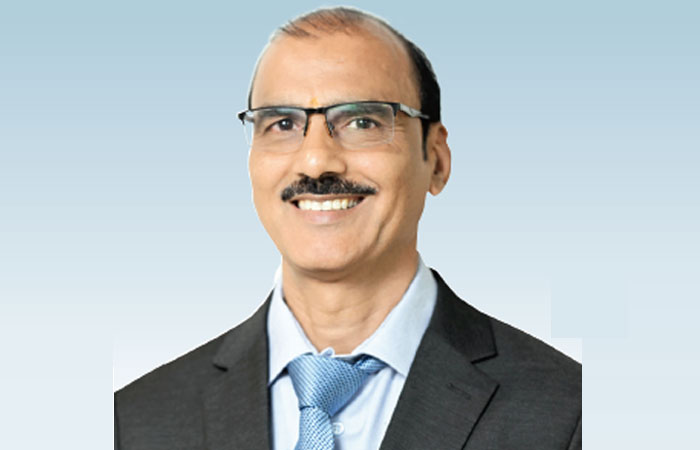
Asghar Raza, Senior GM – Strategic Customer and Segment Mining, Minerals and Metals Segment, Schneider Electric, discusses the transition towards a low-carbon future through intelligent electrification.

The cement industry is one of the largest sources of CO2 emissions, accounting for about 8 per cent of global CO2 output. However, increasing abatement pressures are prompting efforts to reimagine the business. Companies now have several options to decarbonise. Optimistically, analyses indicate that CO2 emissions could be reduced by up to 75 per cent by 2050. Of this, only about 20 per cent will come from operational advances such as energy efficiency improvements and process optimisation, while the remaining reduction will need to stem from technological innovation and new growth areas such as CCUS, new materials and process electrification.
Combining traditional and innovative levers will accelerate progress toward these goals. Our digital technologies for energy, process, and quality management and optimisation support customers in achieving their decarbonisation objectives by reducing CO2 emissions. We collaborate with our customers to create comprehensive decarbonisation roadmaps that guide their transition toward a low-carbon future.

New green production by design
We enable green-by-design production capacity through integrated power, process automation and software solutions.
Our solutions accelerate decarbonisation by supporting green technology transitions across the entire engineering and modelling process — from end to end — using advanced software tools for operational efficiency.
Carbon Capture and Storage (CCS) Green by Design has two key aspects:

  • Sustainable equipment design: We engineer our equipment with sustainability at the core — ensuring higher resource efficiency and minimal climate impact. For instance, we are transitioning towards SF6- free equipment.
  • System-level optimisation: We design entire systems to be fit-for-purpose, minimising resource consumption and improving overall process efficiency.

For a green cement plant, our solutions align with high-impact emission abatement levers. We support customers across the entire green lifecycle of the plant, including:

  • Implementation of AFR and fuels
  • Waste heat recovery systems (WHRS)
  • Asset performance management
  • CCUS deployment
  • Green energy sourcing
  • Process heat electrification

We continuously collaborate with partners and process OEMs on proof-of-concept (POC) and pilot projects in process heating, CCUS, WHRS and AFR technologies.

Greening existing capacity (brownfield)
We help customers decarbonise existing plants through optimised energy systems and a decarbonised supply chain.
Our fit-for-purpose MV/LV equipment design and energy efficiency consulting solutions deliver measurable impact.
The EcoStruxure Automation Platform features built-in libraries and function blocks that facilitate alternative fuel adoption with higher thermal substitution rates.
Our EcoStruxure Process Expert Solution with Advanced Process Control (APC) for waste heat recovery maximises energy recovery, optimises control and enhances operational efficiency — reducing downtime and improving asset performance.

Key achievements:

  • Close collaboration with technology vendors for greening existing cement facilities.
  • Five Schneider Electric factories recognised as Advanced Lighthouses by the World Economic Forum.

Energy supply strategy
Schneider Electric’s Energy Sustainability Consulting Services help customers optimise energy sourcing and monitor company-wide emissions for effective GHG management.

Key achievements and highlights:

  • Targeting 50 per cent CO2 emission reduction from our top 1,000 suppliers by 2025.
  • A Green Cement product made with alternative fuels can only be truly green if powered by renewable energy such as solar or wind. Given that integrated cement plants require over 50 MW of power each, renewable sourcing is essential.
  • Unrivalled expertise in energy management:

o 300,000+ sites powered by Schneider solutions
o €30 billion in managed energy spend
o 13 GW+ of corporate renewable PPAs since 2014

  • EcoStruxure Resource Advisor: A platform for tracking Scope 1, 2, and 3 emissions.
  • Ranked No. 1 Energy-as-a-Service Solutions Provider by Navigant Research.

Process energy management
We optimise process energy use through the following:

  • Energy-efficient power system design: Includes SF6-free equipment, Altivar variable frequency drives, E-house solutions, and ETAP-based energy modelling with electrical digital twins.
  • Advisory services: Comprehensive energy assessments, modernisation, and performance enhancement using energy-efficient software and drives.
  • Leadership in power distribution: Expertise in low- and medium-voltage power design using digital twins and energy modelling.
  • Advanced Process Control (APC): Optimises pyro and grinding operations with proven energy savings.

Our AI-powered APC represents a step toward autonomous operations, featuring:

  • Soft sensors: Continuous monitoring of infrequent measurements for precision control.
  • Non-linear modelling and prediction: Neural network-based models (RBF ANN) that improve process accuracy and foresight.
  • Python scripting for online adaptation: Real-time optimisation under changing conditions.

In conclusion, achieving a low-carbon future for India’s cement industry demands not just intent but intelligent integration. Schneider Electric’s end-to-end decarbonisation solutions embody this approach. By enabling smarter, cleaner and more efficient operations across the entire cement value chain, we are helping cement producers accelerate their journey towards a greener planet.

ABOUT THE AUTHOR:
Asghar Raza, Senior GM – Strategic Customer and Segment Mining, Minerals and Metals Segment, Schneider Electric, comes with over 20 years of experience, specialising in driving digital transformation, decarbonisation and sustainable industrial solutions.

Concrete

Steel: Shielded or Strengthened?

CW explores the impact of pro-steel policies on construction and infrastructure and identifies gaps that need to be addressed.

Published

on

By

Shares

Going forward, domestic steel mills are targeting capacity expansion
of nearly 40 per cent through till FY31, adding 80-85 mt, translating
into an investment pipeline of $ 45-50 billion. So, Jhunjhunwala points
out that continuing the safeguard duty will be vital to prevent a surge
in imports and protect domestic prices from external shocks. While in
FY26, the industry operating profit per tonne is expected to hold at
around $ 108, similar to last year, the industry’s earnings must
meaningfully improve from hereon to sustain large-scale investments.
Else, domestic mills could experience a significant spike in industry
leverage levels over the medium term, increasing their vulnerability to
external macroeconomic shocks.(~$ 60/tonne) over the past one month,
compressing the import parity discount to ~$ 23-25/tonne from previous
highs of ~$ 70-90/tonne, adds Jhunjhunwala. With this, he says, “the
industry can expect high resistance to further steel price increases.”

Domestic HRC prices have increased by ~Rs 5,000/tonne
“Aggressive
capacity additions (~15 mt commissioned in FY25, with 5 mt more by
FY26) have created a supply overhang, temporarily outpacing demand
growth of ~11-12 mt,” he says…

To read the full article Click Here

Continue Reading

Concrete

JK Cement Commissions 3 MTPA Buxar Plant, Crosses 31 MTPA

Company becomes India’s fifth-largest grey cement producer

Published

on

By

Shares

JK Cement  has commissioned its new 3 MTPA grey cement plant in Buxar, Bihar, taking the company’s total installed capacity to 31.26 million tonnes per annum (MTPA) and moving it past the 30 MTPA milestone. With this addition, JK Cement now ranks among the top five grey cement manufacturers in India, strengthening its national presence.

Commenting on the development, Dr Raghavpat Singhania, Managing Director, JK Cement, said, “Crossing 31 MTPA is a significant turning point in JK Cement’s expansion and demonstrates the scale, resilience, and aspirations of our company. In addition to making a significant contribution to Bihar’s development vision, the commissioning of our Buxar plant represents a strategic step towards expanding our national footprint. We are committed to developing top-notch manufacturing capabilities that boost India’s infrastructure development and generate long-term benefits for local communities.”

Spread across 100 acres, the Buxar plant is located on the Patna–Buxar highway, enabling efficient distribution across Bihar and neighbouring regions. While JK Cement entered the Bihar market last year through supplies from its Prayagraj plant, the new facility will allow local manufacturing and deliveries within 24 hours across the state.

Mr Madhavkrishna Singhania, Joint Managing Director & CEO, JK Cement, said, “JK Cement is now among India’s top five producers of grey cement after the Buxar plant commissioning. Our capacity to serve Bihar locally, more effectively, and on a larger scale is strengthened by this facility. Although we had already entered the Bihar market last year using Prayagraj supplies, local manufacturing now enables us to be nearer to our clients and significantly raise service standards throughout the state. Buxar places us at the center of this chance to promote sustainable growth for both the company and the region in Bihar, a high-growth market with strong infrastructure momentum.”

The project has involved an investment of Rs 5 billion. Commercial production began on 29 January 2026, following construction commencement in March 2025. The company said the plant is expected to generate significant direct and indirect employment and support ancillary industrial development in the region.

Continue Reading

Concrete

JK Cement Crosses 31 MTPA Capacity with Commissioning of Buxar Plant in Bihar

Published

on

By

Shares

JK Cement has commissioned a 3 MTPA Grey Cement plant in Buxar, Bihar, taking its total capacity to 31.26 MTPA and placing it among India’s top five grey cement producers. The ₹500 crore investment strengthens the company’s national footprint while supporting Bihar’s infrastructure growth and local economic development.

JK Cement Ltd., one of India’s leading cement manufacturers, has announced the commissioning of its new state-of-the-art Grey Cement plant in Buxar, Bihar, marking a significant milestone in the company’s growth trajectory. With the commissioning of this facility, JK Cement’s total production capacity has increased to 31.26 million tonnes per annum (MTPA), enabling the company to cross the 30 MTPA threshold.

This expansion positions JK Cement among the top five Grey Cement manufacturers in India, strengthening its national footprint and reinforcing its long-term growth strategy.

Commenting on the strategic achievement, Dr Raghavpat Singhania, Managing Director, JK Cement, said, “Crossing 31 MTPA is a significant turning point in JK Cement’s expansion and demonstrates the scale, resilience, and aspirations of our company. In addition to making a significant contribution to Bihar’s development vision, the commissioning of our Buxar plant represents a strategic step towards expanding our national footprint. We are committed to developing top-notch manufacturing capabilities that boost India’s infrastructure development and generate long-term benefits for local communities.”

The Buxar plant has a capacity of 3 MTPA and is spread across 100 acres. Strategically located on the Patna–Buxar highway, the facility enables faster and more efficient distribution across Bihar and adjoining regions. While JK Cement entered the Bihar market last year through supplies from its Prayagraj plant, the Buxar facility will now allow the company to serve the state locally, with deliveries possible within 24 hours across Bihar.

Sharing his views on the expansion, Madhavkrishna Singhania, Joint Managing Director & CEO, JK Cement, said, “JK Cement is now among India’s top five producers of grey cement after the Buxar plant commissioning. Our capacity to serve Bihar locally, more effectively, and on a larger scale is strengthened by this facility. Although we had already entered the Bihar market last year using Prayagraj supplies, local manufacturing now enables us to be nearer to our clients and significantly raise service standards throughout the state. Buxar places us at the center of this chance to promote sustainable growth for both the company and the region in Bihar, a high-growth market with strong infrastructure momentum.”

The new facility represents a strategic step in supporting Bihar’s development vision by ensuring faster access to superior quality cement for infrastructure, housing, and commercial projects. JK Cement has invested approximately ₹500 crore in the project. Construction began in March 2025, and commercial production commenced on January 29, 2026.

In addition to strengthening JK Cement’s regional presence, the Buxar plant is expected to generate significant direct and indirect employment opportunities and attract ancillary industries, thereby contributing to the local economy and the broader industrial ecosystem.

Continue Reading

Trending News

SUBSCRIBE TO THE NEWSLETTER


Don't miss out on valuable insights and opportunities to connect with like minded professionals.


    This will close in 0 seconds