Connect with us

Concrete

Evolving in response to customer needs

Published

on

Shares

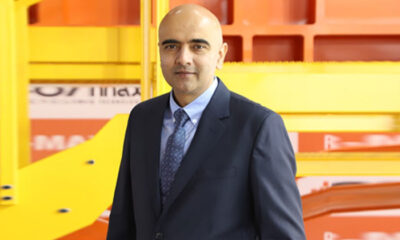
Tushar Kulkarni, Business Head – Minerals – Cement & Mining, Innomotics India, shares insights on digitalisation technologies that are powering the cement industry’s transition.

From high-performance motor and drive systems to AI-powered optimisation and digital twins, Innomotics is leading a quiet revolution in the cement sector’s electrification and automation landscape. Its deep domain expertise—spanning over three decades—now converges with advanced digitalisation to make plants smarter, more efficient, and more sustainable. In this conversation, Tushar Kulkarni, Business Head – Minerals – Cement & Mining, Innomotics India, discusses how Innomotics’ innovations, including the new High Voltage Compact (HVC) motors, CEMAT automation platform, and AI-driven process solutions, are empowering cement manufacturers to achieve operational excellence and decarbonisation goals simultaneously.

How is Innomotics redefining the ‘motion and drive’ paradigm specifically for the cement industry?
Our products and solutions for the cement industry incorporate more than 35 years of experience and collaboration with the world’s leading cement companies. They are based on proven standards and tailored to the specific demands of your industry. Since many decades, Innomotics prides itself as a technology provider in Electrification and Automation space and continuously supports various cement manufacturers in operating plants in efficient condition – be it energy efficiency, plant uptime and reliable operations.
In today’s Industry 4.0 era, Innomotics with innovative and state-of-the-art digitalisation solutions specific to cement manufacturing, is set to boost our customers’ effort in achieving sustainability goals by enabling them in adapting to fast changing market scenario and maintain their competitive position with continuous improvement in productivity, efficiency and optimum utilisation of resources.

What recent breakthroughs in motor / drive technology are you most excited about?
We have recently launched our High Voltage Compact (HVC) motor portfolio. The high voltage compact IEC motors cover a power range from 150 kW to 2.7 MW, in the various cooling types for low installation heights – in addition to classic fin cooling, also available with water jacket cooling. With these versions, they seamlessly cover the corresponding power and application ranges – from basic or standard up to sector-specific applications. They can also address extreme requirements with degree of protection up to IP66. The compact motors set themselves apart because of its high-power density and compact design that applies across the board. Due to their outstanding reliability, as well as low maintenance, they boost plant and system availability and reduce energy costs based on their high efficiencies.
For three decades, Innomotics Perfect Harmony GH180 has stood as a defining force in medium voltage drive technology, transforming industry standards with unmatched reliability and digital innovation. This milestone celebrates a legacy of engineering excellence that continues to empower customers worldwide.
Since its introduction, the GH180 has gained global recognition as a trusted leader. Its innovative modular cell architecture delivers safe and efficient medium voltage power. With more than 25,000 installations internationally, the success of the GH180 rests on three core commitments:

1. Unwavering reliability and consistency
Providing steady and predictable operation that minimises downtime while maximising confidence.
2. Continuous innovation with user-centric efficiency
Evolving in response to customer needs, ensuring intuitive and accessible operation at every stage.
3. Advanced digital integration
Leveraging smart technologies through Inspire IQ, the company’s IIoT digitalisation solution for drive systems, to enhance performance and connectivity within the framework of Industry 4.0.

Describe how your CEMAT automation platform brings new value in cement plant operations?
Cement manufacturing is an exhaustive process, from Quarry to Lorry, and requires a high number of equipment to be controlled and signals to be monitored. Designed specifically for the Cement and Mining industries, CEMAT library efficiently operates processes with many interlocks and equipment, keeping the equipment safe.
Customers are continuously looking for efficient resource utilisation, without compromising the quality and performance KPIs. Here is where CEMAT an integrated process control system with cement and mining standards comes into view. CEMAT is not just about delivering some operation blocks but setting up plant operation culture in the right perspective, backed by 50+ years of experience and knowledge embedded in its DNA. Due to the legacy of CEMAT (900 installations worldwide), many cement manufacturers already speak the CEMAT language, making it easier for new customers to adapt to it quickly. Offering excellent process automation and a solid base for digitalisation, it plays a key role in all phases of cement production.

How are AI / data analytics solutions like AIKiln or AIMill (or equivalent) being used in cement plants?
Our DigiMine AI Pyro & AI Mill solutions provide optimum setpoints for Pyro and Mill automation systems, ensuring efficient and stable operations and thereby enhancing productivity and energy optimisation.
These solutions are powered by self-learning AI technology, which can adapt its algorithms in case of changes in the process or operating environment. AI Simulator – part of the solution further enables process teams to identify improvement areas and validate improvement steps virtually, saving time and material wastage in trying implementations of different steps at site.

In what ways does your portfolio support retrofits in legacy cement plants?
The PCS7 CEMAT-based automation solutions are truly scalable. It supports multiple versions in a single project; this enables individual sections to upgrade while other sections are in operation.
In new builds, the scalable capability of CEMAT automation solutions supports simultaneous commissioning of various plant sections, which helps in reducing the overall commissioning time.
For plant revamps, CEMAT automation solutions support cement manufacturers in scaling the plant while many sections are still in operation. Hence, with reduced overall downtime, customers can easily plan plant expansions during revamps.
For motors and drives, when their service life ends, we can modernise them either with a retrofit or an upgrade, depending on operational goals. Our tiered services cater to customer needs and can help assess the right approach for their goals, including what to do once the end of the lifecycle has been reached.
When the time has come, our drive retrofit and upgrade services provides customer production systems with the latest advancements for a high reliability and availability. A retrofit gives a functional replacement of the original drive, which may have unique properties or a special function. Upgrades, on the other hand, are more common – replacing section of the drives with new technology.
When the lifecycle of motor or generator comes to an end, Innomotics offers different options to cover your asset. This can either be a replica where the whole existing machine will be reproduced.
If customer prefer to choose a retrofit, the
latest technology machine from the current portfolio will be used with interface adaptions to fit into the existing installation.

What’s your approach to co-innovating with cement OEMs, plants, or academic R&D partners?
For over four years, we have been working and developing digital AI based process optimisation solutions like AI Pyro and AI Mill in close collaboration with domain and subject matter experts in cement production. Therefore, our digitalisation solutions bring a unique combination of process expertise and latest digital AI technology, thereby improving efficiency and productivity of process by identifying best operating parameter values and further optimising them based on current conditions.
These solutions are tested live in cement processes such as Pyro and Cement Mill at different cement plants, yielding promising outcomes. It creates its own knowledge database of good and bad operating conditions which it keeps on updating during operation, also considering feedback from expert and operator on a continuous basis, which makes the solution become more intelligent over the time, thereby recommending enhanced set point and improving process optimisation.

Over the next 5–10 years, which radical or disruptive technologies (beyond current stage) do you believe Innomotics must lead in?
The current advancement in electrical and automation technologies has enabled the system to achieve its peak performance for day-to-day activities far smoother than it was earlier. Also, Industry 4.0 has enabled automation systems to provide efficient and consistent data.
With this advancement, AI-based systems have started receiving continuous meaningful data to perform many activities, which has allowed AI / ML models to predict outcomes accurately, thereby helping customers achieve their sustainability goals.
Currently, we are implementing specific process AI systems i.e. AI Pyro and AI Mill. With our futuristic goal to develop a single AI system for the entire cement manufacturing process, we are on path to develop a common platform which can connect with different automation / third-party systems to collect data seamlessly, provide Analytics Dashboards and Reports 24X7 as well as provide set-points for control parameters from Quarry to Lorry.

Reference: Insights Magazine, Innomotics.com

Table 3a: Impact of Digital Tools
Achievable Improvements from AI Pyro: Derived Benefits:
• Specific heat consumption by 3 per cent – 5 per cent decrease
• AFR (Alternative Fuels) usage up to 5 per cent Increase
• Increase Process stability • Consistent clinker quality associated with stable process
• CO2 reduction
• Sulphur Content reduction
• NOx Content reduction
• Detection of preheater jamming at earlier stages

Achievable Improvements from AI Pyro: Derived Benefits:
• Productivity (Throughput) by 3 per cent – 5 per cent increase
• Specific Power Consumption up to 2 per cent Decrease • Increased machine availability


Concrete

FORNNAX Appoints Dieter Jerschl as Sales Partner for Central Europe

Published

on

By

Shares

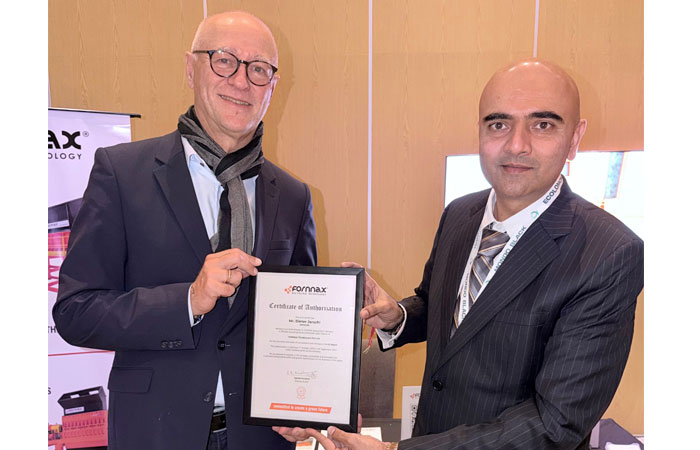
FORNNAX TECHNOLOGY has appointed industry veteran Dieter Jerschl as its new sales partner in Germany to strengthen its presence across Central Europe. The partnership aims to accelerate the adoption of FORNNAX’s high-capacity, sustainable recycling solutions while building long-term regional capabilities.

FORNNAX TECHNOLOGY, one of the leading advanced recycling equipment manufacturers, has announced the appointment of a new sales partner in Germany as part of its strategic expansion into Central Europe. The company has entered into a collaborative agreement with Mr. Dieter Jerschl, a seasoned industry professional with over 20 years of experience in the shredding and recycling sector, to represent and promote FORNNAX’s solutions across key European markets.

Mr. Jerschl brings extensive expertise from his work with renowned companies such as BHS, Eldan, Vecoplan, and others. Over the course of his career, he has successfully led the deployment of both single machines and complete turnkey installations for a wide range of applications, including tyre recycling, cable recycling, municipal solid waste, e-waste, and industrial waste processing.

Speaking about the partnership, Mr. Jerschl said,
“I’ve known FORNNAX for over a decade and have followed their growth closely. What attracted me to this collaboration is their state-of-the-art & high-capacity technology, it is powerful, sustainable, and economically viable. There is great potential to introduce FORNNAX’s innovative systems to more markets across Europe, and I am excited to be part of that journey.”

The partnership will primarily focus on Central Europe, including Germany, Austria, and neighbouring countries, with the flexibility to extend the geographical scope based on project requirements and mutual agreement. The collaboration is structured to evolve over time, with performance-driven expansion and ongoing strategic discussions with FORNNAX’s management. The immediate priority is to build a strong project pipeline and enhance FORNNAX’s brand presence across the region.

FORNNAX’s portfolio of high-performance shredding and pre-processing solutions is well aligned with Europe’s growing demand for sustainable and efficient waste treatment technologies. By partnering with Mr. Jerschl—who brings deep market insight and established industry relationships—FORNNAX aims to accelerate adoption of its solutions and participate in upcoming recycling projects across the region.

As part of the partnership, Mr. Jerschl will also deliver value-added services, including equipment installation, maintenance, and spare parts support through a dedicated technical team. This local service capability is expected to ensure faster project execution, minimise downtime, and enhance overall customer experience.
Commenting on the long-term vision, Mr. Jerschl added,
“We are committed to increasing market awareness and establishing new reference projects across the region. My goal is not only to generate business but to lay the foundation for long-term growth. Ideally, we aim to establish a dedicated FORNNAX legal entity or operational site in Germany over the next five to ten years.”

For FORNNAX, this partnership aligns closely with its global strategy of expanding into key markets through strong regional representation. The company believes that local partnerships are critical for navigating complex market dynamics and delivering solutions tailored to region-specific waste management challenges.

“We see tremendous potential in the Central European market,” said Mr. Jignesh Kundaria, Director and CEO of FORNNAX.
“Partnering with someone as experienced and well-established as Mr. Jerschl gives us a strong foothold and allows us to better serve our customers. This marks a major milestone in our efforts to promote reliable, efficient and future-ready recycling solutions globally,” he added.

This collaboration further strengthens FORNNAX’s commitment to environmental stewardship, innovation, and sustainable waste management, supporting the transition toward a greener and more circular future.


Continue Reading

Concrete

Budget 2026–27 infra thrust and CCUS outlay to lift cement sector outlook

Published

on

By

Shares

Higher capex, city-led growth and CCUS funding improve demand visibility and decarbonisation prospects for cement

Mumbai

Cement manufacturers have welcomed the Union Budget 2026–27’s strong infrastructure thrust, with public capital expenditure increased to Rs 12.2 trillion, saying it reinforces infrastructure as the central engine of economic growth and strengthens medium-term prospects for the cement sector. In a statement, the Cement Manufacturers’ Association (CMA) has welcomed the Union budget 2026-27 for reinforcing the ambitions for the nation’s growth balancing the aspirations of the people through inclusivity inspired by the vision of Narendra Modi, Prime Minister of India, for a Viksit Bharat by 2047 and Atmanirbharta.

The budget underscores India’s steady economic trajectory over the past 12 years, marked by fiscal discipline, sustained growth and moderate inflation, and offers strong demand visibility for infrastructure linked sectors such as cement.

The Budget’s strong infrastructure push, with public capital expenditure rising from Rs 11.2 trillion in fiscal year 2025–26 to Rs 12.2 trillion in fiscal year 2026–27, recognises infrastructure as the primary anchor for economic growth creating positive prospects for the Indian cement industry and improving long term visibility for the cement sector. The emphasis on Tier 2 and Tier 3 cities with populations above 5 lakh and the creation of City Economic Regions (CERs) with an allocation of Rs 50 billion per CER over five years, should accelerate construction activity across housing, transport and urban services, supporting broad based cement consumption.

Logistics and connectivity measures announced in the budget are particularly significant for the cement industry. The announcement of new dedicated freight corridors, the operationalisation of 20 additional National Waterways over the next five years, the launch of the Coastal Cargo Promotion Scheme to raise the modal share of waterways and coastal shipping from 6 per cent to 12 per cent by 2047, and the development of ship repair ecosystems should enhance multimodal freight efficiency, reduce logistics costs and improve the sector’s carbon footprint. The announcement of seven high speed rail corridors as growth corridors can be expected to further stimulate regional development and construction demand.

Commenting on the budget, Parth Jindal, President, Cement Manufacturers’ Association (CMA), said, “As India advances towards a Viksit Bharat, the three kartavya articulated in the Union Budget provide a clear context for the Nation’s growth and aspirations, combining economic momentum with capacity building and inclusive progress. The Cement Manufacturers’ Association (CMA) appreciates the Union Budget 2026-27 for the continued emphasis on manufacturing competitiveness, urban development and infrastructure modernisation, supported by over 350 reforms spanning GST simplification, labour codes, quality control rationalisation and coordinated deregulation with States. These reforms, alongside the Budget’s focus on Youth Power and domestic manufacturing capacity under Atmanirbharta, stand to strengthen the investment environment for capital intensive sectors such as Cement. The Union Budget 2026-27 reflects the Government’s focus on infrastructure led development emerging as a structural pillar of India’s growth strategy.”

He added, “The Rs 200 billion CCUS outlay for various sectors, including Cement, fundamentally alters the decarbonisation landscape for India’s emissions intensive industries. CCUS is a significant enabler for large scale decarbonisation of industries such as Cement and this intervention directly addresses the technology and cost requirements of the Cement sector in context. The Cement Industry, fully aligned with the Government of India’s Net Zero commitment by 2070, views this support as critical to enabling the adoption and scale up of CCUS technologies while continuing to meet the Country’s long term infrastructure needs.”

Dr Raghavpat Singhania, Vice President, CMA, said, “The government’s sustained infrastructure push supports employment, regional development and stronger local supply chains. Cement manufacturing clusters act as economic anchors across regions, generating livelihoods in construction, logistics and allied sectors. The budget’s focus on inclusive growth, execution and system level enablers creates a supportive environment for responsible and efficient expansion offering opportunities for economic growth and lending momentum to the cement sector. The increase in public capex to Rs 12.2 trillion, the focus on Tier 2 and Tier 3 cities, and the creation of City Economic Regions stand to strengthen the growth of the cement sector. We welcome the budget’s emphasis on tourism, cultural and social infrastructure, which should broaden construction activity across regions. Investments in tourism facilities, heritage and Buddhist circuits, regional connectivity in Purvodaya and North Eastern States, and the strengthening of emergency and trauma care infrastructure in district hospitals reinforce the cement sector’s role in enabling inclusive growth.”

CMA also noted the Government’s continued commitment to fiscal discipline, with the fiscal deficit estimated at 4.3 per cent of GDP in FY27, reinforcing macroeconomic stability and investor confidence.

Continue Reading

Concrete

Steel: Shielded or Strengthened?

CW explores the impact of pro-steel policies on construction and infrastructure and identifies gaps that need to be addressed.

Published

on

By

Shares

Going forward, domestic steel mills are targeting capacity expansion
of nearly 40 per cent through till FY31, adding 80-85 mt, translating
into an investment pipeline of $ 45-50 billion. So, Jhunjhunwala points
out that continuing the safeguard duty will be vital to prevent a surge
in imports and protect domestic prices from external shocks. While in
FY26, the industry operating profit per tonne is expected to hold at
around $ 108, similar to last year, the industry’s earnings must
meaningfully improve from hereon to sustain large-scale investments.
Else, domestic mills could experience a significant spike in industry
leverage levels over the medium term, increasing their vulnerability to
external macroeconomic shocks.(~$ 60/tonne) over the past one month,
compressing the import parity discount to ~$ 23-25/tonne from previous
highs of ~$ 70-90/tonne, adds Jhunjhunwala. With this, he says, “the
industry can expect high resistance to further steel price increases.”

Domestic HRC prices have increased by ~Rs 5,000/tonne
“Aggressive
capacity additions (~15 mt commissioned in FY25, with 5 mt more by
FY26) have created a supply overhang, temporarily outpacing demand
growth of ~11-12 mt,” he says…

To read the full article Click Here

Continue Reading

Trending News

SUBSCRIBE TO THE NEWSLETTER


Don't miss out on valuable insights and opportunities to connect with like minded professionals.


    This will close in 0 seconds