The Indian cement industry is embracing green logistics through electric and alternative fuel vehicles, digital innovations and sustainable transport strategies to reduce carbon emissions and improve efficiency. Kanika Mathur looks at the collaborative efforts between industry leaders and government initiatives driving this transformation toward a net-zero future.
The Indian cement industry, as the world’s second-largest producer, plays a pivotal role in the nation’s infrastructure development. However, this prominence comes with significant environmental challenges, particularly in logistics operations. Green logistics—integrating sustainable practices into transportation and supply chain management—has emerged as a critical focus area. By adopting eco-friendly transportation methods, optimising supply chains and leveraging technological innovations, the industry aims to reduce its carbon footprint and enhance operational efficiency.
According to Cargo Insights, the cement industry plans to invest around `40,000 crore to add 40 MTPA annually, targeting an increase of 100-120 MTPA over the next three years.
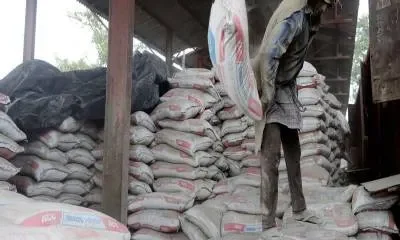
India is the sixth-largest market for medium and heavy-duty trucks (MHDTs), with over 200,000 vehicles sold in 2021 and more than 40 lakh trucks operating on its roads. However, the dominance of internal combustion engine (ICE) trucks, with over 90 per cent running on diesel, presents significant challenges, including high emissions and fuel dependency. In the cement industry, road transport plays a crucial role, with 74 to 76 per cent of cement, 15 to 20 per cent of clinker, and most limestone, fly ash, and other additives being transported by trucks. While coal and slag rely more on rail, the sector remains heavily dependent on road logistics, underscoring the urgent need for sustainable alternatives such as LNG and electric trucks to reduce environmental impact and improve efficiency, informs a report by the Confederation of Indian Industry (May 2024).
Environmental imperative
Logistics in the cement industry is a major contributor to carbon emissions, primarily due to the extensive use of fossil fuel-powered transportation. With approximately 74 per cent of cement and clinker transport relying on roadways, the environmental impact is substantial. Transitioning to greener logistics solutions is essential to mitigate these emissions and align with global sustainability goals.
“Jassper Shipping is dedicated to reducing carbon footprints, including those of clients. Emission-reduction plans and carbon offset investments aim to achieve net-zero carbon emissions by 2035. Over the next two quarters, the number of EVs in the fleet will increase from 58 to 150. The last-mile delivery supply chain is becoming more sustainable and efficient with EV integration while maintaining high-quality service,” says Pushpank Kaushik, CEO, Jassper Shipping.
According to the Investment Information and Credit Rating Agency (ICRA), cement demand in India may touch approximately 460 million metric tonnes (MT) by 2025, and the sector is projected to grow its capacity by 5 per cent annually until
March 2027.
India’s per capita cement consumption remains below 300 kg, which is only half of the global average, indicating significant potential for growth. However, economic progress often comes at an environmental cost, with the cement industry accounting for approximately seven per cent of India’s total CO2 emissions due to its heavy reliance on coal. During China’s peak growth in 2008, the country produced 113.5 crore MT of cement, emitting approximately 0.46 MT of CO2 per MT of cement. In 2024, while India is producing only 40 per cent of China’s 2008 cement volumes, its specific emissions remain comparable. Additionally, environmental concerns are exacerbated by clinker dust, wastage during manufacturing and packaging, and transportation leaks, all of which contribute to the industry’s overall carbon footprint.
As India works toward its ambitious goal of becoming a net-zero emissions nation by 2070, it faces the challenge of balancing rapid economic growth with sustainability. The cement industry, as a key player in infrastructure development, must integrate green solutions at multiple levels of the value chain. This transformation involves optimising power consumption, improving manufacturing processes, developing eco-friendly products and implementing better preservation methods post-processing. By adopting these measures, the industry can contribute to India’s sustainability goals while maintaining its critical role in economic expansion.
The race for EVS
A significant stride toward green logistics is the industry’s pilot testing of electric trucks (E-trucks). Around 150 E-trucks have been deployed to assess their feasibility in cement transportation. Neeraj Akhoury, President, Cement Manufacturers’ Association (CMA), and Managing Director, Shree Cement, highlighted that while E-trucks can potentially reduce operating costs and emissions, challenges such as high ownership costs, heavy batteries, limited charging infrastructure and range constraints need to be addressed.
Companies like UltraTech Cement are leading the way by expanding their EV fleet. UltraTech has signed contracts to deploy approximately 100 EV trucks, aiming to transport 75,000 metric tonnes of clinker monthly. This initiative is part of a broader strategy to incorporate 500 electric trucks by
June 2025, aligning with the Government of India’s eFAST initiative.
The company has signed a transport service contract to deploy approximately 100 EV trucks, which will transport 75,000 MT of clinker each month. This initiative positions UltraTech as the first Indian cement company to integrate EV trucks on such a large scale for long-distance logistics.
By replacing conventional fossil-fuel-powered
trucks with EVs, the company expects to reduce its transport-related carbon emissions by 17,000 MT annually, making a significant contribution to sustainable logistics.
This large-scale deployment follows a successful pilot project launched in January 2024, which introduced five electric trucks on the same route. The pilot also focused on setting up essential charging infrastructure and implementing driver training programs to ensure smooth operations. Encouraged by the positive results, UltraTech is now evaluating additional routes for EV integration and is preparing for another pilot to facilitate clinker transport between two of its other manufacturing units. This phased approach demonstrates the company’s commitment to expanding green logistics solutions across its supply chain.
In a press release, KC Jhanwar, Managing Director, UltraTech Cement, stated, “UltraTech is fully committed to achieving its Net Zero goal by 2050. We have taken a holistic approach to embedding sustainability in our operations. Scaling up EV trucks in our logistics is a testament to our commitment to advancing sustainable practices in the industry.”
UltraTech plans to scale up its EV fleet to 500 trucks by June 2025 under the Government of India’s eFAST initiative. The company has been a pioneer in sustainable transportation, having introduced CNG vehicles in 2021 and LNG vehicles in 2022 before adopting EV trucks in 2024. Currently, its logistics network operates over 468 CNG and
67 LNG trucks, ensuring a reduced environmental footprint across multiple manufacturing units. This ambitious expansion further cements UltraTech’s leadership in integrating sustainability into its business operations while advancing India’s green energy and carbon reduction goals.
Integrating alternative fuels and renewable energy
Beyond electrification, the industry is exploring alternative fuels to power logistics operations. JK Lakshmi Cement, in collaboration with GreenLine Logistics, has introduced LNG-fueled heavy trucks to decarbonise its road logistics. This initiative marks a significant step toward reducing emissions associated with cement transportation.
Back in 2022, JK Lakshmi Cement had announced its tie-up with GreenLine, an Indian green and smart logistics company. This collaboration introduced LNG-fueled heavy trucks in the company’s logistics protocol. While Arun Shukla, President and Director, JK Lakshmi Cement, had hailed this as their first step towards sustainable transportation in an official statement, the company has come a long way in integrating green logistics in its supply chain over the years. Companies such as GreenLine Logistics are helping the cement transportation industry become more eco-conscious, thereby facilitating the transition towards a more circular economy.
Heavy trucking contributes approximately 10 to 12 per cent of total emissions. Switching to LNG-fuelled trucks can reduce CO2 emissions by 28 per cent, NOx by 59 per cent, SOx by 100 per cent, and particulate matter by 91 per cent, while also cutting noise pollution by 30 per cent. This transition
offers a cleaner, more sustainable alternative for freight transport.
Additionally, the adoption of renewable energy sources within manufacturing and logistics operations is gaining momentum. The Indian cement industry has been proactive in utilising waste heat recovery systems and renewable energy, contributing to a reduction in overall carbon emissions.
Another dimension to consider is improving the supply chain efficiency. The integration of digital technologies is revolutionising supply chain management in the cement industry. Advanced tracking systems, data analytics and the Industrial Internet of Things (IIoT) are being employed to optimise routes, monitor vehicle performance, and reduce fuel consumption. These technologies not only enhance efficiency but also contribute to sustainability by minimising unnecessary transportation and associated emissions.
Challenges in implementing green logistics
Despite the clear benefits, the transition to green logistics is fraught with challenges:
- High initial investment: The upfront costs for EVs and alternative fuel vehicles are considerably higher than traditional diesel trucks.
- Infrastructure limitations: The lack of adequate charging stations and refueling infrastructure for alternative fuels hampers widespread adoption.
- Regulatory Hurdles: Navigating the evolving landscape of environmental regulations and standards can be complex and resource-intensive.
- Technological adaptation: Integrating new technologies requires substantial changes in existing operational frameworks and workforce training.
“At Fleetronix, we are constantly looking ahead to the future of logistics, and we see a massive opportunity in using technology to make fleet management smarter and more sustainable. Right now, fleet maintenance is often reactive – issues are fixed after they cause downtime. But we envision a future where predictive maintenance becomes the norm. Our goal is to develop a system that identifies potential problems before they turn into costly breakdowns, ensuring trucks run efficiently and reducing unnecessary emissions,” says Anuradha Parakala, Co-founder, Chief Strategy and Product Officer, Fleetronix Systems.
“As the industry moves towards hybrid and electric vehicles, we see Fleetronix playing a key role in optimising fleet transitions – from smart route planning that maximises battery efficiency to integrated tracking for EV charging. Our vision is clear: healthier trucks, lower emissions, and a logistics industry that’s not just efficient, but truly sustainable. And we are actively building the technology to make it happen,” she adds.
Collaborative efforts and government initiatives
Addressing these challenges necessitates collaboration between industry stakeholders and government bodies. The Indian government is facilitating Memorandums of Understanding (MoUs) for new technologies, promoting research and development through incentives, and providing subsidies to encourage the adoption of green logistics practices. Such partnerships are crucial for creating an ecosystem conducive to sustainable logistics.
Furthermore, the Indian cement industry’s commitment to green logistics is poised to yield significant environmental and economic benefits. As technological advancements continue and infrastructure improves, the adoption of sustainable practices is expected to accelerate. This transition not only aligns with global sustainability targets but also positions the industry competitively in a rapidly evolving market.
Conclusion
Embracing green logistics is imperative for the Indian cement industry to mitigate its environmental impact and ensure long-term sustainability. Through the adoption of electric and alternative fuel vehicles, integration of renewable energy, and leveraging technological innovations, the industry is making commendable strides toward eco-friendly operations. Continued collaboration among industry players, government agencies and technology providers will be essential to overcome existing challenges and
fully realise the potential of green logistics in
cement manufacturing.