Connect with us

Concrete

Proactive Maintenance

Published

on

Shares

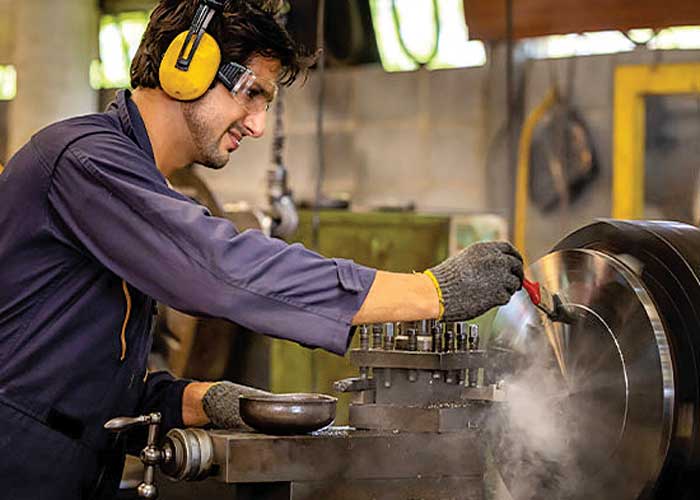
Gaurav Mathur, Director and Chief Executive, Global Technical Services, discusses the importance of an on-site oil testing laboratory within industrial plants for improved safety, extended equipment life and cost effectiveness in the manufacturing sector.

Oil condition monitoring can provide important information about the condition of the machine through oil analysis. Lubricant in any machine is like blood in the human body. Just as a blood test can help a doctor diagnose an illness and inform a treatment plan, similarly an oil analysis can provide an effective way to know the machine condition and inform it to take maintenance decisions.
Once the oil test laboratory is within the plant, the test reports are made available to the machine maintenance team within a timeline of 48 hours. Timely action helps reduce the expensive mechanical maintenance costs and improves machine life and productivity, leading to the plant’s profitability.
Normally, the oil testing laboratories are far away from the plant. They are mostly in a different city, and these laboratories provide test reports after 10 to 15 days. However, those reports are of no use in machine maintenance as mechanical damage starts to set in within 48 hours in any machine. Hence, it is important to have an on-site oil test laboratory within the plant.
Oil condition monitoring, covering moisture (water presence in the oil), particle contamination, wear debris analysis or loss of additives level, etc. are the parameters that clearly bring out any machine’s internal condition. This reporting leads to timely maintenance decisions by the mechanical team. These reports also help improve the reliability of the machine being tested.
Thus, an oil testing laboratory within the plant site is instrumental in greatly improving the value of machine life and reducing a major cost of mechanical maintenance. These improvements and cost reductions in turn lead to cost savings, profitability and enhance efficiency in manufacturing.

OIL ANALYSIS AT SITE LABORATORY
Oil analysis is an important activity used to check oil health, oil contamination, oil cleanliness level, and machine wear. Its main purpose is to verify that a lubricant in the machine is operating with the oil in good condition i.e. the oil is free from any contamination due to continued usage in the machine over a period of time.
An on-site oil testing laboratory helps to form a system for early detection of oil degradation, contamination, and machine wear. Early detection has several benefits that ensure a healthier environment for the employees and the machinery, such as improved safety, early detection and warning of machine degradation, and increased equipment availability and effectiveness.
Once the oil testing laboratory is established within the plant, thereafter, the next step is to prepare department-wise, machine-wise oil testing schedules. These schedules ensure that there is periodic oil testing and subsequent corrective measures can be taken by the mechanical team. This kind of reporting and availability of the
on-site laboratory leads to a more proactive mechanical maintenance.
Almost 82 per cent of wear-related failures are the direct result of particle contamination.
It is a well-known fact that lubricating oils in a machine never dies. Once the contaminants are removed and the oil cleaned to its original level, the oil can be made as good as ‘new’. Hence, a good oil filtration and accurate additives treatment at site assumes considerable importance in ‘oil conservation’ in the industry. By conducting the above activity about 40 per cent to 50 per cent conservation of the lubricant oil can be achieved.
Hence, having a site condition monitoring laboratory not only improves the life of the machines, it also reduces mechanical maintenance costs and can bring a large economic change in the cement manufacturing sector. Besides, oil can also be recycled to its original level. Thus, having an on-site oil testing laboratory is paramount important and profitable for all large industries.

Concrete

Cement Makers Reaffirm Commitment to Sustainable Growth

Published

on

By

Shares

World Environment Day spotlight on innovation and circularity

On World Environment Day, the Indian cement industry reiterated its commitment to supporting India’s climate ambitions through sustainable manufacturing, resource efficiency and the adoption of cleaner technologies.

The Cement Manufacturers’ Association (CMA) said the sector remains aligned with the Government of India’s Net Zero commitments and is accelerating efforts to reduce its environmental footprint while supporting the country’s infrastructure and development agenda.

Parth Jindal, President, CMA and Managing Director, JSW Cement, said the industry is increasingly adopting cleaner technologies, improving energy efficiency and expanding the use of alternative fuels and raw materials. He also highlighted the growing importance of circular economy practices, where industrial by-products and waste streams from one sector are utilised as resources in another.

“The Indian Cement Industry is aligned to the Government’s commitments on carbon mitigation and is accelerating the adoption of cleaner technologies, resource efficiency and circular economy practices while actively exploring the potential of Carbon Capture, Utilisation and Storage (CCUS) as a critical pathway for deep decarbonisation,” said Jindal.

He added that coprocessing industrial waste and by-products helps conserve natural resources, reduce disposal requirements and lower the environmental footprint across multiple sectors.

According to Jindal, sustainability is no longer limited to manufacturing processes but is increasingly influencing investment decisions, innovation strategies and long-term growth plans within the industry.

Echoing similar views, Dr Raghavpat Singhania, Vice President, CMA and Managing Director, JK Cement, said sustainable development extends beyond emissions reduction and must also focus on responsible resource utilisation and waste minimisation.

“Sustainability in the built environment cannot be measured by emissions alone. It is equally about how efficiently we use resources, how effectively we minimise waste and how responsibly we create the infrastructure that will serve future generations,” said Singhania.

He noted that the cement industry is advancing its sustainability agenda through greater resource efficiency, increased circularity, technological innovation and continuous improvements in manufacturing practices. As a key contributor to India’s infrastructure development, the sector has a critical role to play in balancing economic growth with environmental responsibility.

On the occasion of World Environment Day, industry leaders reaffirmed their commitment to supporting India’s climate goals while delivering the materials required for resilient, durable and sustainable infrastructure.


Continue Reading

Concrete

Building a Greener Future Together

Published

on

By

Shares

Environmental sustainability requires immediate action, not just long-term commitments and discussions. Recycling, circular economy practices, and technology-driven waste management can help industries reduce environmental impact while supporting sustainable growth.

Author: Jignesh Kundaria, Director and CEO, Fornnax Technology

World Environment Day serves as an important reminder that environmental sustainability can no longer remain confined to discussions, reports, or long-term commitments. The environmental challenges facing the world today demand immediate, measurable, and collective action. Across industries and communities, waste generation continues to outpace our ability to process it responsibly, placing increasing pressure on ecosystems, natural resources, public health, and the well-being of future generations.

One of the most significant shifts required today is a change in how society perceives waste. Rather than being viewed as a material to be discarded, waste must be recognised as a valuable resource that can contribute to both economic growth and environmental protection when managed through the right technologies and systems. This mindset forms the foundation of the circular economy model that countries across the world are increasingly adopting to reduce landfill dependence, recover valuable materials, and create more sustainable industrial ecosystems.

India has made meaningful progress in strengthening awareness around sustainability, recycling, and environmental responsibility over the past decade. Significant efforts are being made to formalise the recycling sector through improved infrastructure, technology adoption, policy implementation, and broader stakeholder participation. These developments are creating a stronger foundation for responsible waste management and resource recovery across the country.

However, achieving long-term environmental impact requires collaboration from all stakeholders. Industries, policymakers, technology providers, and communities must work together with greater accountability to strengthen recycling ecosystems, encourage responsible waste management practices, and create sustainable outcomes through consistent execution rather than temporary interventions.

As someone closely associated with the recycling industry, I firmly believe that technology will play a decisive role in addressing future environmental challenges. Advanced recycling systems have the potential to recover valuable resources, reduce pollution, minimise landfill burdens, and conserve energy, creating a more sustainable future for generations to come. This belief is deeply reflected in Fornnax’s motto, “Committed to Create a Green Future,” which embodies our commitment to building long-term environmental value through innovation and responsible action.

At the same time, technology alone cannot deliver meaningful change. Real progress requires intent, awareness, participation, and a shared sense of responsibility. Sustainable development can only be achieved when innovation is supported by collective action and a genuine commitment to environmental stewardship.

On this World Environment Day, let us move beyond conversations and take meaningful steps towards creating a cleaner, greener, and more sustainable planet. By embracing innovation, strengthening recycling ecosystems, and acting responsibly today, we can create lasting environmental impact and secure a better future for generations to come.

Continue Reading

Concrete

JK Lakshmi Advances LC3 Cement Expansion

Company highlights commercial production and research partnerships

Published

on

By

Shares


The meeting reviewed progress in limestone calcined clay cement (LC3) technology and its commercial adoption in India’s cement sector, focusing on low-carbon alternatives to conventional binders. JK Lakshmi Cement noted that limestone calcined clay cement can reduce carbon dioxide emissions by up to 40 per cent compared with conventional cement and said this reduction supports industry decarbonisation. The company highlighted that it was among the first two cement manufacturers in India to move LC3 into commercial production after the Bureau of Indian Standards approved the technology as a cement standard.

Vinita Singhania said the transition of LC3 from research to commercial production reflected collaboration between industry, academia and international institutions. Maya Tissafi acknowledged JK Lakshmi Cement’s role in advancing LC3 adoption in India and its contribution in taking the technology from laboratory trials to commercial implementation. Both representatives underlined the growing relevance of sustainable construction materials as India expands infrastructure and urban development.

The meeting explored continued collaboration with Swiss research institutions such as EPFL, EMPA and ETH Zurich alongside Indian academic partners and development organisations. JK Lakshmi Cement has been associated with the LC3 initiative since 2014 and worked with EPFL, IIT Delhi, IIT Madras, Development Alternatives and Technology and Action for Rural Advancement. The company conducted one of the earliest industrial trials of LC3 and recently announced commercial production of Green Pro LC3 cement from its Jaykaypuram plant in Rajasthan.

India remains the world’s second-largest cement producer and expansion of infrastructure, urbanisation and housing demand continue to support long-term sector growth, increasing interest in low-carbon technologies. The company reported an annual turnover of more than Rupees (Rs) 60 bn and current cement capacity of about 18 million (mn) tonnes (t) per annum, with a target of reaching 30 million (mn) tonnes (t) by 2030. Apart from grey cement, the company also makes ready-mix concrete, gypsum plaster, wall putty, primers, adhesives and fly ash blocks, and both sides concluded on the need for continued collaboration to develop sustainable construction solutions.

Continue Reading

Video Thumbnail

    SIGN-UP FOR OUR GENERAL NEWSLETTER


    Trending News