Pralhad Mujumdar, President, RMC, Aggregates and Construction Chemicals, Infra.Market, focusses on minimising environmental impact by placing emphasis on efficient and optimal use of raw materials, resources, workforce, energy, time and money.
Tell us about the manufacturing capacity of your plants and their regional diversity.
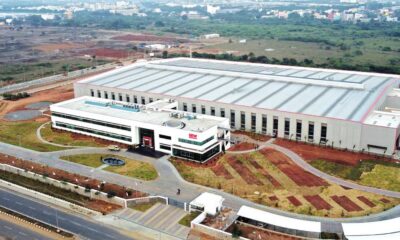
The rated manufacturing capacity of our plants ranges from 60 to 120 cubic metres per hour, with a production efficiency exceeding 80 per cent. We are proud to have a total of 84 plants located throughout 50+ cities in India, ensuring to efficiently meet the demands of our customers across the country.
Tell us more about the concrete mix of various grades and qualities that are produced by your organisation.
Our company is dedicated to providing top-quality concrete mixes for a wide range of applications, ranging from M5 to M80. This comprehensive range of concrete mixes allows us to cater to the diverse needs of our clients and ensures to provide the perfect solution for each project.
Our value-added concrete solutions, specially designed to add strength, durability, and aesthetic appeal to structures can be used for a variety of applications, from foundation to ceiling, waterproofing, and architectural concrete solutions.
In addition to the standard mix options and value-added solutions, we offer tailor-made concrete mix that are specifically designed to suit the unique requirement of our customer. Our team of experts works closely with customers to understand their specific needs and challenges, and then develops customised and optimised concrete mix solutions.
Our commitment to quality and innovation has made us a trusted leader in the concrete industry, and we are proud to offer our clients an extensive range of high-quality concrete that is designed to meet their distinct needs and exceed their expectations.
What are the quality standards and control practices established by your organisation?
At Infra.Market, we take quality control and adherence to industry norms as our topmost priority. We ensure that all our concrete mix designs and practices are in line with IS norms and codes of practice. To meet particular requirements, we also adhere to international standards like American Society for Testing and Materials (ASTM) and British Standards (BS).
We conduct stringent quality checks on all incoming raw materials. Concrete trial mixes are also checked frequently in each plant to ensure high-quality output. Our technical team, including certified technologists and American Concrete Institute (ACI) qualified field technicians, ensures quality control throughout the production process. We ensure that every outgoing truck is thoroughly checked by a technical team for the fresh properties of concrete, ensuring that our customers receive consistent quality concrete. Regular education about on-site concrete handling is provided to customers. As a crucial part of our quality assurance process, we conduct cube casting at both the site and plant as per customer requirements and ensure transparency of strength and its durability. We have a National Accreditation Board for Testing and Calibration Laboratories (NABL) accredited Innovation and Quality Assurance Centre to support quality control processes.
Our commitment to quality has made us a trusted partner for many of our customers.
Tell us about the role of automation and technology in your ready-mix concrete making process.
We prioritise efficient management and optimisation of manufacturing processes by fully integrating our production lines with ERP systems. We have developed an internal application platform, Phoenix, which enables simplification and transparency in our operations and promotes ease of doing business. Our commitment to rebuilding the future of construction through innovation and technology is reflected in our technology-focused strategy from customer onboarding to final delivery and invoicing. By staying at the forefront of technological advancements and embracing innovative solutions, we have been able to stay ahead of the curve.
How do you incorporate sustainability in concrete mixes? What initiatives have been taken by your organisation?
We prioritise the use of supplementary cementitious materials such as fly ash, ground granulated blast furnace slag (GGBS), rice husk ash, copper slag, recycled and green aggregates amongst others into our construction processes. These materials are known for their durability and sustainability and are used as substitutes for traditional raw materials. In addition, we have switched to using manufactured sand in place of natural river sand, demonstrating our commitment to eco-friendly construction practices. Through these measures, we aim to reduce the carbon footprint associated with the construction industry and contribute to a more sustainable future.
What are the major challenges faced by your organisation in manufacturing and delivering concrete mixes?
Despite the challenges posed by the unorganised construction sector and traffic restrictions that come along, we have been taking proactive steps to position ourselves for success. By expanding our footprint and increasing our reach, we are efficiently navigating the competitive landscape and attracting new customers. Moreover, one of our significant investments is in human resource recruitment and development that is paying off. We are building a talented and dedicated team that can deliver high quality work. By nurturing our employees and providing opportunities for growth, we are fostering a positive and supportive work environment that encourages creativity and innovation.
We are excited about the future and are confident that our commitment to excellence and innovation will continue to drive our success in the years to come.
How does the use of ready-mix concrete make construction a cost-efficient operation?
Our construction approach has several advantages that benefit both the project and the environment. By minimising inventory holding costs and wastages at the site level, we aim to reduce project duration and overheads. Our focus on speed of execution helps to further reduce project timelines, resulting in increased efficiency and cost savings.
Our commitment to reducing the overall carbon footprint involves incorporating the use of supplementary cementitious materials, which promotes sustainable construction practices, minimises waste, and contributes to our goal of environmental preservation. We place a strong emphasis on efficient and optimal use of raw materials, resources, workforce, energy, time and money. This allows us to deliver high quality work while reducing costs, minimising waste and increasing the durability of the structure, thus reducing repair and maintenance cost.
Overall, our approach is designed to deliver exceptional results while minimising our impact on the environment.
How do you ensure optimum delivery operations and on time delivery for your consumers?
Our company places great emphasis on efficient fleet management through effective use of technology. By implementing seamless ordering solutions and delivery and tracking systems, we provide a hassle-free experience for our customers, resulting in high levels of satisfaction. We place great importance on fuel management to operate in an environmentally responsible manner, reducing carbon emissions and maximising efficiency, which leads to significant cost savings.
With our commitment to efficient fleet management and technology, we provide exceptional service to our customers while minimising our environmental impact.
-Kanika Mathur