Connect with us

Concrete

Green Fuel for Thought

Published

on

Shares

Ganesh W Jirkuntwar, Senior Executive Director and National Manufacturing Head, Dalmia Cement (Bharat) talks about technology and alternative fuels, which are important tools in the cement industry’s march towards reduction of carbon footprint.

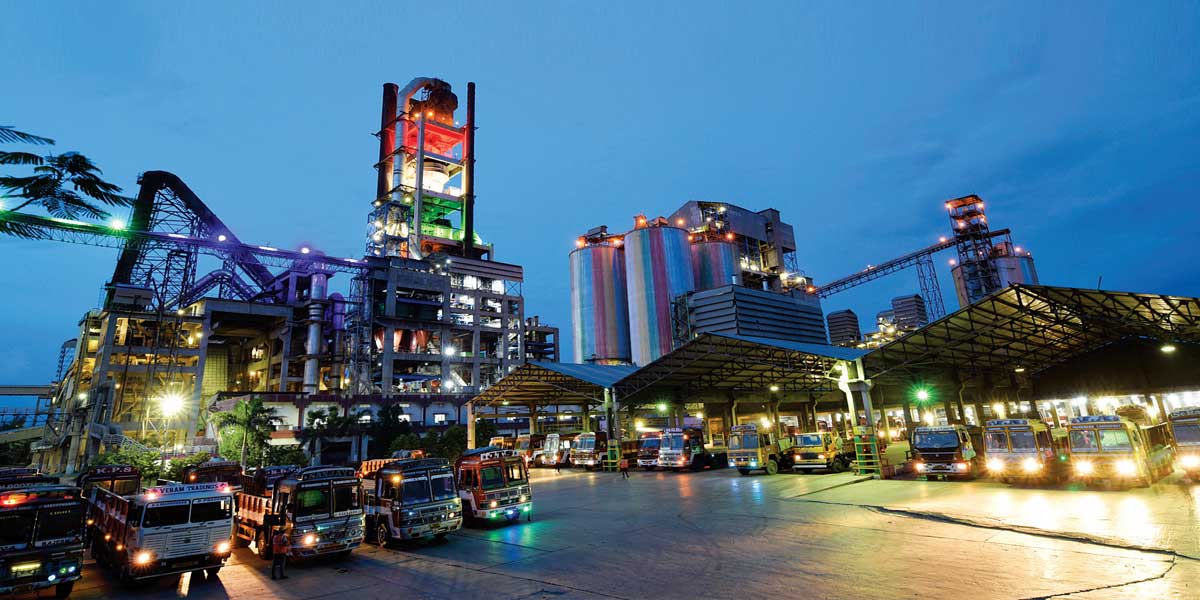
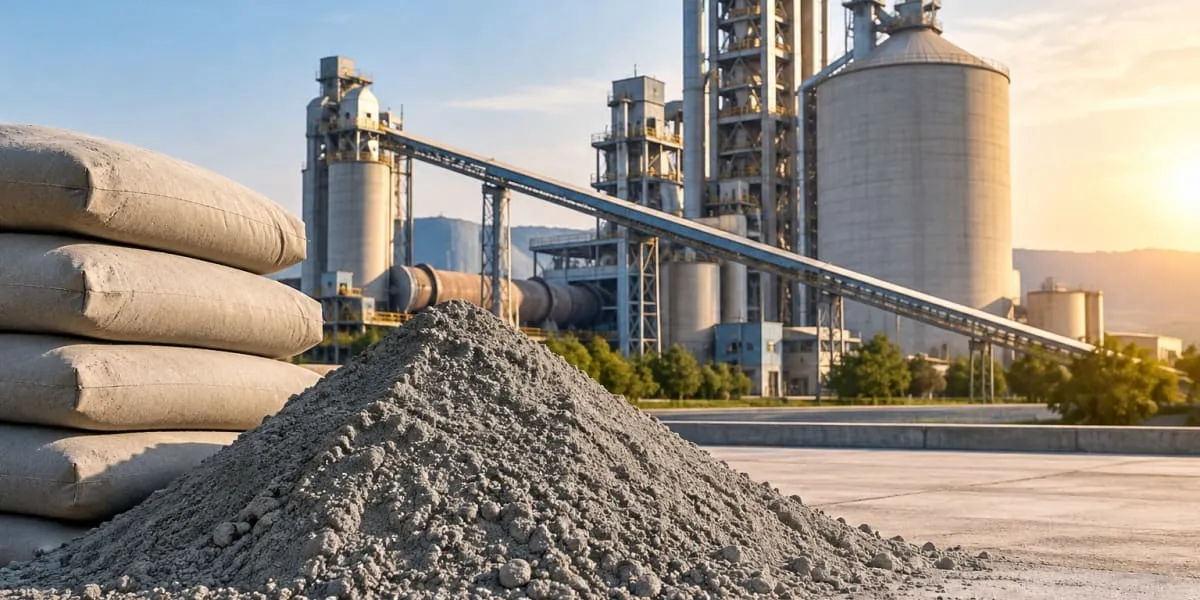
Dalmia Cement Bharat has evolved to create a distinct identity for itself that is synonymous with sustainability and growth. The philosophy of ‘Clean and Green is Profitable and Sustainable’ has helped the company deliver on the expectations of its stakeholders. As a champion of blended cement, it is rapidly gaining popularity as a ‘green’ alternative to the traditional Ordinary Portland Cement in the construction sector. Three levers are being used to decarbonise the cement. Uses of supplementary cementitious materials like fly ash and slag have reduced clinker consumption and hence reduced carbon footprint in cement. Alternative fuels (green fuel) like industrial wastes, renewable biomass, municipal wastes etc., have reduced consumption of fossil fuel facilitating in achieving carbon neutrality. Increased dependence on renewable power sources like solar, waste heat recovery systems, wind power etc., is also helping the company achieve its goal of becoming the second green cement manufacturer.
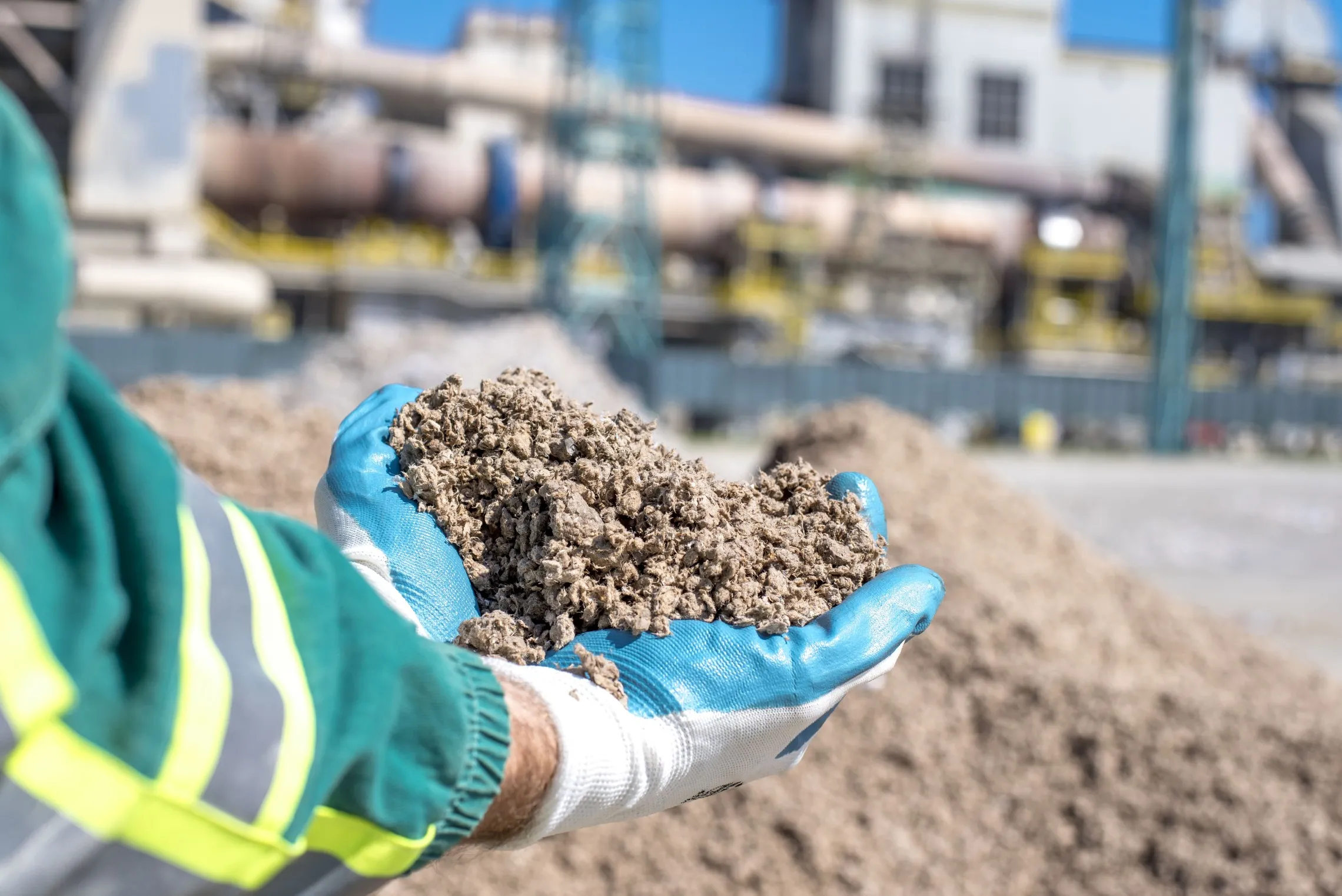
Alternative fuels to the tune of 20 per cent by heat substitution are being used, putting it far ahead of any other Indian cement manufacture in uses of alternative fuel. Dalmia Cement Bharat wants to lead and drive the industry’s shift towards a sustainable use of alternative fuel in cement production by investing in requisite technology and machineries, and setting an ambitious target of achieving 35 per cent TSR by FY25. It uses industrial wastes, municipal wastes, agricultural wastes etc., as alternative fuel, which otherwise goes either into a water source or landfill and creates environmental issues. The use of these industrial wastes is a great example of a circular economy ecosystem.

Reducing the Carbon Footprint
Uses of alternative fuels and raw materials is helping the company fast-track its journey of achieving carbon negative. Dalmia carbon footprint at 467 kg CO2/tonne of cement (specific net CO2) is one of the lowest in the cement sector globally. Since the announcement of the carbon negative ambition in 2018, the specific carbon footprint has reduced by more than 9 per cent in the Scope 1 category and it is currently at 12.55 million tCO2/year. By reducing the scope 1 GHG emissions to 32 per cent per ton of cementitious material by FY ’34, they have also reduced overall scope 2 emissions by 30 per cent and are targeting to reduce scope 2 GHG emissions to 61.9 per cent per tonne of cementitious material by FY’34. Both these are on FY ’19 as base year and within the same timeframe validated by SBTi.

Role of Technology
Technology plays a pivotal role in determining the quantum of alternative raw materials and fuels to be used without compromising properties of cement. Online sampling, online particle size analyser, robotic lab etc., are great enablers for determining composition of alternative raw materials and fuels to be used. Nowadays digital technology is also facilitating in generating lots of insights from process data, which is helping in taking real-time basis decisions on desired composition of alternative raw materials and alternative fuels for achieving targeted quality of clinker and cement.
Cement making process has not undergone major overhaul since inception of dry cement making process, therefore basic chemistry and machinery are pretty much standardised across the industry. Cement composition is decided based on end uses and does not depend on plant machinery per say. Plant machineries are upgraded for switching to newer and efficient designed machines, replacing the old and obsolete machines etc. Plant machinery upgradation is a situational call in Dalmia and is decided based on group guidelines for reliability, technology adoption, ROA etc.

Alternative Fuels and Profitability
Cement producers worldwide are striving to lower their production costs. One effective method of achieving this end is the use of alternative fuels. Use of low-grade alternative fuels such as sewage sludge, biomass fuels such as wood products, agricultural wastes, etc. in precalciners is a viable option because combustion in a precalciner vessel takes place at a lower temperature.
Alternative fuel uses have been quite beneficial for us not only in terms of improving bottom-line but also helping gain tall recognition at the international stage. During peak fossil fuel prices, its uses helped reduce the spend on fuel to great extent and optimise variable cost of cement. Despite having a handicap of regional presence, Dalmia Cement Bharat could beat pan India cement players on cost front as result of substantial uses of alternative fuels.
Usages of alternative fuels lead to marginal increase in overall heat consumption. In case preheater fans and other equipment are being used at its full capacity, usage of alternative fuels may result in marginal reduction of clinker throughput.
Similarly, uses of alternative raw materials may impact cement quality, if not proportioned carefully.
Alternative fuel uses in Indian cement kilns is at the cusp of transformational change. Almost all cement players are adopting traditional technology and installing necessary infra for using alternative fuels in kilns. Uses of alternative fuel in kilns are limited by its chloride and ash contents. These issues are being taken care of by industry wide research and piloting of technologies, which has potential to reduce chloride and ash contents from alternative fuels. Various technologies for preprocessing of alternative fuels like pyrolysis, pyrorotor etc. are being piloted in India.
Government bodies, academia, industry bodies etc. are also doing extensive research on uses
of alternative raw materials for decarbonising cement.

ABOUT THE AUTHOR:
Ganesh W Jirkuntwar, National Manufacturing Head (Sr Executive Director) and EXCOM Member – Dalmia Group,
comes with 27 years of experience in cement plant and manufacturing, operations and management, logistics, planning, quality and team management. He is also well-versed with lean management, TPM, Six Sigma and ISO 9000, 14000 and 18000. standards.

Concrete

UltraTech Cement FY26 PAT Crosses Rs 80 bn

Company reports record sales, profit and 200 MTPA capacity milestone

Published

on

By

Shares


UltraTech Cement reported record financial performance for Q4 and FY26, supported by strong volumes, higher profitability and improved cost efficiency. Consolidated net sales for Q4 FY26 rose 12 per cent year-on-year to Rs 254.67 billion, while PBIDT increased 20 per cent to Rs 56.88 billion. PAT, excluding exceptional items, grew 21 per cent to Rs 30.11 billion.

For FY26, consolidated net sales stood at Rs 873.84 billion, up 17 per cent from Rs 749.36 billion in FY25. PBIDT rose 32 per cent to Rs 175.98 billion, while PAT increased 36 per cent to Rs 83.05 billion, crossing the Rs 80 billion mark for the first time.

India grey cement volumes reached 42.41 million tonnes in Q4 FY26, up 9.3 per cent year-on-year, with capacity utilisation at 89 per cent. Full-year India grey cement volumes stood at 145 million tonnes. Energy costs declined 3 per cent, aided by a higher green power mix of 43 per cent in Q4.

The company’s domestic grey cement capacity has crossed 200 MTPA, reaching 200.1 MTPA, while global capacity stands at 205.5 MTPA. UltraTech also recommended a special dividend of Rs 2.40 billion per share value basis equivalent to Rs 240.

Continue Reading

Concrete

Towards Mega Batching

Optimised batching can drive overall efficiencies in large projects.

Published

on

By

Shares


India’s pace of infrastructure development is pushing the construction sector to work at a significantly higher scale than previously. Tight deadlines necessitate eliminating concreting delays, especially in large and mega projects, which, in turn, imply installing the right batching plant and ensuring batching is efficient. CW explores these steps as well as the gaps in India’s batching plant market.

Choose well

Large-scale infrastructure and building projects typically involve concrete consumption exceeding 30,000-50,000 cum per annum or demand continuous, high-volume pours within compressed timelines, according to Rahul R Wadhai, DGM – Quality, Tata Projects.

Considering the daily need for concrete, “large-scale concreting involves pouring more than 1,000–2,000 cum per day while mega projects involve more than 3,000 cum per day,” says Satish R Vachhani, Advanced Concrete & Construction Consultant…

To read the full article Click Here

Continue Reading

Concrete

Andhra Offers Discom Licences To Private Firms Outside Power Sector

Policy allows firms over 300 MW to seek distribution licences

Published

on

By

Shares


The Andhra Pradesh government will allow private firms that require more than 300 megawatt (MW) of power to apply for distribution licences, making the state the first to extend such licences beyond the power sector. The policy targets information technology, pharmaceuticals, steel and data centres and aims to reduce reliance on state utilities as demand rises for artificial intelligence infrastructure.

Approved applicants will be able to procure electricity directly from generators through power purchase agreements, a change officials said will create more competitive tariffs and reduce supply risk. Licence holders will use the Andhra Pradesh Transmission Company (APTRANSCO) network on payment of charges and will not need a separate distribution network initially.

Licences will be granted under the Electricity Act, 2003 framework, with the Central and State electricity regulators retaining authority over terms and approvals. The recent Electricity (Amendment) Bill, 2025 sought to lower entry barriers, enable network sharing and encourage competition, while the state commission will set floor and ceiling tariffs where multiple discoms operate.

Industry players and original equipment manufacturers welcomed the policy, saying competitive supply is vital for large data centre investments. Major projects and partnerships such as those involving Adani and Google, Brookfield and Reliance, and Meta and Sify Technologies are expected to benefit as capacity expands in the state.

Analysts noted India’s data centre capacity is forecast to reach 10 gigawatts (GW) by 2030 and cited International Energy Agency estimates that global data centre electricity consumption could approach 945 terawatt hours by the same year. A one GW data centre needs an equivalent power allocation and one point five times the water, which authorities equated to 150 billion litres (150 bn litres).

Advisers warned that distribution licences will require close regulation and monitoring to prevent misuse and to ensure tariffs and supply obligations are met. Officials said the policy aims to balance investor requirements with regulatory oversight and could serve as a model for other states.

Continue Reading

Video Thumbnail

    SIGN-UP FOR OUR GENERAL NEWSLETTER


    Trending News