Connect with us

Concrete

An Open and Shut

Published

on

Shares

The Indian Cement Industry presents its multi-faceted approach to manufacturing environmentally compatible cement a.k.a. Green Cement as it races against time to minimise carbon footprint of cement production and accelerate the nation’s efforts towards achieving Net Zero deadline.

Cement production is one of the highest-emitting industrial sectors, responsible for about 6 to 7 percent of global CO2 emissions. About 40 per cent of the emissions come from the fossil-fuel combustion used to power the precalciners and kilns in cement plants, the rest from a chemical reaction inherent in cement making.
To bring down the carbon emission from cement manufacturing would require efficient energy usage systems, low carbon alternative fuels and raw materials as well as machinery, equipment, automation, and technology to support the functionality of cement plants, making them productive and cost efficient. Newer processes may also lead to a rise in cost of production, however, this may as well be rewarding for cement manufacturers as the consumption and production of cement is expected to rise in the coming decade globally.
According to Statista, by 2030, China is expected to maintain its status as the world’s leading cement producing nation, albeit by a smaller share. At the beginning of the 2020’s, China accounted for more than half of the world’s cement production, and this is forecast to decrease to 35 per cent of global production by 2030. In second place, India is expected to maintain its ranking. Unlike China, India’s cement production share is anticipated to double by
2030 compared to its 2018 volume, to 16 percent of global production.
The Indian government is highly focused on infrastructure development to boost economic growth. Since the pandemic, India and the world are now pushing harder than ever to meet climate goals. Moreover, for India, the need and importance to cut down on emissions is double; to target climate change and to reduce the current dangerous levels of air pollution. The usage and demand for cement are only going to increase due to the burgeoning population and the need for housing and infrastructure.


The concern for the cement industry is the emission from chemical reaction of limestone in the kiln and the combustion of coal releasing carbon dioxide in the atmosphere making the cement sector a major contributor to the climatic change and rising global warming.
Dr BN Mohapatra, Director General, NCB says, “The production of blended cements like PPC and PSC has seen constant increase since the year 1995 when only 30 per cent blended cements were produced in India as compared to 2017 when the production of blended cements has increased to 73 per cent. This could have been achieved due to acceptance of blended cements in Indian markets by the awareness efforts of cement companies and research organisations like NCB. Keeping in line with the current global scenario, the National Council for Cement and Building Materials (NCB) in its endeavor to help the cement industry realise the target of net zero carbon by 2070 has been working on various levers of CO2 reduction, especially Clinker Substitution.”
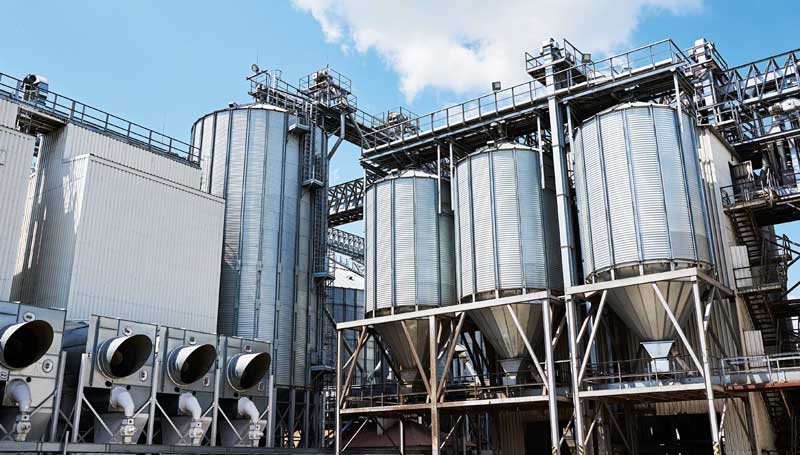
India’s cement production share is anticipated to double by 2030 compared to its 2018 volume to 16 per cent of global production.


Efforts are being taken in the direction to combat this damage to the environment, by making huge emission reductions by using supplementary cementitious materials, by improving energy efficiency, substituting fossil fuels with alternative fuels, using waste heat to generate electricity, and scientifically trying new production techniques and process improvements. Cement manufacturing organisations are also adapting to new technologies like Waste Heat Recovery and alternative energy sources like solar energy for eco-friendly and sustainable cement making.
“The industry has an intention to reduce their carbon footprint and make cement production friendly for the environment. However, without governance and regulation, the implementation will be a challenge and there will be no standard practice. If you go back 30 years when stacks in cement plants had a lot of dust. It was the government that made norms and kept making stricter laws which has led to a highly reduced dust emission from cement plants. Similarly, usage of technology for reduction of carbon footprint will require intervention and regulation for cement players. In Europe, there is a penalty known as carbon tax while the talk of Indian industry is Sustainability Incentive. Either way, there needs to be an intervention to bring down emission levels in any industry,” says Sridhar S Sundaram, VP -Head of Cement Africa, Middle East & South Asia, FLSmidth Private Limited.

COST EFFICIENCY
The rising cost of raw materials, fuel, machinery, and technology is leading to the cost of cement production going up. Cement manufacturers today are investing in making cement production greener and sustainable by relying on efficient systems that enhance the productivity of the process and make full utilisation of the available resources.
V N Balasubramanian, Director – Head BU Cement, Thyssenkrupp Industries India, says, “Costs are increasing every day. The goal is to reduce the production cost to the best possible extent for the customers. At the start of my career there used to be about 800 people working at a cement plant, today there are less than 100. This has been possible due to automation. It is also gradually increasing in the cement industry. Manual intervention not only reduces the chances of risk but also helps in achieving greater accuracy. Automation is not just a buzz word but also the need of the day.”
“For example, German headquarters can evaluate the performance of a plant in India without physically visiting. It comes at a price but there are ways and means to do it and customers are asking for it as well. Developing a solution for this is a challenge, but with us, the advantage is the technical know-how. We understand what needs to be measured, at what time and what frequency. We provide this as part of our package as an offering that is a plus. The advantage of getting this solution from us is because we understand the technology as well as its functionality. Thus, the result and output from our automation solutions are more precise and accurate. We also interpret the results and give recommendations,”
he adds.
Although investment in newer and high-tech machinery and equipment is a large CAPEX, according to the experts it leads to lower OPEX, which in the long run brings cost efficiency to production of
cement by giving machinery a longer life and more precise functionality.
“Sustainability today is not a choice anymore. It has become a part and parcel of boardroom discussions. It is important to understand and appreciate some of the most polluting industries, like the cement industry, are paying close attention to the matter and taking steps to make the environment
better.” says Hitendra Grover, Director – CAD & MSD – India and South Asia, Thermo Fisher Scientific India.
“There are two ways to look at sustainability, on the process side and the utility side. Thermo Fisher plays on the process and environment side. We help the sector to contribute towards the overall sustainability by measuring the level of harmful gasses emitted at the plant,” he adds.

AUTOMATION
The world is moving towards Industry 4.0 and so is the Indian cement industry. Technology, innovation and automation are key components to building a stronger future for the industry. As a mission to achieve Net Zero, efforts are being taken in the direction to reduce carbon foortprint as well as use of energy or make use of alternative fuels and raw materials to achieve desired results.
Technology plays a key role in the same as it brings real time monitoring and accuracy to the functionality of cement plants. This leads to lesser wastage, less lead times and reduces the chances of plant shutdown due to sudden
“According to the cement history of India, the optimum size of the plant is changing every 6 years. Primarily this change relates to the technology that is available to the Indian manufacturers along with the location of mines, location of the market and transportability. These factors play a role in defining the change of the size of the plant. Today I think apart from the selection of technology, availability of the size is also important. For a 10,000 tonne plant to be sustainable, peripheral equipment also needs to be available. Today we have reached that stage,” say Vivek Bhatia, Managing Director and CEO and Makarand Marathe, Business Advisor – Cement, thyssenkrupp.
Newer technologies like Waste Heat Reduction (WHR) and Carbon Capture (CC) are making the rounds which are going to be beneficial for the decarbonisation future of the cement industry. Though these systems are in their nascent stage, they are making their way into the cement manufacturer’s sustainability plans.
“There are some frontier technologies where we increase the density of carbon dioxide speed from 20 per cent to 90 per cent which allows easy carbon capture. We are also working on various carbon capture technologies. As far as carbon capture in India is concerned, we are still at a nascent stage and have to create a situation where carbon can be easily captured. The question is about its storage and subsequent utilisation and disbursement. This technology still has some more distance to cover, but India will reach there,” they add.
Precision and accuracy play a very important role in making the overall process of cement manufacturing cost effective, energy efficient and sustainable. Most equipment makers are making keen efforts in deriving perfection for measurement accuracy. This allows the manufacturers to measure every activity in the manufacturing process accurately and take corrective actions. This helps avoid any errors, thus, saving cost, effort, time and wastage at the plant.
“Today, with new technology the demand for accuracy has increased and it is the call of the technology and customer expectation for parameters in systems to fulfill their requirements. We believe in creating systems that meet customer expectations and add value to their processes without them demanding for it. That is changing from push principle to the pull principle. Cement manufacturers do not incur a high maintenance cost on our equipment; thus, it becomes a cost effective purchase in the long run, giving a better return on investment. Cement manufacturers do not incur a high maintenance cost on our equipment; thus, it becomes a cost-effective purchase in the long run, giving a better return on investment” says Rajesh Pathak, Managing Director, Schenck Process.

SKILLING
The cement industry is a machinery heavy industry. With a technological wave on the horizon and automation taking up a large part of the manufacturing system, it is imperative for the manpower to be trained efficiently in the systems.
The personnel working at cement plants should be able to derive equipment readings as well as understand the data provided by them and make adjustments to the feeds of the machinery. This training in reading data will also help identify markers that indicate a probable need of repair or damage.
“Earlier people used to monitor the output from our systems and monitor them on screens, but now with automation in the picture, everything is in a closed loop control. All systems share selected data with plant control systems. For example, a thermal imaging camera in the burning zone informs about the flame temperature, it also informs about the clinker outgoing temperature as well. This data is given to the kiln optimising package which uses this information to automate their burning process,” says Keyur Shah, Business Manager, SB Engineers
ENERGY EFFICIENCY
According to the International Energy Agency, the cement sector is the third-largest industrial energy consumer in the world, consuming seven per cent of industrial energy use. It is also the second-largest industrial emitter of carbon dioxide, responsible for seven per cent of global emissions. Most emissions occur when raw materials, typically clay and limestone, are heated to more than 2500oF to become the super-strong binding material. Roughly 600 kilograms of carbon dioxide are released per ton of cement produced.
“We have reduced fuel consumption and power consumption as compared to previous years and that is an on-going process. We are an efficient plant and have installed a waste heat recovery system and perhaps it is one of India’s best in the cement industry. It is a 22.5-megawatt WHRS plant, which is of much higher capacity than other cement plants. We have also installed a 30-megawatt solar power plant and are using approximately 35 per cent renewable energy. We are looking forward to increasing this capacity and steps are being taken in this direction” says Vivek Agnihotri, CEO and Executive Director Cement, Prism Johnson.

CONCLUSION
India is the second largest producer of cement in the world. Which means it serves a large consumer base. Therefore, change in consumer preference will also have The Mission Possible Partnership reported in their Concrete Action for Climate plan that global cement production could increase by as much as 23 per cent by 2050. Just as cement and concrete are shaping our built environment, their impacts also shape our climate future. The cement industry will need to decrease its annual emissions by at least 16 per cent by 2030 to meet the Paris Agreement on climate change standards. And because cement and concrete will be crucial for future development, researchers argue that making the material inputs to cement will be one of the fastest ways to reduce emissions and environmental impact.
“Decarbonising the cement industry is likely to require significant advances on three fronts: operational efficiency, technological innovation, and business model reorientation. More collaboration across the cement ecosystem will be pivotal. Despite the increasing complexity and challenges each ecosystem player faces, first movers may gain the upper hand by taking immediate action across the value chain to help the industry reach its decarbonisation targets. These green-cement disruptors are likely to capture headwinds as sustainability becomes increasingly urgent,” says Pankaj Kejriwal, Whole Time Director and COO, Star Cement.
Opportunities could arise across the low-emissions cement industry and its value chain, as well as in the markets and value chains for alternative materials. Collection and recycling of concrete waste, adoption of other building materials, and the application of modular-construction methods and building-information-modeling systems can enable more efficient construction and reduce the need for cement and concrete. New, innovative technologies to alter the composition of cement and to offer alternative solutions may be needed to reach the decarbonisation targets set for 2050.
The growing infrastructure of India and the world will not be slowing down anytime soon. But using greener alternatives to the main building material, cement, shall definitely reduce the adverse effects on the environment. It has become imperative for the cement industry and its partners in technology and allied industries to collectively work towards the better of the environment by taking steps to reduce their carbon footprint. The value chain of cement production needs a strong shift in a sustainable direction, and that change has just begun.

-Kanika Mathur

Concrete

Akhoya Gets New 2.2 Km Road Link Under SASCI

Two cement concrete roads opened at Rs 29.1 million (mn) cost

Published

on

By

Shares


Two cement concrete pavement roads covering a total stretch of 2.2 km in Akhoya village were inaugurated on 27th June 2026 by MLA Nuklutoshi Longkumer, who attended as the special guest. The project comprises the one km L Pangersowa Road and the one point two km Longchara Junction to RC Chiten Jamir Memorial Government High School road. A formal programme followed the inauguration at the school auditorium.

A technical report was presented by Er Waloniba of the Urban Engineering Wing-III, Kohima, which stated the project was sanctioned in March 2026 under the Special Assistance to States for Capital Investment scheme for 2025-26 at a sanctioned cost of Rs 29.1 million (mn). The work order was issued to M/s Ensign Construction on thirtieth April 2026 with a stipulated completion period of 12 months. Work commenced on fourth May 2026 and was completed on sixth June 2026, with the contractor and team finishing the tasks in around two months. The project included a single-lane cement concrete pavement with side drains, two slab culverts and breast walls at required locations.

Longkumer acknowledged the Chief Minister, the advisor for urban development, contractors and other stakeholders for the allocation and support, and he commended the contractor for early completion. He noted that cooperation from landowners and the community had been important in resolving land related issues that can otherwise delay developmental works. He emphasised that planned developmental activities carried out with collective effort would enable more projects to be implemented successfully.

The headmaster of RC Chiten Jamir Memorial Government High School, I Chubasenba Longkumer, outlined the school background, noting it was established in 1962, was earlier known as Government High School Changtongya and was renamed in 2014. Local representatives said the improved approach roads would ease access for students, staff, patients and the general public and fulfil a long standing aspiration of residents. A dedicatory prayer was offered by the pastor and the programme concluded with a ribbon cutting attended by village council and town council representatives.

Continue Reading

Concrete

Green Construction Through Cement Innovation

Published

on

By

Shares

Indian Cement Review (ICR) and Fuller Technologies brought industry, policy and technology leaders together to discuss how cement innovation can drive green construction at scale, writes Rakesh Rao.

India is building at a pace few countries can match. Highways, airports, housing, logistics parks, industrial corridors and urban infrastructure are reshaping the country’s economic geography. But beneath this growth story lies a difficult question: can India continue to build at scale without locking itself into a high-carbon future?

That question formed the core of an online panel discussion titled “Driving Green Construction Through Cement Innovation”, organised by Indian Cement Review (ICR) in association with Fuller Technologies as the Presenting Partner on June 25, 2026. The webinar brought together experts from cement technology, R&D, global industry platforms, building performance policy and international development cooperation to examine how low-carbon cement and material innovation can accelerate India’s green construction transition.

The discussion came at a crucial time. India has committed to achieving net-zero emissions by 2070 and reducing the carbon intensity of its economy by 45 per cent by 2030. At the same time, the country’s construction sector is expanding rapidly, driven by urbanisation, infrastructure development, housing demand and industrial growth. Cement, as one of the most widely used construction materials, sits at the heart of this transition. It is indispensable to development, but also central to the challenge of reducing embodied carbon in buildings and infrastructure.

Moderated by Nitika Krishan, Senior Urban Infrastructure and Sustainable Policy Consultant, the panel featured:

  • Kiranmai Sanagavarapu, Director, Low Carbon Solutions, Fuller Technologies;
  • Dr Hemantkumar Aiyer, VP and Head R&D, Nuvoco Vistas Corp Ltd;
  • Devika Wattal, Innovation Lead, Global Cement and Concrete Association (GCCA);
  • Dr Sunita Purushottam, MD, GBPN India (Global Buildings Performance Network); and
  • Vaibhav Rathi, Senior Technical Advisor, GIZ (the German Agency for International Cooperation)

Setting the tone for the discussion, Nitika Krishan underlined the scale of the challenge before the sector. “The question before us is no longer whether we build, but how we build sustainably,” she said. She pointed out that construction accounts for nearly 40 per cent of global energy-related carbon emissions when both operational and embodied carbon are considered. Cement production, she added, remains one of the hardest industrial processes to decarbonise.

For India, this is not merely an environmental issue. It is a development issue, a competitiveness issue and increasingly, a market issue. As one of the world’s largest cement producers and among the fastest-growing construction markets, India’s material choices will influence the carbon trajectory of its built environment for decades. As Krishan observed, sustainability solutions in economies such as India must not remain limited to laboratory success. They must be scalable, commercially viable and practical at national level.

The innovation gap: From technology to market

Experts believe that there is a need to bridge the innovation gaps for making decarbonisation in cement and concrete scalable. Devika Wattal of GCCA, explained, “The starting point must be the core cement manufacturing process itself. The first and foremost is the heart of our process, the heart of cement manufacturing. How do we reduce clinker? That is always a topic where industry is working very intrinsically.”

Clinker reduction remains one of the most important pathways for lowering emissions in cement. Since clinker production is energy-intensive and chemically emits carbon dioxide, reducing the clinker factor through supplementary cementitious materials (SCMs), blended cements and new chemistries can have a significant impact. Wattal also noted that carbon capture, utilisation and storage (CCUS) will have a role, though it may not be the first lever for all markets.

However, she stressed that innovation cannot stop at technology development. A solution that works in the lab must also be adaptable to industry, scalable in production and acceptable in construction practice. “It is important for that innovation to be adaptable, to be scalable, and so that it can be executed in real time,” she said.

Wattal also called for stronger enabling systems around innovation. These include performance-based standards, product-level embodied carbon databases and clearer frameworks for evaluating green materials. Without these, low-carbon cement products may struggle to compete with conventional materials in procurement and design.

R&D must balance carbon, cost and performance

Bringing in the R&D perspective into the discussion, Dr Hemantkumar Aiyer of Nuvoco Vistas emphasised that low-carbon cement development cannot be treated as a single-variable exercise. Cement must perform in real construction conditions. It must deliver strength, durability, consistency and cost competitiveness, while also reducing carbon.

“The root of understanding and balancing all these aspects lies in materials, and knowing the materials,” he said.

According to Dr Aiyer, R&D teams must understand the variability of raw materials such as fly ash, slag and clinker. Different sources produce different material behaviours. This makes mix optimisation, material characterisation and processing-property relationships critical. When performance is affected, cement manufacturers must understand how strength enhancers, admixtures and other performance chemicals interact with the material system.

He also linked material science with process efficiency. Clinkerisation takes place at extremely high temperatures, around 1,400 to 1,450 degrees Celsius. Any improvement in raw mix design, process control or energy optimisation can, therefore, help reduce emissions and cost. Dr Aiyer pointed to artificial intelligence-based optimisation, Cement 4.0 tools and advanced software as important enablers for real-time process and material control.

“The more you understand the materials, the more you can control it,” he said.

LC3: The promise is proven, the sequencing is not

Limestone calcined clay cement, commonly referred to as LC3, has attracted global attention because it can reduce clinker content significantly by using calcined clay and limestone while maintaining performance in many applications. Kiranmai Sanagavarapu of Fuller Technologies said the technology itself has already moved beyond proof of concept. Fuller Technologies has worked with calcined clay technology for nearly two decades and has seen plants running in France and Ghana. These plants, she said, are meeting local and national specifications, while the economics are beginning to make sense.

“The calciner is performing, the economics is stacking up, it is making business sense to produce,” she said.

But if the technology is viable, why has adoption not scaled faster? For Sanagavarapu, the answer lies in project sequencing. Too often, clay characterisation happens after equipment is specified. This, she warned, is a backward approach because calciner design depends on clay mineralogy, kaolinite content, iron levels, reactivity, moisture and other variables.

“If you don’t know what your deposit looks like before you commit for the equipment, you are, in a way, going blind into designing,” she said.

She also identified permitting and plant integration as major bottlenecks. Environmental clearances, mining permissions and local regulatory approvals must begin early. Similarly, calcined clay must be integrated into existing grinding, blending and logistics systems from the design stage, not treated as an afterthought during commissioning.

India already has IS 18189:2023 standard for LC3, but Sanagavarapu pointed out that the standard is not yet visible enough in procurement documents. “The gap between what is technically being permitted and what the procurement is asking is the single biggest bottleneck,” she said.

In her view, successful scale-up depends on getting the sequence right: clay characterisation first, permitting in parallel, standards aligned with construction, and integration built into plant design.

India’s LC3 journey: Progress, but demand remains thin

Providing details of India’s LC3 commercialisation experience, Vaibhav Rathi of GIZ noted that JK Cement carried out the first commercial production of LC3 at its Rajasthan plant, followed by JK Lakshmi Cement three months later. These initiatives were supported by the International Climate Initiative of the Government of Germany, with IIT Delhi contributing deep institutional knowledge on LC3 research and BIS certification.

Rathi said India’s early experience has produced clear lessons. One of the biggest was the need to build capacity among regulators. While BIS certification existed, State Pollution Control Boards were unfamiliar with the technology and unsure about the approval pathway.

“The capacity building is not just needed amongst the producer and the users of the cement, but also the regulators who are working with this technology for the first time,” he said.

He also highlighted the need for better information on China clay deposits. Since China clay is currently classified as a minor mineral, centralised data on availability, quality and location is limited. If cement manufacturers are to adopt LC3 at scale, stronger mineral intelligence will be important.

The third issue is demand. LC3 has already been used in projects such as Palava City in Mumbai and Noida International Airport, but these remain limited examples. “It is in a chicken and egg situation,” Rathi said. “Cement companies are saying we need more demand, and users are saying there is not enough cement available.”

Public procurement, he suggested, could help break this cycle. If agencies such as CPWD and other public bodies begin testing, accepting and specifying LC3, it could create the market confidence needed for cement companies to invest in production and storage.

Building codes must catch up with innovation

Dr Sunita Purushottam of GBPN India argued that material choices will determine built environment emissions over the long term, but India’s current policy signals remain fragmented. Although LC3 has received BIS recognition, she pointed out that building codes, municipal bylaws, schedules of rates and sustainability codes do not yet provide uniform guidance on low-carbon cement.

“The current cement regulations are largely prescriptive and favouring traditional materials,” she said. This limits the ability of alternative materials to compete on performance, durability and emissions.

Dr Purushottam also raised the issue of taxation. Cement, including LC3, currently falls under the same GST bracket as conventional cement. A differentiated tax structure, she argued, could help accelerate market adoption. “In order for the market to demand LC3, that differentiation in the GST could go a long way,” she said.

She noted that green building certifications such as IGBC and GRIHA are already creating demand for low-carbon materials by assigning points for embodied carbon and sustainable material use. However, she said large-scale adoption will require regulatory mandates, particularly through building codes and state-level notifications.

She also cautioned that low-carbon cement alone does not solve the entire building performance problem. A material may reduce embodied carbon, but the operational carbon of a building depends on thermal performance, design, insulation and energy use. “The energy part has two elements,” she said. “One is the embodied carbon of the material itself, and the other is the operational carbon.”

Collaboration is the bridge between invention and impact

Wattal said GCCA sees innovation as a strategic priority and works through platforms that connect industry with academia and start-ups. “There is no way we will decarbonise our sector without innovation,” she said.

However, she stressed that research must be connected to actual industry challenges. Innovations developed in isolation may fail when they encounter real-world barriers such as raw material variability, plant integration, cost, standards and finance. Start-ups, too, need industry mentorship and scale-up pathways.

Wattal also flagged the importance of finance. Even strong technologies may struggle to attract investment if there is no common understanding of bankability. “We have always put projects into, is this a bankable project? But the definition of a bankable project has never been defined,” she said.

For India, she saw strong potential in its academic and start-up ecosystem, but said the challenge lies in alignment and prioritisation. The country has the research base, industrial capacity and market size. What it now needs is a coordinated route from innovation to deployment.

There is a practical concern for cement manufacturers: how can existing plants be adapted for lower emissions without compromising reliability or commercial viability?

Kiranmai Sanagavarapu addressed, “The reliability risk in calcined clay retrofit is definitely real, but it is almost always self-inflicted. The risk arises when a new process is added to an existing circuit without properly redesigning grinding and blending configurations.”

Existing cement plants, she explained, can take two broad routes. The first is external sourcing of calcined clay combined with mill optimisation. This requires lower capital investment and can potentially move in 12 to 18 months if other conditions are in place. It may reduce emissions by around 20 to 30 per cent. The second route is integrated calcination on site, which requires higher capital expenditure and longer lead times, but provides greater control over quality, supply and emissions reduction potential.

For Sanagavarapu, the principle is simple: low-carbon retrofits must be designed with intent. “Design it with an intent properly from the start. Start in the market conditions where the economics are already working,” she said.

Circularity: The overlooked advantage

According to Vaibhav Rathi, fly ash and slag are already well established in cement and construction (C&D), but construction and demolition waste remains underutilised. “C&D waste is a growing business opportunity which not many have taken up,” he said. India’s continuous construction and demolition activity creates huge volumes of waste, much of which contributes to air pollution, land degradation and material inefficiency. With the right processing and standards, this waste can be converted into useful construction products.

Rathi also pointed out that LC3 has a circular economy dimension that is often overlooked. It can use low-grade kaolin-rich clay left behind after high-grade clay is extracted for other applications. “LC3 is not only a low-carbon solution, but also a circular economy solution,” he said.

At the same time, he cautioned that LC3 in India is not yet cheap because it has not reached scale. Site-specific techno-commercial feasibility studies, supported jointly by development agencies and industry, could help companies assess whether LC3 production makes technical and financial sense at a given location.

Dr Purushottam added that India must address both low-carbon cement and construction waste together. “Both low-carbon cement and C&D waste go hand in hand. India does not have an option but to work on both,” she said.

Dr Aiyer called for policy shifts from both government and industry, including preferential purchasing of sustainable materials, minimum supplementary cementitious material requirements in public and public-private projects, and faster regulatory implementation. “If we can fast-track the regulatory standards and their implementation on the ground, that is the way to go,” he said.

From green ambition to green construction

Cement innovation is no longer only about chemistry. It is about systems. Low-carbon cement will scale only when technology, standards, procurement, finance, regulation, education and construction practice move together.

LC3 and other low-carbon technologies have shown promise. India has early commercial examples, strong research capability and growing market interest. But mainstream adoption will depend on whether demand can be created, regulators can be capacitated, standards can be embedded in procurement, and manufacturers can see a clear business case.

For a country building at India’s scale, the opportunity is enormous. Cement will continue to be central to infrastructure and urban development. The challenge now is to ensure that the cement used in India’s growth story carries a lower carbon burden.

  • Rakesh Rao

Participate in Cement Expo 2026 and discover how next-gen infrastructure can be built with innovations in cement.

Continue Reading

Concrete

JK Cement Declared Preferred Bidder For Gilund Limestone Block

Shares Edge Higher As Company Wins Rajasthan Block

Published

on

By

Shares


JK Cement gained after being declared preferred bidder for the Gilund Limestone Block in Chittorgarh, Rajasthan, a lease area of 370.96 hectares. The firm saw its shares trade at Rs. 5550.05, up by 28.45 points or 0.52 per cent from the previous close of Rs. 5521.60 on the BSE. The scrip opened at Rs. 5569.15 and touched a high of Rs. 5625.00 and a low of Rs. 5531.00.

The stock recorded turnover of 1742 shares on the counter and the BSE group A stock with face value Rs. 10 has a 52 week high of Rs. 7565.00 on 20-Aug-2025 and a 52 week low of Rs. 4670.05 on 12-Jun-2026. Last one week high and low stood at Rs. 5625.00 and Rs. 5329.00 respectively. The promoters holding in the company stood at 45.66 per cent, while institutions and non-institutions held 40.61 per cent and 13.73 per cent respectively.

The e-auction conducted by the Government of Rajasthan resulted in the company being declared preferred bidder for the mining lease, and the allocation will enable the company to plan phased development of the deposit, subject to regulatory approvals. The Gilund block spans 370.96 hectares and its allocation is intended to support raw material security for the company’s cement operations in the region. The designation follows the government auction process and will allow the company to plan development and integration of the deposit into its supply chain.

The current market capitalisation stands at Rs. 430.38 billion (bn), reflecting market response to the mining news and prevailing valuation levels for the sector. Investors and analysts will watch for formal allotment and related disclosures that can clarify timelines, capital expenditure and expected production profiles. The report is intended for informational purposes and does not constitute investment advice, and market participants are advised to consult advisers before making decisions.

Continue Reading

Video Thumbnail

    SIGN-UP FOR OUR GENERAL NEWSLETTER


    Trending News

    SUBSCRIBE TO THE NEWSLETTER


    Don't miss out on valuable insights and opportunities to connect with like minded professionals.


      This will close in 0 seconds