

Concrete
Success Story: Innovation for energy-efficiency in the cement sector


India is the second largest cement producer in the world and accounts for over 7 per cent of global installed capacity, Indian Brand Equity Foundation (IBEF) reports.
Further, the demand for cement is expected to reach 419.92 MT per annum (MTPA) by FY 27 with expected expansion of sectors like housing, commercial construction, and industrial construction. While India’s rich quality and quantity of limestone deposits promise huge potential for the future of the cement industry – the sector had been grappling with challenges in improving efficiency and reducing negative environmental fallouts.
A major contributor to the construction and infrastructure industry, cement manufacturers are today ramping their production capacities to respond to expanding demand in the former that is poised to grow at a CAGR of 10 per cent by 2027. To swiftly meet demands while cautious of efficiency in production processes, cement manufacturers are today maintaining the performance of their equipment through the use of superior lubrication solutions that are reliable and technologically ahead. Manufacturers in the sector are duly collaborating with industry experts to choose the most precise products and services that can guarantee equipment performance and longevity.
Mobil™ Lubricants, with its continuous focus on ensuring customer satisfaction, has been partnering with top cement manufacturers to address their day-to-day challenges and ensure continuous performance. The company’s association with JK Cement is an instance of such industry engagement.
Overcoming performance challenges
JK Cement Ltd. is one of India’s leading manufacturers of gray cement and one of the leading manufacturers of white cement globally. The company’s manufacturing plant at Jharli, Jhajjar, in Haryana, was using a ThyssenKrupp Ball Mill for its core operations, which had a 2600 KW motor with average production capacity of 180 T/hour. For this concentrator ball mill, the company was using a conventional VG 320 oil which was providing about 92 to 93 per cent efficiency of the gearbox and oil drain interval (ODI) of 1 year. This was proving unproductive and leading to a loss of 420 liters of oil annually. Additionally, this excessive wastage was detrimental to the environment and also curtailed productivity. Soon, JK Cement contacted Mobil to seek support in enhancing the performance of its concentrator ball mill and reducing its energy consumption.
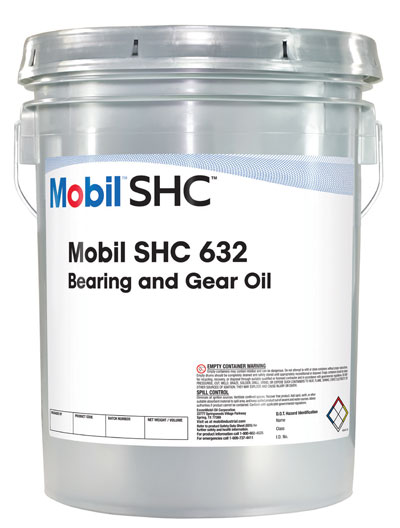
After thoroughly studying the problem and conducting a range of tests, Mobil recommended the use Mobil SHCTM 632 to lubricate the concentrator ball mill. With this switch, JK Cement was successful in reducing its energy consumption and curtailing overhead maintenance costs. The use of Mobil SHC 632 resulted in 0.8 per cent energy efficiency and cost saving of USD 18,764 (INR 13,13,545). This further led to 168 hours of exposure reduction and conserved 263 liters of oil – a leap towards greater efficiency and reduced environmental impact.
Premium lubricants to the rescue
Pioneering lubrication innovation for over 150 years, Mobil’s range of premium synthetic lubricants under the Mobil SHCTM 600 Series are exceptional performance gear and bearing oils designed to provide outstanding service in terms of equipment protection, oil life and problem-free operations that enable increased customer productivity. These products are resistant to mechanical shear, even in heavily loaded gear and high shear bearing applications, so that there is virtually no loss of viscosity. These are especially advantageous for industries dealing with rough and difficult temperatures and raw materials. They also provide excellent resistance to oxidation and deposit formation at elevated temperatures, as well as exceptional resistance to rusting and corrosion, anti-wear, demulsibility, foam control and air release properties, and multi-metal compatibility. These oils maintain good compatibility with seals and other materials used in equipment that are otherwise normally lubricated with mineral oils.
A robust backbone to India’s construction and infrastructure industry, the cement sector is today witnessing a positive growth spiral. To ensure that the sector remains efficient, it is imperative that manufacturers opt for the most superior lubrication solutions that not only guarantee equipment health but also guarantee greater energy efficiency. Here, Mobil has emerged as a trusted partner driven by innovation that can support India’s robust cement sector – a key contributor to the country’s economic growth story.











Concrete
Cement Prices Likely to Rise Rs. 10-15 per Bag from Mid-October
Input costs and steady demand may drive cement price increases
Concrete
Nuvoco Marks 10 Years, Targets 35 MMTPA Capacity by FY28
Nuvoco celebrates a decade of growth, targeting 35 MMTPA cement capacity by FY28.
Concrete
J&K Government Notifies City Gas Distribution Policy
Policy targets PNG and CNG expansion across all 20 districts


Cement Prices Likely to Rise Rs. 10-15 per Bag from Mid-October

Nuvoco Marks 10 Years, Targets 35 MMTPA Capacity by FY28

J&K Government Notifies City Gas Distribution Policy

JSW Cement Commissions 1 MTPA Grinding Unit at Nagaur

JSW Cement Commissions 1 MTPA Unit in Rajasthan
Cement Prices Likely to Rise Rs. 10-15 per Bag from Mid-October
Nuvoco Marks 10 Years, Targets 35 MMTPA Capacity by FY28
J&K Government Notifies City Gas Distribution Policy
JSW Cement Commissions 1 MTPA Grinding Unit at Nagaur
JSW Cement Commissions 1 MTPA Unit in Rajasthan
-

 Concrete1 month ago
Telangana to Supply Subsidised Cement for Indiramma Houses
-

 Concrete3 weeks ago
JSW Cement Receives Rs. 2.3 bn GST Demand Notice
-

 Concrete2 weeks ago
Andhra Pradesh Clears Rs. 30 bn My Home Cement Plant
-

 Concrete1 month ago
Centre Defers Clearance for Limestone Mine Near Bustard Habitat