Economy & Market
3i EXPO & Conference gets a rousing response from the manufacturing industry; IPF presents awards to 19 SMEs from across India
Published
4 years agoon
By
admin
3i EXPO & Conference – hosted by Industrial Products Finder (IPF) from May 20-21, 2022 in Mumbai – received an arousing response from the Indian manufacturing sectors with senior representatives from some of the leading companies like Emerson, Godrej & Boyce, Aditya Birla Group, Reliance Industries, Mitsubishi Electric, etc visiting the event.
Mr Sanjay Bhatia, Upa-Lokayukta, Government of Maharashtra, inaugurated 3i EXPO & Conference; Consul Generals of Sweden, Mauritius, South Africa, Hungary, Indonesia & Brazil participate in 3i EXPOWith 40 exhibitors and over 35 speakers in conference, 3i EXPO witnessed 1,167 visitors over the two daysSenior Representatives of leading companies like Emerson, Godrej & Boyce, Aditya Birla Group, Tata Technologies, Reliance Industries, Mitsubishi Electric, Schneider Electric, Yokogawa, Wipro PARI, Thyssenkrupp, Sanofi, Hitachi Vantara, etc visit 3i EXPOIn the presences of who’s who of the industry, Industrial Products Finder (IPF) presented the 6th IPF Industrial Excellence Awards to 19 SMEs across various industrial sectors
23 May 2022, Mumbai
3i EXPO & Conference – hosted by Industrial Products Finder (IPF) from May 20-21, 2022 in Mumbai – received an arousing response from the Indian manufacturing sectors with senior representatives from some of the leading companies like Emerson, Godrej & Boyce, Aditya Birla Group, Reliance Industries, Mitsubishi Electric, etc visiting the event. During the event, Industrial Products Finder presented the 6th IPF Industrial Excellence Awards to 19 SMEs across various industrial sectors.
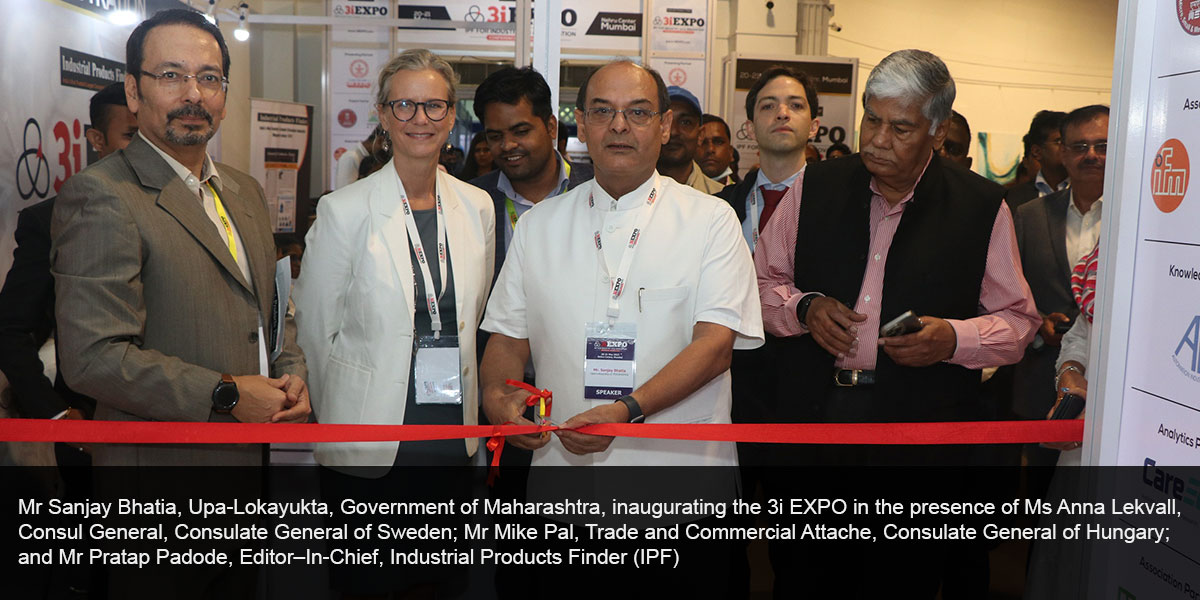
The 3i EXPO (which stands for IPF for Industry 4.0 & Innovations Expo) was inaugurated by Mr Sanjay Bhatia, Upa-Lokayukta, Government of Maharashtra, in the presence of Ms Anna Lekvall, Consul General, Consulate General of Sweden; Mr Mike Pal, Trade and Commercial Attache, Consulate General of Hungary; and Mr Pratap Padode, Editor–In-Chief, Industrial Products Finder (IPF), and Managing Director, ASAPP Info Global Group (the publisher of IPF publication).

Highlighting the significance of 3i EXPO, Mr Pratap Padode, “MSME units are capable to become a critical part of the manufacturing supply chain and be globally competitive because of their diverse offering ranging from intermediate to final products. The Ministry of Heavy Industry & Public Enterprises, Government of India (GoI), has launched Smart Advanced Manufacturing and Rapid Transformation Hub (SAMARTH) Udyog Bharat 4.0 to facilitate and create an eco-system for propagation of Industry 4.0 in the Indian manufacturing sector. Now, the stage is all set for the adoption of smart manufacturing and Industry 4.0 technologies with the government actively supporting the cause. Industrial Products Finder has completed 50 years in 2022 and is proud to present its first edition of 3i EXPO in the quest to help MSMEs scale the next industrial revolution.”

Speaking at the inauguration, Chief Guest Mr Sanjay Bhatia stressed on the need for digitalisation for the industry as well as government agencies. “Introduction of digital technologies in government departments like port, town planning, railways, etc has brought in immense amount of efficiency in terms of planning and execution of projects. Adoption of modern technologies are must to raise the productivity.”
While Maharashtra Industrial Development Corporation (MIDC) was the Presenting Partner of 3i EXPO and Conference, Union Ministry of MSMEs and National Small Industries Corporation (NSIC) were the Supporting Partners of the EXPO. IFM and Robro Systems were the Associate Partners of 3i EXPO.
Various industry associations and organisations extended their wholehearted support for the event. While Automation Industry Association (AIA) was the Knowledge Partner of 3i EXPO, CareEdge and T Hub were Analytics Partner and Start Up Partner, respectively. Other associations like PPMAI (Process Plant & Machinery Association of India), ITAMMA (Indian Textile Accessories and Machinery Manufacture Association), MAIT and Association of Multi-Modal Transport Operators of India (AMTOI) also participated in the event.

Showcasing technology prowess
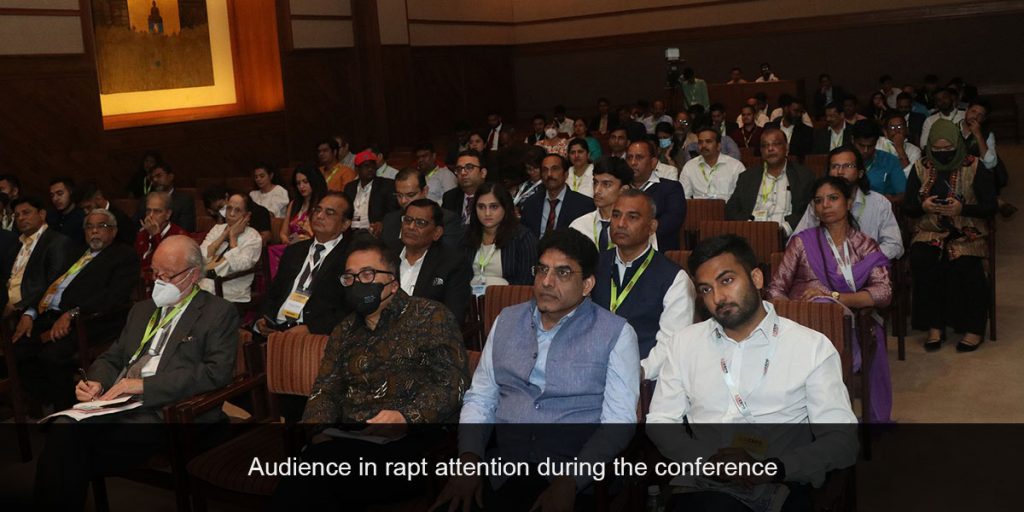
With 40 exhibitors displaying more than 100 innovative products for automation and modernisation of the Indian manufacturing sector, 3i EXPO witnessed 1,167 visitors over the two days.

Exhibiting companies showcased their innovative products and solutions that can help Indian manufacturing sector to gain competitiveness. Exhibitors were happy as they could showcase their latest products and technologies to visitors which included top management and senior representatives of some of the leading companies like Emerson India, Godrej & Boyce, Aditya Birla Group, Tata Technologies, Reliance Industries, Mitsubishi Electric, Schneider Electric, Yokogawa India, Wipro PARI, Thyssenkrupp, Sanofi, Hitachi Vantara, etc.
Visitors gained knowledge on the most trending technologies and engineering processes for meeting the need of automation and Industry 4.0. Exhibitors included companies from sectors such as automation & robotics, additive manufacturing (3D printing), Artificial Intelligence (AI)/Machine Learning (ML), Augmented Reality (AR)/ Virtual Reality (VR), connectivity modules, data analytics, electronics components, industrial IoT solutions, sensors, motors & drives, rapid prototyping & tooling, and vision systems, among others.

Some of the exhibitors were IFM Electronic; Robro System Pvt Ltd; Bohmen Industries; Steam Solutions; Varay Image Runners; Avcon Controls; Subtronics India; Surface Modification Technologies; etc.
Session on “Manufacturing Innovation Hub” – in partnership with T-HUB – presented a platform to the young entrepreneurs and start-ups who showcased their innovative solutions for the industry.
Discussion the future of manufacturing
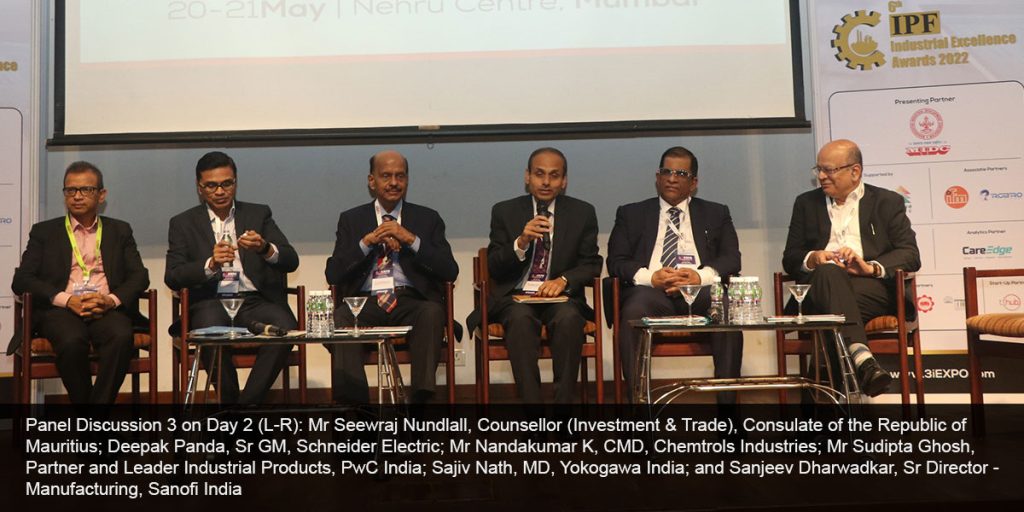
During the 2-day 3i Conference, about 35 Industry Leaders deliberated on the future course of the manufacturing sector and how modern technologies can play a big role in achieving the goals of making “Make in India” scheme. Topics such as India’s journey towards Manufacturing 4.0, implementation challenges for advanced technologies and probable solutions to overcome challenges, policy supports required for making India the next manufacturing hub of the world, etc were discussed during the multiple panel discussions.
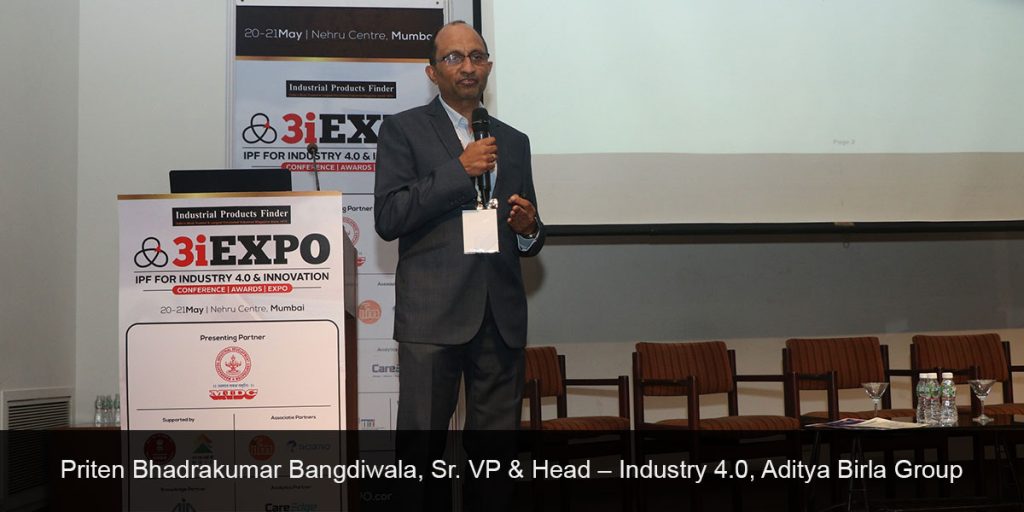
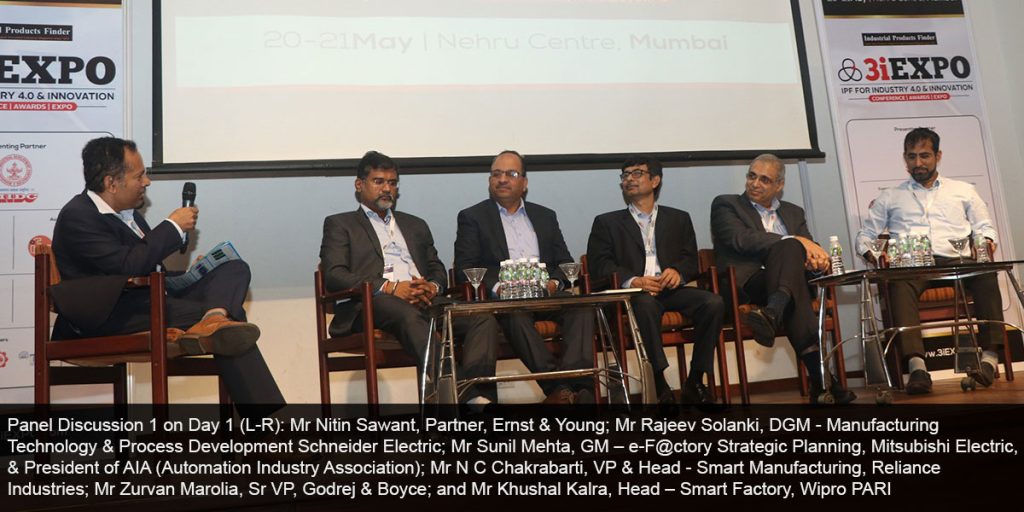
Some of the speakers who presented their views during the 3i Conference included Mr Anil Bhatia, VP and MD, India Automation Solutions, Emerson; Mr Zurvan Marolia, Senior VP, Godrej & Boyce; Mr N C Chakrabarti, VP & Head – Smart Manufacturing, Reliance Industries; Mr Sunil Mehta, GM – e-F@ctory Strategic Planning, Mitsubishi Electric; Mr Vivek Bhatia, MD, thyssenkrupp Industries India; Mr Priten Bhadrakumar Bangdiwala, Sr. VP & Head – Industry 4.0, Aditya Birla Group; Mr Sajiv Nath, Managing Director, Yokogawa; Mr Deepak Panda, Senior GM, Schneider Electric; Mr Sandeep Shukla, Regional COE Head – Digital Manufacturing, Tata Technologies; Mr Sanjeev Dharwadkar, Sr. Director – Manufacturing, Sanofi India, Mr Nandakumar K, CMD, Chemtrols Industries; Mr Rajeev Solanki, DGM – Manufacturing Technology & Process Development, Schneider Electric, Mr Khushal Kalra, Head – Smart Factory, Wipro PARI; Mr Harshit Sureka, Founder & CEO, ROBRO Systems, etc.
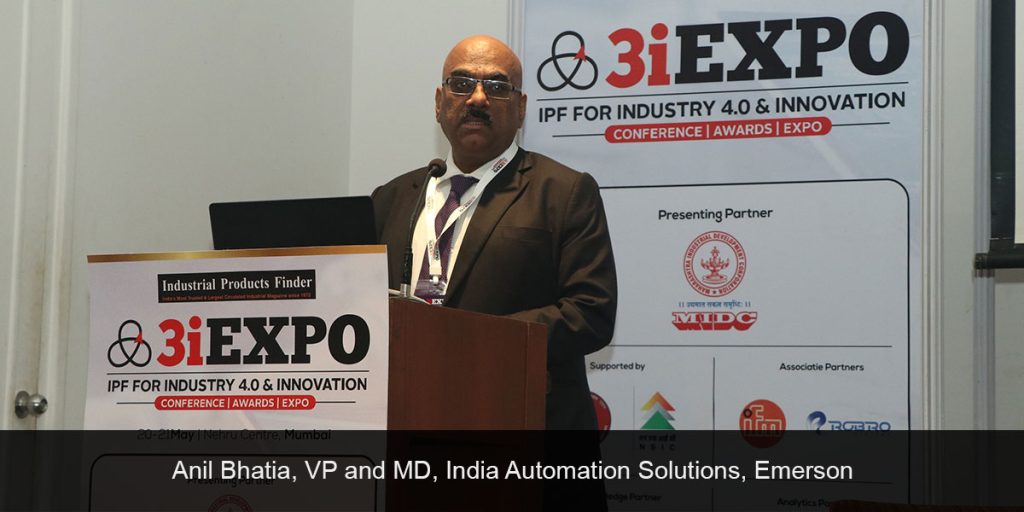
Stating that it was important to start the investment in digital transformation, Mr Anil Bhatia, VP and MD, India Automation Solutions, Emerson, said, “You do not need huge investment for adopting digital solutions. The company can opt for solutions based on their needs and objectives. But it is imperative to embrace digital as it can take your business to the next level.”
Mr Zurvan Marolia, Senior VP, Godrej & Boyce, emphasised on the need for the industry (especially the MSMEs) to take baby steps while adopting automation to deliver better results. “Automation is a double-edged sword. If done properly, it will give you rich dividends. If not, it can give you a cut. Each enterprise automation is need is unique. So, choose automation appropriately to achieve the desired objective.”
IPF Awards: Rewarding the performers
On the second day of 3i EXPO and Conference, the 6th IPF Industrial Excellence Awards were presented in categories like Fastest Growing Manufacturing Companies; Product Excellence; and Entrepreneur of the Year (Male & Female).
For “Fastest Growing Companies” Awards – given to listed companies based on their growth performance of sales and profits – are presented in 3 categories of Small (for companies having revenues of upto Rs 100 crore or below), Medium (Rs 100 crore to Rs 250 crore), and Large (Rs 250 crore to Rs 500 crore). The winners of “Products Excellence Awards” were selected after evaluating the products on parameters like novelty, green or sustainability, USPs, etc.
In the presences of who’s who of the industry, IPF Industrial Excellence Awards 2022 were presented to 19 SMEs across various industrial sectors.
Next: A grandeur show in 2023
The first edition of 3i EXPO & Conference was launched with an aim to provide a collaborative platform to accelerate adaption of modern manufacturing technologies for companies to gain competitive edge globally. With the maiden edition receiving good response from the participants, the scale and scope of the next edition of 3i EXPO & Conference will be grandeur. See you next year.
List of winners of the 6th IPF Industrial Excellence Awards
IPF Female Entrepreneur of Year: Dr Dnyanada Bandodkar, Director, Hindustan Monomers Pvt Ltd
IPF Male Entrepreneur of Year: Shreekant Patil, Founder, Paramount Enterprises
Winners of IPF Product Excellence Awards 2022
| Categories | Winner |
| Building & Construction Material | JSW Steel Coated Products Ltd for its High Tensile GP for torque tube used in mounting of Solar panels |
| Machine Tools | Maharashtra Engineers for its 7 Axis 2 Spindle CNC Horizontal Machining Center (HMC) |
| MRO & Consumables | Hindustan Monomers Pvt Ltd for its patented product – 2,4’ – dihydroxydiphenyl sulfone (24BPS) |
| MRO & Consumables | Minimac Systems Pvt Ltd for its special Coalescer purifiers used for lubricating oil and transformer oils |
| MRO & Consumables | PGE Industries Pvt Ltd for its unique Fluid Sealing Solution that can handle both dangerous acids and gases effectively |
| Testing & Measuring Instruments | Subtronics (India) Pvt Ltd for its breath alcohol analyser Alco-Booth Pro (for Truck Management Software use) |
Winners of IPF Fastest Growing Companies Awards 2022
| Categories | Winner |
| Agri & Food Processing (Small) | Alfavision Overseas India Ltd |
| Auto Ancillary (Small) | IST Ltd |
| Auto Ancillary (Medium) | Hindustan Composites Ltd |
| Engineering (Large) | Pix Transmissions Ltd |
| Engineering (Small) | Thejo Engineering Ltd |
| Fertiliser and Chemical (Large) | Aries Agro Ltd |
| Pharma (Large) | Kwality Pharmaceuticals Ltd |
| Pharma (Medium) | Syncom Formulations India Ltd |
| Plastic, Paper and Packaging (Large) | Mold-Tek Packaging Ltd |
| Plastic, Paper and Packaging (Medium) | Hindustan Adhesives Ltd |
| Steel and Non-Ferrous Metals (Small) | Raghav Productivity Enhancers Ltd |
About Industrial Products Finder (IPF):
Industrial Products Finder (IPF), launched in 1972, is today one of the oldest and most trusted brands in the industrial publication space in the country. It is one-stop-shop solution provider for all the sourcing/procurement needs of the Indian manufacturing sector. Published by Asapp Info Global Group, IPF offers a comprehensive coverage on industrial & engineering products services and provides manufacturers a dual forum (print and online) to display their all latest, innovative solutions. IPF is the country’s true pan-India publication with presence in all major cities like Mumbai, Delhi, Kolkata, Bangalore, Chennai, Coimbatore, Ahmedabad, etc.
Every month IPF reaches more than 100,000 readers through its magazine and website which offers an assortment of news, views/interviews, technical articles, product information, etc. IPF is widely circulated to manufacturing sectors including automobile and auto components, electrical & electronics, machine tools, hydraulics & pneumatics, printing & packaging, plastic processing, chemical & pharmaceuticals, mining & steel, FMCG, and general engineering industries. The magazine reaches out to various government institutions for their sourcing requirements including Defense, Railways, Science & Technology, and Research & Development.

SEEPEX introduces BN pumps with Smart Joint Access (SJA) to improve efficiency, reliability, and inspection speed in demanding rock blasting operations.
Designed for abrasive and chemical media, the solution supports precise dosing, reduced downtime, and enhanced operational safety.
SEEPEX has introduced BN pumps with Smart Joint Access (SJA), engineered for the reliable and precise transfer of abrasive, corrosive, and chemical media in mining and construction. Designed for rock blasting, the pump features a large inspection opening for quick joint checks, a compact footprint for mobile or skid-mounted installations, and flexible drive and material options for consistent performance and uptime.

“Operators can inspect joints quickly and rely on precise pumping of shear-sensitive and abrasive emulsions,” said Magalie Levray, Global Business Development Manager Mining at SEEPEX. “This is particularly critical in rock blasting, where every borehole counts for productivity.” Industry Context
Rock blasting is essential for extracting hard rock and shaping safe excavation profiles in mining and construction. Accurate and consistent loading of explosive emulsions ensures controlled fragmentation, protects personnel, and maximizes productivity. Even minor deviations in pumping can cause delays or reduce product quality. BN pumps with SJA support routine maintenance and pre-operation checks by allowing fast verification of joint integrity, enabling more efficient operations.
Always Inspection Ready
Smart Joint Access is designed for inspection-friendly operations. The large inspection opening in the suction housing provides direct access to both joints, enabling rapid pre-operation checks while maintaining high operational reliability. Technicians can assess joint condition quickly, supporting continuous, reliable operation.
Key Features
- Compact Footprint: Fits truck-mounted mobile units, skid-mounted systems, and factory installations.
- Flexible Drive Options: Compact hydraulic drive or electric drive configurations.
- Hydraulic Efficiency: Low-displacement design reduces oil requirements and supports low total cost of ownership.
- Equal Wall Stator Design: Ensures high-pressure performance in a compact footprint.
- Material Flexibility: Stainless steel or steel housings, chrome-plated rotors, and stators in NBR, EPDM, or FKM.
Operators benefit from shorter inspection cycles, reliable dosing, seamless integration, and fast delivery through framework agreements, helping to maintain uptime in critical rock blasting processes.
Applications – Optimized for Rock Blasting
BN pumps with SJA are designed for mining, tunneling, quarrying, civil works, dam construction, and other sectors requiring precise handling of abrasive or chemical media. They provide robust performance while enabling fast, reliable inspection and maintenance.With SJA, operators can quickly access both joints without disassembly, ensuring emulsions are transferred accurately and consistently. This reduces downtime, preserves product integrity, and supports uniform dosing across multiple bore holes.
With the Smart Joint Access inspection opening, operators can quickly access and assess the condition of both joints without disassembly, enabling immediate verification of pump readiness prior to blast hole loading. This allows operators to confirm that emulsions are transferred accurately and consistently, protecting personnel, minimizing product degradation, and maintaining uniform dosing across multiple bore holes.
The combination of equal wall stator design, compact integration, flexible drives, and progressive cavity pump technology ensures continuous, reliable operation even in space-limited, high-pressure environments.
From Inspection to Operation
A leading explosives provider implemented BN pumps with SJA in open pit and underground operations. By replacing legacy pumps, inspection cycles were significantly shortened, allowing crews to complete pre-operation checks and return mobile units to productive work faster. Direct joint access through SJA enabled immediate verification, consistent emulsion dosing, and reduced downtime caused by joint-related deviations.
“The inspection opening gives immediate confidence that each joint is secure before proceeding to bore holes,” said a site technician. “It allows us to act quickly, keeping blasting schedules on track.”
Framework agreements ensured rapid pump supply and minimal downtime, supporting multi-site operations across continents
Concrete
Digital process control is transforming grinding
Published
3 weeks agoon
February 20, 2026By
admin
Satish Maheshwari, Chief Manufacturing Officer, Shree Cement, delves into how digital intelligence is transforming cement grinding into a predictive, stable, and energy-efficient operation.
Grinding sits at the heart of cement manufacturing, accounting for the largest share of electrical energy consumption. In this interview, Satish Maheshwari, Chief Manufacturing Officer, Shree Cement, explains how advanced grinding technologies, data-driven optimisation and process intelligence are transforming mill performance, reducing power consumption and supporting the industry’s decarbonisation goals.
How has the grinding process evolved in Indian cement plants to meet rising efficiency and sustainability expectations?
Over the past decade, Indian cement plants have seen a clear evolution in grinding technology, moving from conventional open-circuit ball mills to high-efficiency closed-circuit systems, Roller Press–Ball Mill combinations and Vertical Roller Mills (VRMs). This shift has been supported by advances in separator design, improved wear-resistant materials, and the growing use of digital process automation. As a result, grinding units today operate as highly controlled manufacturing systems where real-time data, process intelligence and efficient separation work together to deliver stable and predictable performance.
From a sustainability perspective, these developments directly reduce specific power consumption, improve equipment reliability and lower the carbon footprint per tonne of cement produced.
How critical is grinding optimisation in reducing specific power consumption across ball mills and VRMs?
Grinding is the largest consumer of electrical energy in a cement plant, which makes optimisation one of the most effective levers for improving energy efficiency. In ball mill systems, optimisation through correct media selection, charge design, diaphragm configuration, ventilation management and separator tuning can typically deliver power savings of 5 per cent to 8 per cent. In VRMs, fine-tuning airflow balance, grinding pressure, nozzle ring settings, and circulating load can unlock energy reductions in the range of 8 per cent to 12 per cent. Across both systems, sustained operation under stable conditions is critical. Consistency in mill loading and operating parameters improves quality control, reduces wear, and enables long-term energy efficiency, making stability a key operational KPI.
What challenges arise in maintaining consistent cement quality when using alternative raw materials and blended compositions?
The increased use of alternative raw materials and supplementary cementitious materials (SCM) introduces variability in chemistry, moisture, hardness, and loss on ignition. This variability makes it more challenging to maintain consistent fineness, particle size distribution, throughput and downstream performance parameters such as setting time, strength development and workability.
As clinker substitution levels rise, grinding precision becomes increasingly important. Even small improvements in consistency enable higher SCM utilisation without compromising cement performance.
Addressing these challenges requires stronger feed homogenisation, real-time quality monitoring and dynamic adjustment of grinding parameters so that output quality remains stable despite changing input characteristics.
How is digital process control changing the way grinding performance is optimised?
Digital process control is transforming grinding from an operator-dependent activity into a predictive, model-driven operation. Technologies such as online particle size and residue analysers, AI-based optimisation platforms, digital twins for VRMs and Roller Press systems, and advanced process control solutions are redefining how performance is managed.
At the same time, workforce roles are evolving. Operators are increasingly focused on interpreting data trends through digital dashboards and responding proactively rather than relying on manual interventions. Together, these tools improve mill stability, enable faster response to disturbances, maintain consistent fineness, and reduce specific energy consumption while minimising manual effort.
How do you see grinding technologies supporting the industry’s low-clinker and decarbonisation goals?
Modern grinding technologies are central to the industry’s decarbonisation efforts. They enable higher incorporation of SCMs such as fly ash, slag, and limestone, improve particle fineness and reactivity, and reduce overall power consumption. Efficient grinding makes it possible to maintain consistent cement quality at lower clinker factors. Every improvement in energy intensity and particle engineering directly contributes to lower CO2 emissions.
As India moves toward low-carbon construction, precision grinding will remain a foundational capability for delivering sustainable, high-performance cement aligned with national and global climate objectives.
How much potential does grinding optimisation hold for immediate energy
and cost savings?
The potential for near-term savings is substantial. Without major capital investment, most plants can achieve 5 per cent to 15 per cent power reduction through measures such as improving separator efficiency, optimising ventilation, refining media grading, and fine-tuning operating parameters.
With continued capacity expansion across India, advanced optimisation tools will help ensure that productivity gains are not matched by proportional increases in energy demand. Given current power costs, this translates into direct and measurable financial benefits, making grinding optimisation one of the fastest-payback operational initiatives available to cement manufacturers today.
Concrete
Refractory demands in our kiln have changed
Published
3 weeks agoon
February 20, 2026By
admin
Radha Singh, Senior Manager (P&Q), Shree Digvijay Cement, points out why performance, predictability and life-cycle value now matter more than routine replacement in cement kilns.
As Indian cement plants push for higher throughput, increased alternative fuel usage and tighter shutdown cycles, refractory performance in kilns and pyro-processing systems is under growing pressure. In this interview, Radha Singh, Senior Manager (P&Q), Shree Digvijay Cement, shares how refractory demands have evolved on the ground and how smarter digital monitoring is improving kiln stability, uptime and clinker quality.
How have refractory demands changed in your kiln and pyro-processing line over the last five years?
Over the last five years, refractory demands in our kiln and pyro line have changed. Earlier, the focus was mostly on standard grades and routine shutdown-based replacement. But now, because of higher production loads, more alternative fuels and raw materials (AFR) usage and greater temperature variation, the expectation from refractory has increased.
In our own case, the current kiln refractory has already completed around 1.5 years, which itself shows how much more we now rely on materials that can handle thermal shock, alkali attack and coating fluctuations. We have moved towards more stable, high-performance linings so that we don’t have to enter the kiln frequently for repairs.
Overall, the shift has been from just ‘installation and run’ to selecting refractories that give longer life, better coating behaviour and more predictable performance under tougher operating conditions.
What are the biggest refractory challenges in the preheater, calciner and cooler zones?
• Preheater: Coating instability, chloride/sulphur cycles and brick erosion.
• Calciner: AFR firing, thermal shock and alkali infiltration.
• Cooler: Severe abrasion, red-river formation and mechanical stress on linings.
Overall, the biggest challenge is maintaining lining stability under highly variable operating conditions.
How do you evaluate and select refractory partners for long-term performance?
In real plant conditions, we don’t select a refractory partner just by looking at price. First, we see their past performance in similar kilns and whether their material has actually survived our operating conditions. We also check how strong their technical support is during shutdowns, because installation quality matters as much as the material itself.
Another key point is how quickly they respond during breakdowns or hot spots. A good partner should be available on short notice. We also look at their failure analysis capability, whether they can explain why a lining failed and suggest improvements.
On top of this, we review the life they delivered in the last few campaigns, their supply reliability and their willingness to offer plant-specific custom solutions instead of generic grades. Only a partner who supports us throughout the life cycle, which includes selection, installation, monitoring and post-failure analysis, fits our long-term requirement.
Can you share a recent example where better refractory selection improved uptime or clinker quality?
Recently, we upgraded to a high-abrasion basic brick at the kiln outlet. Earlier we had frequent chipping and coating loss. With the new lining, thermal stability improved and the coating became much more stable. As a result, our shutdown interval increased and clinker quality remained more consistent. It had a direct impact on our uptime.
How is increased AFR use affecting refractory behaviour?
Increased AFR use is definitely putting more stress on the refractory. The biggest issue we see daily is the rise in chlorine, alkalis and volatiles, which directly attack the lining, especially in the calciner and kiln inlet. AFR firing is also not as stable as conventional fuel, so we face frequent temperature fluctuations, which cause more thermal shock and small cracks in the lining.
Another real problem is coating instability. Some days the coating builds too fast, other days it suddenly drops, and both conditions impact refractory life. We also notice more dust circulation and buildup inside the calciner whenever the AFR mix changes, which again increases erosion.
Because of these practical issues, we have started relying more on alkali-resistant, low-porosity and better thermal shock–resistant materials to handle the additional stress coming from AFR.
What role does digital monitoring or thermal profiling play in your refractory strategy?
Digital tools like kiln shell scanners, IR imaging and thermal profiling help us detect weakening areas much earlier. This reduces unplanned shutdowns, helps identify hotspots accurately and allows us to replace only the critical sections. Overall, our maintenance has shifted from reactive to predictive, improving lining life significantly.
How do you balance cost, durability and installation speed during refractory shutdowns?
We focus on three points:
• Material quality that suits our thermal profile and chemistry.
• Installation speed, in fast turnarounds, we prefer monolithic.
• Life-cycle cost—the cheapest material is not the most economical. We look at durability, future downtime and total cost of ownership.
This balance ensures reliable performance without unnecessary expenditure.
What refractory or pyro-processing innovations could transform Indian cement operations?
Some promising developments include:
• High-performance, low-porosity and nano-bonded refractories
• Precast modular linings to drastically reduce shutdown time
• AI-driven kiln thermal analytics
• Advanced coating management solutions
• More AFR-compatible refractory mixes
These innovations can significantly improve kiln stability, efficiency and maintenance planning across the industry.
NDMC Rolls Out Intensive Sanitation Drive Across Lutyens Delhi
UltraTech Appoints Jayant Dua As MD-Designate For 2027
Merlin Prime Spaces Acquires 13,185 Sq M Land Parcel In Pune
Adani Cement and Naredco Partner to Promote Sustainable Construction
Operational Excellence Redefined!
NDMC Rolls Out Intensive Sanitation Drive Across Lutyens Delhi
UltraTech Appoints Jayant Dua As MD-Designate For 2027
Merlin Prime Spaces Acquires 13,185 Sq M Land Parcel In Pune
Adani Cement and Naredco Partner to Promote Sustainable Construction