Connect with us

Concrete

Use of digital technology can improve energy efficiency by as much as 5%

Published

on

Shares

Modern plants utilise high pressure grinding in vertical roller mills and hydraulic roll presses to achieve 30-50 percent better energy consumption compared to ball mills, says Avanish Karrahe, Global Product Manager Grinding Products, Cement Industry, FLSmidth.

Modern plants utilise high pressure grinding in vertical roller mills and hydraulic roll presses to achieve 30-50 percent better energy consumption compared to ball mills, says Avanish Karrahe, Global Product Manager Grinding Products, Cement Industry, FLSmidth.

Today, the requirement for the cement industry is to reduce energy consumption, especially in the grinding process. Please share your views on how this can be achieved.

 Improved energy efficiency in the grinding processes in the cement industry largely depends upon the comminution principle of the grinding equipment installed. Modern plants utilise high pressure grinding in vertical roller mills and hydraulic roll presses to achieve 30-50 percent better energy consumption compared to ball mills. 

Next, advancements in the geometry of the mill components or grinding profile, where grinding enabled gains in the general benefits from the types of technology employed. A further benefit is achieved with the tuning of design considerations and actual operating parameters, for example, grinding force (KN/m2), peripheral speeds, velocity profile within various zones inside the grinding equipment, etc. 

Along with mill design, advances in high-efficiency separator design have further improved energy efficiency by reducing the amount of over-grinding, unnecessarily returning product-size material to the grinding part of the machine, allowing for more stable operation and better overall product quality. Separator efficiency depends upon the actual geometry of the classifying equipment in the mill system. An ideal geometry ensures optimum velocity profile and physical dimensions within the various separation zones. When combined with the latest mill designs an optimised separator offers potential for up to 10 per cent better overall energy efficiency than mill systems with inferior separators. After the mechanical design, there are several operating and maintenance practices that enhance energy efficiency.

The use of grinding aid is already a common practice in many markets. While there is the obvious added cost for the additive itself, this is typically more than compensated for by improvements to mill capacity and overall better operation. For example, grinding aid stabilises the grinding bed in a VRM, reducing the vibration level, which allows for more capacity at the same power use. Better stability also reduces the number of mills stops and starts, which decreases the total energy consumption for the system in a given operating period.

Regularly making necessary adjustments of mechanical and process parameters to take care of incoming variations from input materials helps to sustain high-efficiency levels.

Following a predictive maintenance program with timely and proper maintenance of the overall grinding system helps to ensure consistency in higher efficiencies being achieved and also helps to avoid unplanned stops that largely can deteriorate the efficiency levels.

Consistent control of the quality of the feed material and final product also helps to aid the efficiency of the overall grinding system.

A final aspect of optimising energy consumption is the application of digital technologies that enable advances in feed material and product quality control, as well as process operating control. Digital connectivity also enables remote or online support services or condition monitoring that can enable both process and mechanical benefits.

What are the latest energy-efficient grinding technologies/solutions that can benefits cement companies in terms of energy consumption, quality and cost?

The latest energy-efficient grinding technologies include Vertical Roller Mills and Roller Presses. As such it is important to choose the right grinding machine on a case-to-case basis for a given requirement. The selection of the right machine depends upon several parameters, for example, layout constraints, physical and chemical properties of the material to be ground, product quality targets, the skill level of the operational staff, etc.

Roller presses and vertical roller mills have much higher grinding efficiencies compared to traditional ball mills and can operate with almost half the electrical energy consumption compared to a traditional ball mill. 

Regarding quality, there have been several tests done to compare the quality of the product out of various grinding machines. In today’s well-established designs of Vertical Roller Mills and Roller Press systems supported by high-efficiency Dynamic Separators, one can get the same quality as can be expected out of any traditional Ball Mill system. In fact, due to the larger number of adjustable mechanical and operating parameters in these mills, it is often possible to achieve better product quality targets than in older ball mill systems.

There have been significant developments in recent years on wear materials which have been a painful area for a long within the cement industry. Today we do have well-established superior wear materials that can not only increase the wear life drastically but can also ensure more effective energy transfer to the materials to be ground. For example, TRIBOMAXâ„¢ wear surface helps to increase the friction coefficient of the roller surfaces and eventually achieves improved energy transfer to materials being ground. 

The use of digital technology such as advanced process control can further improve energy efficiency by as much as 5 percent. References of combining separator upgrades to modern high-efficiency design or upsizing to accommodate new feed materials and/or product types with advanced process control have yielded as much as 25 percent overall performance improvement. 

Multi-compartment ball mills and air separators are the main process equipment in clinker grinding circuits. How has been the evolution in terms of technical innovations in this area?

Multi-compartment Ball Mills are widely used in the cement industry today mainly because of the history of their use over several hundred years. Over time advances in liner design and material of manufacture along with system layout and ball charge have helped optimise ball mill energy consumption. 

Digital technologies that optimise feed and product quality control, and advanced expert operating control can be applied to ball mill systems as well. 

As grinding technology evolved, Vertical Roller Mills and Roller Presses are now the leading machines across the globe for grinding. This is mainly due to the better energy efficiency, flexibility of producing various types of products, ease of operation and maintenance, and higher production capacities. Of course, upgrades to existing ball mill systems with a roller press for pregrinding or semi-finish grinding offer some limited efficiency improvement.

When it comes to separators, there has been significant improvement in separator designs in the recent past and the latest dynamic separators are equally effective irrespective of the main grinding machine (VRM, HRP, Ball Mill). However, the fact remains that ball mills are always going to be less efficient than the other grinding machines.

What kind of grinding aids/ additives are in demand and what are the advantages?

The adoption of supplementary cementitious materials (SCMs) varies widely depending on where you are in the world. In some markets, it is common to use fly ash and slag to reduce the clinker factor to as little as 65 percent. Worldwide, the average clinker/cement ratio is about 0.81, with the balance comprising gypsum and additives such as blast furnace slag, fly ash, and natural pozzolana. UNEP suggests a reasonable worldwide average of 0.60 is achievable by 2050. 

The grinding operation is critical to the success of increasing SCM use, to achieve the necessary particle size distribution. Some materials can be ground together, so-called ‘intergrinding’, while others may benefit from a separate grinding operation. Likewise, water demand (to increase workability) can present another sustainability concern that requires additional process treatments – such as chemical admixtures – to address. In terms of mill type, both roll press and VRM offer energy-efficient options for cement grinding, however, VRMs are more commonly used for SCM grinding due to more flexibility for drying and a wider range of acceptable feed particle size. 

Grinding aids are typically used to produce high Blaine cement products. There is a wide range of grinding aid options available ranging from the old industry standard of diethylene glycol (DEG) to a range of newer amine-based additives, and the latest specialised additives designed for specific machines and cement products with different SCM contents. In the end, the most effective option often is based on the combination of feed materials, cement products, local availability, and of course cost. 

From a mill OEM perspective, the specific type of grinding aid is less important than having the correct amount and distribution in the mill in combination with the best mill design for cement grinding. Experience in markets that have traditionally used grinding aids shows that under the right conditions they are a viable option to maximise energy efficiency and mill performance in a cost-effective way.

Please share your roadmap in the grinding innovation/ digital technology to enhance grinding efficiency.

Grinding technology has reached a stable point in the lifecycle curve. Incremental improvements are most likely to account for advancements for the near future. 

These are in the areas of:

  • Wear materials and metallurgy that allow for longer lasting and smaller/lighter component weights. 
  • Integration of digital technology to push the limits of efficiency and performance higher, while implementing predictive maintenance to streamline costs for labour, and parts supply and inventory.
  • Continued optimisation of the production of blended and high Blaine cement and the introduction of new high-performance cement that uses a wide range of SCM to replace clinker. This includes the advancement of separator designs to achieve finer product residues at a higher capacity than are possible today.

More significant advancements will likely come over the long term, as advanced research into energy consumption and grinding mechanisms is developed into new applications.

Could you also share a case study, where companies have benefited from adopting your grinding techniques/solution?

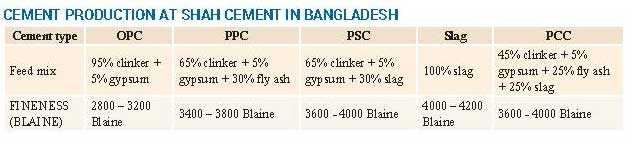
The Guinness World Record certified largest cement VRM, the FLSmidth OK 81-6 cement mill at Shah cement in Bangladesh grinds a wide range of cement products with clinker factor as low as 45 percent as well as a slag as shown in the table below. This mill is the perfect example of the type of energy-efficient grinding installation of the future.

Continue Reading
Click to comment

Leave a Reply

Your email address will not be published. Required fields are marked *

Concrete

Cement Demand Revives As Prices Decline In Q3 FY26

Nuvama reports improved volume growth after price correction

Published

on

By

Shares


A report by Nuvama Financial Services (Nuvama) said cement sector demand revived in the third quarter of fiscal year twenty twenty six as prices declined, supporting volume growth across regions. The note indicated that sequential price correction helped replenish demand that had been subdued by elevated pricing earlier in the year. Nuvama quantified the price decline as a sequential correction that varied across states and segments, facilitating restocking by merchants and traders.

The report suggested that improved affordability after the price correction encouraged housing and infrastructure activity, with developers and contractors adjusting procurement plans. It added that regional dynamics varied, with some markets showing faster recovery while others remained reliant on seasonal construction cycles. Housing demand was driven by both affordable and mid segment projects, while infrastructure segment recovery was contingent on timely execution of public works.

Analysts at Nuvama assessed that the price moderation eased inventory pressures for manufacturers and distributors and supported margin stabilisation at several producers. Demand improvement was visible in both urban and rural segments, although the pace of recovery differed by state and trade channel. Producers were seen balancing price realisations with volume targets and managing input cost volatility through operational efficiencies.

The report recommended that investors monitor volumes and realisations closely as market equilibrium emerges in the coming quarters, noting that sustainability of recovery would depend on monsoon patterns and government infrastructure outlays. Overall, the assessment pointed to a cautiously optimistic outlook for the cement industry as price correction translated into tangible volume gains. Market participants were advised to track early signs of demand broadening beyond core construction hubs to assess the depth of the rebound.

Continue Reading

Concrete

Refractory demands in our kiln have changed

Published

on

By

Shares

Radha Singh, Senior Manager (P&Q), Shree Digvijay Cement, points out why performance, predictability and life-cycle value now matter more than routine replacement in cement kilns.

As Indian cement plants push for higher throughput, increased alternative fuel usage and tighter shutdown cycles, refractory performance in kilns and pyro-processing systems is under growing pressure. In this interview, Radha Singh, Senior Manager (P&Q), Shree Digvijay Cement, shares how refractory demands have evolved on the ground and how smarter digital monitoring is improving kiln stability, uptime and clinker quality.

How have refractory demands changed in your kiln and pyro-processing line over the last five years?
Over the last five years, refractory demands in our kiln and pyro line have changed. Earlier, the focus was mostly on standard grades and routine shutdown-based replacement. But now, because of higher production loads, more alternative fuels and raw materials (AFR) usage and greater temperature variation, the expectation from refractory has increased.
In our own case, the current kiln refractory has already completed around 1.5 years, which itself shows how much more we now rely on materials that can handle thermal shock, alkali attack and coating fluctuations. We have moved towards more stable, high-performance linings so that we don’t have to enter the kiln frequently for repairs.
Overall, the shift has been from just ‘installation and run’ to selecting refractories that give longer life, better coating behaviour and more predictable performance under tougher operating conditions.

What are the biggest refractory challenges in the preheater, calciner and cooler zones?
• Preheater: Coating instability, chloride/sulphur cycles and brick erosion.
• Calciner: AFR firing, thermal shock and alkali infiltration.
• Cooler: Severe abrasion, red-river formation and mechanical stress on linings.
Overall, the biggest challenge is maintaining lining stability under highly variable operating conditions.

How do you evaluate and select refractory partners for long-term performance?
In real plant conditions, we don’t select a refractory partner just by looking at price. First, we see their past performance in similar kilns and whether their material has actually survived our operating conditions. We also check how strong their technical support is during shutdowns, because installation quality matters as much as the material itself.
Another key point is how quickly they respond during breakdowns or hot spots. A good partner should be available on short notice. We also look at their failure analysis capability, whether they can explain why a lining failed and suggest improvements.
On top of this, we review the life they delivered in the last few campaigns, their supply reliability and their willingness to offer plant-specific custom solutions instead of generic grades. Only a partner who supports us throughout the life cycle, which includes selection, installation, monitoring and post-failure analysis, fits our long-term requirement.

Can you share a recent example where better refractory selection improved uptime or clinker quality?
Recently, we upgraded to a high-abrasion basic brick at the kiln outlet. Earlier we had frequent chipping and coating loss. With the new lining, thermal stability improved and the coating became much more stable. As a result, our shutdown interval increased and clinker quality remained more consistent. It had a direct impact on our uptime.

How is increased AFR use affecting refractory behaviour?
Increased AFR use is definitely putting more stress on the refractory. The biggest issue we see daily is the rise in chlorine, alkalis and volatiles, which directly attack the lining, especially in the calciner and kiln inlet. AFR firing is also not as stable as conventional fuel, so we face frequent temperature fluctuations, which cause more thermal shock and small cracks in the lining.
Another real problem is coating instability. Some days the coating builds too fast, other days it suddenly drops, and both conditions impact refractory life. We also notice more dust circulation and buildup inside the calciner whenever the AFR mix changes, which again increases erosion.
Because of these practical issues, we have started relying more on alkali-resistant, low-porosity and better thermal shock–resistant materials to handle the additional stress coming from AFR.

What role does digital monitoring or thermal profiling play in your refractory strategy?
Digital tools like kiln shell scanners, IR imaging and thermal profiling help us detect weakening areas much earlier. This reduces unplanned shutdowns, helps identify hotspots accurately and allows us to replace only the critical sections. Overall, our maintenance has shifted from reactive to predictive, improving lining life significantly.

How do you balance cost, durability and installation speed during refractory shutdowns?
We focus on three points:
• Material quality that suits our thermal profile and chemistry.
• Installation speed, in fast turnarounds, we prefer monolithic.
• Life-cycle cost—the cheapest material is not the most economical. We look at durability, future downtime and total cost of ownership.
This balance ensures reliable performance without unnecessary expenditure.

What refractory or pyro-processing innovations could transform Indian cement operations?
Some promising developments include:
• High-performance, low-porosity and nano-bonded refractories
• Precast modular linings to drastically reduce shutdown time
• AI-driven kiln thermal analytics
• Advanced coating management solutions
• More AFR-compatible refractory mixes

These innovations can significantly improve kiln stability, efficiency and maintenance planning across the industry.

Continue Reading

Concrete

Digital supply chain visibility is critical

Published

on

By

Shares

MSR Kali Prasad, Chief Digital and Information Officer, Shree Cement, discusses how data, discipline and scale are turning Industry 4.0 into everyday business reality.

Over the past five years, digitalisation in Indian cement manufacturing has moved decisively beyond experimentation. Today, it is a strategic lever for cost control, operational resilience and sustainability. In this interview, MSR Kali Prasad, Chief Digital and Information Officer, Shree Cement, explains how integrated digital foundations, advanced analytics and real-time visibility are helping deliver measurable business outcomes.

How has digitalisation moved from pilot projects to core strategy in Indian cement manufacturing over the past five years?
Digitalisation in Indian cement has evolved from isolated pilot initiatives into a core business strategy because outcomes are now measurable, repeatable and scalable. The key shift has been the move away from standalone solutions toward an integrated digital foundation built on standardised processes, governed data and enterprise platforms that can be deployed consistently across plants and functions.
At Shree Cement, this transition has been very pragmatic. The early phase focused on visibility through dashboards, reporting, and digitisation of critical workflows. Over time, this has progressed into enterprise-level analytics and decision support across manufacturing and the supply chain,
with clear outcomes in cost optimisation, margin protection and revenue improvement through enhanced customer experience.
Equally important, digital is no longer the responsibility of a single function. It is embedded into day-to-day operations across planning, production, maintenance, despatch and customer servicing, supported by enterprise systems, Industrial Internet of Things (IIoT) data platforms, and a structured approach to change management.

Which digital interventions are delivering the highest ROI across mining, production and logistics today?
In a capital- and cost-intensive sector like cement, the highest returns come from digital interventions that directly reduce unit costs or unlock latent capacity without significant capex.
Supply chain and planning (advanced analytics): Tools for demand forecasting, S&OP, network optimisation and scheduling deliver strong returns by lowering logistics costs, improving service levels, and aligning production with demand in a fragmented and regionally diverse market.
Mining (fleet and productivity analytics): Data-led mine planning, fleet analytics, despatch discipline, and idle-time reduction improve fuel efficiency and equipment utilisation, generating meaningful savings in a cost-heavy operation.
Manufacturing (APC and process analytics): Advanced Process Control, mill optimisation, and variability reduction improve thermal and electrical efficiency, stabilise quality and reduce rework and unplanned stoppages.
Customer experience and revenue enablement (digital platforms): Dealer and retailer apps, order visibility and digitally enabled technical services improve ease of doing business and responsiveness. We are also empowering channel partners with transparent, real-time information on schemes, including eligibility, utilisation status and actionable recommendations, which improves channel satisfaction and market execution while supporting revenue growth.
Overall, while Artificial Intelligence (AI) and IIoT are powerful enablers, it is advanced analytics anchored in strong processes that typically delivers the fastest and most reliable ROI.

How is real-time data helping plants shift from reactive maintenance to predictive and prescriptive operations?
Real-time and near real-time data is driving a more proactive and disciplined maintenance culture, beginning with visibility and progressively moving toward prediction and prescription.
At Shree Cement, we have implemented a robust SAP Plant Maintenance framework to standardise maintenance workflows. This is complemented by IIoT-driven condition monitoring, ensuring consistent capture of equipment health indicators such as vibration, temperature, load, operating patterns and alarms.
Real-time visibility enables early detection of abnormal conditions, allowing teams to intervene before failures occur. As data quality improves and failure histories become structured, predictive models can anticipate likely failure modes and recommend timely interventions, improving MTBF and reducing downtime. Over time, these insights will evolve into prescriptive actions, including spares readiness, maintenance scheduling, and operating parameter adjustments, enabling reliability optimisation with minimal disruption.
A critical success factor is adoption. Predictive insights deliver value only when they are embedded into daily workflows, roles and accountability structures. Without this, they remain insights without action.

In a cost-sensitive market like India, how do cement companies balance digital investment with price competitiveness?
In India’s intensely competitive cement market, digital investments must be tightly linked to tangible business outcomes, particularly cost reduction, service improvement, and faster decision-making.
This balance is achieved by prioritising high-impact use cases such as planning efficiency, logistics optimisation, asset reliability, and process stability, all of which typically deliver quick payback. Equally important is building scalable and governed digital foundations that reduce the marginal cost of rolling out new use cases across plants.
Digitally enabled order management, live despatch visibility, and channel partner platforms also improve customer centricity while controlling cost-to-serve, allowing service levels to improve without proportionate increases in headcount or overheads.
In essence, the most effective digital investments do not add cost. They protect margins by reducing variability, improving planning accuracy, and strengthening execution discipline.

How is digitalisation enabling measurable reductions in energy consumption, emissions, and overall carbon footprint?
Digitalisation plays a pivotal role in improving energy efficiency, reducing emissions and lowering overall carbon intensity.
Real-time monitoring and analytics enable near real-time tracking of energy consumption and critical operating parameters, allowing inefficiencies to be identified quickly and corrective actions to be implemented. Centralised data consolidation across plants enables benchmarking, accelerates best-practice adoption, and drives consistent improvements in energy performance.
Improved asset reliability through predictive maintenance reduces unplanned downtime and process instability, directly lowering energy losses. Digital platforms also support more effective planning and control of renewable energy sources and waste heat recovery systems, reducing dependence on fossil fuels.
Most importantly, digitalisation enables sustainability progress to be tracked with greater accuracy and consistency, supporting long-term ESG commitments.

What role does digital supply chain visibility play in managing demand volatility and regional market dynamics in India?
Digital supply chain visibility is critical in India, where demand is highly regional, seasonality is pronounced, and logistics constraints can shift rapidly.
At Shree Cement, planning operates across multiple horizons. Annual planning focuses on capacity, network footprint and medium-term demand. Monthly S&OP aligns demand, production and logistics, while daily scheduling drives execution-level decisions on despatch, sourcing and prioritisation.
As digital maturity increases, this structure is being augmented by central command-and-control capabilities that manage exceptions such as plant constraints, demand spikes, route disruptions and order prioritisation. Planning is also shifting from aggregated averages to granular, cost-to-serve and exception-based decision-making, improving responsiveness, lowering logistics costs and strengthening service reliability.

How prepared is the current workforce for Industry 4.0, and what reskilling strategies are proving most effective?
Workforce preparedness for Industry 4.0 is improving, though the primary challenge lies in scaling capabilities consistently across diverse roles.
The most effective approach is to define capability requirements by role and tailor enablement accordingly. Senior leadership focuses on digital literacy for governance, investment prioritisation, and value tracking. Middle management is enabled to use analytics for execution discipline and adoption. Frontline sales and service teams benefit from
mobile-first tools and KPI-driven workflows, while shop-floor and plant teams focus on data-driven operations, APC usage, maintenance discipline, safety and quality routines.
Personalised, role-based learning paths, supported by on-ground champions and a clear articulation of practical benefits, drive adoption far more effectively than generic training programmes.

Which emerging digital technologies will fundamentally reshape cement manufacturing in the next decade?
AI and GenAI are expected to have the most significant impact, particularly when combined with connected operations and disciplined processes.
Key technologies likely to reshape the sector include GenAI and agentic AI for faster root-cause analysis, knowledge access, and standardisation of best practices; industrial foundation models that learn patterns across large sensor datasets; digital twins that allow simulation of process changes before implementation; and increasingly autonomous control systems that integrate sensors, AI, and APC to maintain stability with minimal manual intervention.
Over time, this will enable more centralised monitoring and management of plant operations, supported by strong processes, training and capability-building.

Continue Reading

Trending News

SUBSCRIBE TO THE NEWSLETTER


Don't miss out on valuable insights and opportunities to connect with like minded professionals.


    This will close in 0 seconds