Connect with us

Concrete

Material grinding is the largest electrical energy consumer in cement

Published

on

Shares

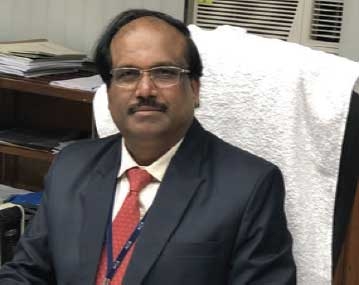
Indian cement plants are at par with global cement industry in adoption of latest energy efficient technologies such as VRM, roller press in semi-finish and finish mode, believes Dr Bibekananda Mohapatra, Director General- National Council for Cement and Building Materials (NCCBM).

Indian cement plants are at par with global cement industry in adoption of latest energy efficient technologies such as VRM, roller press in semi-finish and finish mode, believes Dr Bibekananda Mohapatra, Director General- National Council for Cement and Building Materials (NCCBM).

Today, the requirement for the cement industry is to reduce power consumption and make the grinding process more energy efficient. Please share your views on how this can be achieved.

Material grinding is the largest electrical energy consumer in cement manufacture. For raw material grinding, the most preferred energy efficient technologies are Vertical Roller Mill (VRM), roller press with ball mill and roller press in finish mode. For coal grinding, VRM is the most energy efficiency technology. VRM is most preferred for using different type of fuels like coal, petcoke etc.

The introduction of an external re-circulation system for material, adjustable louvre ring, latest generation classifier, vortex rectifier, thin liners for ball mill, use of Computational Fluid Dynamics (CFD) to improve classification efficiency, multi-drive systems, secondary classification in the grid cone, installation of high-efficiency fans, the use of slide gates instead of dampers for major fans with Variable Frequency Drives (VFD) and modification of mill body in VRM to improve the air and material trajectories are examples of such changes which increase throughput and improve energy efficiency.

What are the latest energy efficient grinding/technologies/solutions that could benefit Indian cement companies in achieving energy efficiencies?

There are several energy-efficient grinding technologies/solutions available in grinding. Some of them are ceramic grinding media for mono-chamber ball mills, thin liners for ball mills and online particle size distribution analyser for cement mills. In (VRM) grit cone water injection concept can reduce the water consumption by up to 50 per cent and stabilise the grinding bed with less vibrations. Moreover, feeding solutions like rotary feeder, sandwich sealing system for clinker/slag mills results in less wear rate. Comparing different grinding systems, high pressure grinding rolls are at par in energy efficiency as compared to VRMs for grinding purpose. In VRMs, recent development in support rollers is also providing grinding force enabling high energy efficiency. Advancements in VRM main drive gear box is leading to lower cooling requirement and reduction in energy loss. Reduction in mills pressure drop, optimisation of grinding media in ball mills, separator fan volume loading, addition of grinding aids are some of the optimisation measures adopted by cement plants as seen in recent PAT cycles. Some high energy efficient plants have already achieved overall specific electrical energy consumption of 63-65 kWh/t cement. It is anticipated that with the improvements in motor efficiencies, fan efficiencies, implementation of above mentioned technologies and innovations, there is a scope for further electrical energy savings in grinding section.

How is the adoption level of the latest grinding techniques in India as compared to the global cement industry?

Indian cement plants are at par with global cement industry in adoption of latest energy efficient technologies such as VRM, roller press in semi-finish and finish mode. The specific power consumption of grinding section of a cement plant depends on various factors such as type of grinding technology adopted, type of cement produced, fineness requirement, clinker/additives characteristics etc. While it is not possible to trace reduction in specific energy consumption of grinding section over the decades, however, for the Indian cement industry as a whole, the average specific electrical energy consumption for complete plant was around 122 kWh/t of cement in 1960 and started decreasing in late 80’s due to technology change in large cement plants to present level of average of 82.5 kWh/t of cement. The best achieved specific energy consumption for integrated cement plant in India is 63 kWh/t of cement when compared to global best achieved specific energy consumption of 65 kWh/t of cement in Japan.

How have we evolved in terms of innovation in grinding mills at cement plants? What are the latest developments observed in this area?

Innovation is the need of the hour. Grinding technology suppliers are also working consistently in this direction. Some of the innovative grinding technologies are:

Beta-mill: This mill works on the pressure grinding principle. By having defined feeding velocity, material height and width, a defined layer of material is fed to the pressure transaction zone (grinding zone). Energy savings of up to 30 per cent for mill motor as compared to Roller Press and up to 70 per cent as compared to ball mills is possible.

Ultrasonic comminution: Latest development in comminution is based on the application of ultrasonic energy. Ultrasonic comminution efficiently transfers the energy needed for crushing to the raw material, by means of acoustic ultrasonic pulses that are generated by two counter-rotating disks with special aerodynamic surfaces. The small-pulse durations exert pressure waves that pulverize the particles.

Microwave comminution: Grinding is very energy intensive process. Typically, only 1 per cent of the energy input is used to create new surfaces, the rest is turned into noise and heat. Now, prior to mechanically grinding the material, microwaves can be used to selectively heat parts of the rock, causing them to fracture along grain boundaries. This significantly reduces grinding power when the microwave treated material enters into the mill.

Applying ultrasonic field in a roller -press mill: The required energy consumption for grinding is significantly reduced by careful application of an ultrasonic field in the grinding zone. It is also expected to prolong the life of mechanical components. A lower stress on the shafts and a reduction of the required torque can be observed. The lower mechanical stress should also cause less abrasive wear on the rolls. Experimental results obtained by using ultrasound to enhance the performance of a roller-press mill are very encouraging. An experiment was carried out for coal grinding in which the energy consumption was as low as 3 kWh/t of material when compared to 20 kWh/t of material in hammer mills.

Further investigations are required for possible implementation of the above technologies in the cement industry.


Continue Reading
Click to comment

Leave a Reply

Your email address will not be published. Required fields are marked *

Concrete

UltraTech Appoints Jayant Dua As MD-Designate For 2027

Executive named to succeed current managing director in 2027

Published

on

By

Shares


UltraTech Cement has appointed Jayant Dua as managing director (MD) designate who will take charge in 2027, the company announced. The appointment signals a planned leadership transition at one of the country’s largest cement manufacturers. The board has set a clear timeline for the handover and has framed the move as part of a structured succession plan.

Jayant Dua will be referred to as MD after assuming the role and will be responsible for overseeing operations, strategy and growth initiatives across the company’s network. The company said the designation follows established governance norms and aims to ensure continuity in executive leadership. The appointment is expected to allow a phased transfer of responsibilities ahead of the formal changeover.

The decision is intended to provide strategic stability as UltraTech Cement navigates domestic infrastructure demand and evolving market dynamics. Management will continue to focus on operational efficiency, capacity utilisation and cost management while aligning investments with long term objectives. The board will monitor the transition and provide further information on leadership responsibilities closer to the effective date.

Investors and market observers will have time to assess the implications of the announcement before the change is effected, and analysts will review the company’s outlook in the context of the succession. The company indicated that it will communicate any additional executive appointments or organisational changes as they are finalised. Shareholders were advised to refer to formal filings and company releases for definitive details on governance or remuneration.

The leadership change will be managed with attention to stakeholder interests and operational continuity, and the company reiterated its commitment to delivery on ongoing projects and customer obligations. Senior management will engage with employees and partners to ensure a smooth handover while maintaining focus on safety and compliance. Further updates will be provided through official investor communications in due course.

Continue Reading

Concrete

Merlin Prime Spaces Acquires 13,185 Sq M Land Parcel In Pune

Rs 273 crore purchase broadens the developer’s Pune presence

Published

on

By

Shares


Merlin Prime Spaces (MPS) has acquired a 13,185 sq m land parcel in Pune for Rs 273 crore, marking a notable expansion of its footprint in the city.

The transaction value converts to Rs 2,730 mn or Rs 2.73 bn.

The parcel is located in a strategic area of Pune and the firm described the acquisition as aligned with its growth objectives.

The deal follows recent activity in the region and will be watched by investors and developers.

MPS said the acquisition will support its planned development pipeline and enable delivery of commercial and residential space to meet local demand.

The company expects the site to provide flexibility in product design and phased development to respond to market conditions.

The move reflects an emphasis on land ownership in key suburban markets.

The emphasis on land acquisition reflects a strategy to secure inventory ahead of demand cycles.

The purchase follows a period of sustained investor interest in Pune real estate, driven by expanding office ecosystems and residential demand from professionals.

MPS will integrate the new holding into its existing portfolio and plans to engage with local authorities and stakeholders to progress approvals and infrastructure readiness.

No financial partners were disclosed in the announcement.

The firm indicated that timelines will depend on approvals and prevailing market conditions.

Analysts note that strategic land acquisitions at scale can help developers manage costs and timelines while preserving optionality for future projects.

MPS will now hold an enlarged land bank in the region as it pursues growth, and the acquisition underlines continued corporate appetite for measured expansion in second tier cities.

The company intends to move forward with detailed planning in the coming months.

Stakeholders will assess how the site is positioned relative to existing infrastructure and connectivity.

Continue Reading

Concrete

Adani Cement and Naredco Partner to Promote Sustainable Construction

Collaboration to focus on skills, technology and greener practices

Published

on

By

Shares


Adani Cement has entered a strategic partnership with the National Real Estate Development Council (Naredco) to support India’s construction needs with a focus on sustainability, workforce capability and modern building technologies. The collaboration brings together Adani Cement’s building materials portfolio, research and development strengths and technical expertise with Naredco’s nationwide network of more than 15,000 member organisations. The agreement aims to address evolving demand across housing, commercial and infrastructure sectors.

Under the partnership, the organisations will roll out skill development and certification programmes for masons, contractors and site supervisors, with training to emphasise contemporary construction techniques, safety practices and quality standards. The programmes are intended to improve project execution and on-site efficiency and to raise labour productivity through standardised competencies. Emphasis will be placed on practical training and certification pathways that can be scaled across regions.

The alliance will function as a platform for knowledge sharing and technology exchange, facilitating access to advanced concrete solutions, innovative construction practices and modern materials. The effort is intended to enhance structural durability, execution quality and environmental responsibility across developments while promoting adoption of low-carbon technologies and green cement alternatives. Companies expect these measures to contribute to longer term resilience of built assets.

Senior executives conveyed that the partnership reflects a shared commitment to strengthening quality and sustainability in construction and that closer engagement with developers will help integrate advanced materials and technical support throughout the project lifecycle. Leadership noted the need for responsible construction practices as urbanisation accelerates and indicated that the association should encourage wider adoption of green building norms and collaboration within the real estate and construction ecosystem.

The organisations said they will also explore integrated building solutions, including ready-mix concrete offerings, while supporting initiatives aligned with affordable and inclusive housing. The partnership will progress through engagements, conferences and joint training programmes targeting rapidly urbanising cities and growth centres where demand for efficient and environmentally responsible construction grows. Naredco, established under the aegis of the Ministry of Housing and Urban Affairs, will leverage its policy and advocacy role to support implementation.

Continue Reading

Trending News

SUBSCRIBE TO THE NEWSLETTER


Don't miss out on valuable insights and opportunities to connect with like minded professionals.


    This will close in 0 seconds