Technology
Construction Technology: The need of the hour!
Published
4 years agoon
By
admin
In the past, the construction industry has been extremely reticent in adopting technology. Prime hurdles include education among skilled labour, on-the-job training, use of manual labour instead of machines, and lack of enforceability.
But technology is now transforming the way buildings are designed; modular construction or even advanced technology like 3D printing, robotics, AI, machine learning, etc, can deliver business benefits.
Evidently, technology is here to stay, and we have to ensure that we can utilise it to accelerate what we are intending to do.
Construction World Magazine under the aegis of ASAPP Info Global Group and FIRST Construction Council, is organising the CONSTRUCTION TECHNOLOGY SUMMIT
on July 22-23, 2021, virtually to identify proven, innovative and globally established construction technologies. CW provides you with an opportunity to join an exclusive community of like-minded professionals, discovering how technology is being used to improve the design, delivery, and operation of construction projects in India.
We are curating three exclusive panel discussions, interactive keynotes, and expert interviews helping you to better focus your day to understand how modern technologies are catalysing productivity, innovation and quality.
Here are highlights of the two-day summit:
-
Avenues for interaction among stakeholders that can open up new areas for collaboration and will facilitate conversion of ideas into market-ready products.
-
Platform to witness paradigm shift in the manner in which construction is perceived in the country.
-
Inviting start-ups to present their solutions at our INNOVATION LAB.
DAY 1: 22 JULY
SMART DESIGN with BIM
Building Information Modelling (BIM) has made a revolution in the way we design, construct and manage our project?? life-cycle. BIM has far and reaching consequences on both building procurement and infrastructure. This recent emergence constitutes one of the most exciting developments in the field of the Built Environment. These advances have offered project teams multi-sensory collaborative tools and opportunities for new communication structures.
DAY 1 of the Construction Technology Summit will focus on BIM implementation, its benefits, and application to project life-cycle and tools, technologies, and techniques in BIM.
Here, Dr. Amarnath CB, President, BIM Association of India & Head-BIM Strategy, Larsen & Toubro Construction, will deliver an industry keynote on ??020 ??21: The year for Data-Driven Efficiency??/strong>. Data-driven design can increase productivity and drive efficiency in project management processes. What becomes clear is that the real value relies on the data about all relevant building information which are integrated into the BIM model. A quick look through on how data-driven approach adds to the efficiency of design.
This will be followed by a technology keynote by Kalyanaraman Vaidyanathan, Director??usiness Development, Bentley Systems, on ??onstruction 4.0 – Data Driven Project Controls powered by BIM??
This will be followed by power-packed panel discussions as below:
Building Information Modelling (BIM) in Design, Construction, and Operations
This session fulfills the vital task of bringing together experts from industry, practice, and academia to debate and to develop innovative solutions, and predict future trends.
-
Implementation of BIM and Virtual & Design Construction on the Cloud
-
BIM for Time Management, Cost Management
-
Overcome common processes challenges (poor visibility, BIM compliance, project overruns)
-
BIM & growing need for prefab structures
Moderator: Yash Pratap Singh, Partner ??Major Projects Advisory, KPMG
Speakers
-
Amarnath CB, President, BIM Association of India and Head-BIM Strategy, Larsen & Toubro Construction
-
Kasturi Srinivas, Regional Director, Bentley Systems
-
Rohini Kulkarni, BIM & VDC, Digital Transformation Specialist, AECOM
-
Tushar Vagal, CIO & Head Digital, L&T Realty
-
Sonali Dhopte, Director, Excelize
Decoding Design Challenges with BIM
In this session, we look at some of the iconic projects in Mumbai and how BIM was used in planning and designing of the projects.
Speakers
-
Sachin Kale, India BIM Lead, BuroHappold
-
Muralimanoj Varadhrajan, Conputational Lead, BuroHappold
Understanding BIM Challenges in planning and designing
Moderator: Mr. Nikhil Bagalkotkar, APAC Technical Head, AEC Business, Autodesk
Speakers
-
Rajendra Hiremath, Managing Director, Synergy Infrasys
-
Sandeep Roy, Head ??Design, AIPL
-
Navneet Aron, Founder and CEO, Livio Building System
-
Rupesh Gujarathi, Director, Electro-mech India
Evolving Role of the Modern BIM manager
Reliance on complex software is increasing in the construction industry. This session will explore the traditional BIM management role, and how that role is adapting and expanding with innovative tools and technologies.
-
The evolving role of BIM Manager in AEC projects
-
How is the software supporting the evolution of this role?
-
Upskilling and training required to stay on top
-
How leading firms are using tools such as Digital Twin, Virtual Reality, Artificial Intelligence to take a whole life-cycle approach when tackling building projects
Moderator: Jose Kurian, Sr. Project Adviser, Kerala Infrastructure Investment Fund Board
Speakers
-
Ajith Menon, MD & CEO, BIMAGE Consulting
-
Parveen Sharma, CEO, The BIM Engineers
-
Ar. Venu Natraj, Director, Vesina Construction
DAY 2: 23 July
INNOVATION in CONSTRUCTION EQUIPMENT
The global construction machinery market is expected to grow from $204.24 billion in 2020 to $226.97 billion in 2021 at a compound annual growth rate (CAGR) of 11.1%. The growth is mainly due to the companies rearranging their operations and recovering from the COVID-19 impact, which had earlier led to restrictive containment measures involving social distancing, remote working, and the closure of commercial activities that resulted in operational challenges. The market is expected to reach $321.21 billion in 2025 at a CAGR of 9.1%.
Most of the construction companies are facing heavy equipment operator shortage throughout the world. Manufacturers are more focused towards technology such as robotics and automation primarily to combat labour shortages along with finishing up their tasks faster, reduce wastage and provide high yields with improved quality. Experts believed that, one of the best solutions to combat labour shortage is to automate construction equipment, especially in remote areas, for repetitive tasks and in locations with significant labour shortages. Therefore, shortage in labour or skilled workforce is driving the Autonomous construction equipment market.
Further, new construction technology companies are shaking up the industry, from the digital transformation of the design process to preconstruction estimation software, scheduling, predictive analytics, and asset management. With these new technologies and industry-wide digital transformation comes data ??and lots of it. The construction industry is experiencing a dynamic era of rapid innovation. In many ways, construction equipment manufacturers are starting to adapt to advances in telematics, autonomous machinery, and electromobility ??to name a few. DAY 2 of the Construction Technology Summit is talking about strategic partnerships among equipment makers and equipment users that are driving this change.
DAY 2 of the Construction Technology Summit will focus on Construction Equipment.
Here, Nitesh Jain, Director, CRISIL, will deliver an industry keynote on ??eyond 2021: CE market in India during and post pandemic??
This will be followed by power-packed panel discussions as below:
Gearing up for National Infrastructure Pipeline (NIP) with innovation in Constuction Equipment
The new generation equipment from OEMs is preempting the needs for implementing projects along National Infrastructure Pipeline (NIP) like DMICDC, Metro Rail, NHAI, Railways, Water, Ports & Airports. Smart Cities and Urban housing projects demand equipment capabilities at compressed job sites. where the equipment features need a compact design and maneuverability. Similarly mega projects need better assessment of the task at hand, better safety, low downtime and high productivity. In this session, let?? take a look at how the CE industry is responding to the needs of infrastructure across segments.
-
CE industry gearing up for NIP
-
Demand for innovative equipment in India
-
Mega Projects need precision, speed, and scale
-
Skill sets available for operating advanced equipment features
Moderator: Nitesh Jain, Director, CRISIL
Speakers:
-
Basavaraj MB, Chief Engineer ??Metro, MMRDA
-
Umakant Mahapatra, Dy Project Director, AYESA ING – for Mumbai Metro Project Line 7 & 2B
-
Dr. Vishal Thombre, Engineer, Coastal Road Department, MCGM
-
Atul Bhobe, Managing Director, TPF Engineering
-
Amitabha Bhattacharjee, AVP & Head Asset Management (Urban Infra), TATA Projects
Extreme Project Management (XPM) leading construction equipment
Special projects like those undertaking Mining, Tunneling, Undersea tunnels, or those undertaking projects around hostile borders deserve special attention, Unfriendly sites are more demanding of construction equipment players. Such large and complex projects that are happening in extraordinary environmental conditions sometimes also require the customization of equipment. In this session, let?? look at the challenging situations and how innovation is helping in bringing about optimal solutions.
Speaker: Prabhu Kumar LT, DGM??ivil, L&T ECC
Optimising fuel efficiency
Environmental and energy cost issues demand that the construction equipment industry develop more efficient and energy-saving machines. This session will talk about recent advances and whether hybridization is now on the interim answer to efficiency.
Speaker: Kumar Gyanendra Mohan, DGM, Montecalro
Tech Focus
Speaker:Kalyanaraman Vaidyanathan, Director ??Business Development, Bentley Systems
Most Compelling Tech Interventions
Contractors, Equipment owners now invest to update their fleet with an eye on most desirable tech internet ions which help them execute projects faster, economically and provide greater accountability and transparency. What features are most compelling that contractors and equipment owners look for in equipment that they use?
-
Working on the cloud to improve productivity
-
Safely integrating new equipment technology
-
RoI vs advanced features in CE
Moderator: Sanjay Garg, Partner, PwC India
Speakers:
-
Mahesh Mudda, MD & CEO, New Consolidated Construction Company Ltd
-
PS Patel, Chairman & Managing Director, PSP Projects
-
Neerav Parmar, Sr. VP ??Contracts & Procurement, Shapoorji Pallonji
-
KRR Chandran, VP & Head ??Corporate Services ??Heavy Civil, L&T
-
Siddharth Dey, Sr. VP & Head ??Projects, Adani Airports
Evidently, India needs to drive economic activity through infrastructure and a major thrust on infrastructure projects lies in adopting technologies. JOIN US IN DRIVING THIS ECONOMIC ACTIVITY!
Economy & Market
SEW-EURODRIVE India Opens Drive Technology Centre in Chennai
Published
2 weeks agoon
March 25, 2026By
admin
The new facility strengthens SEW-EURODRIVE India’s manufacturing, assembly and service capabilities
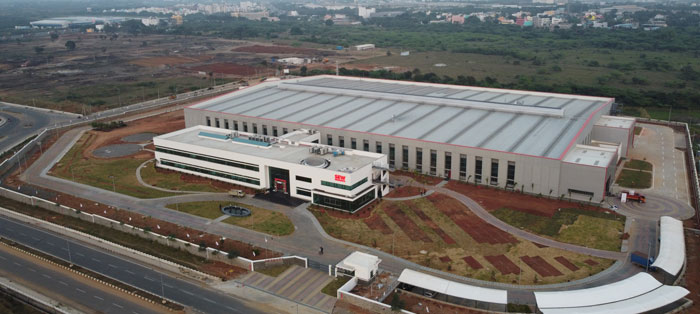
SEW-EURODRIVE India has inaugurated a new Drive Technology Centre (DTC) in Chennai, marking a significant expansion of its manufacturing and service infrastructure in South India. The facility is positioned to enhance the company’s responsiveness and long-term support capabilities for customers across southern and eastern regions of the country.
Built across 12.27 acres, the facility includes a 21,350-square-metre assembly and service setup designed to support future industrial growth, evolving application requirements and capacity expansion. The centre reflects the company’s long-term strategy in India, combining global engineering practices with local manufacturing and service capabilities.
The new facility has been developed in line with green building standards and incorporates sustainable features such as natural daylight utilisation, solar power generation and rainwater harvesting systems. The company has also implemented energy-efficient construction and advanced climate control systems that help reduce shopfloor temperatures by up to 3°C, improving production stability, product quality and working conditions.
A key highlight of the centre is the 15,000-square-metre assembly shop, which features digitisation-ready assembly cells based on a single-piece flow manufacturing concept. The facility also houses SEW-EURODRIVE India’s first semi-automated painting booth, aimed at ensuring uniform surface finish and improving production throughput.
With the commissioning of the Chennai Drive Technology Centre, SEW-EURODRIVE India continues to strengthen its manufacturing footprint and reinforces its long-term commitment to supporting industrial growth and automation development in India.
Economy & Market
RAHSTA Roundtable Sets Agenda for Smarter, Safer Highways
Published
4 weeks agoon
March 16, 2026By
admin
Roundtable discussions focus on innovation for safer highways.
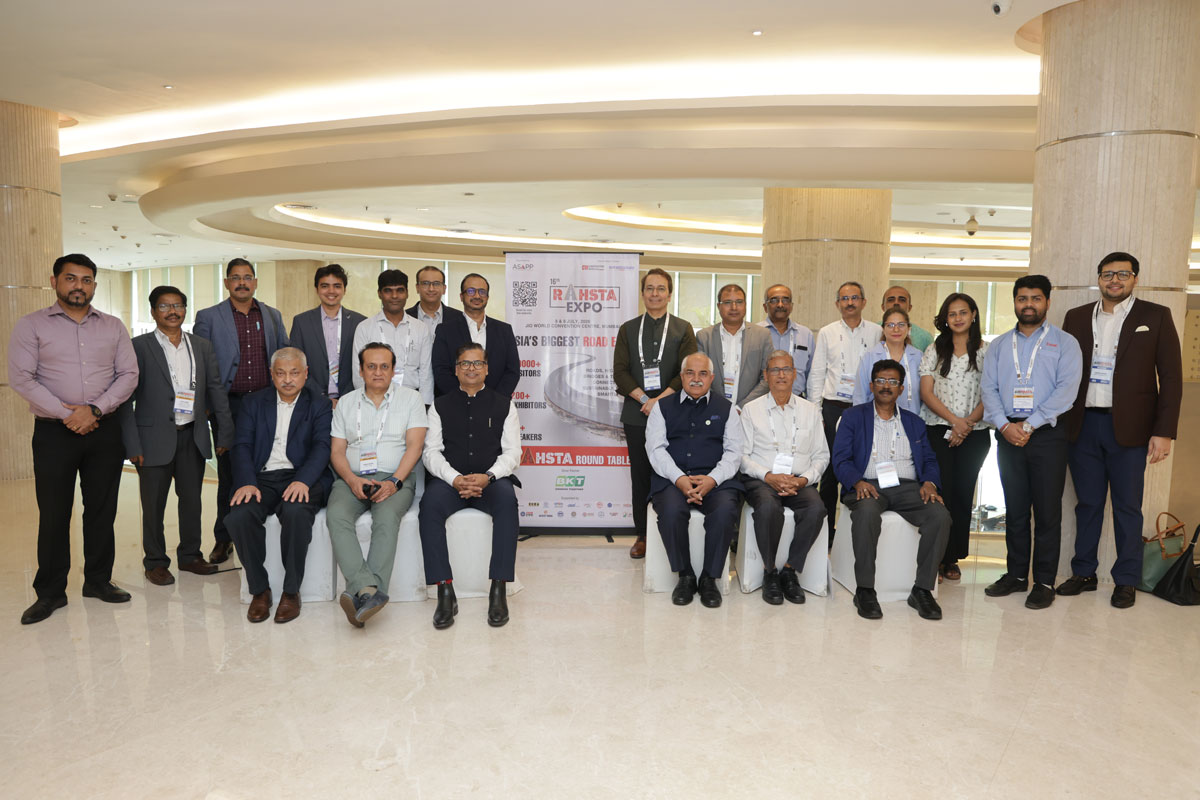
Held on 12 March 2026 at Courtyard by Marriott, Mumbai, alongside the Infrastructure Today Airport Conclave, the RAHSTA Roundtable brought together stakeholders from across the highways and infrastructure ecosystem to shape the agenda for the 16th RAHSTA 2026, scheduled for 8–9 July 2026 at the Jio Convention Centre, Mumbai. The session focused on key industry themes including road construction, technology, safety and long-term sustainability.
Opening the discussion, Pratap Padode, Founder, FIRST Construction Council, said the roundtable marked the beginning of a broader consultative process leading up to the July event. The aim, he noted, is to bring together industry stakeholders to refine the agenda for discussions on the future of roads, bridges, tunnels and allied infrastructure.
Padode noted that while central road project awards have slowed in recent years, states are increasingly driving the next phase of infrastructure growth. Maharashtra, with its long-term road development plans and agencies such as MSRDC and MSIDC, is expected to play a significant role in this expansion.
RAHSTA Expo 2026 as a specialised platform dedicated to road infrastructure, covering highways, tunnels, bridges and flyovers along with construction technologies, safety systems and maintenance solutions. He also highlighted the growing importance of rural connectivity and said the organisers are engaging with government bodies to highlight rural road development initiatives.
Tanveer Padode, CIO, ASAPP Info Group, presented insights from IMPACCT, the group’s infrastructure intelligence platform. He pointed to a strong project pipeline despite slower highway awards earlier in the year, noting that states such as Maharashtra, Odisha and Arunachal Pradesh are emerging as key drivers of new projects. The data also revealed that only a small group of contractors participates in large-value infrastructure bids.
Lt Gen Rajeev Chaudhary, former Director General, Border Roads Organisation and Chairman of the RAHSTA Expo Committee, emphasised the need for stronger collaboration across the ecosystem, including policymakers, contractors, technology providers and financiers. He also called for addressing systemic issues within the sector and encouraged greater participation of women in infrastructure leadership.
The discussion also explored the evolving economics of road development. Phani Prasad Mandalaparthy, Associate Director, CRISIL Intelligence, noted that the slowdown in project awards reflects a shift towards higher-value logistics corridors rather than simple road widening projects. However, private participation through BOT and TOT models remains limited.
From the contractors’ perspective, Sudhir Hoshing, Whole-Time Director, Ceigall, said companies are becoming more selective in bidding, favouring projects with clearer payment mechanisms and efficient processes. While NHAI continues to offer greater operational clarity, states such as Uttar Pradesh and Bihar were cited as relatively supportive environments for project execution.
Durability and sustainability also emerged as key themes. Himanshu Agarwal, COO – Road & Infrastructure, Zydex Group India, highlighted the need to prioritise lifecycle performance and resilient pavements, while participants discussed the potential of alternative materials such as plastic waste, steel slag and industrial by-products in road construction.
Dr LR Manjunatha, Vice President, JSW Cement, emphasised that India has abundant fly ash, slag and other industrial materials that can improve durability and sustainability if integrated into specifications and policy frameworks.
Technology and equipment challenges were also discussed. Dr Lakshmana Rao Mantri, Dy General Manager, Afcons Infrastructure, highlighted the shortage of tunnel boring machines (TBMs), which is delaying several underground infrastructure projects. Participants agreed that developing domestic TBM manufacturing capabilities will be critical for future infrastructure expansion.
The future of concrete pavements was another area of discussion. Dr V Ramachandra, President, Indian Concrete Institute, stressed that the debate should focus on lifecycle performance rather than material choice alone, noting that evolving design standards are improving the feasibility of concrete roads.
Prof Dharamveer Singh of IIT Bombay added that while India has made significant progress in infrastructure development, stronger capacity building and better execution practices are essential to ensure consistent road quality.
The discussion also touched upon technology adoption in the sector. Rushabh Mamania, Partner & CBO, Roadvision, highlighted the growing role of AI in road infrastructure, noting that AI-driven monitoring systems are already being deployed across large stretches of national highways.
Overall, the roundtable underscored that the future of highway infrastructure will depend not only on the pace of construction but also on durability, safety, technology integration and sustainable materials. The discussions offered valuable insights that will help shape the agenda for RAHSTA 2026 and guide future collaboration within the industry.
Economy & Market
CTS Roundtable Charts Tech-Led Roadmap for Construction
Published
4 weeks agoon
March 16, 2026By
admin
CTS Roundtable Maps Technology Roadmap for Construction
Ahead of the Construction Technology Show (Con Tech Show) 2026, industry leaders, technology innovators and academia came together in Mumbai to deliberate on how digitalisation, automation and industrialised construction can reshape the sector. The discussion made one thing clear: construction can no longer afford to treat technology as optional.
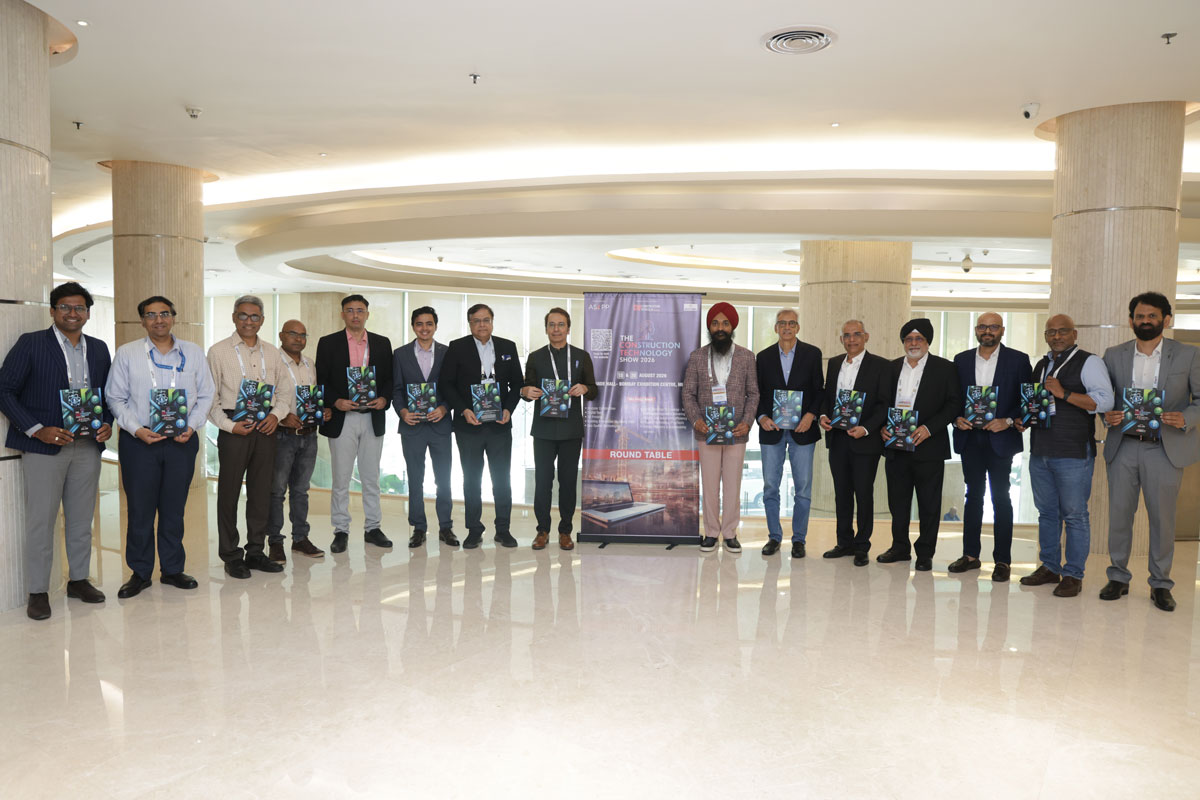
Held on 12 March 2026 at Courtyard by Marriott, Mumbai, alongside the Infrastructure Today Airport Conclave, the CTS Roundtable served as a precursor to the Construction Technology Show 2026, scheduled for 19–20 August 2026 at NESCO, Mumbai.
A platform to move from discussion to deployment
Opening the session, Pratap Padode, Founder and Editor-in-Chief, ASAPP Info Global Group, said construction technology has long remained close to his heart, especially given the sector’s traditionally slow pace of technology adoption. He noted that over the years, the Construction Technology Summit had steadily built interest, and the next step was now to expand it into a larger, more meaningful platform that could bring together technology providers, users, startups and innovators under one roof.
Padode said the vision for CTS is not limited to software alone. The platform aims to embrace all forms of technology that can improve construction efficiency, quality and execution—from digital tools and project management systems to lean construction, off-site fabrication and startup-led innovation. He also highlighted plans to deepen startup participation and create space for young companies to showcase emerging construction solutions.
Industry at a turning point
Moderating the roundtable, Naushad Panjwani, Chairman, Mandarus Partners, set the context by pointing out that the global construction industry, despite being a multi-trillion-dollar sector, continues to lag in productivity. He noted that while manufacturing has consistently improved efficiency, construction has remained slow to modernise.
Referring to both global and Indian trends, Panjwani underlined that the industry is now at a decisive moment. India, he said, is entering a major build cycle, and delivering the next phase of infrastructure and real estate growth through traditional methods alone is no longer viable. The goal of the roundtable, therefore, was not to debate technology in isolation, but to identify the most critical conversations that would bridge the gap between innovation and implementation.
His central message was clear: CTS 2026 must be shaped around themes that make CEOs, CIOs and CTOs feel they cannot afford to miss the event.
From BIM to AI, data to governance
A major theme that emerged through the discussion was the need for better data, better visibility and better decision-making. Dr Venkata Santosh Kumar of IIT Bombay echoed this, saying that the underlying data infrastructure itself needs attention. Construction projects, particularly remote ones, often face issues around connectivity, data collection and data use. Without this foundation, more advanced technologies cannot deliver their full value.
Chandra Vasireddy, CEO & Co-founder, Inncircles, expanded the discussion to governance, arguing that technology must help connect the many moving parts of a construction business. For him, the real value of digital transformation lies in creating better governance, clearer visibility and stronger business outcomes.
Tejas Vara of Inncircles stressed the importance of timely site data for leadership teams, especially in large and remote projects where decisions on materials, machinery and manpower often get delayed because information does not reach headquarters in time.
The role of AI also featured prominently. Rushabh Mamania, Partner and CBO, Roadvision said that while AI and machine learning are now common terms, vision intelligence and language intelligence have still not deeply penetrated the construction sector. He emphasised that startups in India are building relevant AI-led solutions and are already attracting international interest, showing that innovation need not be imported—it can be built locally and scaled globally.
Industrialised construction gains ground
The roundtable also placed strong emphasis on industrialised construction methods. Kalyan Vaidyanathan, CTO – Construction & R&D, Tvasta, called for greater focus on off-site fabrication and the broader industrialisation of construction. Bhargav Jog, General Manager, Dextra, highlighted precast technology and alternative sustainable materials as areas with immediate relevance.
Several participants agreed that modular, precast and pre-engineered approaches are no longer niche ideas. They are increasingly becoming practical responses to the sector’s challenges around labour shortage, timelines, quality control and predictability.
Anup Mathew, Sr VP & Business Head, Godrej, argued that the industry needs a fully integrated approach—from design and procurement to execution and asset management. Unless these are connected, technology adoption will remain fragmented and sub-optimal. He pointed to pre-engineered and modular systems as examples of how industrial thinking can compress timelines, improve quality and reduce dependence on difficult on-site conditions.
Adoption remains the biggest hurdle
While there was broad agreement on the promise of technology, the discussion repeatedly returned to one fundamental challenge: adoption.
Abhishek Kumar, COO, LivSYT, observed that the market is crowded with solutions, but many buyers still struggle to evaluate which technology suits which use case. According to him, the industry needs clearer frameworks to help users select, compare and adopt solutions, rather than expecting a single platform to solve every problem.
Dr Tenepalli JaiSai, Associate Professor, School of Construction(SoC), NICMAR University, noted that isolated technologies will not solve the productivity problem by themselves. What is required is an integrated Construction 4.0 approach, where digital, physical and cyber-physical systems work together rather than in silos.
That concern around silos was reinforced by Subodh Dixit, former Director, Shapoorji Pallonji, who said the issue is not just that technologies are disconnected, but that stakeholders are as well. Clients, consultants, contractors and partners often operate with different priorities. Unless these silos are broken, technology will struggle to percolate across the full project value chain.
Harleen Oberoi, Project Management, Tata Realty shared a practical perspective from the client side, saying that successful BIM implementation requires investment across the ecosystem, not just within one organisation. Trade partners, vendors and other stakeholders must also be trained and aligned if the technology is to deliver its intended results.
Beyond buzzwords
A notable takeaway from the session was that the industry is moving past the phase of treating technology as a buzzword. Participants repeatedly stressed that the real question is not whether technology should be used, but where it creates measurable value and how that value can be scaled.
The conversation also expanded beyond mainstream themes to include repairs and rehabilitation, construction and demolition waste, sustainability, circular economy, green sourcing, carbon measurement, design interoperability, generative design, robotics, and the role of horticulture and greener built environments.
Setting the agenda for CTS 2026
By the close of the session, the roundtable had surfaced a strong set of themes for the upcoming show: BIM and digital twins, AI and data platforms, industrialised construction, startup innovation, governance-led technology adoption, robotics, sustainable materials, and integrated project delivery.
More importantly, the session established CTS 2026 as more than an exhibition. It is shaping up to be a serious industry platform where users, technology providers, researchers and policymakers can collectively define the future of construction.
As Padode noted in his closing remarks, the conversation will continue through further consultations and possibly webinars in the run-up to the show. If the roundtable is any indication, CTS 2026 will aim not merely to showcase technology, but to push the industry towards meaningful adoption at scale.
Ultra Concrete Age
NCB Signs MoU With Cement Manufacturer To Boost Construction Skills
JSW Cement Commissions Nagaur Plant, Enters North India
Cement Prices Likely To Rise As Petcoke Costs Increase
IIT Guwahati Develops Radiation-Resistant Cement Mortar
Ultra Concrete Age
NCB Signs MoU With Cement Manufacturer To Boost Construction Skills
JSW Cement Commissions Nagaur Plant, Enters North India
Cement Prices Likely To Rise As Petcoke Costs Increase