Connect with us

Concrete

Cement industry will take a ready-mix concrete route

Published

on

Shares

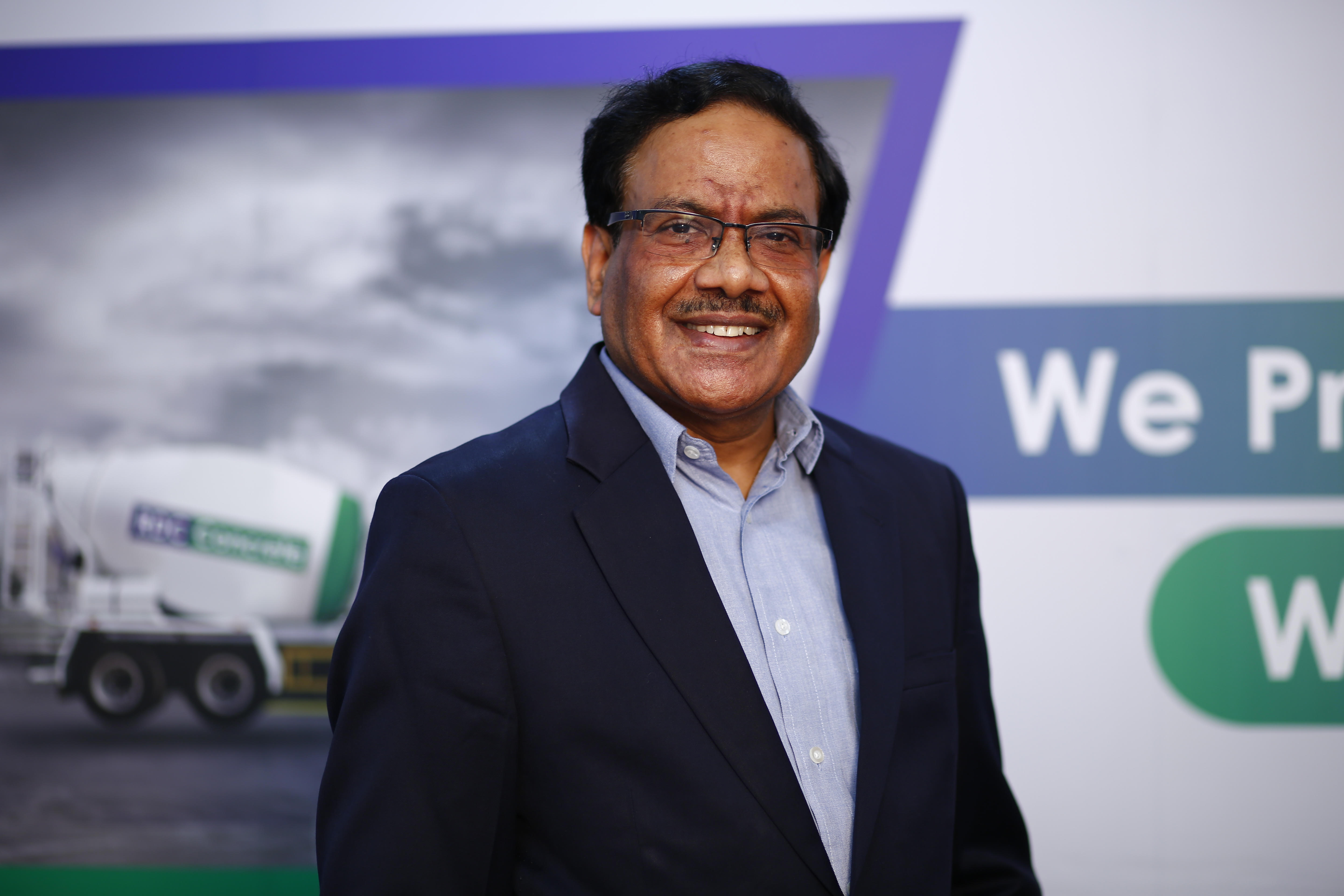
– Anil Banchhor,MD and CEO of RDC Concrete

Can you briefly introduce RDC concrete to our readers? Please tell us about your pan India presence and capacity as of March 31, 2021.

RDC concrete is the pioneer of the commercial ready-mix concrete industry in India. The first commercial plant was established in 1993 in Mumbai as a JV between RDC of Singapore and UNITEC developers. The earlier name of the company was Unitech Prefab. In the year 2000, RDC Singapore took over 100 per cent of equity and the name of the company changed to RDC Concrete India. At that time, RDC concrete of Singapore was also having a presence in several other countries like Malaysia, Vietnam, Indonesia, Hongkong, etc.

In the year 2005, Truenorth a PE fund (India value fund) took over RDC, but the name RDC concrete continued as the brand name was strongly associated with quality and service. In the portfolio of Truenorth PE fund, there are about 25 companies from various sectors like cement, aggregates, banking, home financing, technology, logistics, FMCG, pharma, services, etc. RDC concrete has 51 plants across India with a capacity of 25 lac m3 concrete per year.

The year 2020 was critical for every industry. To what extent your business got affected due to the pandemic? How was the recovery?

In our RMC industry, work from home is not possible as all actions happen at factories for production, deliveries, and pumping at the site. When the lockdown was imposed, we kept two batchers within the plant and their job was to keep the equipment in good condition and take dry runs at regular intervals so that we are fully prepared once the lockdown is lifted. We kept a check on the functioning of the plants through video calls. This way, we kept the powder dry and started firing on all cylinders, when lockdown ended.

We did a 20 per cent lower volume in the last financial year as compared to FY 2020, but we were successful in exceeding the EBITDA of the previous year, despite Covid-19. Q1 was a complete washout after the lockdown was imposed after 23rd March. But we were the first to restart plants in Mumbai on 13th April and then all plants opened gradually. Q2 was like breakeven. Q3 and Q4 were really good, and we could produce 17.5 lac m3 concrete. Profitability wise we improved over previous year numbers due to reduction in fixed costs. Our truck hiring model was changed from fixed rental per month to variable model on a km run basis. Also, we were successful in reducing costs such as power, water, wastages, etc on the plant operations level.

What about cash flow?

Cash flow was a matter of concern and we increased focus on collections. Many clients were not paying dues, but we kept on paying our vendors because they have been associated with us for a long time. Slowly all customers started paying in parts, which we kept rotating back in our business.

As a leader how do you keep the morale of the employees high during the pandemic time?

Morale is infectious. If the morale of a leader is high, then the morale of the whole team remains high. The morale of all our business heads was high and this is in our culture. They just do not give instructions, but they lead from the front. When the concrete was required for a government project in Mumbai, our plants were started immediately. Our Mumbai Business head was present at the plant for the smooth delivery of concrete. I remember that this happened on 13th April in the Sakinaka area of Mumbai. This kind of leadership action boosted the morale of the team.

We made an Emergency Response Team called ERT consisting of two people from each city and two people from the head office. The job of ERT was to call every employee at regular intervals for improved communication and to check the well-being of their family members. They provided immediate assistance in case of any hospitalisation.

We also introduced daily health declarations by all employees, including family members, through google form about their health status like temperature, cough, oxygen level to quickly identify issues and to provide immediate support.

We purchased O2 concentrators for each location and kept them in readiness for any emergency requirements. Plants were sanitised regularly. We followed all protocols related to wearing a mask, hand washing, and social distancing. We had taken the Apollo home care package and all employees with families were covered in it. Apollo doctors were calling the patients two times a day through web calls and checking all vital parameters. Medicines, oximeters, thermometers were delivered to their homes regularly. Regular video calls by psychologists and dieticians were arranged for them. As a result, the number of people infected in our company was very low.

We have also given 14 days special leave provision for those who got infected from Corona, apart from 42 days of Earned leave. To my knowledge, no other company from our industry has given such additional leave provision. We did not sack any staff during Covid-19, and no salary deduction was done. We enhanced the life insurance coverage at the beginning of the first Covid impact. At the lower level pay scale, it worked out to be 10 years of CTC and that is quite impactful.

Tell us about your preparedness for the second wave or maybe the subsequent third wave?

Everything was looking good in December-January, and then suddenly the second wave hit India, which was more infectious. Since many SOPs were in place during the first wave of Covid, we simply rolled it out again. We were ready but were only constrained by the government’s orders. Otherwise, our people are geared to work in any wave now. Our Emergency response Team ??RT??strong> swung into action and started enquiring with all staff members to check their well-being and assist, if needed. Our group company Truenoth is having about 25 companies and a network of all HR heads who started regular web meetings for supporting each other. We continued with the Apollo home package.

We also made a list of plasma donors within the company and shared it with other sister companies for any urgent requirements. Additional Covid leave of 14 days is already in place. This was our preparedness for the second wave.

What is the current situation? How many of your plants are functional?

Kerala is fully locked down and no plant is running there. Gurgaon is fully closed too. Few of the cities are having a weekend lockdown and we cannot operate on weekends. Our volume has come down to 40-50 percent of the normal.

Many companies increased their technology penetration during Covid. How has RDC leveraged technology to enhance efficiency and effectiveness?

We already have good technology penetration in RDC. All our plants are online including all incoming material systems and outgoing supplies. Further enhancement was made on the technology during the Covid period, and we were able to reduce the paper consumption significantly.

Earlier, all incoming trucks with raw materials were coming with paper challans and we converted them to e challan with QR code. Hence all points of contact were eliminated, and this helped us in reducing the spread of infection. This led to a drastic reduction in paper consumption. All outgoing delivery challans were converted to e challan for all customers except a few who still wanted paper challans compulsorily. In our industry, people are not very tech-savvy, and many customers still want everything in hard copies. Whereas we do not want any hard copy from any of our vendors.

Our IT penetration has reached all employees. Training is online, the production system is online, logistics is online, all documents are on the server. All employee claim forms and documents were converted to a digital platform including all approvals. Papers have been dispensed with and everything moves electronically by DMS. Another major technology penetration is an e-learning tool called E Diksha. We took advantage of the available time and opportunity to train all staff in plant operations, logistics, quality controls, materials management, and general management programmes through web training.

We also developed interesting business simulation games, which were done completely in-house. These simulation games are for all business managers to sharpen their decision-making skills in a real-life situation. We are the only company in our industry to have such business simulation games. We run business games for three to four quarters and results are declared after every quarter. Feedback is also given, after every quarter, as to what went well and what needs improvement. This has helped significantly in improving leadership skills.

On the technology front, we developed a manless weighbridge based on QR code and RFID. All weighbridges are fitted with three cameras and two RFID readers. The supplier gets material receipt notification with a pdf copy by mail along with six photographs.

We introduced Petro cards issued by oil companies and gave them to transporters. As soon as the diesel is dispensed from petrol pumps through petro card, automatic GRN entry reflects in our ERP. In the plant, we also developed an automated diesel dispensing system with ERP integration. Whatever diesel is drawn, the automatic diesel issue gets recorded in ERP.

All HR-related items have been shifted to zing HR, like KPI, performance review, compensation, leave approvals, salary slips, form 16, mediclaim, etc. Silo stock measurement has also been developed with automation and is being implemented after a successful pilot in three to four plants.

Do you think it is a fallout of the Covid wave or otherwise also you would have persuaded the same this time?

Due to Covid-19, we could get time since all the plants were closed and we could spend some energy on it. The other reason is we always wanted to go paperless. Paper is one cause for spreading infections. We are moving towards paperless RDC.

How do you foresee business in the year 2021-22? Especially taking into account the spread of the 2nd wave of coronavirus and maybe 3rd a little later?

In April, volumes were down by 20 per cent. In May, the business came down by 40 per cent of the normal months. It seems that this will continue in June also. I expect things will start moving upward from July before it reaches normalcy in October. By this time, more vaccinations will happen and infrastructure in hospitals would also improve to a great extent to tackle the third wave. We have tied up with Apollo hospitals for the vaccination of all our staff and their family members. Preparedness of all agencies would be better during the third wave in all cities, and I feel that the impact would be much lower. I am confident that all businesses will bounce back after November, and we will do better than last year.

Give us some idea about the safety aspects of your operations? How do you engage employees in making safety a matter of daily routine? How coronavirus impacted the safety at your plants and offices?

In RDC Concrete, safety is taken as a priority item. Safety Toolbox talk meetings are happening at plants on a daily and weekly basis. Compliance on safety initiatives, hazard identification, and rectification are reviewed on a weekly and monthly basis. We keep on improving safety through various new safety initiatives. We also ensure that the best practice of one plant is replicated in other plants quickly.

KPI of all employees is having 20 per cent weightage on safety. Even the staff at the head office must go to the plant every quarter to complete a safety audit of the plant. We have a quarterly interplant competition on Safety and productivity called ??artaj??and safety has 38 per cent weightage in the competition.

The winning plant is awarded with a rolling trophy with one lac cash award for staff engagement with certificates for all plant staff. Runner up plant gets Rs 50,000 for party or people engagement activities. RDC concrete is the only RMC company which is having such interplant completion on safety and productivity.

The safety officer visits each plant in a year and conducts audits. During this pandemic, video audits are being done. Apart from this, we have internal and external statutory auditors, and they also check safety compliance in the plant and bring out issues if there are any. Safety related to Coronavirus is the most important aspect now. The well-being of employees is the foremost priority at present and not the business. If employees are taken care of, the business will bounce back later. We are taking all precautions for the protection of staff and their family members during this challenging time.

We have tied up with Apollo for vaccination of all staff including their family members. We made vaccination compulsory for each staff member. About 95% of staff including their family members are already vaccinated as of the date.

How do you manage the shortage of sand in making concrete?

River sand is being used mostly in the north and eastern part of India, otherwise in most of the states use of river sand for concrete making is banned. All grades of concrete including high grades up to M120 and high-performance concrete are being produced with crushed sand or manufactured sand. Even concrete structures in coastal zones which are exposed to the extreme weather conditions and durability is foremost important, are being made with crushed sand. In fact, we should not be using river sand at all. Customer acceptance in some locations is a challenge and not the availability of river sand. Slowly all locations are seeing improved customer acceptability.

Normally the river sand is rounded whereas crushed has angular particles which give a kind of harshness to concrete. How is this problem addressed?

With proper proportioning of the ingredients like 10 mm, 20 mm, sand, and the finer material fly ash and cement together should give a cohesive mix of concrete. Let us not forget about the admixtures. Today we get good and consistent quality of admixtures, which helps in producing self-compacting concrete even with crushed sand, which can be used for very thin sections and is easily pourable. All this put together takes care of the angularity of manufactured sand. The manufactured sand produced using a vertical shaft impact (VSI) crusher is much better in shape and angularity. While sourcing the material we make sure that the supplier uses a VSI crusher.

What are the disadvantages of being a non-cement player in concrete business? I agree that being a non-cement RMC player is a challenge but there are opportunities also, which makes us more efficient, more productive, and agile, leading to better service to the customers. Let me admit that the cement and concrete together are a very good combination. However, it does not mean that a non-cement player cannot work. In fact, he can turn it into an opportunity to be a more efficient player, which we are. In fact, all cement players must have concrete as a channel. We had seen in practical terms that in combination, cement EBITDA gets doubled or more than double, if the cement company is having RMC as a channel.

In the last few years, there has been a boom in the RMC industry and the cement consumption through the RMC route is increasing every day. RMC penetration in tier 2 and tier 3 cities are increasing. Headache of manual mixing is a challenge due to the shortage of workers and wastages. Architects are also recommending the use of RMC for better quality and durability of the concrete structure.

Which are the highest-selling grades of concrete for metro work and for real estate? What are the challenges associated with supplying these grades?

For metro jobs, generally, M40 and M30 grades are being used. For the precast segment higher grades like M50 are also being used for early stripping of formwork. In commercial or residential projects, general grades are M40 and M30. For columns, M60 is being used. For high-rise skyscraper projects, we have supplied even M95 grades also in Mumbai and other metro cities.

Quality control on raw materials and the skill set of people are very important for high grades and there is no challenge for us in this regard as our in-house team is quite competent and motivated. We have done many metro captive jobs in many cities and at present, five metro captive jobs are running in different cities. We are also supplying a lot of concrete from commercial plants as well to metro projects. Managing transit mixer truck movement is the only challenge during peak traffic in cities.

What do you see 5 years, 10 years down the line about the ready mixed concrete business? What kind of sophistication do you think can come in?

The RMC industry will keep growing at about 18 to 20 per cent CAGR and more and more cement will move through the ready-mix concrete route. Trade sales will keep on coming down over a period. Because of increased RMC penetration, more cement needs to be delivered in bulk. Cement companies need to create bulk terminals near cities for quicker delivery. Such cement companies would be at an advantage. More penetration will come in tier 2 and 3 cities as the high-rise building construction will increase in such cities apart from metros. Individual house constructions are getting reduced. Builders and developers are launching new projects in tier 2, 3 cities. A lot of commercial complexes, malls are being built. All these constructions are using batching plants with bulk supplies.

At present, there are about 2,500 commercial RMC plants and about 7,000 captive plants of contractors and construction companies. This number will keep on growing and within the next 8-10 years, this number is expected to double. Automation will increase in RMC and more mechanised construction will take place leading to higher productivity per person.

Many cities are having a lot of traffic restrictions for truck movement. So, the time available to service to customers is getting reduced. This will lead to a higher capacity of plants and a higher capacity of transit mixers. At present we use trucks with a capacity of 6-7 cum of concrete that will go to 8-10 cum of concrete. More and more use of concrete pumps will take place. Hence bigger size plants are required in outskirts of the city.

Anil Banchhor is Managing Director and CEO of RDC Concrete. He is a professionally qualified civil engineer. Initially, started from construction and then moved to cement marketing and to ready mixed business. He was associated with ACC, rose to the position of CEO- RMX, and then moved on to RDC concrete.


Continue Reading
Click to comment

Leave a Reply

Your email address will not be published. Required fields are marked *

Concrete

Green Construction Through Cement Innovation

Published

on

By

Shares

Indian Cement Review (ICR) and Fuller Technologies brought industry, policy and technology leaders together to discuss how cement innovation can drive green construction at scale, writes Rakesh Rao.

India is building at a pace few countries can match. Highways, airports, housing, logistics parks, industrial corridors and urban infrastructure are reshaping the country’s economic geography. But beneath this growth story lies a difficult question: can India continue to build at scale without locking itself into a high-carbon future?

That question formed the core of an online panel discussion titled “Driving Green Construction Through Cement Innovation”, organised by Indian Cement Review (ICR) in association with Fuller Technologies as the Presenting Partner on June 25, 2026. The webinar brought together experts from cement technology, R&D, global industry platforms, building performance policy and international development cooperation to examine how low-carbon cement and material innovation can accelerate India’s green construction transition.

The discussion came at a crucial time. India has committed to achieving net-zero emissions by 2070 and reducing the carbon intensity of its economy by 45 per cent by 2030. At the same time, the country’s construction sector is expanding rapidly, driven by urbanisation, infrastructure development, housing demand and industrial growth. Cement, as one of the most widely used construction materials, sits at the heart of this transition. It is indispensable to development, but also central to the challenge of reducing embodied carbon in buildings and infrastructure.

Moderated by Nitika Krishan, Senior Urban Infrastructure and Sustainable Policy Consultant, the panel featured:

  • Kiranmai Sanagavarapu, Director, Low Carbon Solutions, Fuller Technologies;
  • Dr Hemantkumar Aiyer, VP and Head R&D, Nuvoco Vistas Corp Ltd;
  • Devika Wattal, Innovation Lead, Global Cement and Concrete Association (GCCA);
  • Dr Sunita Purushottam, MD, GBPN India (Global Buildings Performance Network); and
  • Vaibhav Rathi, Senior Technical Advisor, GIZ (the German Agency for International Cooperation)

Setting the tone for the discussion, Nitika Krishan underlined the scale of the challenge before the sector. “The question before us is no longer whether we build, but how we build sustainably,” she said. She pointed out that construction accounts for nearly 40 per cent of global energy-related carbon emissions when both operational and embodied carbon are considered. Cement production, she added, remains one of the hardest industrial processes to decarbonise.

For India, this is not merely an environmental issue. It is a development issue, a competitiveness issue and increasingly, a market issue. As one of the world’s largest cement producers and among the fastest-growing construction markets, India’s material choices will influence the carbon trajectory of its built environment for decades. As Krishan observed, sustainability solutions in economies such as India must not remain limited to laboratory success. They must be scalable, commercially viable and practical at national level.

The innovation gap: From technology to market

Experts believe that there is a need to bridge the innovation gaps for making decarbonisation in cement and concrete scalable. Devika Wattal of GCCA, explained, “The starting point must be the core cement manufacturing process itself. The first and foremost is the heart of our process, the heart of cement manufacturing. How do we reduce clinker? That is always a topic where industry is working very intrinsically.”

Clinker reduction remains one of the most important pathways for lowering emissions in cement. Since clinker production is energy-intensive and chemically emits carbon dioxide, reducing the clinker factor through supplementary cementitious materials (SCMs), blended cements and new chemistries can have a significant impact. Wattal also noted that carbon capture, utilisation and storage (CCUS) will have a role, though it may not be the first lever for all markets.

However, she stressed that innovation cannot stop at technology development. A solution that works in the lab must also be adaptable to industry, scalable in production and acceptable in construction practice. “It is important for that innovation to be adaptable, to be scalable, and so that it can be executed in real time,” she said.

Wattal also called for stronger enabling systems around innovation. These include performance-based standards, product-level embodied carbon databases and clearer frameworks for evaluating green materials. Without these, low-carbon cement products may struggle to compete with conventional materials in procurement and design.

R&D must balance carbon, cost and performance

Bringing in the R&D perspective into the discussion, Dr Hemantkumar Aiyer of Nuvoco Vistas emphasised that low-carbon cement development cannot be treated as a single-variable exercise. Cement must perform in real construction conditions. It must deliver strength, durability, consistency and cost competitiveness, while also reducing carbon.

“The root of understanding and balancing all these aspects lies in materials, and knowing the materials,” he said.

According to Dr Aiyer, R&D teams must understand the variability of raw materials such as fly ash, slag and clinker. Different sources produce different material behaviours. This makes mix optimisation, material characterisation and processing-property relationships critical. When performance is affected, cement manufacturers must understand how strength enhancers, admixtures and other performance chemicals interact with the material system.

He also linked material science with process efficiency. Clinkerisation takes place at extremely high temperatures, around 1,400 to 1,450 degrees Celsius. Any improvement in raw mix design, process control or energy optimisation can, therefore, help reduce emissions and cost. Dr Aiyer pointed to artificial intelligence-based optimisation, Cement 4.0 tools and advanced software as important enablers for real-time process and material control.

“The more you understand the materials, the more you can control it,” he said.

LC3: The promise is proven, the sequencing is not

Limestone calcined clay cement, commonly referred to as LC3, has attracted global attention because it can reduce clinker content significantly by using calcined clay and limestone while maintaining performance in many applications. Kiranmai Sanagavarapu of Fuller Technologies said the technology itself has already moved beyond proof of concept. Fuller Technologies has worked with calcined clay technology for nearly two decades and has seen plants running in France and Ghana. These plants, she said, are meeting local and national specifications, while the economics are beginning to make sense.

“The calciner is performing, the economics is stacking up, it is making business sense to produce,” she said.

But if the technology is viable, why has adoption not scaled faster? For Sanagavarapu, the answer lies in project sequencing. Too often, clay characterisation happens after equipment is specified. This, she warned, is a backward approach because calciner design depends on clay mineralogy, kaolinite content, iron levels, reactivity, moisture and other variables.

“If you don’t know what your deposit looks like before you commit for the equipment, you are, in a way, going blind into designing,” she said.

She also identified permitting and plant integration as major bottlenecks. Environmental clearances, mining permissions and local regulatory approvals must begin early. Similarly, calcined clay must be integrated into existing grinding, blending and logistics systems from the design stage, not treated as an afterthought during commissioning.

India already has IS 18189:2023 standard for LC3, but Sanagavarapu pointed out that the standard is not yet visible enough in procurement documents. “The gap between what is technically being permitted and what the procurement is asking is the single biggest bottleneck,” she said.

In her view, successful scale-up depends on getting the sequence right: clay characterisation first, permitting in parallel, standards aligned with construction, and integration built into plant design.

India’s LC3 journey: Progress, but demand remains thin

Providing details of India’s LC3 commercialisation experience, Vaibhav Rathi of GIZ noted that JK Cement carried out the first commercial production of LC3 at its Rajasthan plant, followed by JK Lakshmi Cement three months later. These initiatives were supported by the International Climate Initiative of the Government of Germany, with IIT Delhi contributing deep institutional knowledge on LC3 research and BIS certification.

Rathi said India’s early experience has produced clear lessons. One of the biggest was the need to build capacity among regulators. While BIS certification existed, State Pollution Control Boards were unfamiliar with the technology and unsure about the approval pathway.

“The capacity building is not just needed amongst the producer and the users of the cement, but also the regulators who are working with this technology for the first time,” he said.

He also highlighted the need for better information on China clay deposits. Since China clay is currently classified as a minor mineral, centralised data on availability, quality and location is limited. If cement manufacturers are to adopt LC3 at scale, stronger mineral intelligence will be important.

The third issue is demand. LC3 has already been used in projects such as Palava City in Mumbai and Noida International Airport, but these remain limited examples. “It is in a chicken and egg situation,” Rathi said. “Cement companies are saying we need more demand, and users are saying there is not enough cement available.”

Public procurement, he suggested, could help break this cycle. If agencies such as CPWD and other public bodies begin testing, accepting and specifying LC3, it could create the market confidence needed for cement companies to invest in production and storage.

Building codes must catch up with innovation

Dr Sunita Purushottam of GBPN India argued that material choices will determine built environment emissions over the long term, but India’s current policy signals remain fragmented. Although LC3 has received BIS recognition, she pointed out that building codes, municipal bylaws, schedules of rates and sustainability codes do not yet provide uniform guidance on low-carbon cement.

“The current cement regulations are largely prescriptive and favouring traditional materials,” she said. This limits the ability of alternative materials to compete on performance, durability and emissions.

Dr Purushottam also raised the issue of taxation. Cement, including LC3, currently falls under the same GST bracket as conventional cement. A differentiated tax structure, she argued, could help accelerate market adoption. “In order for the market to demand LC3, that differentiation in the GST could go a long way,” she said.

She noted that green building certifications such as IGBC and GRIHA are already creating demand for low-carbon materials by assigning points for embodied carbon and sustainable material use. However, she said large-scale adoption will require regulatory mandates, particularly through building codes and state-level notifications.

She also cautioned that low-carbon cement alone does not solve the entire building performance problem. A material may reduce embodied carbon, but the operational carbon of a building depends on thermal performance, design, insulation and energy use. “The energy part has two elements,” she said. “One is the embodied carbon of the material itself, and the other is the operational carbon.”

Collaboration is the bridge between invention and impact

Wattal said GCCA sees innovation as a strategic priority and works through platforms that connect industry with academia and start-ups. “There is no way we will decarbonise our sector without innovation,” she said.

However, she stressed that research must be connected to actual industry challenges. Innovations developed in isolation may fail when they encounter real-world barriers such as raw material variability, plant integration, cost, standards and finance. Start-ups, too, need industry mentorship and scale-up pathways.

Wattal also flagged the importance of finance. Even strong technologies may struggle to attract investment if there is no common understanding of bankability. “We have always put projects into, is this a bankable project? But the definition of a bankable project has never been defined,” she said.

For India, she saw strong potential in its academic and start-up ecosystem, but said the challenge lies in alignment and prioritisation. The country has the research base, industrial capacity and market size. What it now needs is a coordinated route from innovation to deployment.

There is a practical concern for cement manufacturers: how can existing plants be adapted for lower emissions without compromising reliability or commercial viability?

Kiranmai Sanagavarapu addressed, “The reliability risk in calcined clay retrofit is definitely real, but it is almost always self-inflicted. The risk arises when a new process is added to an existing circuit without properly redesigning grinding and blending configurations.”

Existing cement plants, she explained, can take two broad routes. The first is external sourcing of calcined clay combined with mill optimisation. This requires lower capital investment and can potentially move in 12 to 18 months if other conditions are in place. It may reduce emissions by around 20 to 30 per cent. The second route is integrated calcination on site, which requires higher capital expenditure and longer lead times, but provides greater control over quality, supply and emissions reduction potential.

For Sanagavarapu, the principle is simple: low-carbon retrofits must be designed with intent. “Design it with an intent properly from the start. Start in the market conditions where the economics are already working,” she said.

Circularity: The overlooked advantage

According to Vaibhav Rathi, fly ash and slag are already well established in cement and construction (C&D), but construction and demolition waste remains underutilised. “C&D waste is a growing business opportunity which not many have taken up,” he said. India’s continuous construction and demolition activity creates huge volumes of waste, much of which contributes to air pollution, land degradation and material inefficiency. With the right processing and standards, this waste can be converted into useful construction products.

Rathi also pointed out that LC3 has a circular economy dimension that is often overlooked. It can use low-grade kaolin-rich clay left behind after high-grade clay is extracted for other applications. “LC3 is not only a low-carbon solution, but also a circular economy solution,” he said.

At the same time, he cautioned that LC3 in India is not yet cheap because it has not reached scale. Site-specific techno-commercial feasibility studies, supported jointly by development agencies and industry, could help companies assess whether LC3 production makes technical and financial sense at a given location.

Dr Purushottam added that India must address both low-carbon cement and construction waste together. “Both low-carbon cement and C&D waste go hand in hand. India does not have an option but to work on both,” she said.

Dr Aiyer called for policy shifts from both government and industry, including preferential purchasing of sustainable materials, minimum supplementary cementitious material requirements in public and public-private projects, and faster regulatory implementation. “If we can fast-track the regulatory standards and their implementation on the ground, that is the way to go,” he said.

From green ambition to green construction

Cement innovation is no longer only about chemistry. It is about systems. Low-carbon cement will scale only when technology, standards, procurement, finance, regulation, education and construction practice move together.

LC3 and other low-carbon technologies have shown promise. India has early commercial examples, strong research capability and growing market interest. But mainstream adoption will depend on whether demand can be created, regulators can be capacitated, standards can be embedded in procurement, and manufacturers can see a clear business case.

For a country building at India’s scale, the opportunity is enormous. Cement will continue to be central to infrastructure and urban development. The challenge now is to ensure that the cement used in India’s growth story carries a lower carbon burden.

  • Rakesh Rao

Participate in Cement Expo 2026 and discover how next-gen infrastructure can be built with innovations in cement.

Continue Reading

Concrete

JK Cement Declared Preferred Bidder For Gilund Limestone Block

Shares Edge Higher As Company Wins Rajasthan Block

Published

on

By

Shares


JK Cement gained after being declared preferred bidder for the Gilund Limestone Block in Chittorgarh, Rajasthan, a lease area of 370.96 hectares. The firm saw its shares trade at Rs. 5550.05, up by 28.45 points or 0.52 per cent from the previous close of Rs. 5521.60 on the BSE. The scrip opened at Rs. 5569.15 and touched a high of Rs. 5625.00 and a low of Rs. 5531.00.

The stock recorded turnover of 1742 shares on the counter and the BSE group A stock with face value Rs. 10 has a 52 week high of Rs. 7565.00 on 20-Aug-2025 and a 52 week low of Rs. 4670.05 on 12-Jun-2026. Last one week high and low stood at Rs. 5625.00 and Rs. 5329.00 respectively. The promoters holding in the company stood at 45.66 per cent, while institutions and non-institutions held 40.61 per cent and 13.73 per cent respectively.

The e-auction conducted by the Government of Rajasthan resulted in the company being declared preferred bidder for the mining lease, and the allocation will enable the company to plan phased development of the deposit, subject to regulatory approvals. The Gilund block spans 370.96 hectares and its allocation is intended to support raw material security for the company’s cement operations in the region. The designation follows the government auction process and will allow the company to plan development and integration of the deposit into its supply chain.

The current market capitalisation stands at Rs. 430.38 billion (bn), reflecting market response to the mining news and prevailing valuation levels for the sector. Investors and analysts will watch for formal allotment and related disclosures that can clarify timelines, capital expenditure and expected production profiles. The report is intended for informational purposes and does not constitute investment advice, and market participants are advised to consult advisers before making decisions.

Continue Reading

Concrete

Star Cement Named Preferred Bidder For Boro Lakhindong Block

Preferred bidder for limestone mining lease in Assam

Published

on

By

Shares


Star Cement has been declared the preferred bidder for the mining lease for Boro Lakhindong West Block following e-auctions conducted by the Government of Assam. The block is located in Boro Lakhindong Village, Umrangso Tehsil, Dima Hasao District, Assam, and extends over an area of 123 hectares. The estimated limestone resource is 207.822 million (mn) tonnes (t), a quantity that will supply raw material for cement production and support the company’s manufacturing operations in the region.

The company is engaged in the manufacturing and selling of cement clinker and cement and distributes products across the north-eastern and eastern states of India. Star Cement operates plants and logistics networks that procure and process limestone to produce clinker for cement, and the addition of Boro Lakhindong is presented as a strategic enhancement of feedstock availability. The preferred bidder status secures rights to the specified lease area under the terms of the auction process.

Financial results for the company in the fourth quarter of fiscal year 2026 showed a consolidated net profit rise of 20.24 per cent to Rs 1,481.0 mn on an 11.54 per cent increase in revenue to Rs 11,735.5 mn compared with the corresponding quarter of the previous year. Those results reflected higher sales volumes and revenue growth in the company’s primary markets and are cited in company disclosures accompanying the lease announcement. The reported performance provides context to the company’s ability to pursue and finance new mining lease opportunities.

Market reaction to the declaration was modest, with the scrip rising zero point thirty six per cent to trade at Rs 212 on the BSE. The award of the Boro Lakhindong lease concludes the e-auction process for the west block and assigns operational rights to Star Cement as the preferred bidder, subject to completion of statutory and contractual formalities.

Continue Reading

Video Thumbnail

    SIGN-UP FOR OUR GENERAL NEWSLETTER


    Trending News

    SUBSCRIBE TO THE NEWSLETTER


    Don't miss out on valuable insights and opportunities to connect with like minded professionals.


      This will close in 0 seconds