

Economy & Market
Is Germany Making Too Much Renewable Energy?

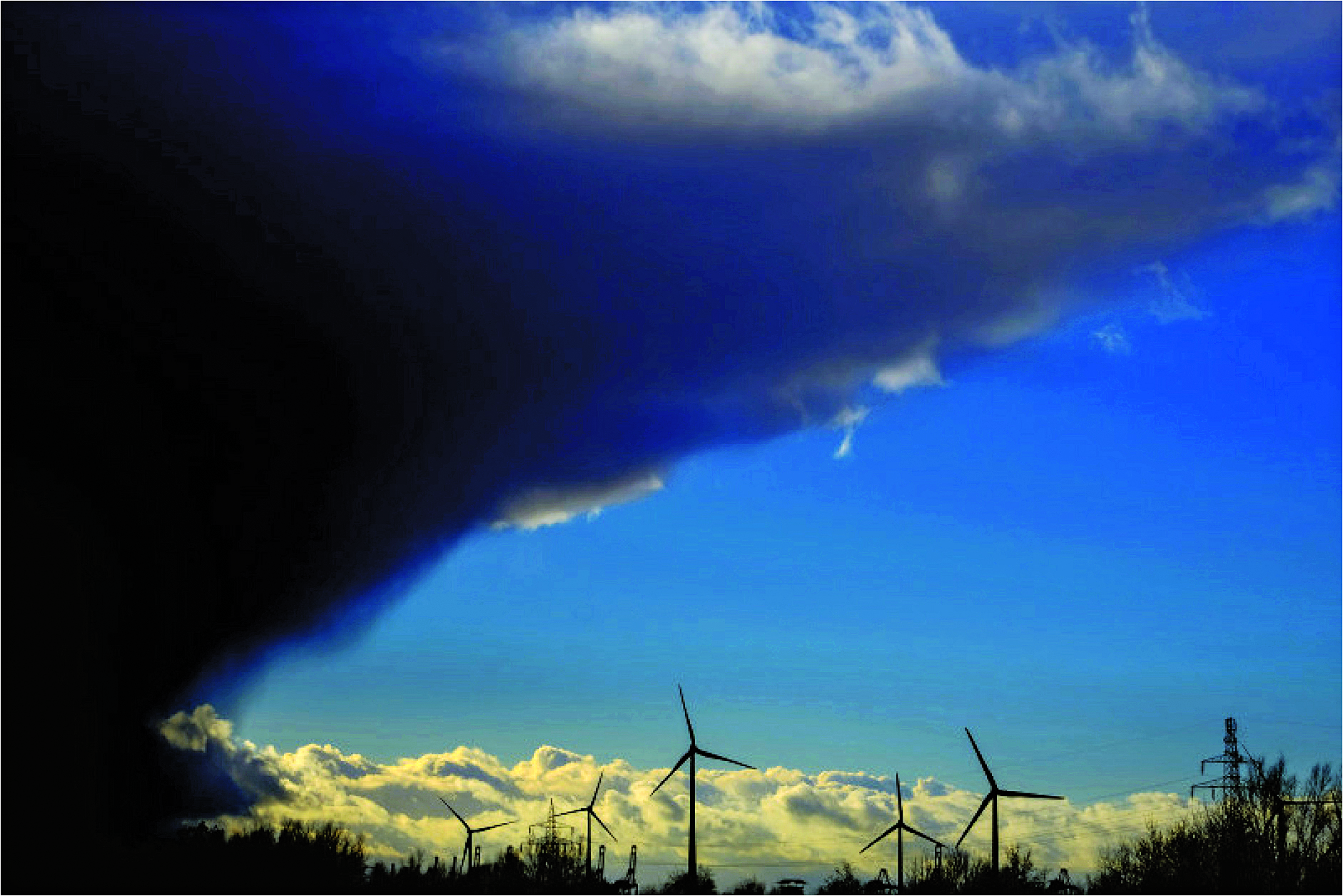
Wind turbines are seen on a plain near Bremerhaven, Germany on Dec. 26, 2017. PATRIK STOLLARZ/AFP VIA GETTY IMAGES
For Germany, 2020 was a banner year in the production of renewable energy. Clean energy sources??ind farms and solar arrays as well as hydroelectric and biogas plants??atcheted their share of power consumption up to 46 percent, nearly equaling that of coal, gas, oil, and nuclear power combined. And after a period of stagnation in the 2010s, the greenhouse emissions of the world?? fourth-largest economy have been dropping again, last year by around 80 million tons of carbon dioxide. That puts Germany 42 percent down from its 1990 emissions level, thus surpassing its decade target by 2 percentage points. This trajectory is good news for Germany??nd for the EU, which wants to turn the continent carbon-neutral by 2050.
Yet Germany?? move to a power system largely reliant on weather-dependent renewables is quickly running up against limits??ssues that all countries exchanging conventional fuels for wind and solar will eventually face. What happens when the sun doesn?? shine and the wind doesn?? blow for hours or even days at a time? And what about the short, dark, cold days of midwinter when renewables of Germany?? power demand?
And it?? not only shortages that are problematic but also surpluses: Stormy days can be so windy that the power flows from wind parks on- and offshore overwhelm the power grid, even triggering its collapse.
These electricity tsunamis can threaten the stability of neighboring countries??energy systems, a brickbat the Poles and Czechs wield. Moreover, when there?? excess power in the grid, prices can go negative, forcing grid operators to pay customers to take the electricity,
The transition from a conventional energy system with 24/7 production to one based on intermittent renewables entails more than just swapping one set of energy sources for another; it demands rethinking and restructuring the entire energy system.
Georg Stamatelopoulos, an energy expert at the utilities company EnBW, sums up the conundrum: ??enewables now cover around half of the demand, and there is still sufficient available power in the system and there is still the possibility of obtaining electricity from our neighbors. What is certain, however, is that further expansion of renewables will increase the volatility in the system. That is why we will always need available service, i.e., service that is available to us when we have the corresponding need.??/p>
Energy blackouts are the bugbear that industrialists and the conventional energy sector have long warned about in ominous tones. Too much or too little power in the grid can indeed prompt energy shortfalls, causing whole regions to go dark and assembly lines to halt. But thus far, in highly industrialized Germany, blackouts have not??et??ome to pass. There?? been no countrywide blackout for years, and last year, the average German experienced just 12 minutes of outage: the lowest in Europe and infinitesimal compared the U.S. citizen?? 2019 average of 4.7 hours.
The Germans??feat was possible, however, only because the country has mostly just added clean energy capacity to the supply over the last two decades, investment encouraged through price supports that make its energy among the most costly in Europe. At the same time, the country maintained much of its fossil fuel generation and a handful of nuclear plants. The surplus power is exported??t a handsome profit for coal-plant-owning utilities.
This whole calculation is changing dramatically, however, as Germany moves to shutter its coal-fired plants (the country?? last will close, at the latest, in 2038) and nuclear power stations (which will be disconnected from the grid in 2022). On Jan. 1, 11 coal-fired plants??ine in North Rhine-Westphalia and two near Hamburg??ent dark, and others will soon follow. Of the six remaining nuclear plants, three will terminate at the year?? end and the final three a year later.
Moreover, while utility power storage options, such as batteries, are quickly improving, batteries still don?? have the capacity to bottle up enough clean power for Germany to hold out even for a couple of fossil-free hours, much less days. Another factor: Even if energy efficiency improves dramatically??hrough the mass insulation of buildings and modernization of their energy systems, for example??ermany will in the future still need more power than it uses today for its fleets of electric cars and trucks, for public transportation, for electrified heating, and for producing the hydrogen and e-fuels that will fly planes and produce cement.
This drop-off is steep and fast, and it throws the Germany energy system into unknown territory??here the interests of energy providers, environmentalists, politicians, and grid operators clash fiercely. There?? more than one way to balance the grid, and it will have wide-ranging implications for Germany?? march to carbon neutrality.
The German gas sector and most German industry underscore that flexible, gas-fired electricity generation is the perfect partner for fluctuating renewables. Indeed, the most modern gas-fired power plants emit significantly less carbon than coal and oil. (Damning reports about gas methane emissions, another greenhouse gas, have tarnished its brand but not enough to disqualify it.) The gas lobby and many experts want more state-of-the-art gas-fired plants constructed, which they say will operate to 2050 and beyond. The gas companies, which now advertise their product as ??reen energy,??are naturally all in favor of replacing nuclear, coal, and oil with their product as fast as possible. Gas-fired electricity, they argue, will also be essential to producing hydrogen, which will power fuel-celled vehicles and produce synthetic fuels as well as store electricity.
Economists, however, point out that as higher carbon pricing boosts the surcharge on carbon dioxide to new highs, natural gas will price itself out of the market. ??as looks like the easiest answer,??said Toby Couture, director of E3 Analytics, an independent renewable energy consultancy in Berlin. ??ut in the near future, gas is increasingly likely to be outpriced. The question is: Can other technologies and approaches balance more cheaply? And the answer is yes.??/p>
Experts like Couture say demand management has enormous, thus far mostly untapped, potential. Through price incentives, massive quantities of power demand can be shifted from, for example, daytime peaks to night hours when demand is almost none. The state-financed German Energy Agency argues that management of electricity demand can be accomplished through ??he targeted switching off and on of loads according to market signals. This can be done ??in mills, furnaces, or pumps.??/p>
??n short,??Couture said, ??hat we need to do is flip the previous paradigm on its head used to build power plants to meet demand. Now we need to intentionally shape our electricity demand so that it is better adapted to our supply: variable, renewable, and abundant.??/p>
Storage is the obvious go-to option. Utility-size batteries can give back in the dark the surplus they collect during the day??nd tank up on super blustery days so upsurges don?? crash the system or cost grid operators. Other, non-battery means of storage, such as hydrogen, seawater, and aluminum storage, are currently advanced enough to pitch in. ??ven when the excess electrons aren?? enough to crash the system, they have to go somewhere. Now, absurdly, power stations are shut down or other countries actually paid to take this electricity off Germany?? hands,??said Gretchen Bakke, author of The Grid: The Fraying Wires Between Americans and Our Energy Future.
Battery technology has advanced vastly in recent years and already contributes to the short-term reliability of Germany?? grid. California has gone further, though: Utility battery developers have actually undercut the prices of gas companies to provide back-up capacity to the state?? energy system. California energy authorities expect that storage coupled with deft energy management and renewables will replace natural gas and coal-fired generations across the American West.
Most importantly, according to climate experts, is the broad, rapid rollout of renewables??ive to 10 times what Germany now has??ncluding geothermal, bioenergy, hydroelectric, and wave/tide energy, all of which are less weather dependent than solar and wind. Until then, even environmental groups like Friends of the Earth and Greenpeace acknowledge that natural gas is going to be part of the solution??hough exclusively as reserve capacity that may run just 5 or 10 percent of the time. ??as will be like a fire brigade,??said grids expert Werner Neumann of Friends of the Earth. ??here for when we need it and compensated accordingly.??/p>
Cross-border trade in energy is another way to compensate for shortfalls. Policymakers in the European Union have sketched visions of a long-distance smart transmission network that would extend from the Arctic Circle to the Mediterranean Sea, capable of seamlessly balancing shortfalls and surpluses??ventually with 100 percent green energy. Trans-European energy grids will be linked to decentralized small-scale grids and plants, making the dream come true of an EU-wide energy market. Although the project is in motion and already helps shift power between Germany and Denmark, as well as France and the United Kingdom, it won?? cover all of Europe anytime soon.
ABOUT THE AUTHOR:
Paul Hockenos is a Berlin-based journalist. His recent book is Berlin Calling: A Story of Anarchy, Music, the Wall and the Birth of the New Berlin (The New Press).








JSW Cement Commissions 1 MTPA Unit in Rajasthan

Wonder Cement appoints Mahesh Singh as VP Corporate Brand Communication

JSW Cement commissions additional 1 MTPA grinding unit in Rajasthan

JSW Cement Boards Approve Proposed Shiva Cement Merger

JSW Cement commissions additional 1 MTPA grinding unit at Nagaur
JSW Cement Commissions 1 MTPA Unit in Rajasthan
Wonder Cement appoints Mahesh Singh as VP Corporate Brand Communication
JSW Cement commissions additional 1 MTPA grinding unit in Rajasthan
JSW Cement Boards Approve Proposed Shiva Cement Merger







