

Concrete
Golden rule for project managers


Many a time, colleagues would ask me what is the sure shot recipe for success in managing projects. The answer would come to me very easily, and I would naturally respond by saying that there is no such magic bullet in project management. At the same time, I always hasten to add, that there is but one pre-condition for success. And that is, We must think of the project contractors as our partners, and not as opponents. This may sound quite easy to practice, but in actual practice I have seen that it is almost always observed in its violation. Contractor bashing is so common-place amongst us, that we have almost made it a religion in itself.
Before we delve into the strange behavioural aspects of this phenomenon, let me explain the contractual relationships that define a contractor. This is easier done with an example. Let us say that in Delhi, the Delhi Metro Rail Corporation enters into a public-private partnership with a company named DAMEPL for setting up the Airport Metro Line. Let us assume that DAMEPL, in turn, engages Siemens, among many other parties, to carry out signalling installation. Now, Siemens again, employs M/s XYZ Pvt Ltd for the actual erection work, and this XYZ Pvt Ltd asks M/s ABC Co., as labour contractors. Thus, in this illustration, we have created a 5 tier contractual structure. We can see here that as we step down this so called ladder, a contractor in turn becomes a customer, and that there are many customer-contractor relationships existing in such a large project at different levels.

I am a little confused. I do not know precisely why we tend to treat our contractors in a condescending manner, suspecting them all the time, and persecuting them all the time. Is this attitude rooted in our colonial past, or is it arising from our public sector mentality? Or, is it that we are always afraid to befriend the contractors, lest we are seen to be unfairly favouring them? Is it a cultural approach of ours, to play safe like true-blue bureaucrats, or is it driven by some kind of innermost sadistic tendencies that we harbour? I am clueless on this, but I do know this for a fact that we mistreat our contractors, and I also know that this can be most damaging for a project. Also, isn?? this behaviour surprising and downright funny, considering that the two entities, customer and contractor, have, in the end, a common purpose, which is to complete the project successfully.
Take the foregoing example. Going by our absolutely normal behaviour patterns, the project would have failed, (delayed, etc.) primarily because everyone in the whole chain who is a customer/owner would have dealt with the contractor down the line in the most non-cooperative and unhelpful manner. Like we say, in an organisation culture flows top down, in our example also, the way a customer will behave with the contractor, will largely depend on the kind of treatment he has in turn received as a contractor, from HIS customer. If DMRC were to follow the golden rule and embrace DAMEPL as a partner, this helpful attitude would have spread downward to DAMEPL, Siemens, and others. But alas, this is not to be! Even in a so-called ??ublic-private partnership??contract, the public sector makes a mockery of the word partnership, and proceeds to deal with the hapless ??artner(s)??in the traditional and time-tested contractor treatment formula.

One small corollary to this golden rule. A potential contractor is not necessarily a friend. We must maintain proper arms length distance in our interactions with all potential contractors, before the contract is awarded. During competitive bidding, during negotiations and during the finalisation process, the owner/customer will be well-advised to be distant, formal, fair and transparent with all competing bidders. But once the contract is signed with the successful bidder(s), they immediately become partners to embrace and not contractors to persecute. So we have to discriminate between the pre-contract and post-contract phases, in defining and shaping our relationship with our contractors.
To sum up, a project manager must view all contractors as partners, and not as a subordinate, nor as a necessary evil in a project. S/he must behave like a friend of the contractor, not as a foe. The contractor is very much a part of the project team, united in a common goal, and has to be treated as such. Remember, this is just a pre-condition to success in projects, not a complete solution to project management.
– SUMIT BANERJEE

Concrete
Cement Prices Likely to Rise Rs. 10-15 per Bag from Mid-October
Input costs and steady demand may drive cement price increases

Concrete
Nuvoco Marks 10 Years, Targets 35 MMTPA Capacity by FY28
Nuvoco celebrates a decade of growth, targeting 35 MMTPA cement capacity by FY28.

Concrete
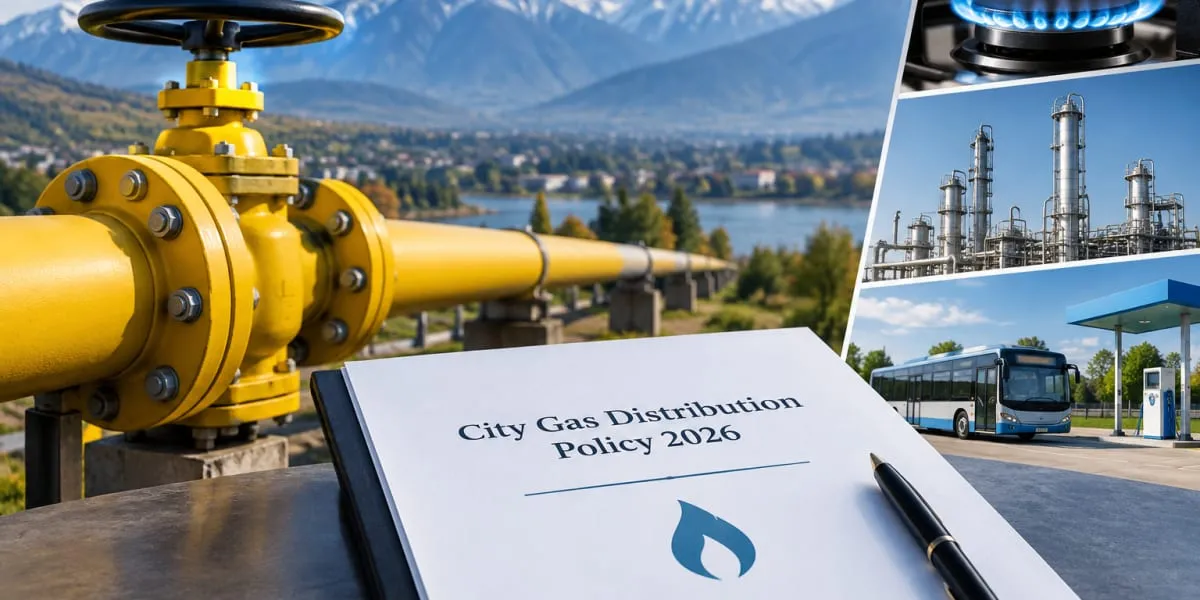
J&K Government Notifies City Gas Distribution Policy
Policy targets PNG and CNG expansion across all 20 districts


Cement Prices Likely to Rise Rs. 10-15 per Bag from Mid-October

Nuvoco Marks 10 Years, Targets 35 MMTPA Capacity by FY28

J&K Government Notifies City Gas Distribution Policy

JSW Cement Commissions 1 MTPA Grinding Unit at Nagaur

JSW Cement Commissions 1 MTPA Unit in Rajasthan
Cement Prices Likely to Rise Rs. 10-15 per Bag from Mid-October
Nuvoco Marks 10 Years, Targets 35 MMTPA Capacity by FY28
J&K Government Notifies City Gas Distribution Policy
JSW Cement Commissions 1 MTPA Grinding Unit at Nagaur
JSW Cement Commissions 1 MTPA Unit in Rajasthan
-

 Concrete4 weeks ago
Telangana to Supply Subsidised Cement for Indiramma Houses
-

 Concrete3 weeks ago
JSW Cement Receives Rs. 2.3 bn GST Demand Notice
-

 Concrete2 weeks ago
Andhra Pradesh Clears Rs. 30 bn My Home Cement Plant
-

 Concrete4 weeks ago
Centre Defers Clearance for Limestone Mine Near Bustard Habitat