

Concrete
Creating a concrete connect

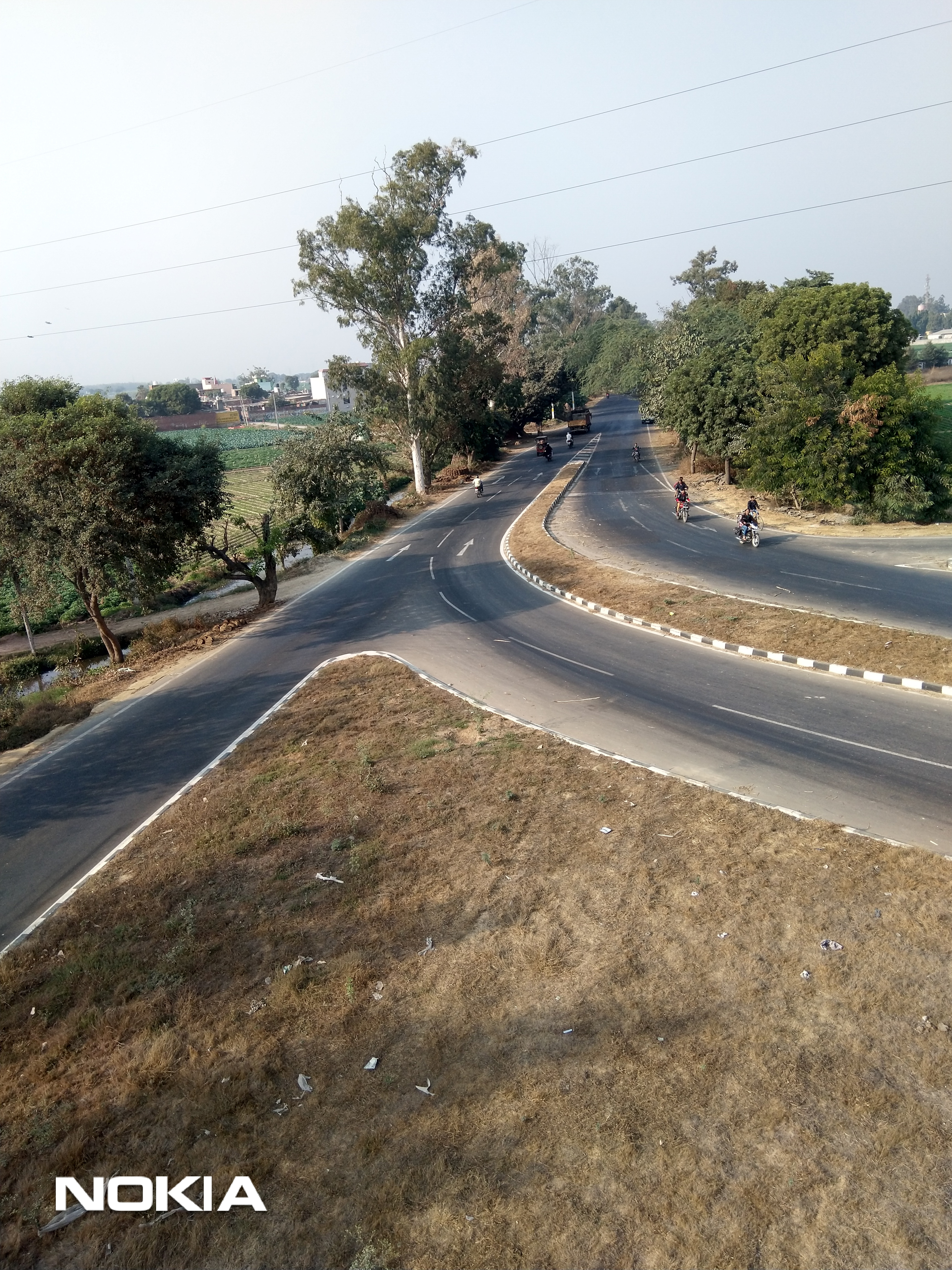
The National Highways Authority of India (NHAI) had awarded the work for the four-laning of the Meerut-Bulandshahr section of NH-235 from 8.800 km to 73.512 km (design chainage in the state of Uttar Pradesh under NHDP Phase IV on Hybrid Annuity Model), for a concession period of 17.5 years, including a construction period of 910 days, i.e. two-and-a-half years, and an operation and maintenance period of 15 years to Freedom Point Expressways as concessionaire. Apco Infratech, who was the lowest bidder, had incorporated a SPV, Freedom Point Expressways (FEPL), as the concessionaire for development of the project.
??EPL had entered into a concession agreement (CA) with NHAI on March 4, 2016, for construction, operation and maintenance of the project,??informs DK Srivastava, Executive Vice-President, APCO Infratech. The CA sets out the scope, rights and obligations of all the parties, overall framework for the development, and operation and maintenance of the project. While the project bid was floated by NHAI at end of 2015, the appointed date was declared as April 28, 2017. ??uring this course of time and the completion period as well, the project alignment features have been modified to cater to the topographic and demographic variations and inhabitant demands.??/p>
Scope of work
The site of the four-lane project highway comprises the section of NH-235 (New NH-334) commencing 8+800 km to 66+482 km and excluding 3.522 km of existing bypass of NH-24 (i.e., the Meerut- Bulandshahr section), having a total length of 64.712 km, including 3.522 km of the existing Hapur Bypass of NH-24 in Uttar Pradesh. The total design length of the project road is about 61.19 km. This section traverses through three districts of Uttar Pradesh: Meerut, Hapur and Bulandshahr.
As Srivastava shares, ??HAI had proposed to bypass nodal towns, i.e. Phaphunda Bypass (2.7 km), Kharkhauda Bypass (3.2 km), Hapur Bypass (11.2 km ??greenfield and 1.228 km ??improvement of existing Hapur Bypass on NH 24) and Gulaothi Bypass (7.6 km), and widen the two-lane existing alignment into four lanes with a paved shoulder and divided median on the basis of a detailed project (feasibility) report carried out in the year 2010.??/p>
The alignment traverses along and across various canals, drains and railway crossings. In order to cater to these structures, nine minor bridges, one major bridge, and one RoB has been provided. Additionally, a six-lane carriageway underpass (three vehicular underpass (VUP), five pedestrian underpass (PUP)) has also been provided to accommodate major crossroads without conflict.
Resource planning and execution
FEPL, the concessionaire, had to design the project considering the above project particulars as per codal provisions of IRC: SP: 84 – 2014 and determine the requisite resources, i.e. manpower, material and machinery, to complete the project within the stipulated timeframe. The contractor had identified its need and planned its resources to execute the work within a 910 day timeline. Srivastava shares the key resource deployment in the form of material, manpower and machinery, as tabulated here:
Execution challenges
-
Various challenges were involved in the execution of this project.
-
Various hindrances in the form of factories, boundary wall, trees, houses, and shops.
-
Delay in handing over encumbrance-free ROW to the concessionaire.
-
Non-disbursement of compensation or dispute by landowners regarding compensation awarder.
-
Hindrances owing to irrigation structures and DFCC.
-
Construction ban imposed by the Supreme Court and National Green Tribunal.
-
Delay in finalisation of ??hange of scope??by the authority .
-
Delay in approval for tree felling by the Forest Department.
-
Lockdown due to outbreak of COVID-19.
??hese issues had resulted in project delays,??says Srivastava. ??he project timeline was stretched for 553 days in addition to 910 days. However, FEPL, with its prudent approach and accelerated efforts, reduced the time span to 295 days from the additional 553 days required for the project and achieved a provisional completion certificate on August 14, 2020.??/p>
Challnges during the Coronavirus outbreak
In March 2020, when the Government imposed the nationwide lockdown to curb the spread of the pandemic, the project was about to achieve the provisional certificate scheduled on April 25, 2020. Owing to the lockdown, the project lost movement, motivation and resources for executing project facility work (finishing work) and balance major work.
The concessionaire, upholding the professional ethics and values of its promoter APCO Infratech, retained manpower at its respective accommodation facilities and provided the best services to help them during a hard time. ??owever, a manpower exodus begun upon the start of special trains and buses to their respective home places,??says Srivastava. ??he government eased lockdown restriction for the infrastructure sector on April 20, 2020, but the district administration had not allowed commencement of work till May 4, 2020.??Workers were then facilitated with all type of Covid-19 precautions.
Safety first!
To avoid fatalities or accidents at work, FEPL ensured that the labour or manpower wore high-visibility clothing, which included a vest, hardhats, safety glasses, face shields, earplugs, fall arrest systems, safety-toed shoes, respirators and all types of PPE. The procedure was well-established??ome call it an internal traffic control plan??o separate workers from the path of vehicles and equipment.
Socioeconomic benefit
The Minister of Road Transport and Highways has cited that this project will shorten travel time from Meerut to Bulandshahr to one hour from the two hours earlier. Also, the highway will serve as a direct access route to Garh-Mukteshwar, where the state government is planning to develop a waterway and promote tourism. It will also serve as an access route to the upcoming Ganga Expressway in Meerut and Bulandshahr.
Achievement
The entire project has a rigid pavement and is among the few projects in Uttar Pradesh to have the entire length paved with pavement quality concrete. What?? more, the toll plaza has been established within 180 m RoW comprising a 14-lane road; it is one of the most advanced and equipped toll plazas.
– SHRIYAL SETHUMADHAVAN
PROJECT DETAILS
Cost: Rs 11.30 billion including COS granted for additions of elevated structures for safety of road users and access to villagers or farmers
Month of completion: August 14, 2020, (PCOD) and November 12, 2020 (COD)
Total length: 61.19 km
Developer: Freedom Point Expressways
Contractor: APCO Infratech
Consultant: SAI Consulting Engineering (SYSTRA)
Steel: SAIL, REAL Ishpath, JSPL
Other technology or material used: Fly ash or silica as cement



Concrete
UltraTech Cement Expands in Andhra Pradesh with Rs. 26.5 bn
Petnikota plant adds 3.6 MTPA cement dispatch capacity

Concrete
Nuvoco reports 13.5% revenue growth in Q2 FY27
Cement sales rose 9% to 4.7 MMT, while EBITDA increased 11%.

Concrete
Meghalaya Cabinet Approves MCCL Closure, Writes Off Rs. 244.3 mn
Cabinet approves winding up of state-owned cement company


UltraTech Cement Expands in Andhra Pradesh with Rs. 26.5 bn

Nuvoco reports 13.5% revenue growth in Q2 FY27

Meghalaya Cabinet Approves MCCL Closure, Writes Off Rs. 244.3 mn

Fornnax Wins AIRIA’s Special Export Award for Rubber Machinery in 2025-26

Cement Prices Likely to Rise Rs. 10-15 per Bag from Mid-October
UltraTech Cement Expands in Andhra Pradesh with Rs. 26.5 bn
Nuvoco reports 13.5% revenue growth in Q2 FY27
Meghalaya Cabinet Approves MCCL Closure, Writes Off Rs. 244.3 mn
Fornnax Wins AIRIA’s Special Export Award for Rubber Machinery in 2025-26
Cement Prices Likely to Rise Rs. 10-15 per Bag from Mid-October
-

 Concrete4 weeks ago
JSW Cement Receives Rs. 2.3 bn GST Demand Notice
-

 Concrete3 weeks ago
Andhra Pradesh Clears Rs. 30 bn My Home Cement Plant
-

 Concrete4 weeks ago
Montra Electric, Wonder Cement Deploy 250-Vehicle EV Fleet
-

 Concrete3 weeks ago
Cement Prices Rise Rs. 7 per Bag in September; October Hikes Expected