

Concrete
Cementing the brand

Branding is a significant aspect in a business to establish trust and recall value amongst customers. The critical question is whether these branding techniques help in influencing the consumers to change their commodity mindset? The answer is a yes. Branding can change the perception of consumers towards a commodity and persuade them to buy a product.
We have some very good examples in the cement industry that prove how they have built cement as a brand successfully. A TV commercial launched by Ambuja cement in 2001-2002 became a huge hit and helped the company establish itself as a famous brand. The commercial it launched back then was no less than a Bollywood film scene where the two brothers shared dialogues ????haiyaaaa, ye deewar toot ti kyu nahi?? followed by another dialogue ????ootegi kaise, Ambuja Cement se jo bani hai?? The commercial delivered a clear message that Ambuja cement has compressive strength. Recently, it launched an explanatory videos series called ??azboot Ghar Ke Mazboot Adhaar?? Similarly, UltraTech Cement is known as a brand of ??he Engineers Choice?? This famous tagline depicts that the cement is been approved by qualified engineers.
Industry leaders believe that creating a brand name needs to be done keeping in mind key aspects of a business??ricing, quality, packaging, and other sales and marketing strategies.
JK Lakshmi Cement?? Mazbooti Guaranteed tagline is a prime example of how much importance the company gives to the strength of its product. In 2020, the company came up with a new campaign ????a Strength Dikha?? which is another attempt to showcase the higher strength of the brand vis-a-vis competitor.
M Ravinder Reddy, Director ??Marketing, Vicat, says ?? am quite satisfied with the journey of cement as a brand so far. If you consider the control days, the situation has changed significantly since 1982 when partial decontrol was introduced. Cement started selling as a brand since then. Initially, it was in a radius of around 400 km around the plant. Then in the year 1989, cement became an independent commodity without any controls. It was then when the cement companies started advertisements for branding. The manufacturers went from one location to multiple locations. Today if you see there is one mother brand and under it, there are a few more sub-brands. Today, cement is almost like any FMCG product.??/p>
Customer-centric approach
Many cement brands follow a customer-centric approach to grow their businesses. For instance, Ambuja Certified Technology (ACT) is a unique solution for millions of home builders in India. The value-added service addresses the three critical Ms in house building ??men, materials, and methods.
Ambuja?? ACT is based on three pillars- the right techniques, the right material, and the right people. The company claims that over 77,000 customers have taken advantage of the various onsite services. ACT is a holistic package that addresses three critical needs – Men (contractors), Materials (primarily building materials) & Methods (practices), by helping customers select the right contractor, products, and construction methods to build strong and durable homes.
??ddressing the customers??pain points is the key to winning their long-term loyalty. What we offer as ACT approach goes far beyond selling cement. While we deliver top-notch cement in terms of quality, ACT ensures that the other equally important elements in building a home come together seamlessly. The number of homes we have helped build over the years proves the value of ACT to builders,” said Neeraj Akhoury, CEO & MD, Ambuja Cements.
Similarly, UltraTech launched the first-ever pan-India multi-brand retail chain concept called-UltraTech Building Solutions (UBS) to offer a one-stop-shop solution to its customers. UBS caters to the needs of individual home builders (IHBs) and helps to engage with home builders at all stages of the construction cycle. This led customers to engage themselves with the brand while building a dream home.

Branding strategies to position a brand
Some of these leading cement players have left a remarkable impression in our minds about their products. UltraTech is known to aggressively promote its products with an aggressive strategy. It has a 90,000+ dealer and retail network all over the country and has a presence in more than 80 per cent of Indian states.
In 2014, Dalmia group launched its first-ever integrated television and multimedia brand campaign. The company demonstrated a philosophy of ??ewthink?? which leverages its proposition of a wise and young generation. With the tagline ??era Bharat Bada Ho Raha Hai?? the ideology was to re-position its brand, which has been intrinsic to the India story through its pre-and post-Independence phases.
JK White Cement got a brand refresh, which is now called JK Cement WhiteMaxX. The re-branding of JK Cement WhiteMaxX was intensified with a digital campaign, ??bSabKuchMaxX??that attracted over 10 million views on social media. The brand re-launch was done to expand and strengthen the JK White Cement portfolio bringing them under the ??axX??family of products. This includes value-added products such as JK Cement ShieldMaxX, JK Cement GypsoM. Typically, JK Cement?? media mix consists of a 360-degree strategy that includes a mix of OOH, print media, electronic media, banner ads, etc.
Recently, amidst the ongoing second wave of Covid-19, JK Super Cement has launched a new campaign for plasma donation #HumSeHaiSuraksha.
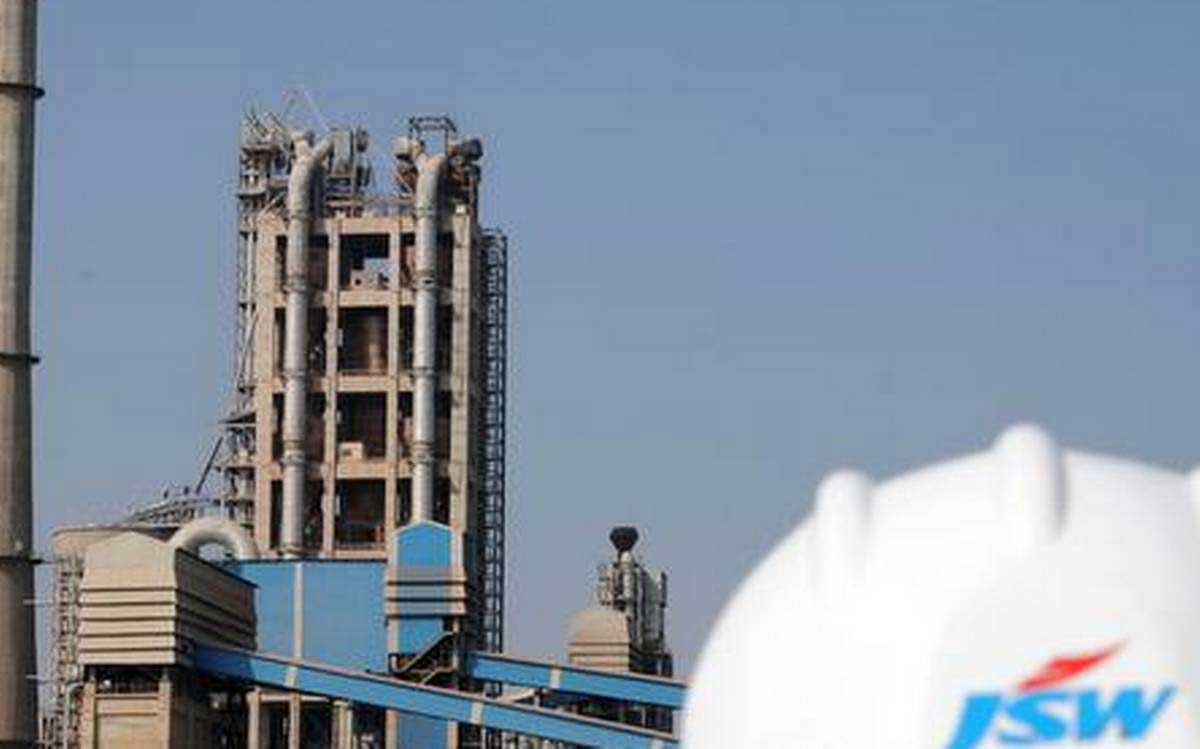
Similarly, JSW Cement introduced conversational commerce services to its customers by partnering with Yalochat ??a conversational commerce service provider, to introduce artificial intelligence-based Anytime Anywhere Business transactions for its trade customers.
However, due to the ongoing pandemic situation, companies are now focused on branding through digital media channels.
The Art of Packaging
Packaging is an integral part of building a brand. When you go to a supermarket, it is the packaging of the product that catches your eye first. Brands are working towards changing their packaging strategies to not only bring advantages to the customer but also the cement producer.
JK Lakshmi Cement was one of the first companies to introduce a coloured packaging of Cement Bag.
Rishi Fogla, Executive Director at Fogla Corp, explains, ??hen cement moves from B2B to B2C sector, the attractiveness of packaging is the first to have an encounter with the customer. The customer expects the packaging to be not just attractive, but more agile, more sophisticated and that is what we do. This is how we have been trying with cement companies for the last four to five years and I even look at it as if I am a cement user myself (we are cement for our various expansion projects). When a brand moves from a standard product to a premium one, the packaging is on the preface. It has a role to play from its journey from commodity to brand.??/p>
Fogla believes that this change in bags relates to the journey from commodity to brand. The journey has been from PP bags to PP laminated bags to BOPP bags.
Apart from packaging, other attributes also play important role in brand building. Saxena believes that a brand should also focus on the services as this is also the brand?? responsibility to provide great services like expert advice, on-site guidance, hassle-free ordering, on-time delivery, and great customer service.
Partnerships and Associations
Associating a celebrity or famous personality to your brand is the key branding strategy with the big construction or commodity brands to offer their customers a bouquet of services under one roof. Brand building is not a one-time task. From sponsoring cricket teams in IPL to having sports celebrities, cement players have engaged themselves with the best personalities to uplift their brands in the market. JK Lakshmi has Vijender Singh and Rohit Sharma as brand ambassadors.
The journey of JK Lakshmi Cement started by positioning their product on the plank of strength with a tagline of ??azbooti Guaranteed?? ??hen we progressed to a serious tone of narration depicting Nation Building with Brand Ambassador Om Puri. People associated JK Lakshmi Cement with that for close to a decade and then we moved to a more emotional campaign ??India, Ab Soch Karo Buland,??em> says Aseem Saxena, General Manager ??Marketing Services, JK Lakshmi Cement.
Similarly, UltraTech Cement has associated itself with Deccan Chargers team and Rajasthan Royals in the IPL. It has also partnered with some of India?? premier construction product companies like Berger, Pidilite, Sintex, Supreme, Astral among several others.
JSW Cement has signed Sourav Ganguly and Sunil Chhetri as its brand ambassadors. It launched a new multi-media marketing campaign ??eader?? Choice??with the two sports icons that promote the ideology of crafting a solid foundation for a better future. Apart from this, the company has partnered with a few channels and has embraced platforms like Whatsapp, Dealer App, Internal Sales app, etc. To address customer queries faster, they have rolled out an application called ??Saathi App.
Reddy believes that adding a personality or celebrity is important. He says, ??hen new cement is launched, we would engage a personality that can give confidence to the buyer. It is necessary for any new product but when the product is already established you can think of a different type of campaign. I remember at Bharathi cement, we had hired the well-known Telugu actor Surya as a brand ambassador. We came to know before he took up our assignment, he had used our cement for his own construction and was a quite satisfied customer. This gives another dimension to the entire campaign.??/p>
Pricing strategies
Ultimately, all strategies work only when your product pricing is done right. The most important factor while determining the price of a product in the cement industry is the demand across various regions, supply cost, external environmental factors like raw materials, and the overall cost of production.
For instance, some cement brands follow a principle where places with surplus supply experience lower whereas those regions where the demand is almost more than production experience higher pricing.
Overall, the cement industry has evolved as a brand by adopting best practices and strategies. A perfect mix of product, packaging, solid teamwork, and market strategies is what it takes to create a successful brand.
– MEGHA RAI











Concrete
Nuvoco Marks 10 Years, Targets 35 MMTPA Capacity by FY28
Nuvoco celebrates a decade of growth, targeting 35 MMTPA cement capacity by FY28.
Concrete
J&K Government Notifies City Gas Distribution Policy
Policy targets PNG and CNG expansion across all 20 districts

Concrete
JSW Cement Commissions 1 MTPA Grinding Unit at Nagaur
Nagaur unit lifts JSW Cement’s grinding capacity to 25.10 MTPA



Nuvoco Marks 10 Years, Targets 35 MMTPA Capacity by FY28

J&K Government Notifies City Gas Distribution Policy

JSW Cement Commissions 1 MTPA Grinding Unit at Nagaur

JSW Cement Commissions 1 MTPA Unit in Rajasthan

Wonder Cement appoints Mahesh Singh as VP Corporate Brand Communication
Nuvoco Marks 10 Years, Targets 35 MMTPA Capacity by FY28
J&K Government Notifies City Gas Distribution Policy
JSW Cement Commissions 1 MTPA Grinding Unit at Nagaur
JSW Cement Commissions 1 MTPA Unit in Rajasthan
Wonder Cement appoints Mahesh Singh as VP Corporate Brand Communication
-

 Concrete4 weeks ago
Telangana to Supply Subsidised Cement for Indiramma Houses
-

 Concrete2 weeks ago
Andhra Pradesh Clears Rs. 30 bn My Home Cement Plant
-

 Concrete2 weeks ago
JSW Cement Receives Rs. 2.3 bn GST Demand Notice
-

 Concrete4 weeks ago
Centre Defers Clearance for Limestone Mine Near Bustard Habitat