Concrete
Cementing the brand
Published
5 years agoon
By
admin
Branding is a significant aspect in a business to establish trust and recall value amongst customers. The critical question is whether these branding techniques help in influencing the consumers to change their commodity mindset? The answer is a yes. Branding can change the perception of consumers towards a commodity and persuade them to buy a product.
We have some very good examples in the cement industry that prove how they have built cement as a brand successfully. A TV commercial launched by Ambuja cement in 2001-2002 became a huge hit and helped the company establish itself as a famous brand. The commercial it launched back then was no less than a Bollywood film scene where the two brothers shared dialogues ????haiyaaaa, ye deewar toot ti kyu nahi?? followed by another dialogue ????ootegi kaise, Ambuja Cement se jo bani hai?? The commercial delivered a clear message that Ambuja cement has compressive strength. Recently, it launched an explanatory videos series called ??azboot Ghar Ke Mazboot Adhaar?? Similarly, UltraTech Cement is known as a brand of ??he Engineers Choice?? This famous tagline depicts that the cement is been approved by qualified engineers.
Industry leaders believe that creating a brand name needs to be done keeping in mind key aspects of a business??ricing, quality, packaging, and other sales and marketing strategies.
JK Lakshmi Cement?? Mazbooti Guaranteed tagline is a prime example of how much importance the company gives to the strength of its product. In 2020, the company came up with a new campaign ????a Strength Dikha?? which is another attempt to showcase the higher strength of the brand vis-a-vis competitor.
M Ravinder Reddy, Director ??Marketing, Vicat, says ?? am quite satisfied with the journey of cement as a brand so far. If you consider the control days, the situation has changed significantly since 1982 when partial decontrol was introduced. Cement started selling as a brand since then. Initially, it was in a radius of around 400 km around the plant. Then in the year 1989, cement became an independent commodity without any controls. It was then when the cement companies started advertisements for branding. The manufacturers went from one location to multiple locations. Today if you see there is one mother brand and under it, there are a few more sub-brands. Today, cement is almost like any FMCG product.??/p>
Customer-centric approach
Many cement brands follow a customer-centric approach to grow their businesses. For instance, Ambuja Certified Technology (ACT) is a unique solution for millions of home builders in India. The value-added service addresses the three critical Ms in house building ??men, materials, and methods.
Ambuja?? ACT is based on three pillars- the right techniques, the right material, and the right people. The company claims that over 77,000 customers have taken advantage of the various onsite services. ACT is a holistic package that addresses three critical needs – Men (contractors), Materials (primarily building materials) & Methods (practices), by helping customers select the right contractor, products, and construction methods to build strong and durable homes.
??ddressing the customers??pain points is the key to winning their long-term loyalty. What we offer as ACT approach goes far beyond selling cement. While we deliver top-notch cement in terms of quality, ACT ensures that the other equally important elements in building a home come together seamlessly. The number of homes we have helped build over the years proves the value of ACT to builders,” said Neeraj Akhoury, CEO & MD, Ambuja Cements.
Similarly, UltraTech launched the first-ever pan-India multi-brand retail chain concept called-UltraTech Building Solutions (UBS) to offer a one-stop-shop solution to its customers. UBS caters to the needs of individual home builders (IHBs) and helps to engage with home builders at all stages of the construction cycle. This led customers to engage themselves with the brand while building a dream home.

Branding strategies to position a brand
Some of these leading cement players have left a remarkable impression in our minds about their products. UltraTech is known to aggressively promote its products with an aggressive strategy. It has a 90,000+ dealer and retail network all over the country and has a presence in more than 80 per cent of Indian states.
In 2014, Dalmia group launched its first-ever integrated television and multimedia brand campaign. The company demonstrated a philosophy of ??ewthink?? which leverages its proposition of a wise and young generation. With the tagline ??era Bharat Bada Ho Raha Hai?? the ideology was to re-position its brand, which has been intrinsic to the India story through its pre-and post-Independence phases.
JK White Cement got a brand refresh, which is now called JK Cement WhiteMaxX. The re-branding of JK Cement WhiteMaxX was intensified with a digital campaign, ??bSabKuchMaxX??that attracted over 10 million views on social media. The brand re-launch was done to expand and strengthen the JK White Cement portfolio bringing them under the ??axX??family of products. This includes value-added products such as JK Cement ShieldMaxX, JK Cement GypsoM. Typically, JK Cement?? media mix consists of a 360-degree strategy that includes a mix of OOH, print media, electronic media, banner ads, etc.
Recently, amidst the ongoing second wave of Covid-19, JK Super Cement has launched a new campaign for plasma donation #HumSeHaiSuraksha.
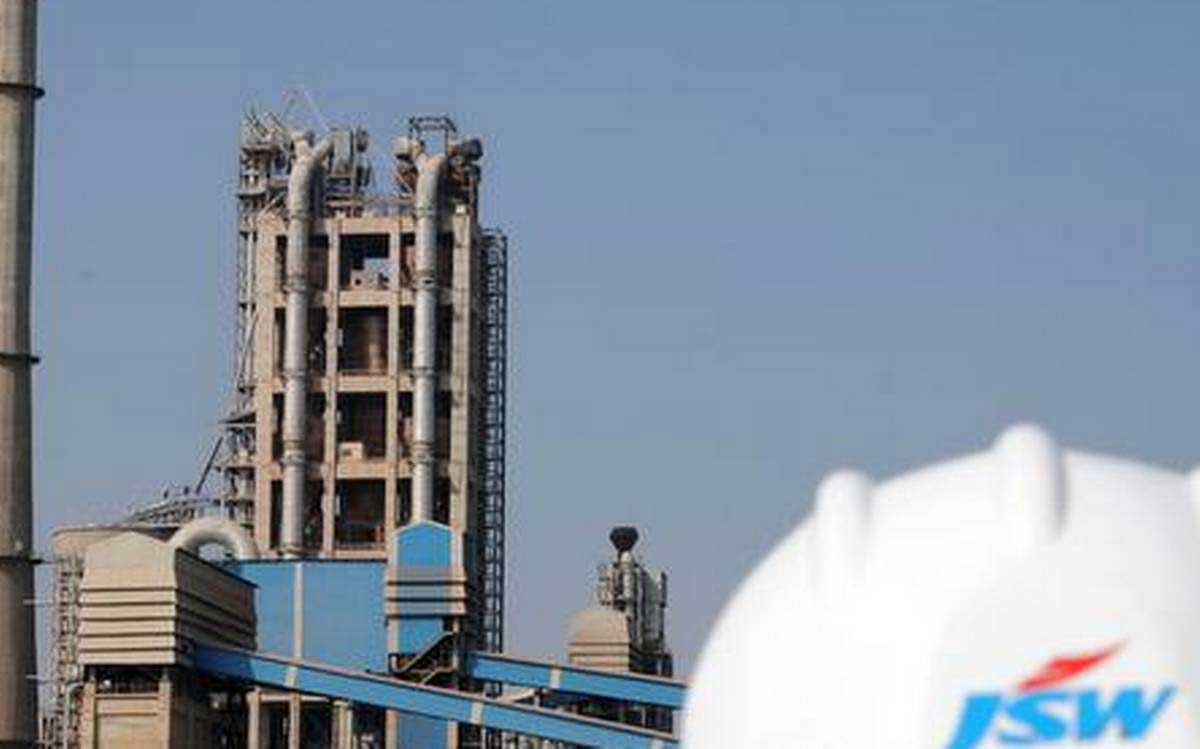
Similarly, JSW Cement introduced conversational commerce services to its customers by partnering with Yalochat ??a conversational commerce service provider, to introduce artificial intelligence-based Anytime Anywhere Business transactions for its trade customers.
However, due to the ongoing pandemic situation, companies are now focused on branding through digital media channels.
The Art of Packaging
Packaging is an integral part of building a brand. When you go to a supermarket, it is the packaging of the product that catches your eye first. Brands are working towards changing their packaging strategies to not only bring advantages to the customer but also the cement producer.
JK Lakshmi Cement was one of the first companies to introduce a coloured packaging of Cement Bag.
Rishi Fogla, Executive Director at Fogla Corp, explains, ??hen cement moves from B2B to B2C sector, the attractiveness of packaging is the first to have an encounter with the customer. The customer expects the packaging to be not just attractive, but more agile, more sophisticated and that is what we do. This is how we have been trying with cement companies for the last four to five years and I even look at it as if I am a cement user myself (we are cement for our various expansion projects). When a brand moves from a standard product to a premium one, the packaging is on the preface. It has a role to play from its journey from commodity to brand.??/p>
Fogla believes that this change in bags relates to the journey from commodity to brand. The journey has been from PP bags to PP laminated bags to BOPP bags.
Apart from packaging, other attributes also play important role in brand building. Saxena believes that a brand should also focus on the services as this is also the brand?? responsibility to provide great services like expert advice, on-site guidance, hassle-free ordering, on-time delivery, and great customer service.
Partnerships and Associations
Associating a celebrity or famous personality to your brand is the key branding strategy with the big construction or commodity brands to offer their customers a bouquet of services under one roof. Brand building is not a one-time task. From sponsoring cricket teams in IPL to having sports celebrities, cement players have engaged themselves with the best personalities to uplift their brands in the market. JK Lakshmi has Vijender Singh and Rohit Sharma as brand ambassadors.
The journey of JK Lakshmi Cement started by positioning their product on the plank of strength with a tagline of ??azbooti Guaranteed?? ??hen we progressed to a serious tone of narration depicting Nation Building with Brand Ambassador Om Puri. People associated JK Lakshmi Cement with that for close to a decade and then we moved to a more emotional campaign ??India, Ab Soch Karo Buland,??em> says Aseem Saxena, General Manager ??Marketing Services, JK Lakshmi Cement.
Similarly, UltraTech Cement has associated itself with Deccan Chargers team and Rajasthan Royals in the IPL. It has also partnered with some of India?? premier construction product companies like Berger, Pidilite, Sintex, Supreme, Astral among several others.
JSW Cement has signed Sourav Ganguly and Sunil Chhetri as its brand ambassadors. It launched a new multi-media marketing campaign ??eader?? Choice??with the two sports icons that promote the ideology of crafting a solid foundation for a better future. Apart from this, the company has partnered with a few channels and has embraced platforms like Whatsapp, Dealer App, Internal Sales app, etc. To address customer queries faster, they have rolled out an application called ??Saathi App.
Reddy believes that adding a personality or celebrity is important. He says, ??hen new cement is launched, we would engage a personality that can give confidence to the buyer. It is necessary for any new product but when the product is already established you can think of a different type of campaign. I remember at Bharathi cement, we had hired the well-known Telugu actor Surya as a brand ambassador. We came to know before he took up our assignment, he had used our cement for his own construction and was a quite satisfied customer. This gives another dimension to the entire campaign.??/p>
Pricing strategies
Ultimately, all strategies work only when your product pricing is done right. The most important factor while determining the price of a product in the cement industry is the demand across various regions, supply cost, external environmental factors like raw materials, and the overall cost of production.
For instance, some cement brands follow a principle where places with surplus supply experience lower whereas those regions where the demand is almost more than production experience higher pricing.
Overall, the cement industry has evolved as a brand by adopting best practices and strategies. A perfect mix of product, packaging, solid teamwork, and market strategies is what it takes to create a successful brand.
– MEGHA RAI

You may like
Concrete
Cement Demand Revives As Prices Decline In Q3 FY26
Nuvama reports improved volume growth after price correction
Published
11 hours agoon
February 24, 2026By
admin
A report by Nuvama Financial Services (Nuvama) said cement sector demand revived in the third quarter of fiscal year twenty twenty six as prices declined, supporting volume growth across regions. The note indicated that sequential price correction helped replenish demand that had been subdued by elevated pricing earlier in the year. Nuvama quantified the price decline as a sequential correction that varied across states and segments, facilitating restocking by merchants and traders.
The report suggested that improved affordability after the price correction encouraged housing and infrastructure activity, with developers and contractors adjusting procurement plans. It added that regional dynamics varied, with some markets showing faster recovery while others remained reliant on seasonal construction cycles. Housing demand was driven by both affordable and mid segment projects, while infrastructure segment recovery was contingent on timely execution of public works.
Analysts at Nuvama assessed that the price moderation eased inventory pressures for manufacturers and distributors and supported margin stabilisation at several producers. Demand improvement was visible in both urban and rural segments, although the pace of recovery differed by state and trade channel. Producers were seen balancing price realisations with volume targets and managing input cost volatility through operational efficiencies.
The report recommended that investors monitor volumes and realisations closely as market equilibrium emerges in the coming quarters, noting that sustainability of recovery would depend on monsoon patterns and government infrastructure outlays. Overall, the assessment pointed to a cautiously optimistic outlook for the cement industry as price correction translated into tangible volume gains. Market participants were advised to track early signs of demand broadening beyond core construction hubs to assess the depth of the rebound.
Concrete
Refractory demands in our kiln have changed
Published
5 days agoon
February 20, 2026By
admin
Radha Singh, Senior Manager (P&Q), Shree Digvijay Cement, points out why performance, predictability and life-cycle value now matter more than routine replacement in cement kilns.
As Indian cement plants push for higher throughput, increased alternative fuel usage and tighter shutdown cycles, refractory performance in kilns and pyro-processing systems is under growing pressure. In this interview, Radha Singh, Senior Manager (P&Q), Shree Digvijay Cement, shares how refractory demands have evolved on the ground and how smarter digital monitoring is improving kiln stability, uptime and clinker quality.
How have refractory demands changed in your kiln and pyro-processing line over the last five years?
Over the last five years, refractory demands in our kiln and pyro line have changed. Earlier, the focus was mostly on standard grades and routine shutdown-based replacement. But now, because of higher production loads, more alternative fuels and raw materials (AFR) usage and greater temperature variation, the expectation from refractory has increased.
In our own case, the current kiln refractory has already completed around 1.5 years, which itself shows how much more we now rely on materials that can handle thermal shock, alkali attack and coating fluctuations. We have moved towards more stable, high-performance linings so that we don’t have to enter the kiln frequently for repairs.
Overall, the shift has been from just ‘installation and run’ to selecting refractories that give longer life, better coating behaviour and more predictable performance under tougher operating conditions.
What are the biggest refractory challenges in the preheater, calciner and cooler zones?
• Preheater: Coating instability, chloride/sulphur cycles and brick erosion.
• Calciner: AFR firing, thermal shock and alkali infiltration.
• Cooler: Severe abrasion, red-river formation and mechanical stress on linings.
Overall, the biggest challenge is maintaining lining stability under highly variable operating conditions.
How do you evaluate and select refractory partners for long-term performance?
In real plant conditions, we don’t select a refractory partner just by looking at price. First, we see their past performance in similar kilns and whether their material has actually survived our operating conditions. We also check how strong their technical support is during shutdowns, because installation quality matters as much as the material itself.
Another key point is how quickly they respond during breakdowns or hot spots. A good partner should be available on short notice. We also look at their failure analysis capability, whether they can explain why a lining failed and suggest improvements.
On top of this, we review the life they delivered in the last few campaigns, their supply reliability and their willingness to offer plant-specific custom solutions instead of generic grades. Only a partner who supports us throughout the life cycle, which includes selection, installation, monitoring and post-failure analysis, fits our long-term requirement.
Can you share a recent example where better refractory selection improved uptime or clinker quality?
Recently, we upgraded to a high-abrasion basic brick at the kiln outlet. Earlier we had frequent chipping and coating loss. With the new lining, thermal stability improved and the coating became much more stable. As a result, our shutdown interval increased and clinker quality remained more consistent. It had a direct impact on our uptime.
How is increased AFR use affecting refractory behaviour?
Increased AFR use is definitely putting more stress on the refractory. The biggest issue we see daily is the rise in chlorine, alkalis and volatiles, which directly attack the lining, especially in the calciner and kiln inlet. AFR firing is also not as stable as conventional fuel, so we face frequent temperature fluctuations, which cause more thermal shock and small cracks in the lining.
Another real problem is coating instability. Some days the coating builds too fast, other days it suddenly drops, and both conditions impact refractory life. We also notice more dust circulation and buildup inside the calciner whenever the AFR mix changes, which again increases erosion.
Because of these practical issues, we have started relying more on alkali-resistant, low-porosity and better thermal shock–resistant materials to handle the additional stress coming from AFR.
What role does digital monitoring or thermal profiling play in your refractory strategy?
Digital tools like kiln shell scanners, IR imaging and thermal profiling help us detect weakening areas much earlier. This reduces unplanned shutdowns, helps identify hotspots accurately and allows us to replace only the critical sections. Overall, our maintenance has shifted from reactive to predictive, improving lining life significantly.
How do you balance cost, durability and installation speed during refractory shutdowns?
We focus on three points:
• Material quality that suits our thermal profile and chemistry.
• Installation speed, in fast turnarounds, we prefer monolithic.
• Life-cycle cost—the cheapest material is not the most economical. We look at durability, future downtime and total cost of ownership.
This balance ensures reliable performance without unnecessary expenditure.
What refractory or pyro-processing innovations could transform Indian cement operations?
Some promising developments include:
• High-performance, low-porosity and nano-bonded refractories
• Precast modular linings to drastically reduce shutdown time
• AI-driven kiln thermal analytics
• Advanced coating management solutions
• More AFR-compatible refractory mixes
These innovations can significantly improve kiln stability, efficiency and maintenance planning across the industry.
Concrete
Digital supply chain visibility is critical
Published
5 days agoon
February 20, 2026By
admin
MSR Kali Prasad, Chief Digital and Information Officer, Shree Cement, discusses how data, discipline and scale are turning Industry 4.0 into everyday business reality.
Over the past five years, digitalisation in Indian cement manufacturing has moved decisively beyond experimentation. Today, it is a strategic lever for cost control, operational resilience and sustainability. In this interview, MSR Kali Prasad, Chief Digital and Information Officer, Shree Cement, explains how integrated digital foundations, advanced analytics and real-time visibility are helping deliver measurable business outcomes.
How has digitalisation moved from pilot projects to core strategy in Indian cement manufacturing over the past five years?
Digitalisation in Indian cement has evolved from isolated pilot initiatives into a core business strategy because outcomes are now measurable, repeatable and scalable. The key shift has been the move away from standalone solutions toward an integrated digital foundation built on standardised processes, governed data and enterprise platforms that can be deployed consistently across plants and functions.
At Shree Cement, this transition has been very pragmatic. The early phase focused on visibility through dashboards, reporting, and digitisation of critical workflows. Over time, this has progressed into enterprise-level analytics and decision support across manufacturing and the supply chain,
with clear outcomes in cost optimisation, margin protection and revenue improvement through enhanced customer experience.
Equally important, digital is no longer the responsibility of a single function. It is embedded into day-to-day operations across planning, production, maintenance, despatch and customer servicing, supported by enterprise systems, Industrial Internet of Things (IIoT) data platforms, and a structured approach to change management.
Which digital interventions are delivering the highest ROI across mining, production and logistics today?
In a capital- and cost-intensive sector like cement, the highest returns come from digital interventions that directly reduce unit costs or unlock latent capacity without significant capex.
Supply chain and planning (advanced analytics): Tools for demand forecasting, S&OP, network optimisation and scheduling deliver strong returns by lowering logistics costs, improving service levels, and aligning production with demand in a fragmented and regionally diverse market.
Mining (fleet and productivity analytics): Data-led mine planning, fleet analytics, despatch discipline, and idle-time reduction improve fuel efficiency and equipment utilisation, generating meaningful savings in a cost-heavy operation.
Manufacturing (APC and process analytics): Advanced Process Control, mill optimisation, and variability reduction improve thermal and electrical efficiency, stabilise quality and reduce rework and unplanned stoppages.
Customer experience and revenue enablement (digital platforms): Dealer and retailer apps, order visibility and digitally enabled technical services improve ease of doing business and responsiveness. We are also empowering channel partners with transparent, real-time information on schemes, including eligibility, utilisation status and actionable recommendations, which improves channel satisfaction and market execution while supporting revenue growth.
Overall, while Artificial Intelligence (AI) and IIoT are powerful enablers, it is advanced analytics anchored in strong processes that typically delivers the fastest and most reliable ROI.
How is real-time data helping plants shift from reactive maintenance to predictive and prescriptive operations?
Real-time and near real-time data is driving a more proactive and disciplined maintenance culture, beginning with visibility and progressively moving toward prediction and prescription.
At Shree Cement, we have implemented a robust SAP Plant Maintenance framework to standardise maintenance workflows. This is complemented by IIoT-driven condition monitoring, ensuring consistent capture of equipment health indicators such as vibration, temperature, load, operating patterns and alarms.
Real-time visibility enables early detection of abnormal conditions, allowing teams to intervene before failures occur. As data quality improves and failure histories become structured, predictive models can anticipate likely failure modes and recommend timely interventions, improving MTBF and reducing downtime. Over time, these insights will evolve into prescriptive actions, including spares readiness, maintenance scheduling, and operating parameter adjustments, enabling reliability optimisation with minimal disruption.
A critical success factor is adoption. Predictive insights deliver value only when they are embedded into daily workflows, roles and accountability structures. Without this, they remain insights without action.
In a cost-sensitive market like India, how do cement companies balance digital investment with price competitiveness?
In India’s intensely competitive cement market, digital investments must be tightly linked to tangible business outcomes, particularly cost reduction, service improvement, and faster decision-making.
This balance is achieved by prioritising high-impact use cases such as planning efficiency, logistics optimisation, asset reliability, and process stability, all of which typically deliver quick payback. Equally important is building scalable and governed digital foundations that reduce the marginal cost of rolling out new use cases across plants.
Digitally enabled order management, live despatch visibility, and channel partner platforms also improve customer centricity while controlling cost-to-serve, allowing service levels to improve without proportionate increases in headcount or overheads.
In essence, the most effective digital investments do not add cost. They protect margins by reducing variability, improving planning accuracy, and strengthening execution discipline.
How is digitalisation enabling measurable reductions in energy consumption, emissions, and overall carbon footprint?
Digitalisation plays a pivotal role in improving energy efficiency, reducing emissions and lowering overall carbon intensity.
Real-time monitoring and analytics enable near real-time tracking of energy consumption and critical operating parameters, allowing inefficiencies to be identified quickly and corrective actions to be implemented. Centralised data consolidation across plants enables benchmarking, accelerates best-practice adoption, and drives consistent improvements in energy performance.
Improved asset reliability through predictive maintenance reduces unplanned downtime and process instability, directly lowering energy losses. Digital platforms also support more effective planning and control of renewable energy sources and waste heat recovery systems, reducing dependence on fossil fuels.
Most importantly, digitalisation enables sustainability progress to be tracked with greater accuracy and consistency, supporting long-term ESG commitments.
What role does digital supply chain visibility play in managing demand volatility and regional market dynamics in India?
Digital supply chain visibility is critical in India, where demand is highly regional, seasonality is pronounced, and logistics constraints can shift rapidly.
At Shree Cement, planning operates across multiple horizons. Annual planning focuses on capacity, network footprint and medium-term demand. Monthly S&OP aligns demand, production and logistics, while daily scheduling drives execution-level decisions on despatch, sourcing and prioritisation.
As digital maturity increases, this structure is being augmented by central command-and-control capabilities that manage exceptions such as plant constraints, demand spikes, route disruptions and order prioritisation. Planning is also shifting from aggregated averages to granular, cost-to-serve and exception-based decision-making, improving responsiveness, lowering logistics costs and strengthening service reliability.
How prepared is the current workforce for Industry 4.0, and what reskilling strategies are proving most effective?
Workforce preparedness for Industry 4.0 is improving, though the primary challenge lies in scaling capabilities consistently across diverse roles.
The most effective approach is to define capability requirements by role and tailor enablement accordingly. Senior leadership focuses on digital literacy for governance, investment prioritisation, and value tracking. Middle management is enabled to use analytics for execution discipline and adoption. Frontline sales and service teams benefit from
mobile-first tools and KPI-driven workflows, while shop-floor and plant teams focus on data-driven operations, APC usage, maintenance discipline, safety and quality routines.
Personalised, role-based learning paths, supported by on-ground champions and a clear articulation of practical benefits, drive adoption far more effectively than generic training programmes.
Which emerging digital technologies will fundamentally reshape cement manufacturing in the next decade?
AI and GenAI are expected to have the most significant impact, particularly when combined with connected operations and disciplined processes.
Key technologies likely to reshape the sector include GenAI and agentic AI for faster root-cause analysis, knowledge access, and standardisation of best practices; industrial foundation models that learn patterns across large sensor datasets; digital twins that allow simulation of process changes before implementation; and increasingly autonomous control systems that integrate sensors, AI, and APC to maintain stability with minimal manual intervention.
Over time, this will enable more centralised monitoring and management of plant operations, supported by strong processes, training and capability-building.
Cement Demand Revives As Prices Decline In Q3 FY26
Refractory demands in our kiln have changed
Digital supply chain visibility is critical
Redefining Efficiency with Digitalisation
Cement Additives for Improved Grinding Efficiency
Cement Demand Revives As Prices Decline In Q3 FY26
Refractory demands in our kiln have changed
Digital supply chain visibility is critical
Redefining Efficiency with Digitalisation
Cement Additives for Improved Grinding Efficiency
Trending News
-
Concrete4 weeks agoAris Secures Rs 630 Million Concrete Supply Order
-
Concrete4 weeks agoNITI Aayog Unveils Decarbonisation Roadmaps
-
Economy & Market3 weeks agoBudget 2026–27 infra thrust and CCUS outlay to lift cement sector outlook
-
Concrete4 weeks agoJK Cement Commissions 3 MTPA Buxar Plant, Crosses 31 MTPA