Connect with us

Concrete

Concrete: Potential to grow

Published

on

Shares

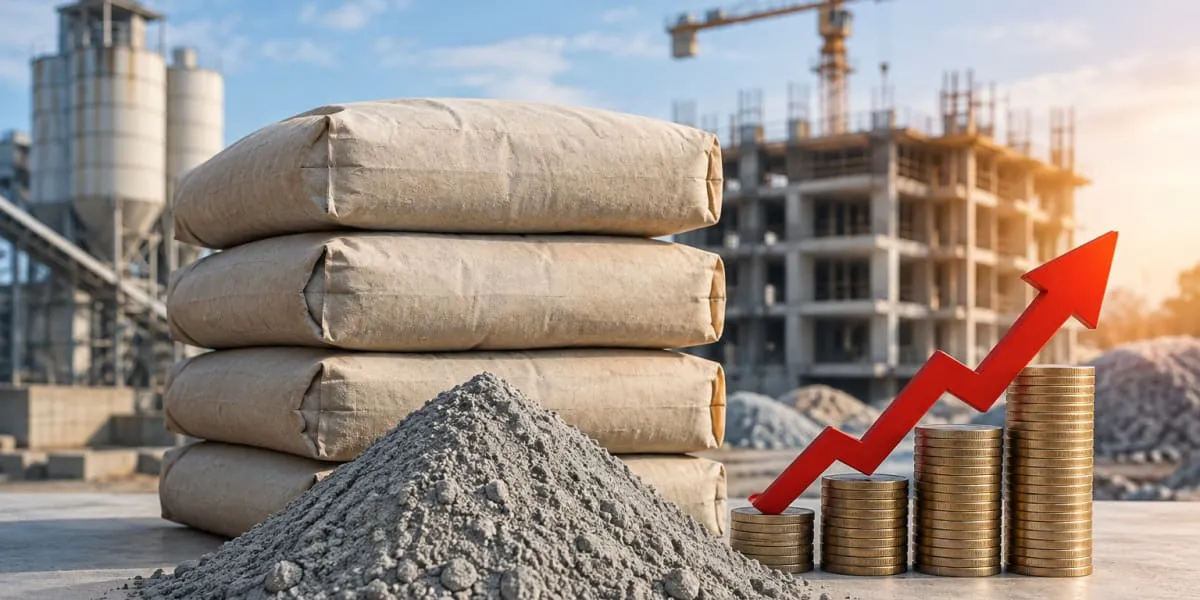
No wonder, India’s concrete industry is a vital part of our economy, directly and indirectly. India has a lot of potential for development in the infrastructure and construction sector and the concrete sector is expected to largely benefit from it.

The beauty of cement is that it is always converted into value added products, and standalone use of cement is very rare. The first major value addition of cement is concrete, which is a heterogeneous mixture of different components where cement plays role of a gum. Sand and stone chips are a few other important ingredients of concrete. Sand sources across globe are depleting fast and therefore engineering community had to find an alternative and it is manufactured sand.

Ready-mix concrete is just an extension of concrete. Globally, the ready-mix concrete market is anticipated to register a CAGR of 8 per cent during the period 2017-2023. The manufacturing of ready-mix concrete and delivering it through a transit mixer allows the integration of precise concrete in construction, thus making it strong, sturdy and long lasting.

Considering the global scenario, the Asia Pacific region is estimated to acquire the major share in the global market and is predicted to retain its dominance in the long run. It is due to the rising number of latest infrastructural projects especially in economies like Singapore, India, Thailand, and China. With the rapid urbanisation and industrialisation in these areas, the market is anticipated to flourish. Moreover, the ever-increasing population, favourable government policies, high availability of skilled workforce and cheap resources, and low labour and operational costs are contributing to the market growth.

The advent of new infrastructure construction projects is also estimated to generate an inflated demand for the ready-mix concrete market. In this region, China has accounted for the lion’s share, owing to the refurbishment and expansion of old structures like railway terminals, and airports, along with the implementation of novel infrastructural projects. India is also considered as a driving cause for the market owing to the development of smart cities.

The worldwide cement production is 4.1 billion metric tonnes (2018). Assuming 75 per cent of cement is used in concrete, we can imagine the quantum of concrete produced considering typically 300 kg of cement is consumed per cubic meter.

Concrete products are often the most sustainable and have the potential for a very long service life, but because concrete is used in large quantities, its use does have a global impact.

It is interesting to know, though ready-mix concrete was patented in the year 1903, it really took off somewhere around 1960s. It gained momentum with fast-track projects where investments done were the key issue and time to complete the projects was critical. There have been many advantages of using ready-mix concrete.

Quality of concrete produced at plant is much superior to what is produced at site. There is strict control over the testing of materials, process parameters and continuous monitoring of key practices during the manufacture. Speed in the construction practices followed in ready-mix concrete plant is followed continuously by having mechanised operations. The output obtained from a site mix concrete plant using an 8/12 mixer is 4 to 5 metric cubes per hour, which is 30-60 metric cubes per hour in a ready mix concrete plant. The other advantage, cement is saved and the dust caused is reduced as ready mix concrete makes use of bulk cement instead of bags of cement. There is saving of cement on account of use of cementious materials like fly ash and slag. The other major benefit is the engineer at site is able to concentrate on engineering jobs than paying attention to material procurement and material management. There is less dependency on human labour, which leads to less of errors.

The major disadvantage of ready mixed concrete is the traffic congestions during the movement of transit of concrete can result in setting of concrete. This will hence require addition of admixtures to delay the setting period. In our country, we have additional tax on ready-mix concrete which when produced manually at site is not levied. One of the major cost components in ready-mix concrete is the transport cost, which is close to 30-35 per cent of the realisation, which is quite significant. Today ready mix business faces many challenges. The major one is shortage of sand and aggregates. The other is fulfilment of environment regulations. The citizens becoming more aware of their rights sometimes lead to conflict of interest. All of sudden the concrete producer gets a closure notice.

Precast
Precast is corollary to ready-mix concrete (For more details on precast, read Devendra Kumar Pandey’s interview in this issue). It is difficult to imagine precast factory without using a batching plant to produce concrete. The list of products coming under precast is pretty long starting from normal covers, lamp poles, railway sleepers, ready to use fence, doors and window frames, decorative facades, stair case, water tanks, toilets etc. The number of metro railway projects undergoing are using many precast shapes in the job. Precast products are factory made shapes and then transported to the locations whereas cast in situ concrete shapes are cast at locations in one monolith piece.

Precast shapes are cast in small shapes and then bolted together. It is a technology used for producing large number of pieces repeatedly. Therefore it is often used for mass housing projects. Typically in mass housing, a factory is set up close to a site, and different sections of house are produced and then assembled at location. In case if cast shapes have to be transported to a distance then precast may not turn out to be a cost-effective option. This enhances the speed of construction. Same is the case of railway sleepers. The Department of Railways have set up sleeper factories at various locations where rail tracks are being laid. Sometime special equipment are required for erection of precast shapes at site and which may be little expensive. Joining different precast shapes is another vulnerable area in precast construction. In case if cast shapes have to be transported to a distance then precast may not turn out to be a cost effective option.

In short, concrete provides us immense opportunities and imagination to make effective use of the man-made material.

VIKAS DAMLE

Continue Reading
Click to comment

Leave a Reply

Your email address will not be published. Required fields are marked *

Concrete

Aditya Birla Group Launches Ultravolt Wires And Cables Business

UltraTech extends building solutions into electrical wiring

Published

on

By

Shares

Aditya Birla Group has entered the wires and cables market through Ultravolt, extending UltraTech’s move from building materials into building solutions. The shift builds on UltraTech Building Solutions, a multi-category platform that already addresses customers across different stages of construction and extends beyond cement into ready-mix concrete, waterproofing, tile-fixing solutions and mortars.

The company intends to enter with scale, seeking presence across 100,000 retailers in more than 500 districts and availability through 5,000 plus UltraTech Building Solutions (UBS) outlets. The portfolio spans house wires, light-duty cables, communication cables, solar cables and low-tension and industrial cables to meet changing electrical requirements driven by solar installations, communications infrastructure and industrial automation.

An upstream advantage begins in the Group’s metals ecosystem, with conductor quality central to product performance. Ultravolt wires will use TruePure Copper, defined as 99.97 per cent pure electrolytic-grade annealed copper sourced from Hindalco, providing greater control over raw material quality and provenance and supporting electrical performance, safety and durability.

The business also targets the electrician community as a decisive influence on product choice and installation quality. The Wires and Cables Business has launched a Skill India Electrician Training Programme in partnership with the Electronics Sector Skills Council of India that aims to train and certify more than 40,000 electricians across India over the next year, focusing on safe wiring practices, correct installation and advanced wire technologies and offering Skill India-aligned certification and identification credentials.

The move combines market opportunity, UltraTech’s construction ecosystem, manufacturing capability and Group-level resources. A large Gujarat facility, advanced machinery and in-house testing and research and development underpin the product strategy, which is designed for both traditional and emerging applications. The ambition is to build a scaled national brand and become one of the top two players within five years, making the Group an integral participant in modern building infrastructure.

Continue Reading

Concrete

Ramco Cements Mine Restoration Gets Global Biodiversity Certification

Pandalgudi mine restoration receives Advanced Certification from TGBS

Published

on

By

Shares
The ecological restoration of Ramco Cements’ limestone mine at Pandalgudi in Virudhunagar district, Tamil Nadu, has received international recognition with the site being awarded Advanced Certification by The Global Biodiversity Standard (TGBS). The recognition makes Pandalgudi the first site in Peninsular India to receive the certification and places it among globally recognised biodiversity restoration projects.
TGBS, recognised by the International Union for Conservation of Nature (IUCN) and the Convention on Biological Diversity (CBD), assesses biodiversity restoration projects based on scientific evaluation and their contribution to ecosystem recovery and local communities. The certification is supported by more than 250 scientists and academics worldwide.
Spread across over 500 acres of worked-out mine areas, the restoration project includes a certified 234-acre site. Initiated in 2018 with technical support from Auroville Botanical Gardens, the project began plantation activities in 2019 and is expected to be completed by 2027. More than 430,000 native trees and shrubs belonging to 150 ecologically significant species have been planted at the site.
The restored mine, which was once a barren landscape with limited biodiversity, has recorded over 72 bird species and 53 butterfly species. The project has also captured an estimated 10,000 tonnes of carbon dioxide over the past seven years, supporting broader sustainability and carbon reduction goals.
Opened officially in 2022, the site has attracted more than 13,000 visitors through educational programmes for schools, colleges and training institutions. The restoration initiative has also contributed to the development of the Rajapalayam Masterplan and supported Tamil Nadu’s carbon neutrality ambitions.
Commenting on the achievement, Mr P. R. Venketrama Raja, Chairman, Ramco Group, said the company aims for the Pandalgudi restoration project to serve as an inspiration and blueprint for the mining industry in India. Dr David Bartholomew, CEO, The Global Biodiversity Standard, highlighted the project’s long-term commitment to biodiversity recovery and independent assessment of ecological outcomes.
The certification reinforces Ramco Cements’ focus on sustainable mining practices and ecological restoration as part of its commitment towards a carbon-neutral future.

Continue Reading

Concrete

Central Technical Team To Survey Sites For Bhadradri Kothagudem Airport

Delegation to assess feasibility and ground conditions

Published

on

By

Shares

A central technical team will visit possible sites identified for the Bhadradri Kothagudem airport in Telangana to assess their suitability for airport development. The team will conduct on-site inspections to evaluate terrain, accessibility and existing infrastructure and will examine factors relevant to safe operations and construction feasibility. The exercise is being carried out in coordination with the state government and local administration to ensure alignment with regional planning objectives.

Members will survey topography, drainage patterns, soil conditions and potential approach paths and will note proximity to habitations and transport corridors. The inspection team will interact with revenue officials, the public works department and representatives of the civil aviation authority to collect technical inputs and records. Satellite imagery and prior site reports will be reviewed alongside ground observations to develop a comprehensive assessment.

Environmental considerations will form a central part of the review, with attention to forest patches, water bodies and biodiversity corridors in and around shortlisted locations. The team will examine regulatory clearances required and will flag areas where detailed environmental impact assessment and mitigation planning are necessary. Land acquisition records and options for minimising displacement will be evaluated in consultation with district authorities.

Findings will be compiled into a technical report for submission to state and central agencies to inform subsequent decision making. The assessment is intended to support careful site selection and to identify infrastructure and connectivity requirements that would need to be addressed during project planning. Stakeholder consultations with local communities and businesses will be part of the follow up process to capture ground level concerns and logistical inputs. The state government will consider the technical report before taking further steps towards detailed design and approvals.

Continue Reading

Video Thumbnail
â–

    SIGN-UP FOR OUR GENERAL NEWSLETTER

    Trending News

    SUBSCRIBE TO THE NEWSLETTER


    Don't miss out on valuable insights and opportunities to connect with like minded professionals.


      This will close in 0 seconds