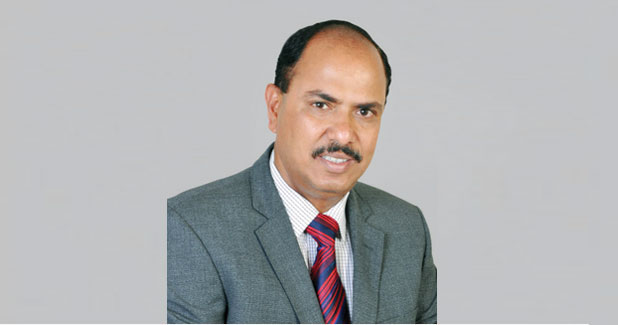
AK Bal, Director, Viraj Projects Pvt Ltd
Pune-based Viraj Projects is a comprehensive construction solutions provider for a wide array of sectors ranging from infrastructure, real estate, power and industrial. Having dealership in steels, sand, dyes, bricks, tiles etc., the firm is aiming to become a leading player in Indian construction sector. AK Bal, Director, Viraj Projects Pvt Ltd discusses the latest developments in the distribution channels in the construction sector as a whole, including that
of cement. What are the latest trends in buying patterns between bulk and bags in cement channels? Is there any change in buying patterns over the last two years and how do you see it panning out in the next two years?
Actually, bulkers are available aplenty, particularly catering to the consumption of RMCs or manufacturing units. For other activities like plastering, brickwork etc., bag cement is required. About 75% of requirements of RMC manufacturers are supplied through bulk only. The trend is building up towards bulk as wastage is low and cost is low. It saves on the cost of bags and wastage is less than one per cent. In the next couple of years, the trend will continue towards bulk. But bags cannot be avoided as there are a lot of consumers in rural India where cement is distributed still in bags. For urban supplies and infrastructure projects, bulk supplies are being preferred, so demand for bulk supplies is expected to rise. I am also working in the state of Orissa, where there was no bulk supplies a year back even in Bhubaneswar. The company we are working for has started manufacturing cement in the state and started bulk supplies. Is there any change in the supply chain strategies over the last few years vs traditional pattern of company-godown-dealer-last mile delivery? What are the evolving low-cost structures?
No change. Today also it is happening in the same way. Besides insuring their payments, the manufacturers want to maintain relations with their dealers so that they can protect market for their products. Though the companies are maintaining accounts of some key customers, the supplies are routed through dealers and distributors. Companies never supply cement directly to anybody. They want to encourage distributors also for insuring their receivables. The companies want to get their payment on time, so dealer will be in between to take care of payments. It seems a couple of online order taking firms have come into being recently and some companies are accepting orders online. Are you doing anything of that sort?
We are not into anything of that kind so far. There might be some firms who are doing this. However, if online orders are accepted by any firm then they may seek payment in advance. Area-wise distributors and dealers are there. So whether they will get commission or not is an issue. With emergence of mega distributors for a state or region, is there any change in the relationship with the manufacturers that is happening?
There are many dealers going in for multiple dealerships. Earlier they used to opt for single dealership and they used to get special incentives for doing so. But in that case, your business growth will be constrained as you will not be able to service clients seeking a particular brand, particularly RMC companies use a particular brand of cement for the whole project or multiple projects, and besides, they cannot afford to wait for supplies. All major distributors have multiple dealerships, instead of sticking to only one brand. What about quality…
I feel, quality of all the brands – big or small – in the market is equally good and there is no big difference, otherwise the small brands will not be able to sell their products in a competitive market. Even users are conscious of quality.Are there any changes in strategies adopted by the dealers for attracting customers? How about developing a network of small and sub-dealers?
Definitely there are small and sub-dealers, who are not the authorised dealers of the company. But they supply cement at higher prices after adding his profit margin. In rural areas the prices are high because there the consumption is low, at 10 or 20 bags, unless it is for a big project. What are the latest trends in consumer demand patterns associated with brands and brand identity?
Actually, there is nothing like smaller brand in the cement market. As far as I know, for all brands the manufacturing processes are robust and quality is monitored. Even if one bag out of one thousand bags they supply is of poor quality that company will lose customer confidence, so consistency is as important. Besides, customers have their own preferences.Are you dealing in some other building materials?
Yes, we are also dealing in steels, sand, dyes, bricks, tiles etc.How cement channels are comparable to other peers like steel, sand and bricks?
In steel, direct supply system from manufacturers is available. No credit is made available for steel from dealers, while it is there for cement. And another thing is cement has to be used within three months from the date of manufacture, hence some dealers push it through credit. That is not the case with steel which can be stores for a couple of years without erosion in quality, if properly stored. How do you see price patterns changing in your region in near future, and why?
Definitely, the prices are expected to go up from here. In Pune we are expecting the cement prices to touch Rs 270 plus GST per bag from the present level of Rs 230 plus GST now. Because the demand is very high and a lot of infrastructure projects are under implementation. With general elections in a year’s time, the government is announcing and implementing a lot of infrastructure projects. Unless the government controls prices before elections to satisfy the end consumer, the price trend will remain upwards. Even builders are trying to complete their projects at the earliest to cash in on their land banks. The reason is that earlier the building prices were going up rapidly giving hope that the builders can make more money if the project is delayed. Now, there is no such hope of revival in prices in the near future. Now the rise in prices is only 4-5 per cent a year, that is not sustainable if the project is delayed and it does not even cover the incremental interest cost incurred. Besides, input prices are moving up.– BS Srinivasalu Reddy